
13,599 views ·
73 replies
14k views
73 replies
Plaster with screed rails
To start with, I wouldn't plaster against the frame directly, but rather with something shock-absorbing against the frame. For example, floor foam or similar so you get a few mm gap that flexes.
Then the next question is how thick the plaster needs to be.
Regarding down towards the floor, it looks damp, which would justify increasing the strength of the plaster.
When it comes to plastering the wall, I would probably cut the guide rail to the right thickness and get started.
Then the next question is how thick the plaster needs to be.
Regarding down towards the floor, it looks damp, which would justify increasing the strength of the plaster.
When it comes to plastering the wall, I would probably cut the guide rail to the right thickness and get started.
Last edited:
The craftsman who applied gypsum plaster did not remove it from the wall, which is an internal wall.A Alexn72 said:To begin with, I would not plaster against the frame but use something shock-absorbing against the frame. For example, floor foam or similar so you get a few mm gap that flexes.
Then the next question is how thick you will need to plaster.
Regarding down towards the floor, it looks damp which would justify increasing the strength of the plaster.
When it comes to the plastering on the wall itself, I would have cut the right thickness of the drawing list and started off.
Instead, additional B-plaster fine was applied.
Should one complain or wait to see if it cracks?
A Alexn72 said:To start with, I would not plaster against the frame without something shock-absorbing against the frame. For example, floor foam or similar so you get a few mm gap that flexes.
then the next question is how thick you will need to plaster.
As for going down to the floor, it looks damp which would justify going up in strength on the mortar.
When it comes to plastering itself on the wall, I would probably have sawed the gauge rod to the right thickness and started.
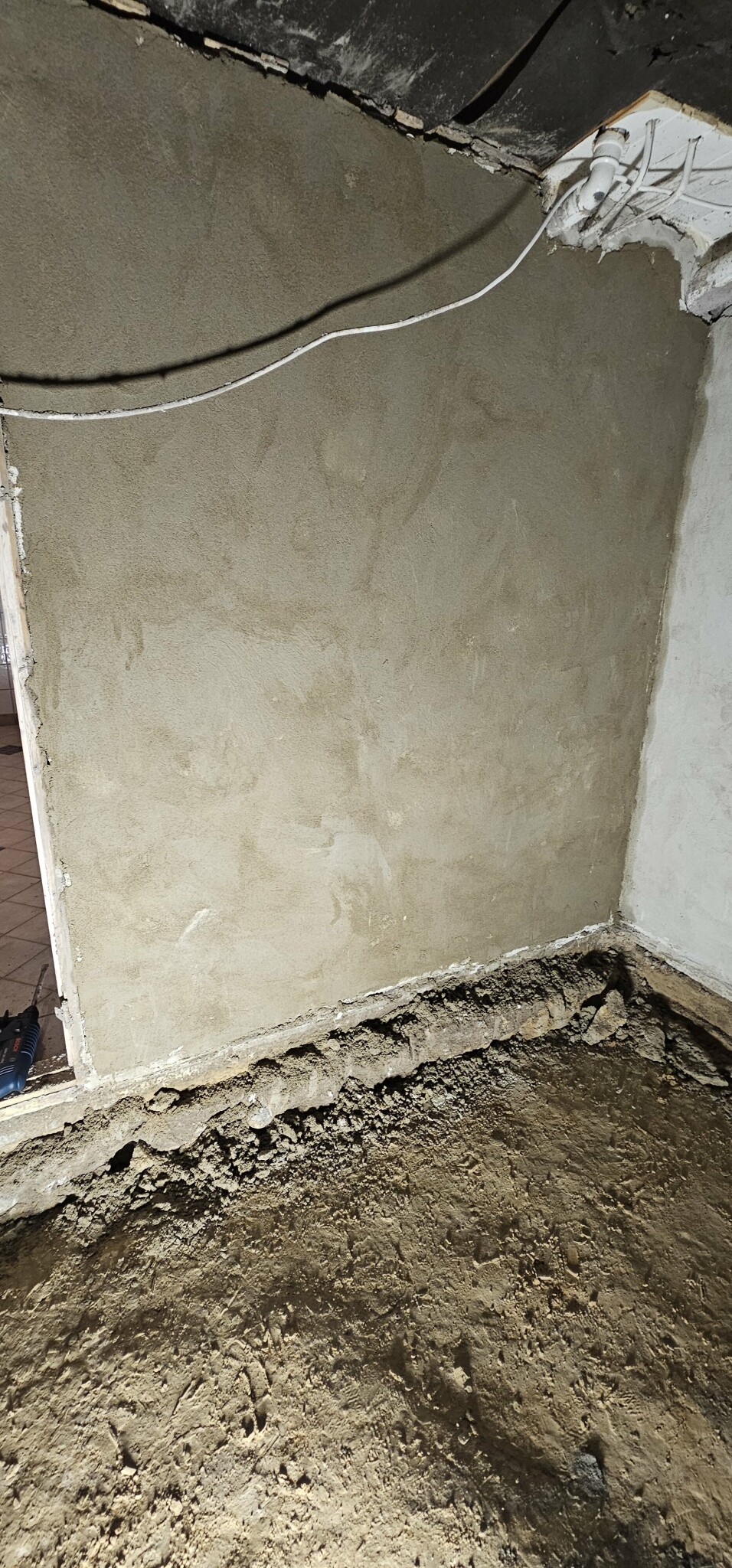
Unfortunately, I cannot comment on how gypsum and plaster work in this way.T Tummenmitthand said:
But I wouldn't want to have them in that order.
S
sinuslinus
Träskalle
· Östergötlands län
· 6 161 posts
sinuslinus
Träskalle
- Östergötlands län
- 6,161 posts
S
sinuslinus
Träskalle
· Östergötlands län
· 6 161 posts
sinuslinus
Träskalle
- Östergötlands län
- 6,161 posts
Thanks for your input, everywhere I've read / said that the strongest should be at the bottom and the weakest on top. Now it becomes something you don't want as you write.A Alexn72 said:
We'll see tomorrow if they can do better when the concrete floor is laid. Otherwise, the entire renovation will be postponed 😁🙈😇

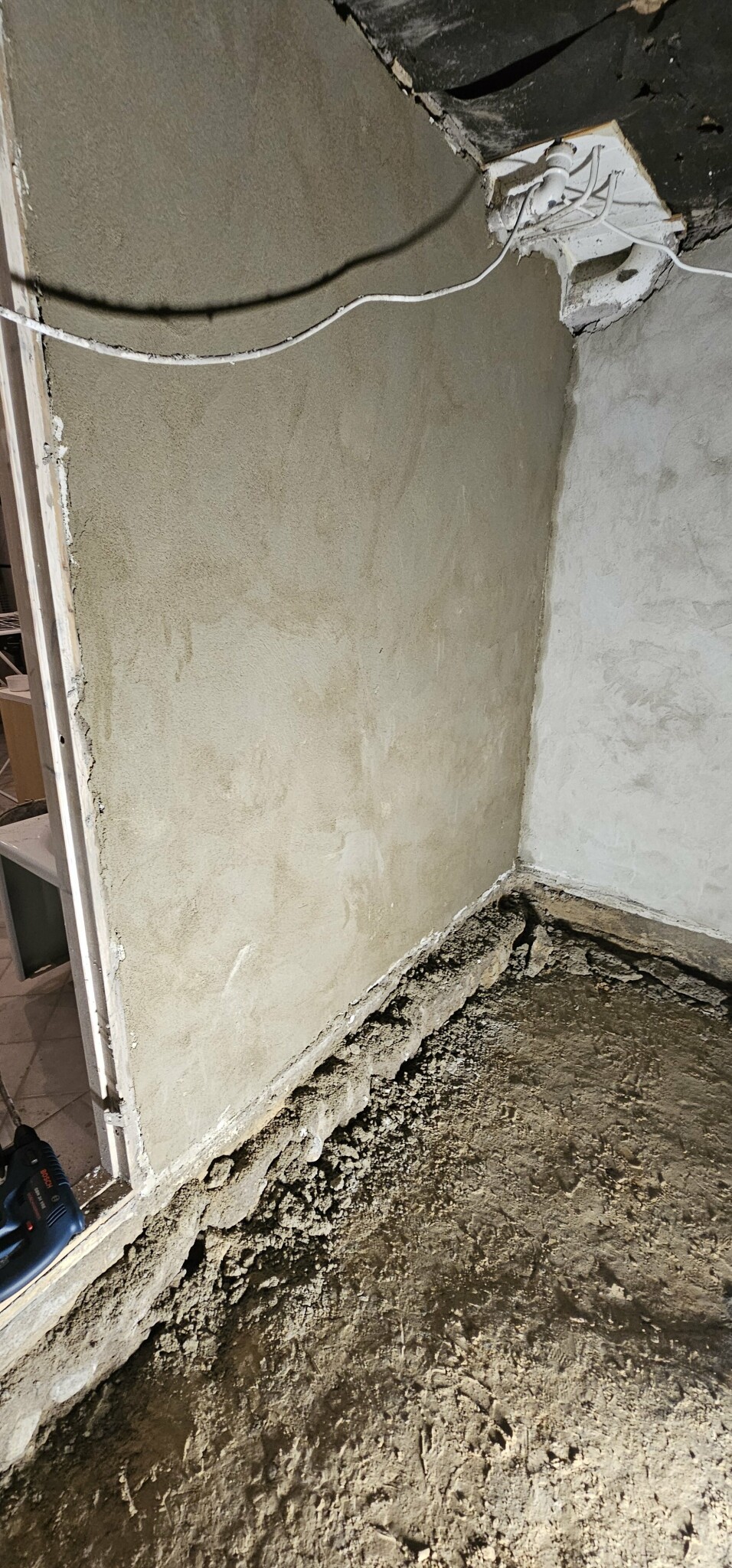
With such limited space on the old wall, the question is whether it has settled or if you can expect it to move.T Tummenmitthand said:Thank you for your input, everywhere I have read/been told that the strongest should be at the bottom and the weakest at the top. Now it is as you write, something you don't want.
We'll see tomorrow if they can do better when the concrete floor is laid. Otherwise, the entire renovation will be postponed 😁🙈😇
After all, you're going to pour and they can move the wall...
Were there cracks before you started fixing it?
Your last image is a bit difficult to interpret in terms of what one sees.
Last edited:
In the room where the craftsman worked, there were no cracks.A Alexn72 said:
It was like white splatter + wallpaper. The outer wall is made of concrete hollow blocks
the partition wall is built with gråsuggor
And the interior walls are Wallategel, and it is the walls with Wallategel that he has applied with plaster.
Beforehand, I had applied a primer A + mesh
Went all in 😁🙈
If painting with silicate paint and you notice it doesn't work because he said it wouldn't show with paint. Can anything be done about the unevenness?
As someone who has worked on this, can a real mason
Smooth out the wall without losing too much plaster? Since I'm thinking they have to redo it after we lay the concrete floor.
Click here to reply