13,250 views ·
73 replies
13k views
73 replies
Plaster with screed rails
If you want a completely smooth surface, you should use a steel trowel (I think
You can somewhat simplistically say that
Throwing on the mortar doesn't matter much how it turns out, but the smoother, the easier in the next step.
But then you adjust the surface with different tools when the surface begins to set.
If you use smooth steel, you will achieve a very smooth surface.
If you then want a surface that is completely flawless, you usually apply gypsum plaster at the end.
But the picture I showed you is just brushed/scraped with a plywood board with a handle.
The surface becomes smooth but a bit like sandpaper.
While I'm at it, you should be a little careful with the mortar against the skin...
Since it is alkaline, it can dissolve the skin if you poke at it all day with damp fingers...
Normal smudges are usually not a problem, but for example, gloves that become damp from the mortar can become a problem after a day.
You can somewhat simplistically say that
Throwing on the mortar doesn't matter much how it turns out, but the smoother, the easier in the next step.
But then you adjust the surface with different tools when the surface begins to set.
If you use smooth steel, you will achieve a very smooth surface.
If you then want a surface that is completely flawless, you usually apply gypsum plaster at the end.
But the picture I showed you is just brushed/scraped with a plywood board with a handle.
The surface becomes smooth but a bit like sandpaper.
While I'm at it, you should be a little careful with the mortar against the skin...
Since it is alkaline, it can dissolve the skin if you poke at it all day with damp fingers...
Normal smudges are usually not a problem, but for example, gloves that become damp from the mortar can become a problem after a day.
Last edited:
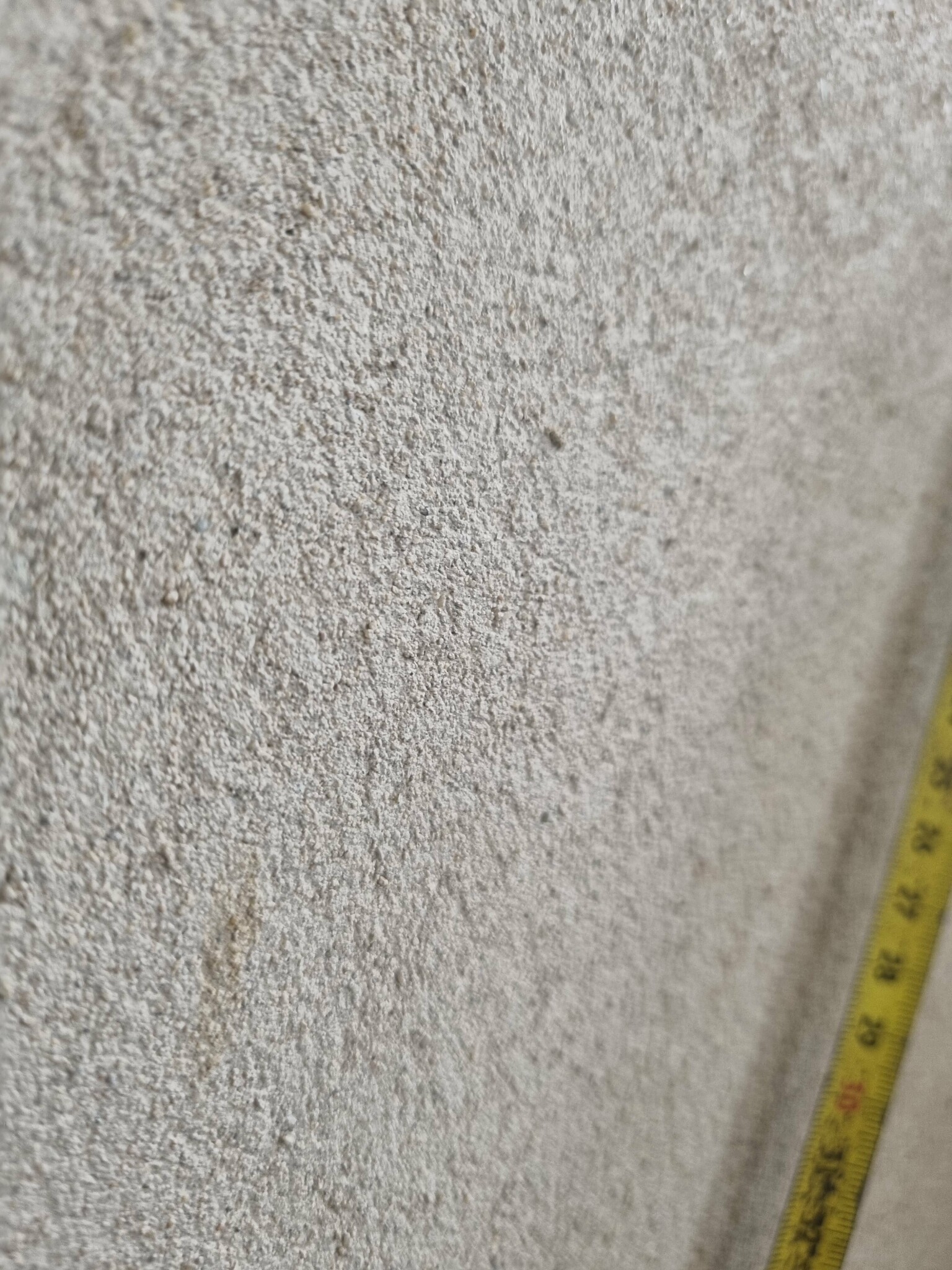
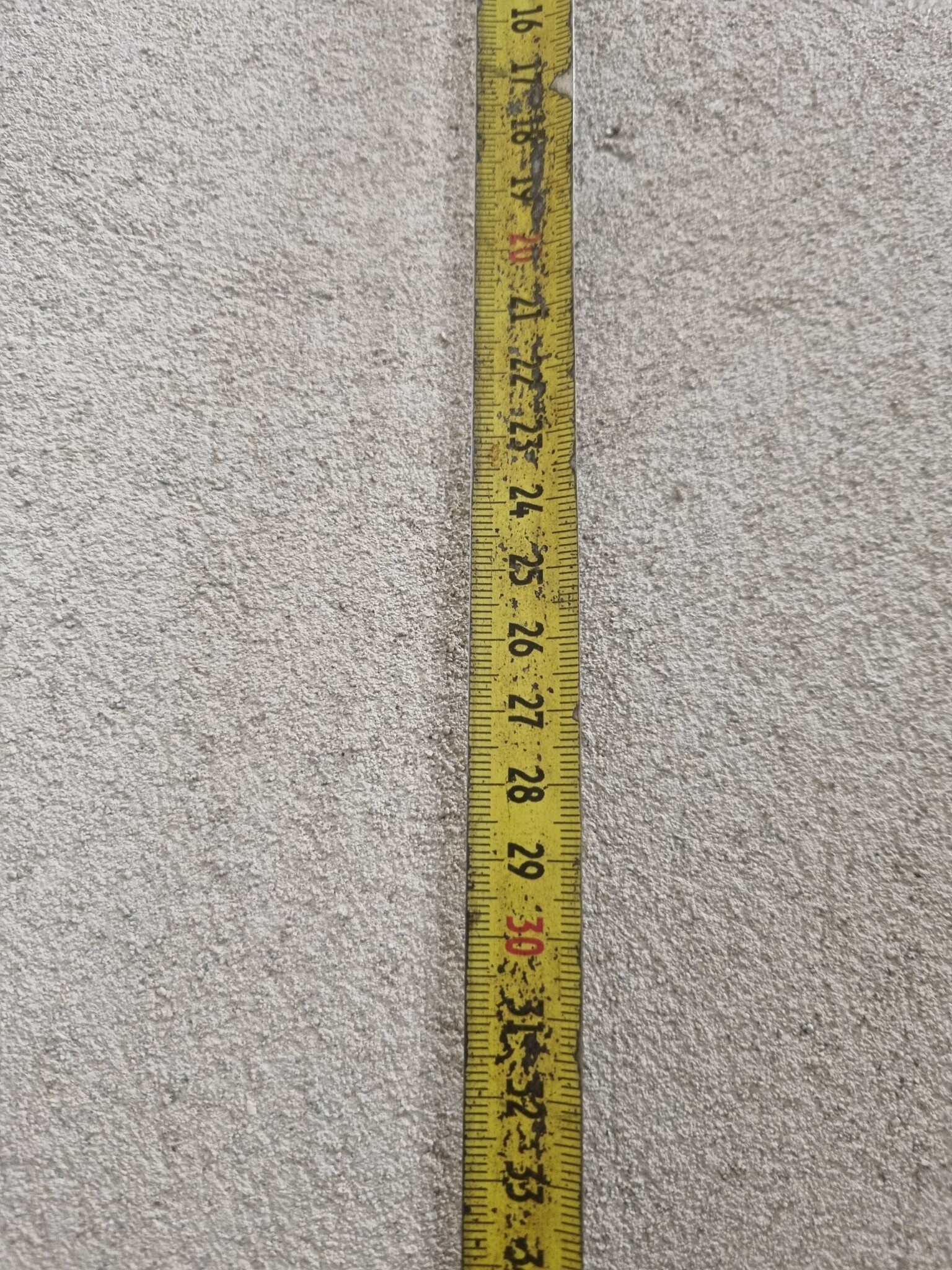
Thanks for your info, I am only using plaster B at the moment. Previously it was foundation AN neo11 said:
Thanks 🙏N neo11 said:
I got a recommendation from a bricklayer to use B
Which made me buy B 🙈😇
The house is from 1942, should movement have done its thing?
What experience do you have with plastering?
Unfortunately, I already bought a lot of B plaster bags and applied it to one room.
I do have a return on 1m left. A more manageable plaster would have been more fun 😁👌
Two rooms left.
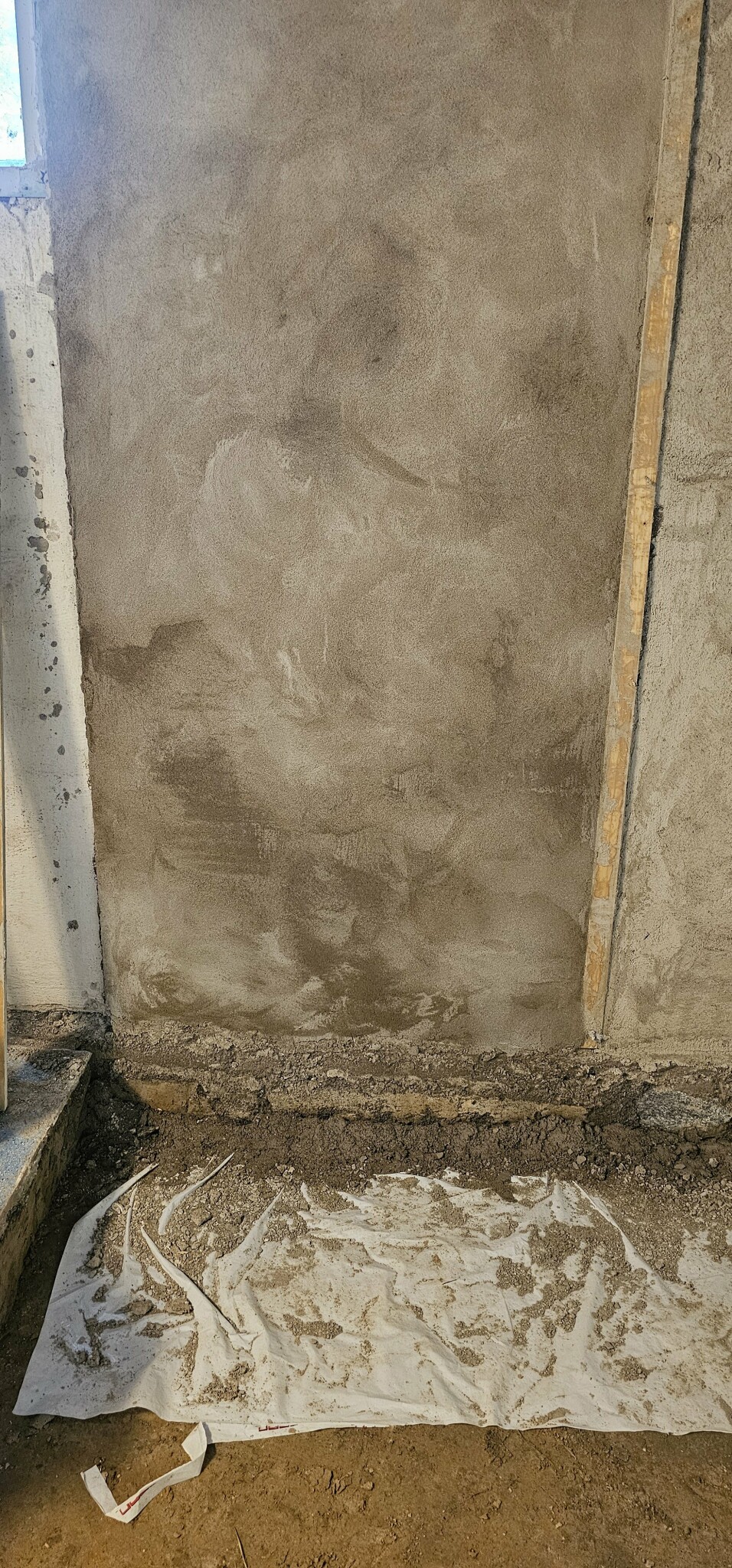
The first room is in progress, see the pictures.
Maybe B is not for beginners to mess with 😅
Can you mix B & C where you have applied base A but haven't fully applied B yet and need to fill up to the battens?
How does C handle moisture vs B?
I think moisture creeps up the walls which are placed against sand and drainage should be okay.
All houses move.
A mortar is usually used outdoors, but it can be used as a base indoors.
B mortar is also a bit hard, but it works.
I would choose c mortar; you can mix b and c if you want.
The hardest mortar must be first, then mortar with less cement.
A to E, where A is like concrete and E is lime mortar without cement.
C and B handle moisture differently because there is more lime in c, and it is used on facades and absorbs moisture better than b.
A and B are more used on plinths to withstand standing water and snow in winter.
The harder a mortar is, the more easily it cracks under movement.
I work with plaster daily since I am a bricklayer.
A mortar is usually used outdoors, but it can be used as a base indoors.
B mortar is also a bit hard, but it works.
I would choose c mortar; you can mix b and c if you want.
The hardest mortar must be first, then mortar with less cement.
A to E, where A is like concrete and E is lime mortar without cement.
C and B handle moisture differently because there is more lime in c, and it is used on facades and absorbs moisture better than b.
A and B are more used on plinths to withstand standing water and snow in winter.
The harder a mortar is, the more easily it cracks under movement.
I work with plaster daily since I am a bricklayer.
Thank you so much for your knowledge, 🙏N neo11 said:All houses move.
A mortar is usually for outdoor use, but you can basically use it indoors.
B mortar is also a bit hard, but works.
I would choose C mortar; you can mix B and C if you want to.
The hardest mortar should be first, then mortar with less cement.
A to E, where A is like concrete and E is lime mortar without cement.
C and B handle moisture differently as there is more lime in C, and you use it on facades as it absorbs moisture better than B.
A and B are more for bases to withstand standing water and snow in winter.
The harder a mortar is, the more easily it cracks with movement.
I work with plaster daily as I am a mason.
I've never done anything like this before, but it's very fun and confusing when you get different suggestions 😅
What do you mean by C absorbing moisture better? Can C handle moisture better?
For the next room, I'll use C 👌
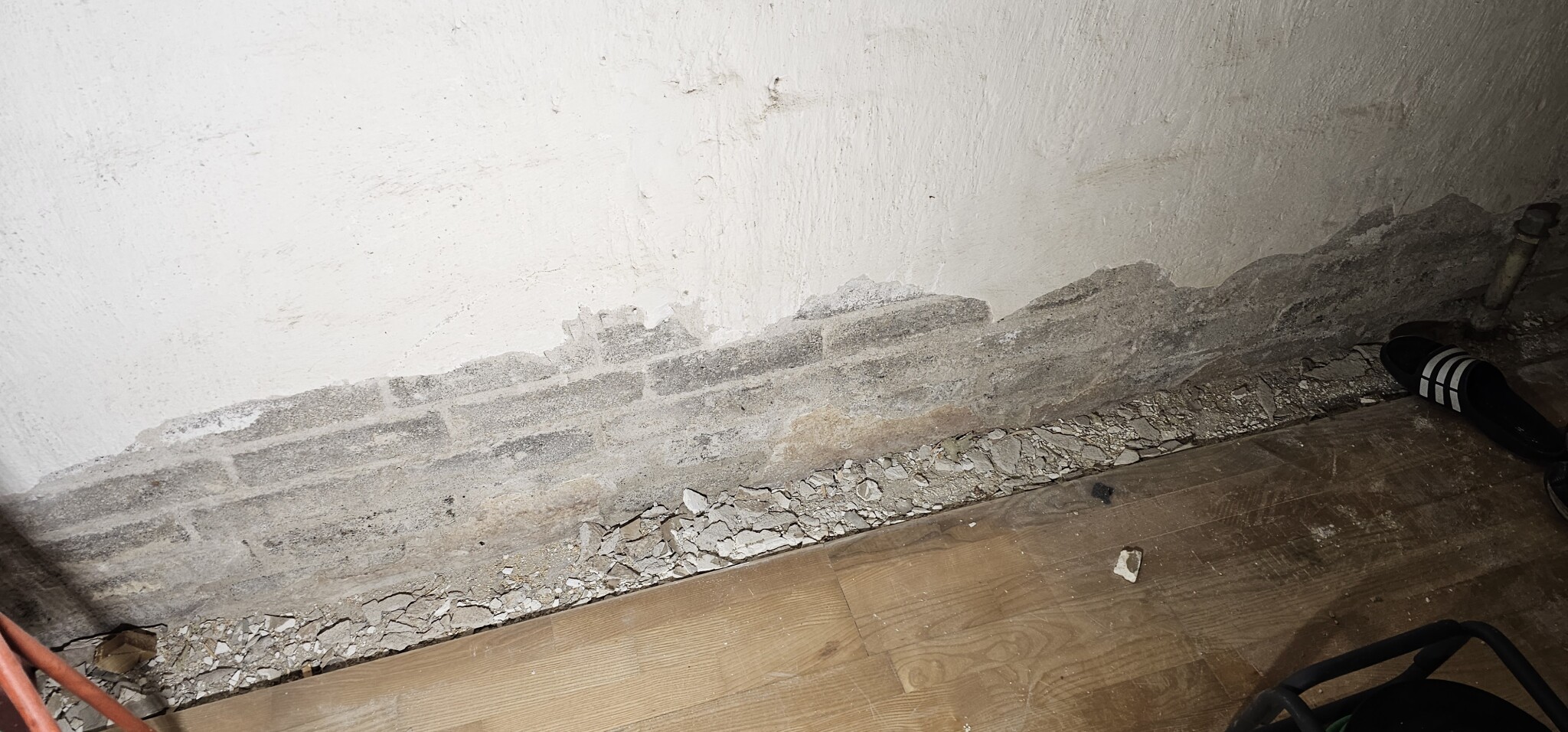
I'm including a picture where I started knocking off the old plaster probably from 1942 because it sounded "hollow" easily scratched. About 30cm.
Previously I had an uninsulated slab but now I'm going to have EPS, so it might be better.
But the wall standing on compact sand/clay will probably absorb moisture as before.
If it cracks when you have B plaster, can you fill it with C to avoid cracking again?
If you apply C plaster, is it easier to repair than B?
The outer walls are concrete hollow brick, and the inner walls are wall tiles + some hard gray brick.
Last edited:
T Tummenmitthand said:Thank you so much for your knowledge, 🙏
I've never done anything like this before, but it's very fun yet confusing when you get different suggestions 😅
For the next room, I'll go with C 👌
I'm attaching a picture where I started chipping away old plaster probably from 1942 because it sounded hollow when lightly scratched. About 30cm. Previously, I had an uninsulated slab but now I'm going to have EPS, so maybe it will be better. But the wall standing on compact sand/clay will probably absorb moisture as before.
If it cracks when using plaster mix B, can you fill in with C to avoid it cracking again?
If you apply C plaster mix, is it easier to repair than B?
The outer walls are made of concrete block and the inner walls are wall tiles + some hard gray brick.
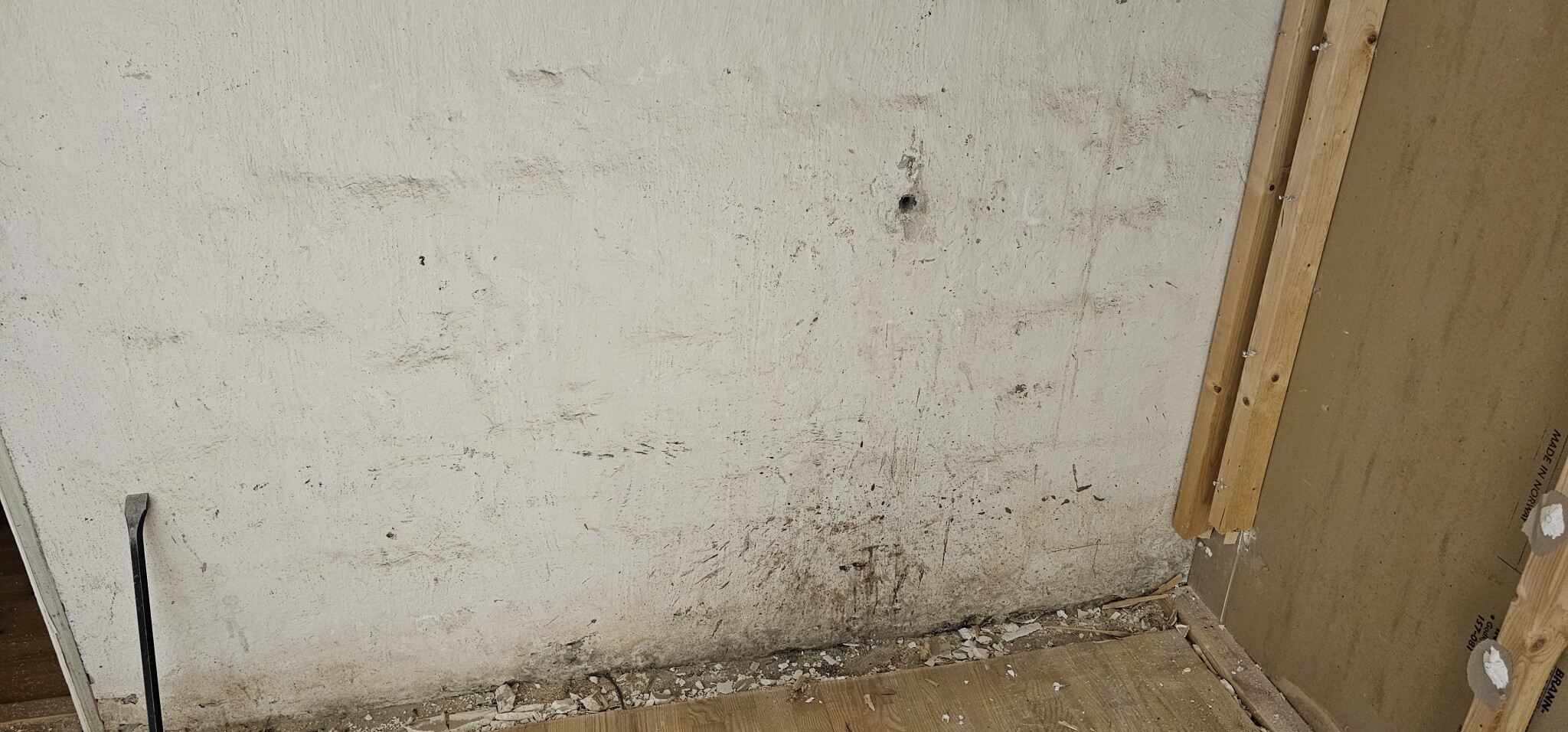
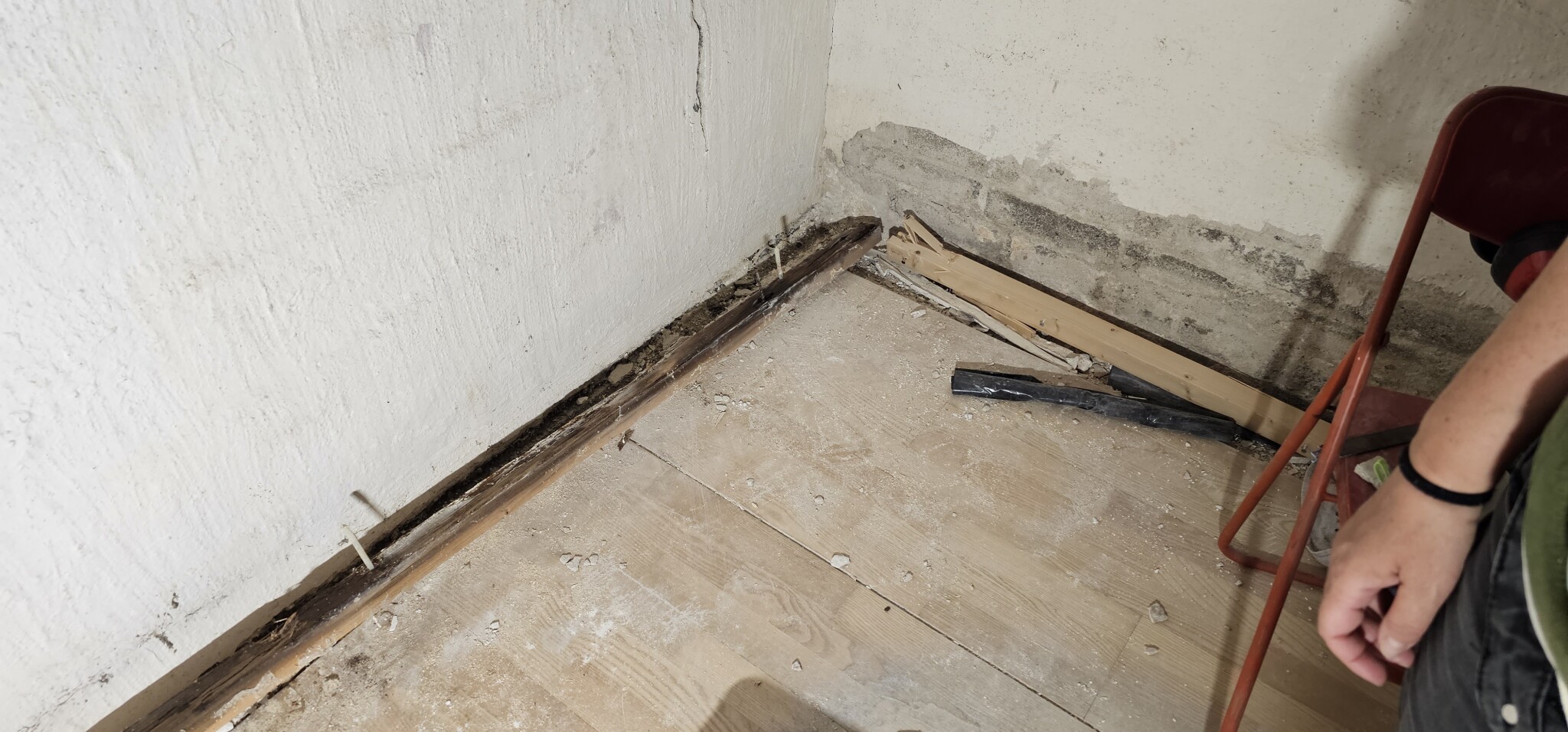

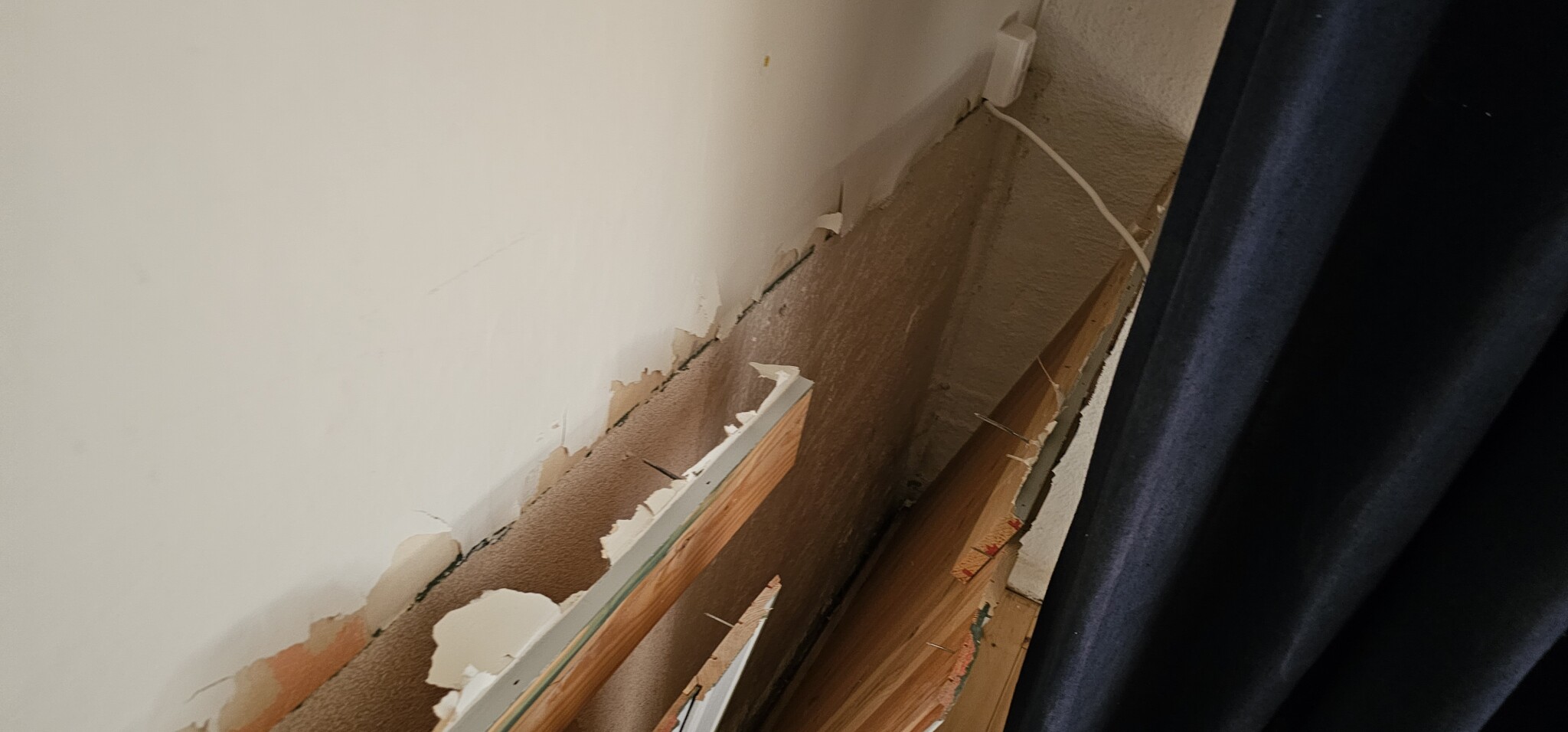
A bit too many questions at once.
Are you going to have EPS cement directly on the sand?
And then what? Dig a little more and lay XPS boards.
However, it's easier with EPS, but what will be on top?
Image 1, if it's not an outer wall, pre-water and apply 3mm C mortar, and slurry upwards.
Image 2 don’t know the question
Image 3 same as image 1/or don’t know the question
Image 4 Looks dry, prime with B mortar.
Scratch and plaster with C mortar. Slurried surface is easiest.
Pre-water a bit, that stone doesn't absorb any water, mainly to bind dust.
Are you going to have EPS cement directly on the sand?
And then what? Dig a little more and lay XPS boards.
However, it's easier with EPS, but what will be on top?
Image 1, if it's not an outer wall, pre-water and apply 3mm C mortar, and slurry upwards.
Image 2 don’t know the question
Image 3 same as image 1/or don’t know the question
Image 4 Looks dry, prime with B mortar.
Scratch and plaster with C mortar. Slurried surface is easiest.
Pre-water a bit, that stone doesn't absorb any water, mainly to bind dust.
Last edited:
Sorry, but thanks for the answers 💪N neo11 said:A few too many questions at once.
Are you going to have EPS cement directly on the sand?
And then what? Dig a bit more and lay XPS boards.
Image 1, if it's not an outer wall, then pre-wet and apply 3mm C mortar, and plaster upwards.
Image 2 don't know the question
Image 3 same as image 1/ or don't know the question
Image 4 Looks dry, prime with B mortar.
Trowel and plaster with C mortar. A plastered surface is easiest.
Pre-wet a bit, that stone doesn't absorb water, mostly to bind dust.
1
What do you mean by saying C absorbs moisture better? Can C handle moisture better?
2
If it cracks when you use B plaster, can you fill it with C to prevent cracking again?
3
If you apply C-plaster, is it easier to repair than B?
The cracks I'm talking about might appear in 6 months or 6 years, or hopefully never. However, plaster does have a tendency to crack, and once the crack appears, everything is nicely finished and painted. And then you just leave it as it is, as it is only aesthetic. Mostly just wanted to give you information.
Thank you very much for your advice, now I have done the plastering and get a more even surface.N neo11 said:
But what causes the darker/lighter areas on the wall?