
52,856 views ·
185 replies
53k views
185 replies
Cross-measure room...not matching yet, then?
It shouldn't have one on the first plane; you use a loose spring there. That way, all other following rows align properly.arneri68 said:The most important thing is that you don't have gaps. If the plane slowly crosses the centerline by 2-3 mm over a stretch of 2-3 meters, I don't think you'll see any gaps.
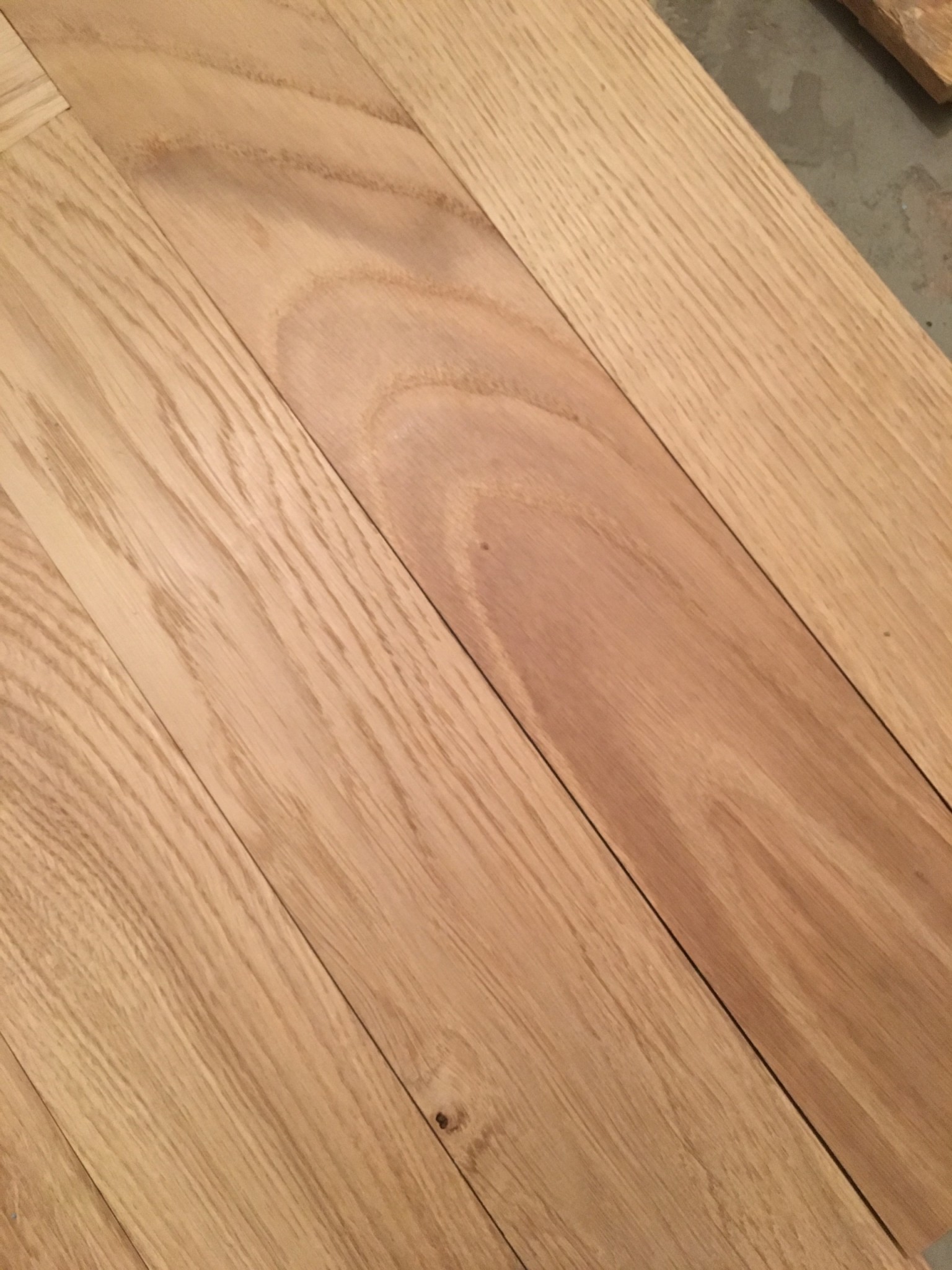
The rods look quite rustic with knots etc. Is that a conscious choice?
I see that your left rod doesn't have a spring in the plane tip. Don't you have left and right rods? See, for example, the installation instructions www.e-pages.dk/junckers/107/fullpdf/1.pdf
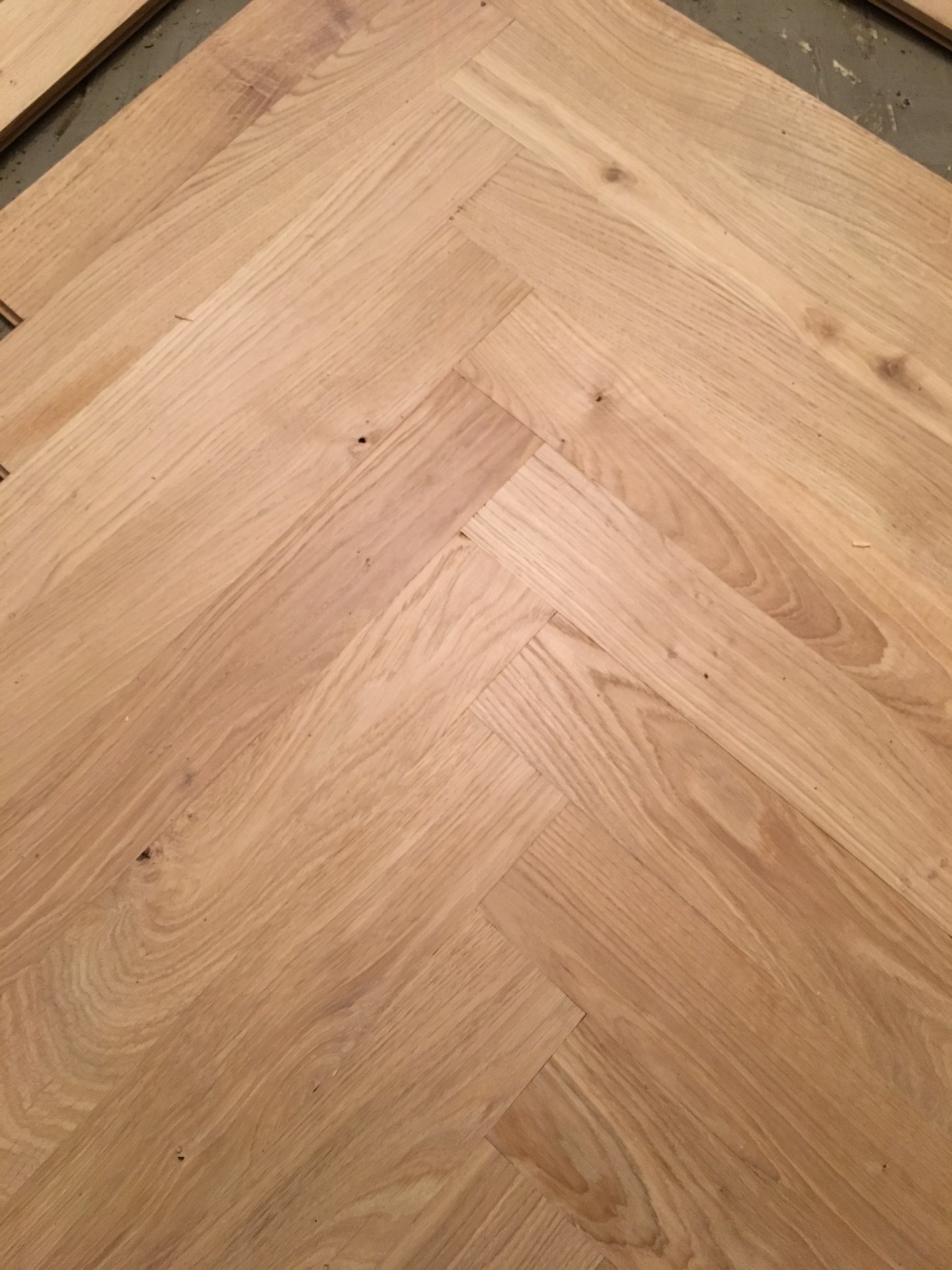
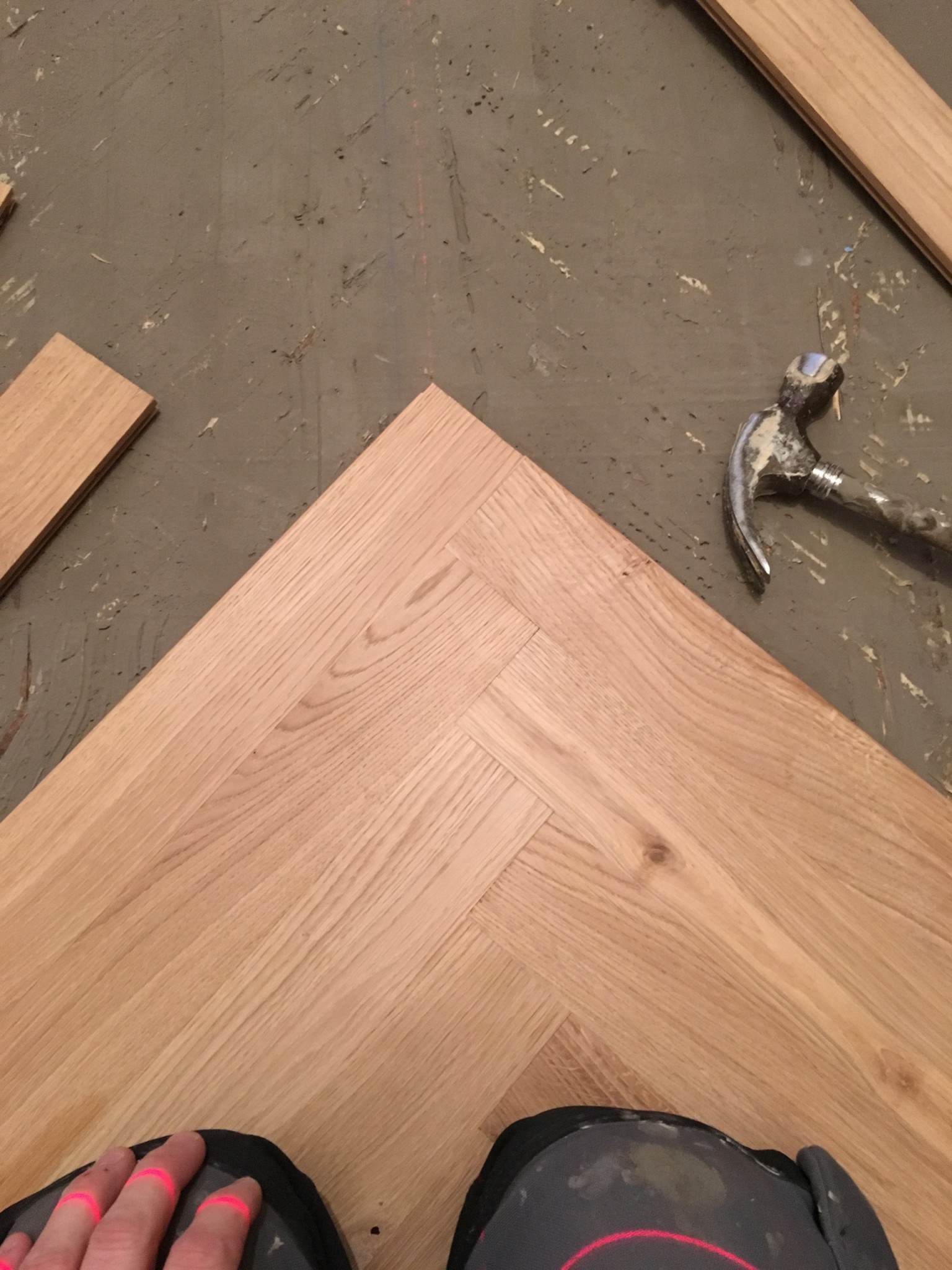
I think it looks good. If it sticks out a few mm over several meters of laying, it doesn't matter as long as it's evenly distributed. Just make sure it hasn't happened on just 4-5 pieces.
It depends on how large pieces are needed. If you need small pieces on one side, you can wait to place them until you've cut another.
It depends on how large pieces are needed. If you need small pieces on one side, you can wait to place them until you've cut another.

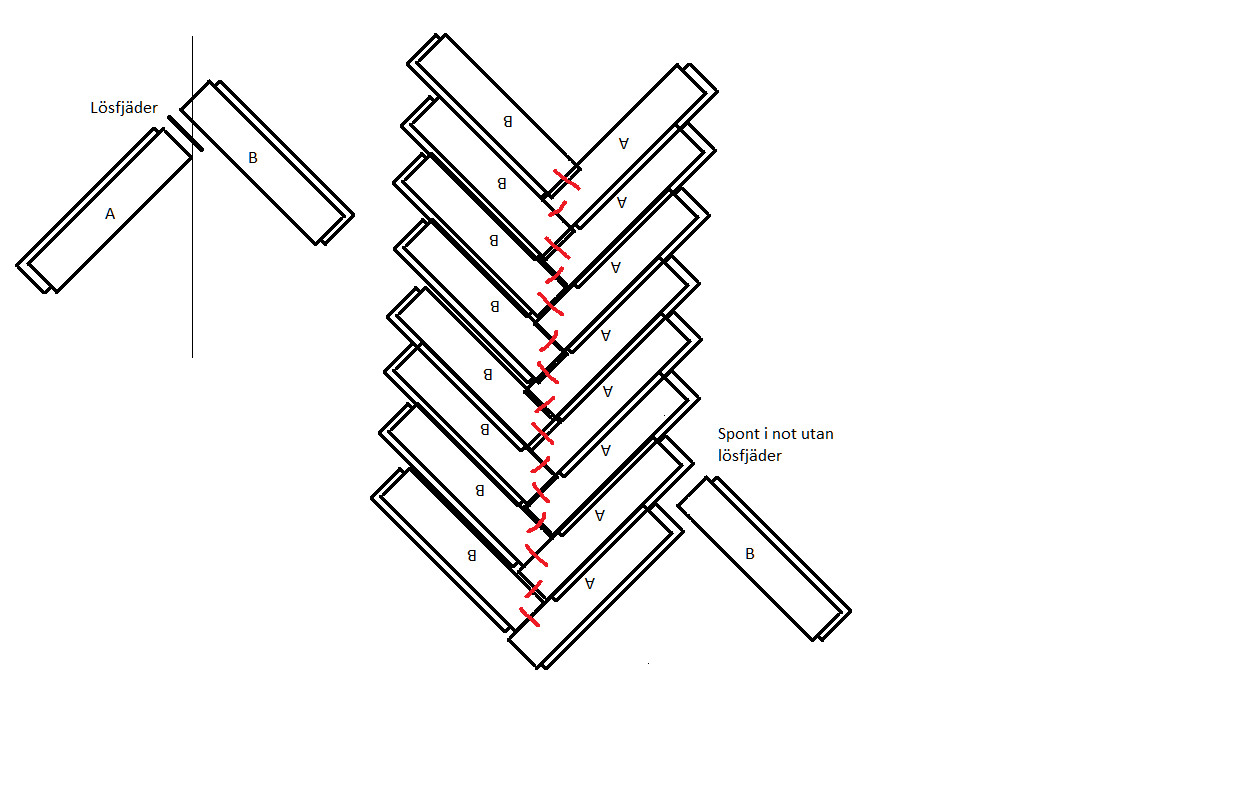
What I mean is that the boards are always laid with the groove facing outward and backward. However, this means that the very first plank doesn't have a groove on the front short side. That's why a loose tongue is used. After the first plank, a loose tongue is no longer needed, as all seams then fit tongue-in-groove.arneri68 said:
But what is the advantage compared to laying the tongue outward and forward?falkn said:What I mean is that the boards are always laid with the tongue facing outward and backward. This means that the first row does not have a tongue on the front short side. Therefore, a loose tongue is used. After the first row, a loose tongue is no longer needed, as all joints become tongue-in-groove.
If you start the opposite way from the beginning, you end up placing the plow from the wrong side and constantly nailing into the note instead of the tongue, which is much more difficult. If you've done it the opposite way on the first plow, you'll need to use a loose feather for the rest of the floor... I can make a sketch later when I'm not on the phone.
Damn..... Starting to mess up again!!!! Same thing as last time. But thankfully not as much, what's the easiest way to cheat it away? Alternatively, find the solution to the problem, why it's not adding up
falkn said:
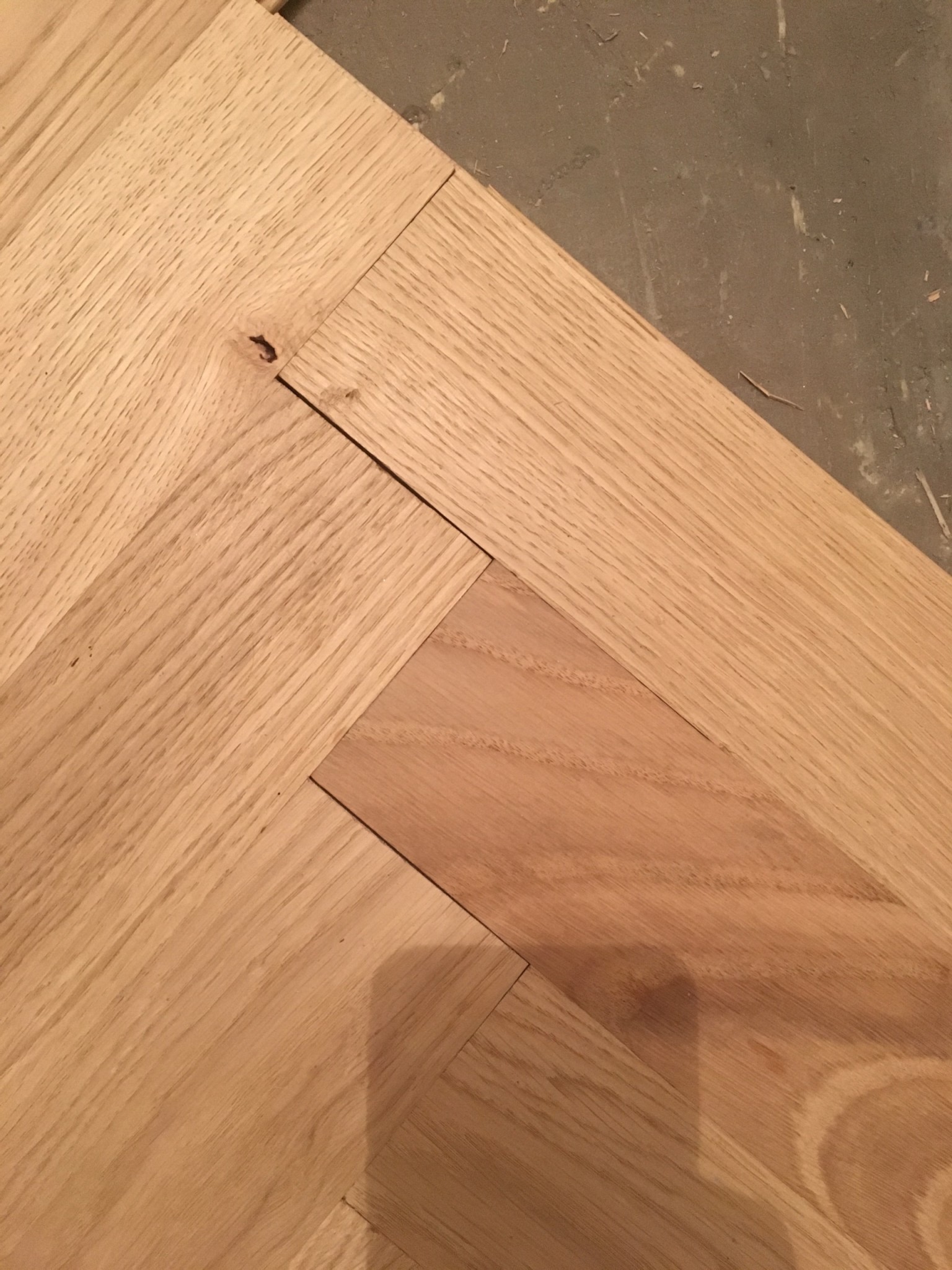
When I do this, the long groove is perfect, but if I try to get the short end together, the long side looks like this:
Short side with a gap on the long
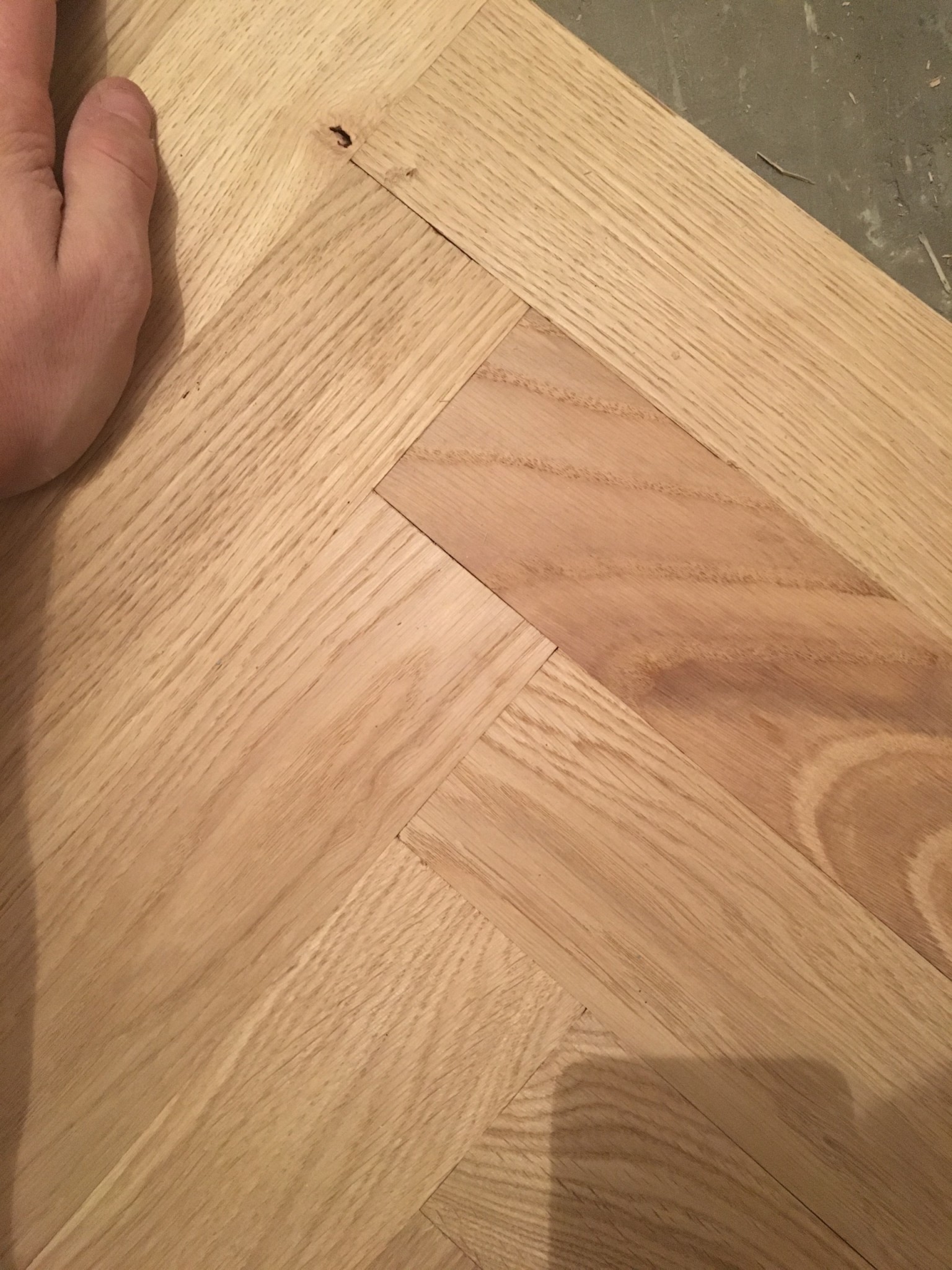
Worth noting, it's not nailed in the picture.
One row left on the other side
 getting there, it was both easy and smooth to lay, seems like everything fits on that side.
You simply have too little space for the piece. If you lay a piece dry a few rows ahead, is the problem everywhere? I have had similar issues and then it has only been a few pieces involved. In that case, you can split the piece you are laying with the plunge saw by half a millimeter so it fits inside. However, it looks like you are not maintaining a perfect 90 degrees, it seems to be a bit under and thereby this occurs.
Now I'm seriously impressed by you! What an eye for measurement, frankly... Crazyfalkn said:You simply don't have enough space for the board. If you dry lay a board by itself a few rows ahead, is the problem everywhere? I've had similar issues and it was only a few pieces that were problematic. In that case, you can split the board you are laying with the plunge saw by about half a mm so it fits inside. However, it looks like you're not holding a perfect 90 degrees, it seems a bit under, and that causes this.
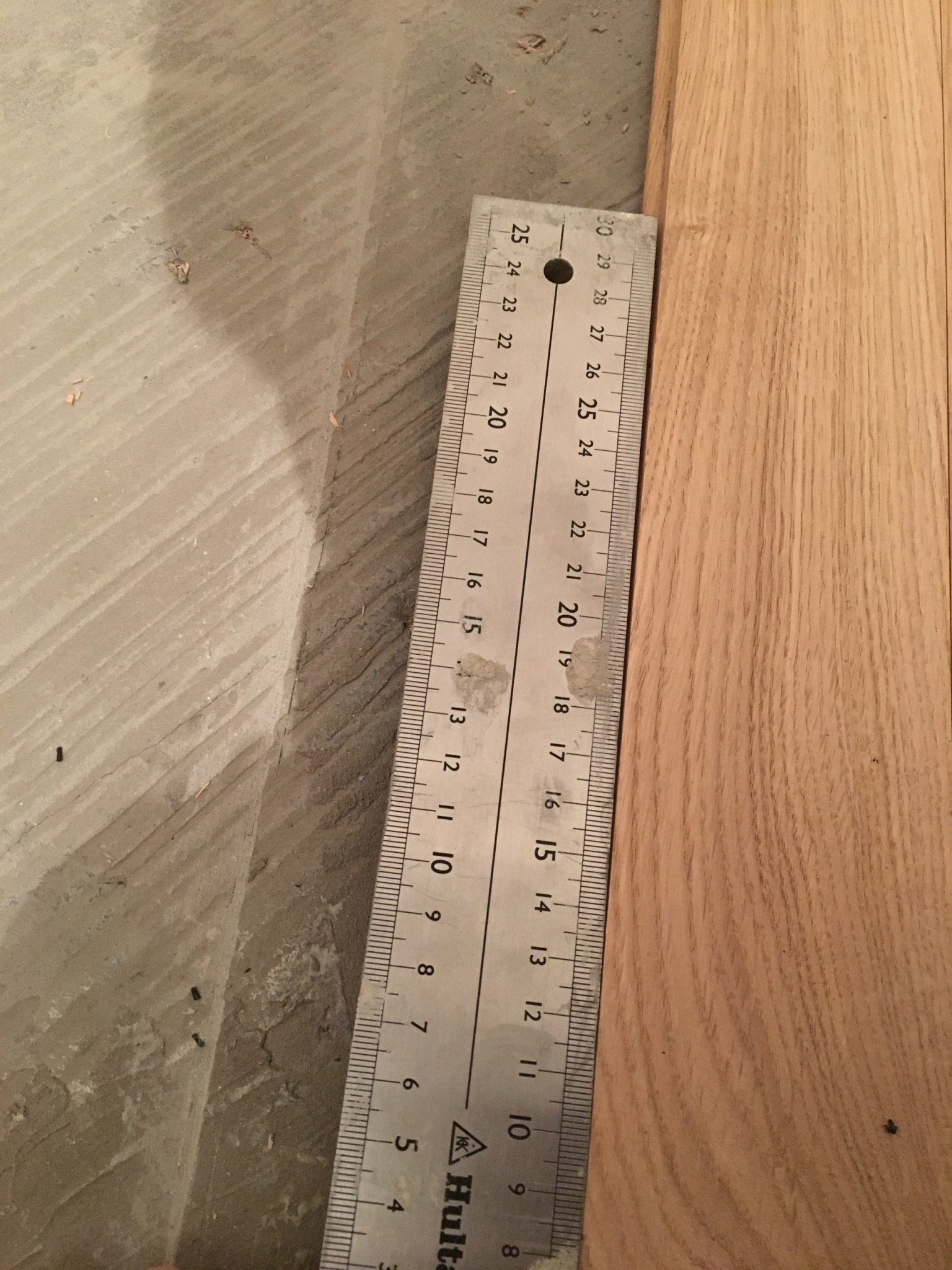
Could that be where the problem lies? I'll test tomorrow, and rip up the few boards that are nailed and make sure the first comes in at 90, it might have shifted a bit when nailing.
No, it seems to work well, tested in 2 places and it became tight and nice.
You mean to shave off a little on the board causing a discrepancy of a few mm, to reduce that?