
4,410 views ·
39 replies
4k views
39 replies
Boiler room to become 3 rooms
Need help with the interior walls now 😊 Have never done anything like this before so apologies for incorrect terms, etc.
1. Should the new walls be placed against the existing ceiling or cut grooves in it and attach to the subceiling? To divide the polystyrene insulation room by room
2. Studs, is it a good idea to use metal studs in the floor, ceiling, and wall and the rest wooden studs? Considering the basement environment. Is anything needed between the studs and concrete walls? How to attach them, for example, I have a tile floor. Is it okay with 70mm studs?
4. Boards, I don't want to use gypsum and want decent sound insulation from the geothermal pump. What type of board would work best? Double boards? Insulation?
1. Should the new walls be placed against the existing ceiling or cut grooves in it and attach to the subceiling? To divide the polystyrene insulation room by room
2. Studs, is it a good idea to use metal studs in the floor, ceiling, and wall and the rest wooden studs? Considering the basement environment. Is anything needed between the studs and concrete walls? How to attach them, for example, I have a tile floor. Is it okay with 70mm studs?
4. Boards, I don't want to use gypsum and want decent sound insulation from the geothermal pump. What type of board would work best? Double boards? Insulation?
Could you show with a picture, like draw. So one understands how it looks? I have a bit of a hard time seeing how it looks now and how you're planning to do it regarding fire risk and interior walls. Which materials should go where, etc.
Let's see, attaching 3 picturesViktor.J said:
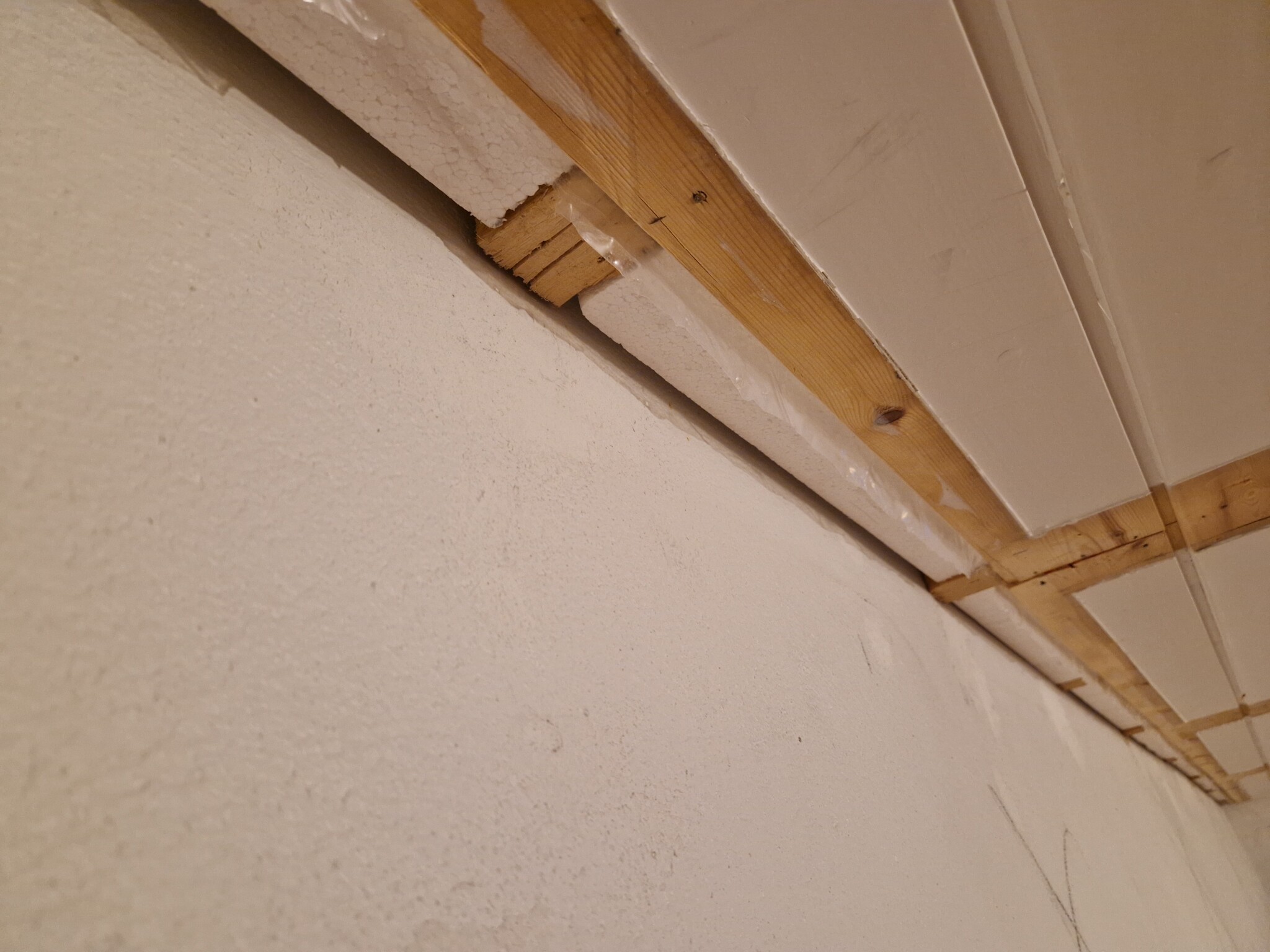
1 Shows how it looks under the existing ceiling, there's polystyrene insulation there, and it's consistent throughout the boiler room
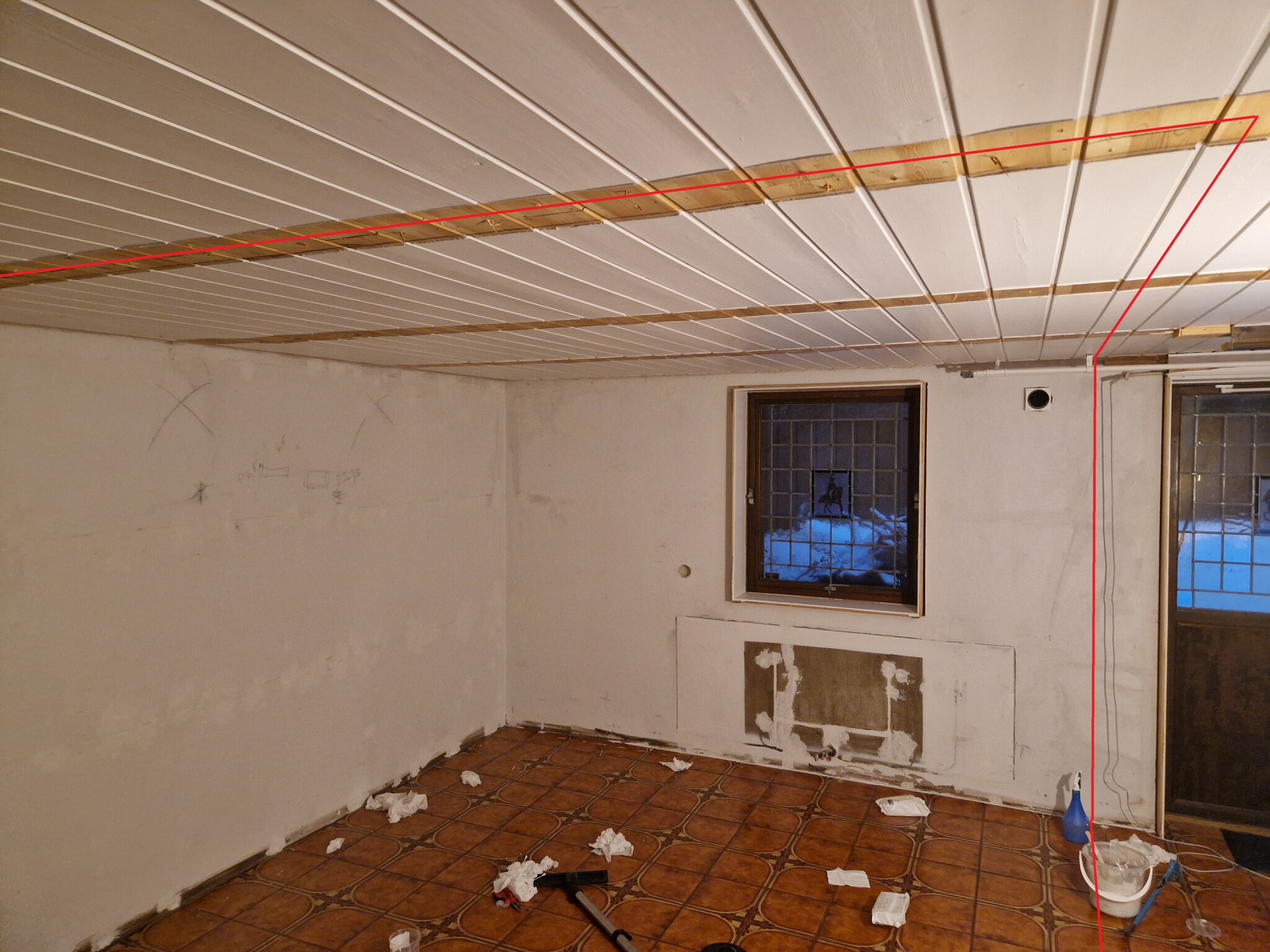
2 Roughly how I imagine where I'll put the ceiling joists etc.
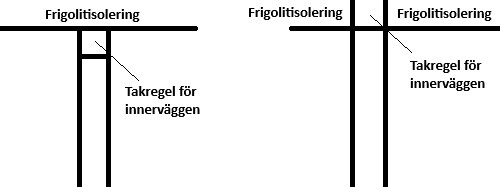
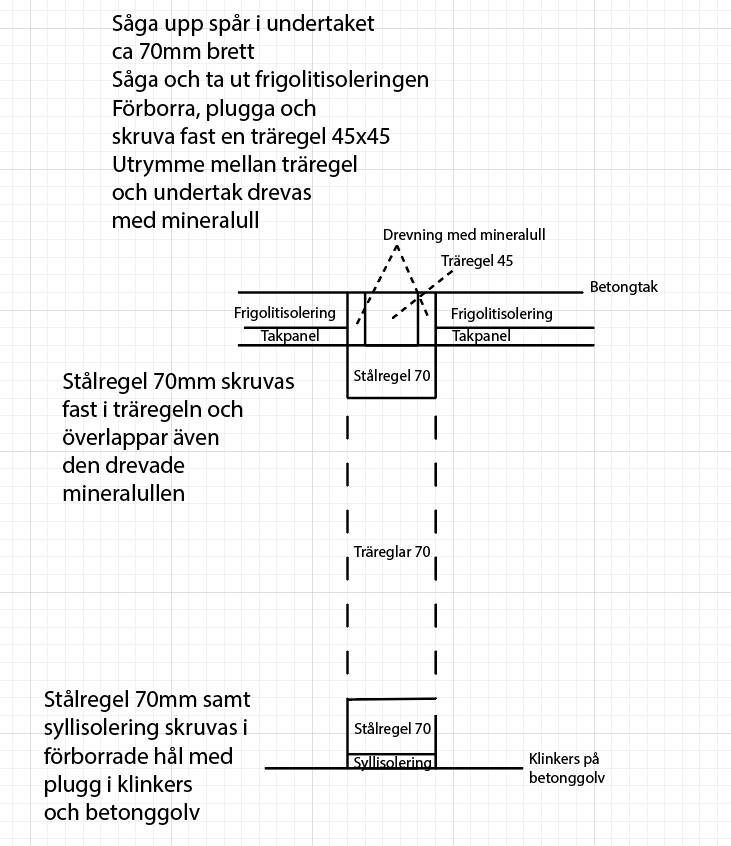
3 Two alternatives for mounting the ceiling joist, the left if I place it on the existing inner ceiling = the polystyrene insulation will then continue between the rooms, or the right if I should cut a groove in the existing inner ceiling and place the ceiling joist so that the polystyrene insulation is divided = the polystyrene is divided into respective rooms
Choice of materials I don't know yet, I'm learning as I go, but I understood that you can use metal studs against ceiling, floor, and exterior walls and then use wooden studs for the rest of the wall structure, and then it becomes a metal stud in the ceiling so if the insulation burns, and I've done according to alternative 2, the fire needs to get past a metal stud = safer
So placing a metal ceiling joist so the polystyrene is divided into respective rooms feels like a safer fire solution, but maybe I'm overthinking
Hi, need help
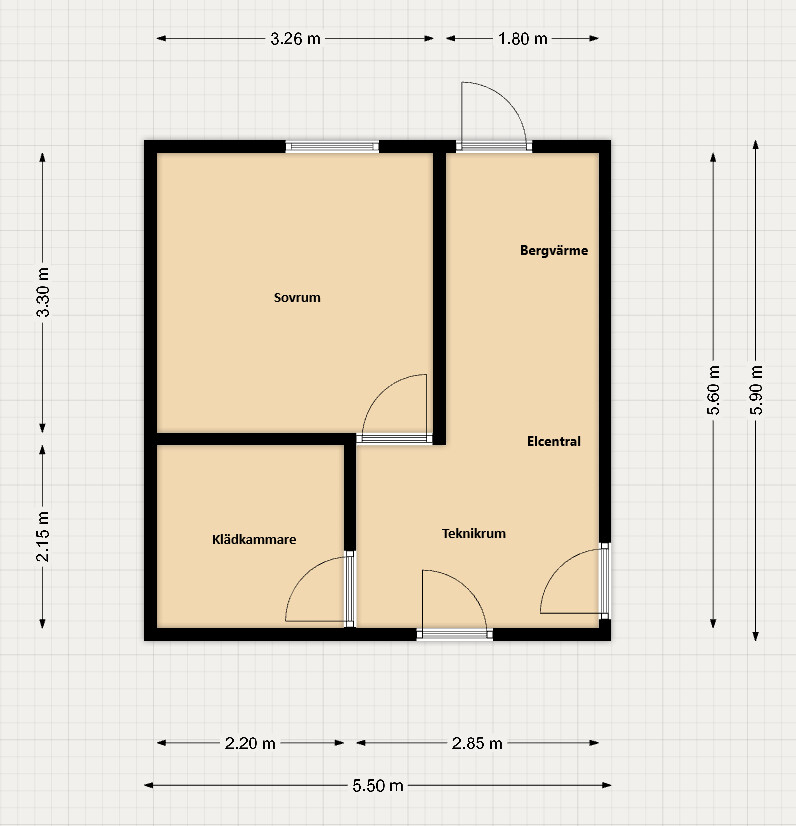
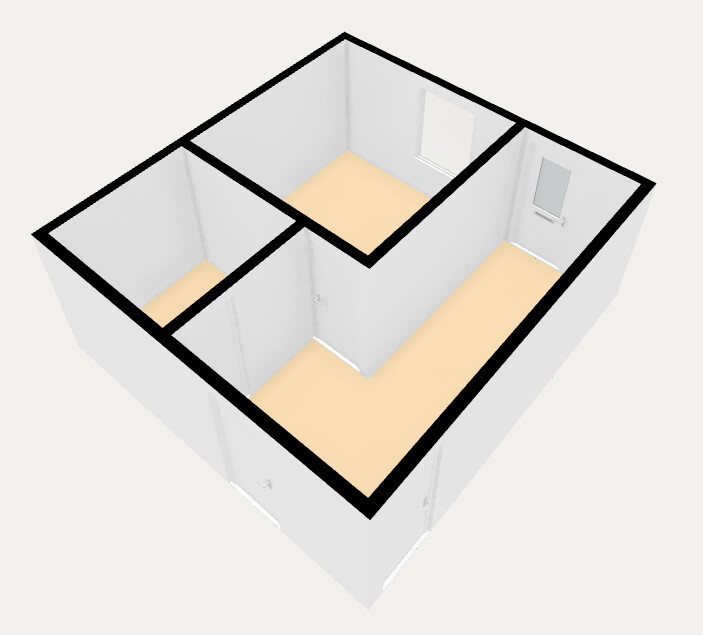
2D and 3D images of the proposed floor plan, not exact to the centimeter but very close. The placement of the walls is determined by items in the proposed technical room, ventilation ducts, sewer pipes, water meters, etc., so the question is if everything can be placed as in the picture or is there something here that is a big no-no?
1 image of a cross-section of how I envision the walls against the ceiling and floor, okay?
Gratefully accepting feedback if I'm thinking correctly before I start.
2D and 3D images of the proposed floor plan, not exact to the centimeter but very close. The placement of the walls is determined by items in the proposed technical room, ventilation ducts, sewer pipes, water meters, etc., so the question is if everything can be placed as in the picture or is there something here that is a big no-no?
1 image of a cross-section of how I envision the walls against the ceiling and floor, okay?
Gratefully accepting feedback if I'm thinking correctly before I start.
Working slowly but surely, taking days off when it also works with the kids, so it will take the time it takes 😊👍
Now I've at least cut a groove in the ceiling, removed about 5cm of extra Styrofoam on each side. The next step is to put short studs with 45 spacers in the gaps, and then I'll caulk with mineral wool on the sides, so there will be about 7cm of mineral wool on each side. If, God forbid, there's a fire, it will provide a better barrier compared to the Styrofoam that was there before.
Feels good to do it this way.
Now I've at least cut a groove in the ceiling, removed about 5cm of extra Styrofoam on each side. The next step is to put short studs with 45 spacers in the gaps, and then I'll caulk with mineral wool on the sides, so there will be about 7cm of mineral wool on each side. If, God forbid, there's a fire, it will provide a better barrier compared to the Styrofoam that was there before.
Feels good to do it this way.
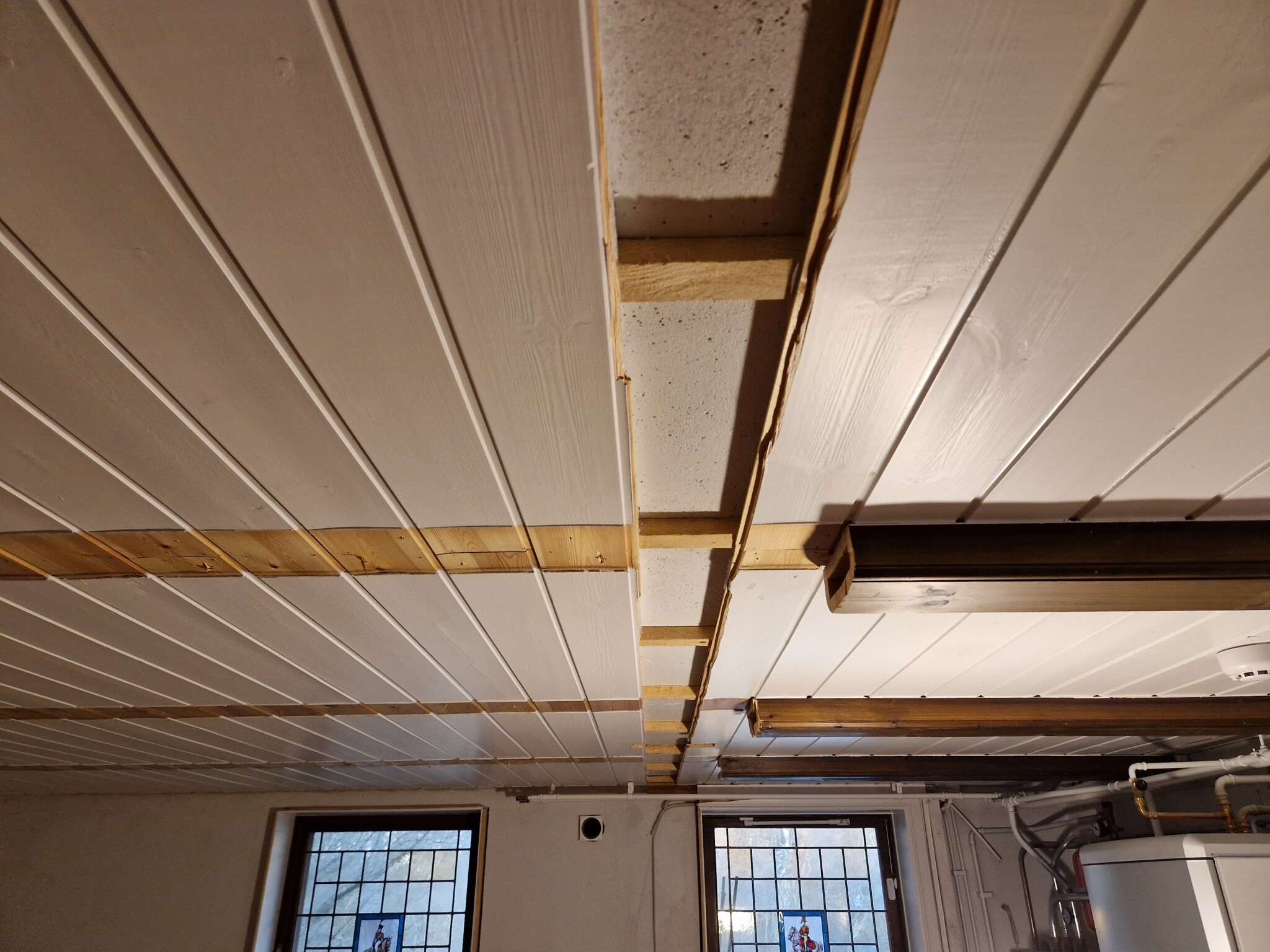
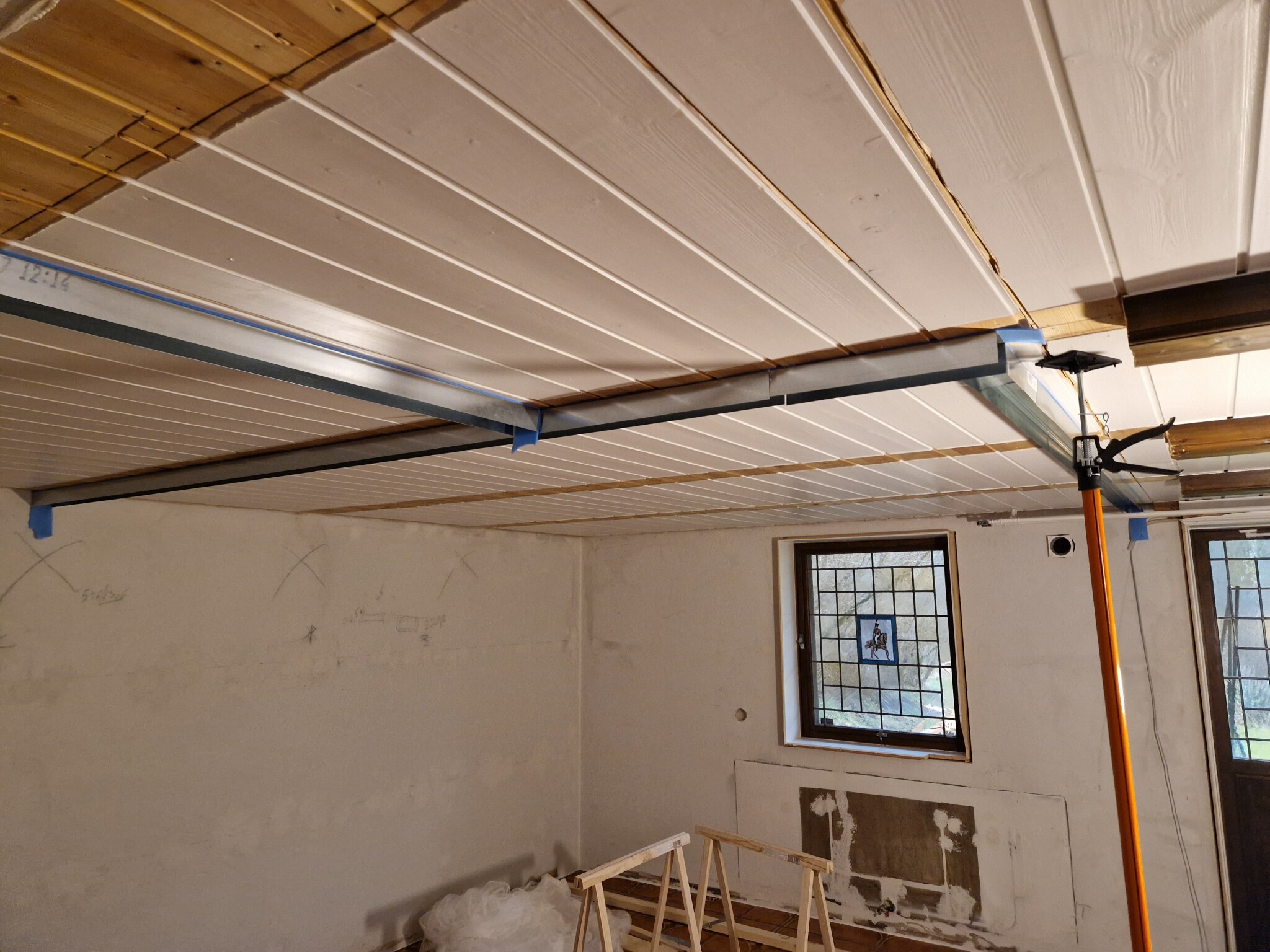
Nailed the noggings and then packed with 20cm mineral wool on each side, then I nailed back the ceiling.
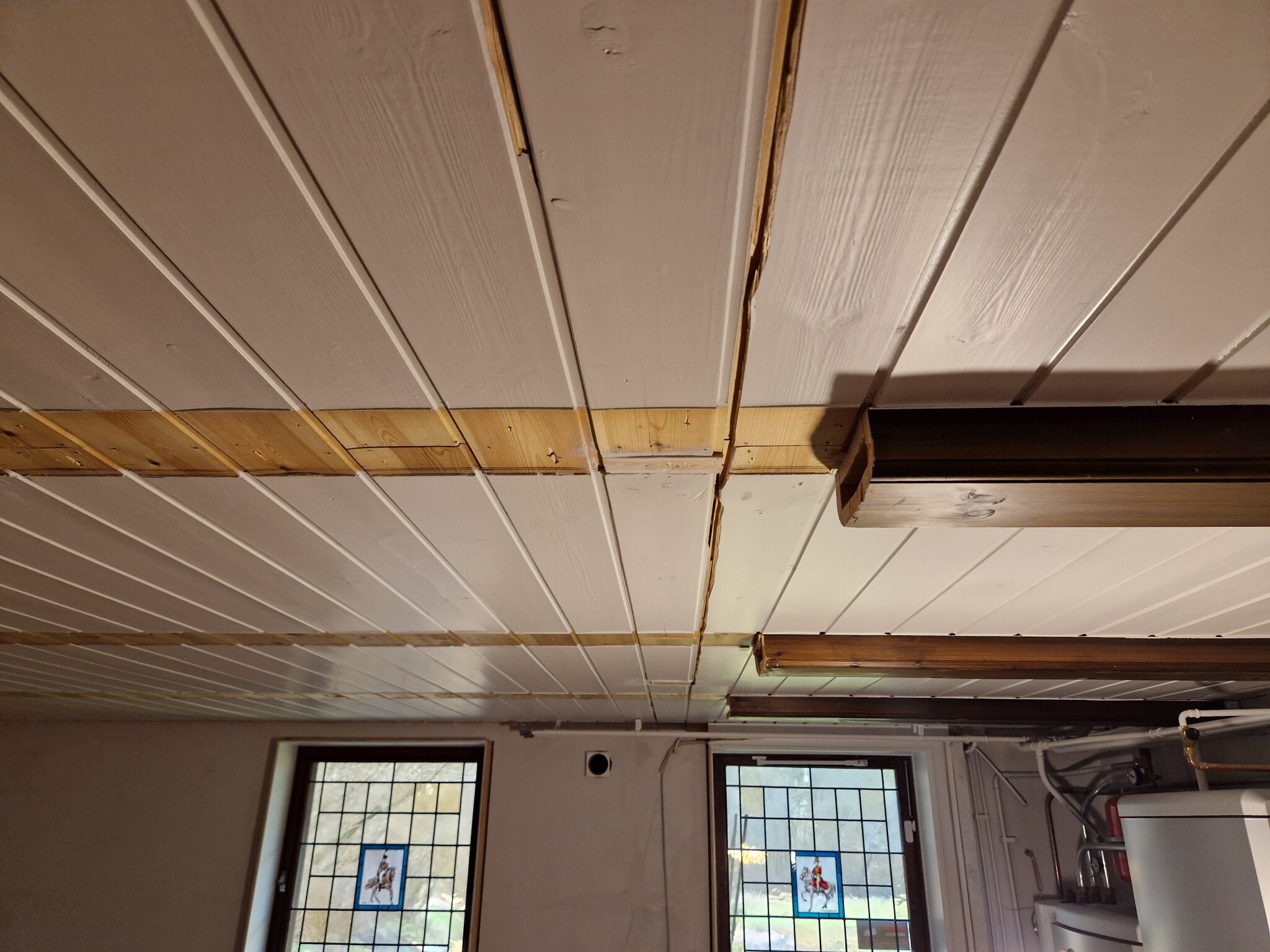
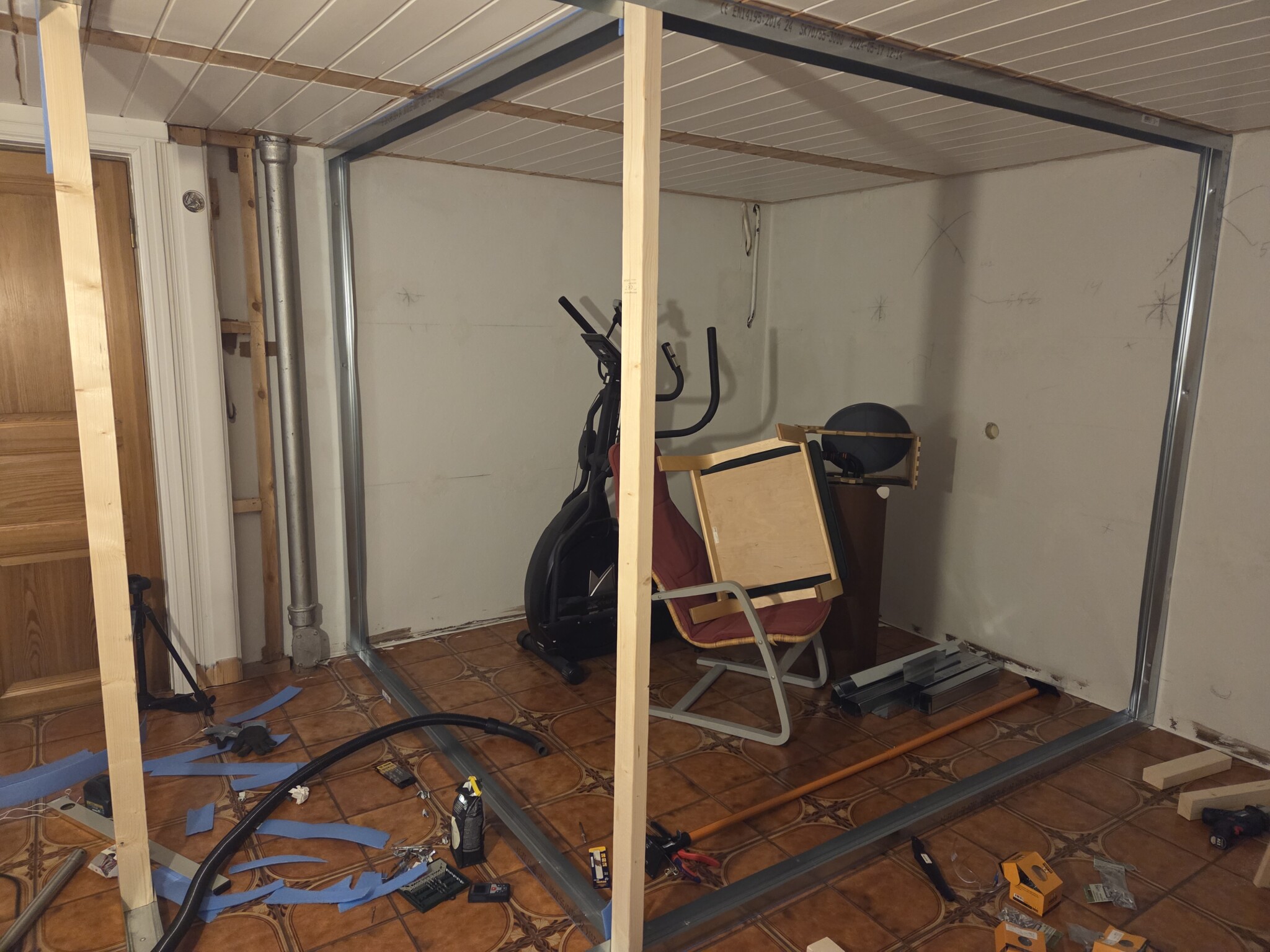
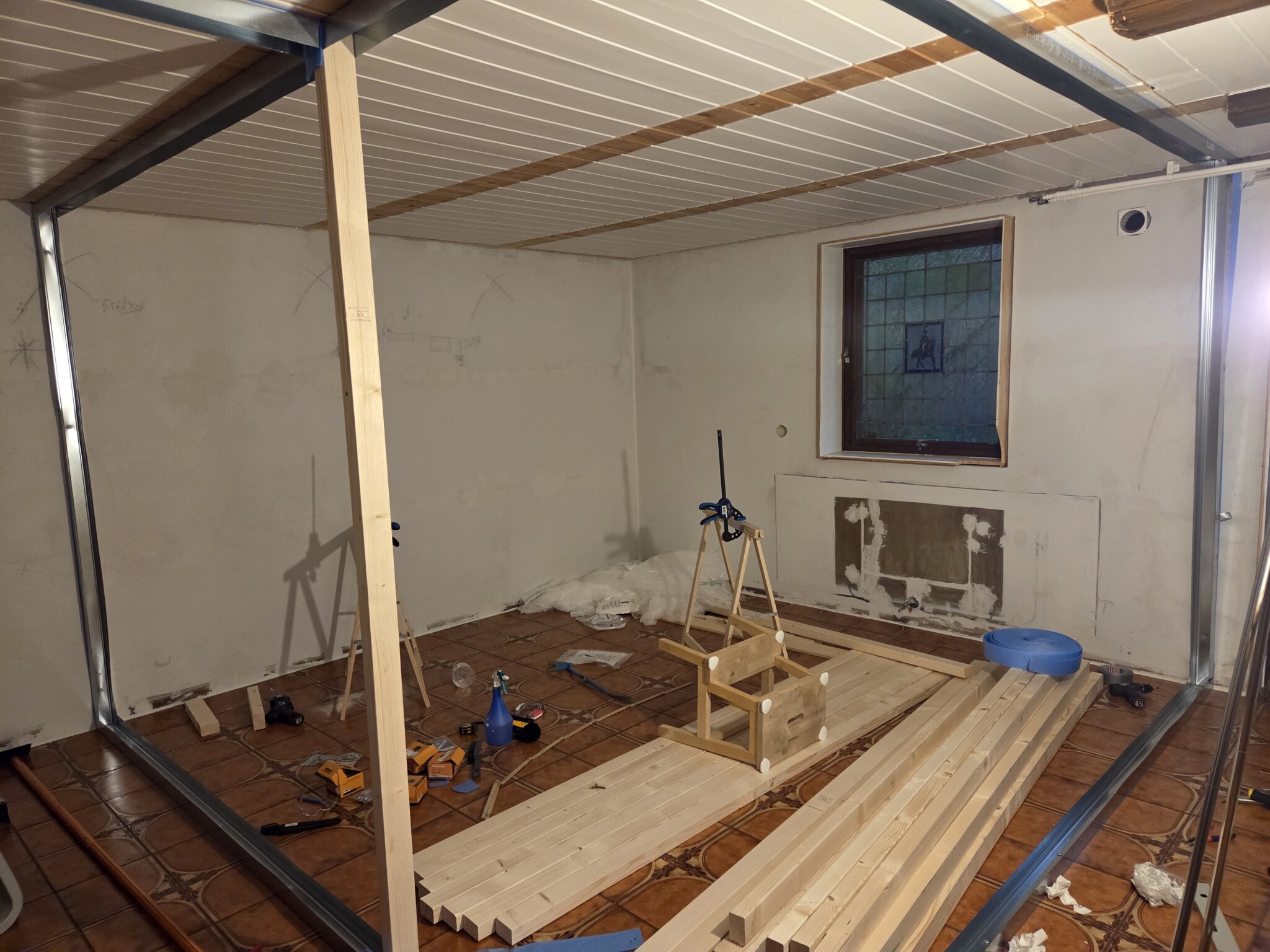
And now I've put up steel tracks in the ceiling 😊
I welcome opinions, criticism, advice so far.
And then I have a question, how do you get the steel tracks in the floor so they end up exactly under?
And now I've put up steel tracks in the ceiling 😊
I welcome opinions, criticism, advice so far.
And then I have a question, how do you get the steel tracks in the floor so they end up exactly under?


Laser or with a plumb
https://www.jula.se/catalog/verktyg-och-maskiner/matinstrument/matverktyg/lod/
https://www.jula.se/catalog/verktyg-och-maskiner/matinstrument/matverktyg/lod/
Click here to reply