
4,409 views ·
39 replies
4k views
39 replies
Boiler room to become 3 rooms
Hello!
I realized I should have taken photos from the start and started a thread about this. But I'm starting now. I already have a lot of questions and would gratefully accept tips and advice as well. 😊
Project:
Convert a boiler room into a bedroom, walk-in closet, and leave space for the geothermal heat pump.
Conditions:
- Old boiler room of 30 sqm, 6x5m. Currently, only the geothermal heat pump is in the space. There's unnecessarily a lot of free space that can be turned into something nice instead 😊
- Basement floor of a split-level house, so nearly a basement environment with about 75% of the far wall from the door below ground level. The sloping ground outside goes from mostly below ground on the left to nearly above ground on the right.
- The walls are framed, which was noted during the inspection when the house was purchased, including possibly a slight mold smell in one corner.
- Installed electrical and waterborne convector
It will become a bedroom for one of the children, so there can't be the slightest risk of mold behind. But I also understand that framed walls are very wrong.
I will return with photos and what has been done so far.
I realized I should have taken photos from the start and started a thread about this. But I'm starting now. I already have a lot of questions and would gratefully accept tips and advice as well. 😊
Project:
Convert a boiler room into a bedroom, walk-in closet, and leave space for the geothermal heat pump.
Conditions:
- Old boiler room of 30 sqm, 6x5m. Currently, only the geothermal heat pump is in the space. There's unnecessarily a lot of free space that can be turned into something nice instead 😊
- Basement floor of a split-level house, so nearly a basement environment with about 75% of the far wall from the door below ground level. The sloping ground outside goes from mostly below ground on the left to nearly above ground on the right.
- The walls are framed, which was noted during the inspection when the house was purchased, including possibly a slight mold smell in one corner.
- Installed electrical and waterborne convector
It will become a bedroom for one of the children, so there can't be the slightest risk of mold behind. But I also understand that framed walls are very wrong.
I will return with photos and what has been done so far.
Addition
- The room is dry and fine but I don't know what's hidden behind the wooden-framed walls
- I believe wooden-framed walls are incorrect since it's probably done the old way and it's below ground
- Also, I'm a novice at this, I've never done such a big job myself before, so much will be new with the risk of misjudgment
- The room is dry and fine but I don't know what's hidden behind the wooden-framed walls
- I believe wooden-framed walls are incorrect since it's probably done the old way and it's below ground
- Also, I'm a novice at this, I've never done such a big job myself before, so much will be new with the risk of misjudgment

The big question is how the moisture movement is within the construction, e.g., drainage and what is under the floor? And how old is the house? In the past, basements were built with the intention of being just basements. A bit cooler and more humid, but perhaps not something to fill with organic material and spend time in. That being said, it doesn't mean there are no solutions if that is the case...
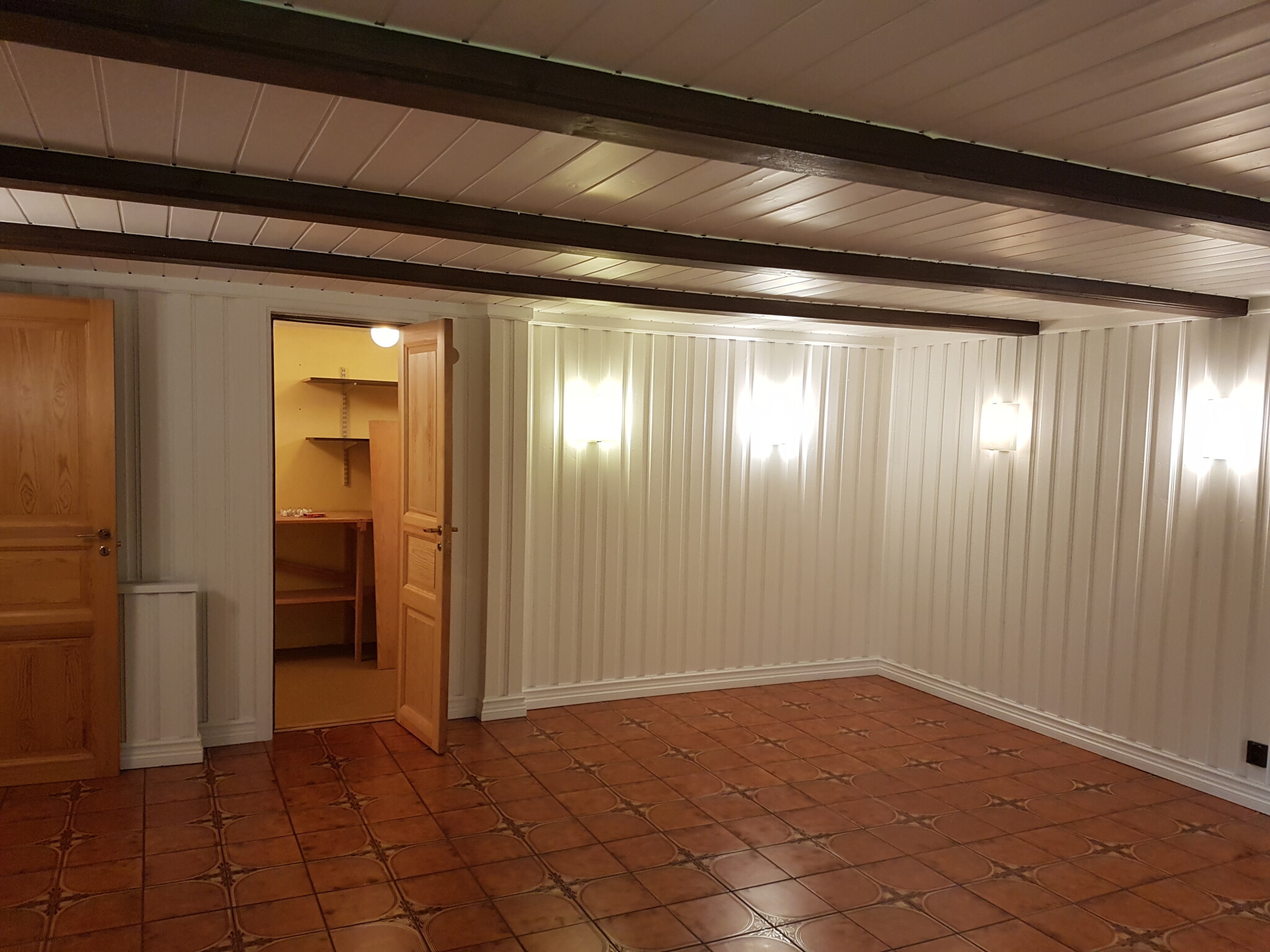
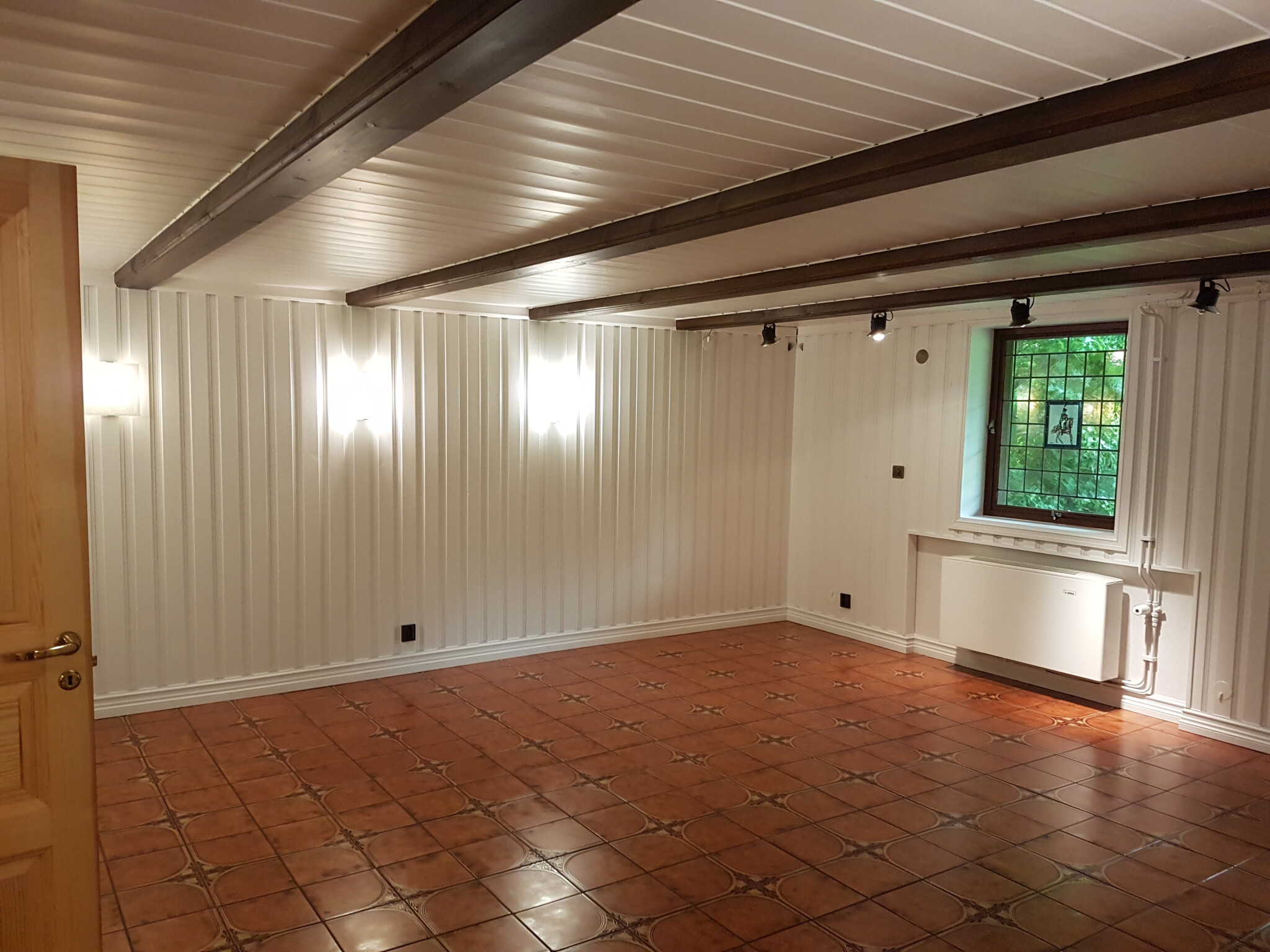
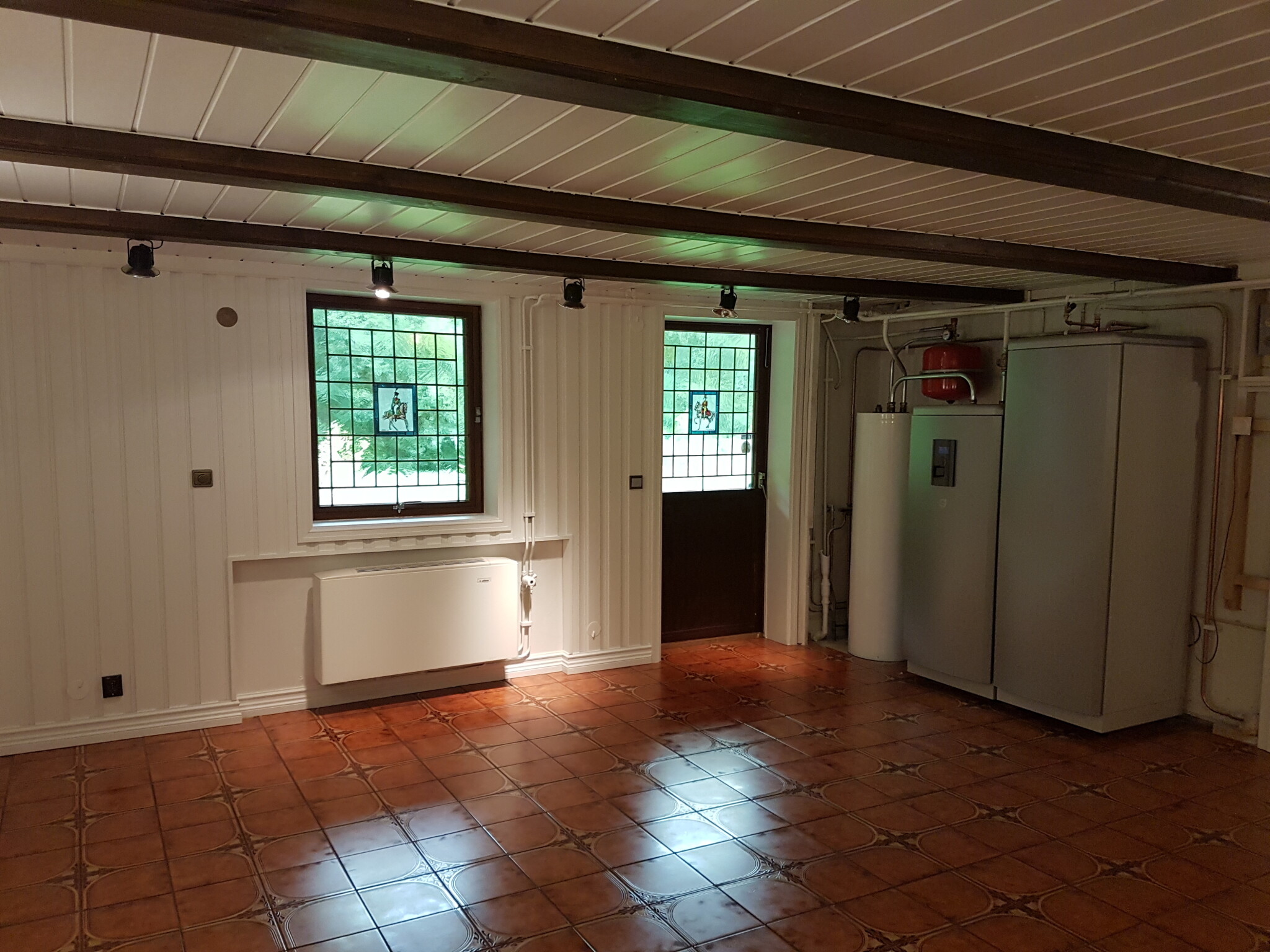
I have an initial question, after taking down the studded walls (more photos and info will come but started documenting today, here's where I am now), everything is gone and it's now a clean concrete wall left, but I still have the beam at the top, it's wedged by the ceiling (which I want to keep) and I can't reach it with a crowbar to get it loose no matter what I do without damaging the ceiling.
I have two options, either try to remove nail by nail until it falls down or let it stay, cut the construction plastic and use it as a ceiling trim, e.g. paint or nail a suitable trim on top to cover.
Need some advice, is it possible to make a 4.5x4.5 beam work as a ceiling trim?
I have two options, either try to remove nail by nail until it falls down or let it stay, cut the construction plastic and use it as a ceiling trim, e.g. paint or nail a suitable trim on top to cover.
Need some advice, is it possible to make a 4.5x4.5 beam work as a ceiling trim?
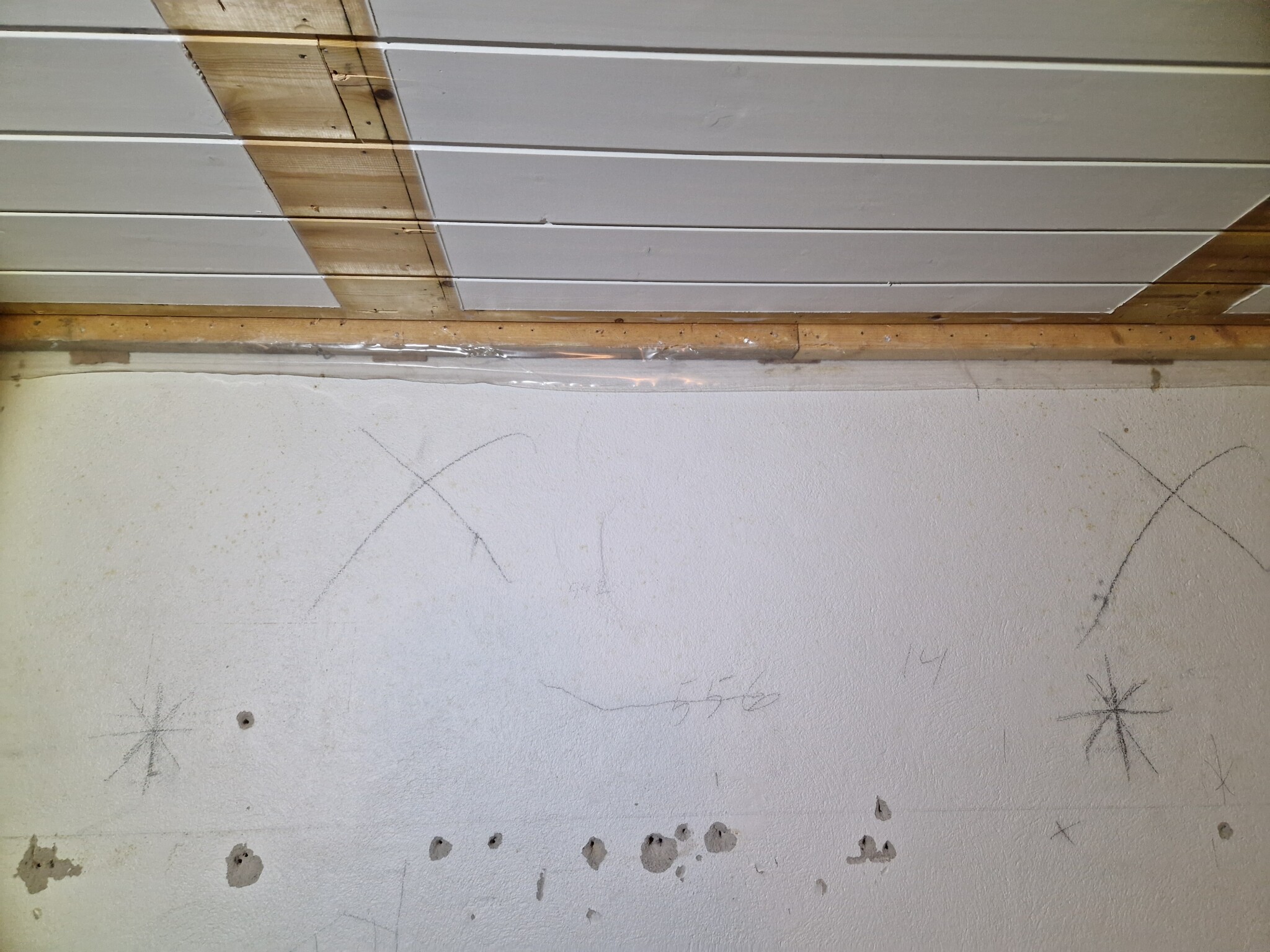
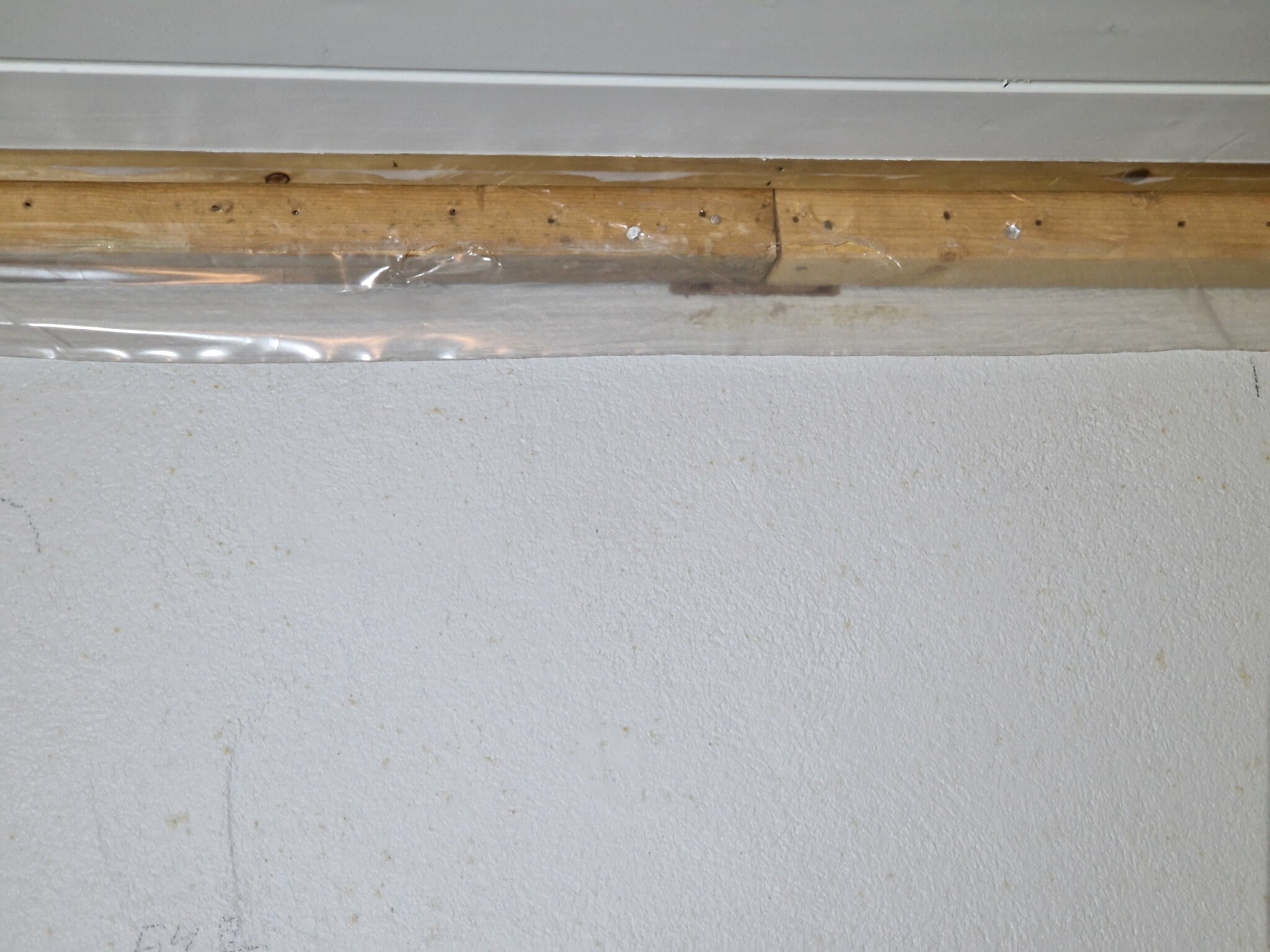
Unfortunately, I can't access it to see. The plastic is between the raised walls and the studs, so what is visible in the picture is the last bit remaining.Centano said:
I also can't say for sure that it's a 45 stud; it could very well be wider and extend upwards.
Could the stud be related to the ceiling? I mean that it might be part of the framework for both the ceiling and the wall.
It's above ground and dry, so I don't think it necessarily needs to be removed. I plan to install a ceiling molding there later anyway.
As I said, I don't want to damage the ceiling since I want to keep it.
Started taking photos late, so here's a description of what happened:
The electrician and plumber removed the electricity and convector, respectively.
With the help of a crowbar, I then took down the false beams in the ceiling.
After that, I went to work on the walls once again with a crowbar, a wonderful tool, which turned out to be insulated with mineral wool and construction plastic.
The framework did have a gap against the concrete wall using 1mm plyfa pieces, but they weren't pleasant, to say the least.
Nails came out along with concrete here and there, but eventually, I got all the studs out, leaving a bare concrete wall.
It looked a bit dull in some places, especially the corners, but overall it looked fine.
Then let the walls breathe for a month.
The electrician and plumber removed the electricity and convector, respectively.
With the help of a crowbar, I then took down the false beams in the ceiling.
After that, I went to work on the walls once again with a crowbar, a wonderful tool, which turned out to be insulated with mineral wool and construction plastic.
The framework did have a gap against the concrete wall using 1mm plyfa pieces, but they weren't pleasant, to say the least.
Nails came out along with concrete here and there, but eventually, I got all the studs out, leaving a bare concrete wall.
It looked a bit dull in some places, especially the corners, but overall it looked fine.
Then let the walls breathe for a month.
Last edited by a moderator:
Then I continued yesterday by taking down the rest of the walls
Ended up with 6 garbage bags of insulation, 3 with mixed debris, and a substantial pile of boards on the property that will be dealt with in the spring
Yesterday's question about the remaining board I took off today nail by nail
Attached pictures show how it now looks after cleaning
Ended up with 6 garbage bags of insulation, 3 with mixed debris, and a substantial pile of boards on the property that will be dealt with in the spring
Yesterday's question about the remaining board I took off today nail by nail
Attached pictures show how it now looks after cleaning
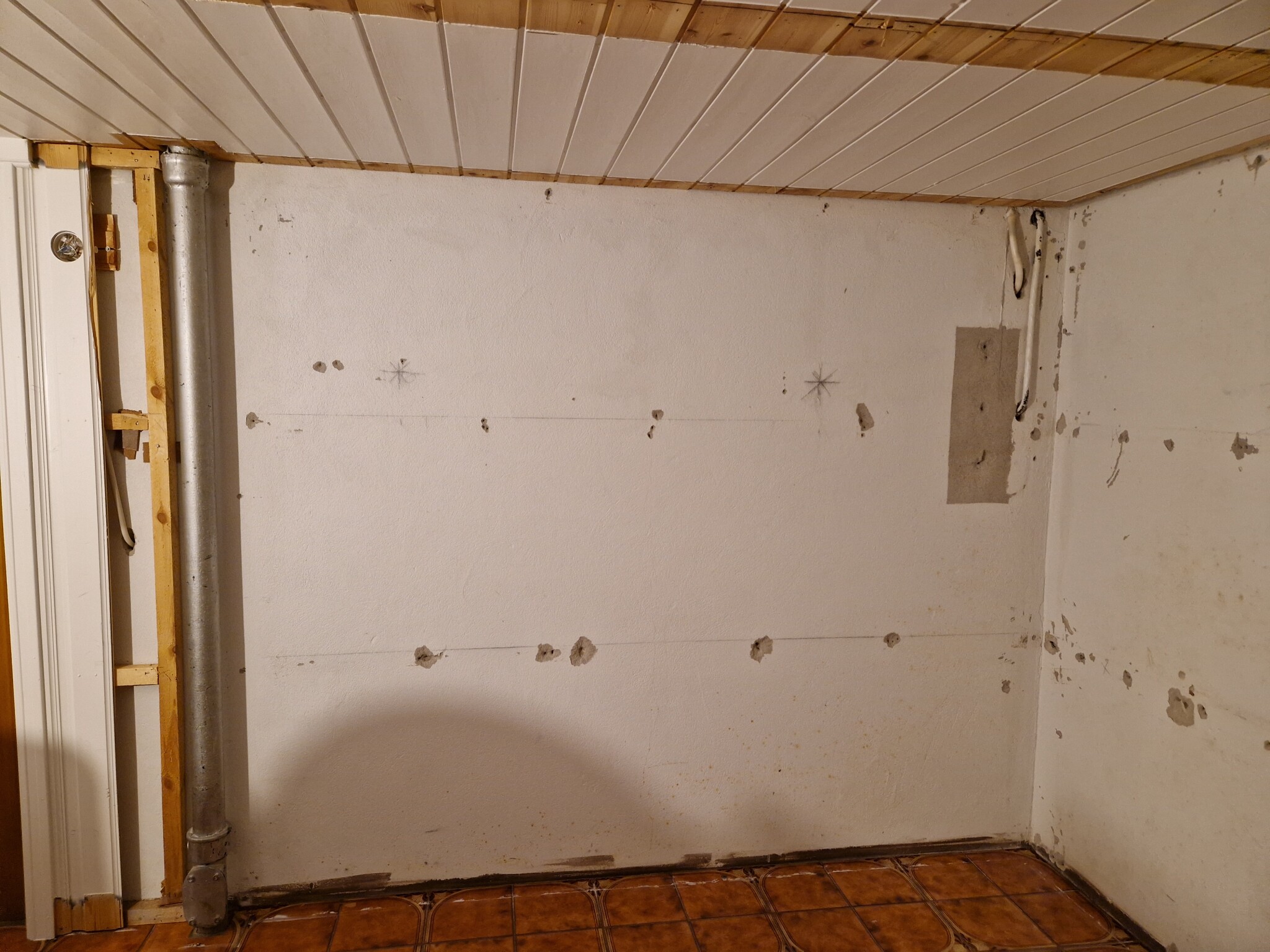
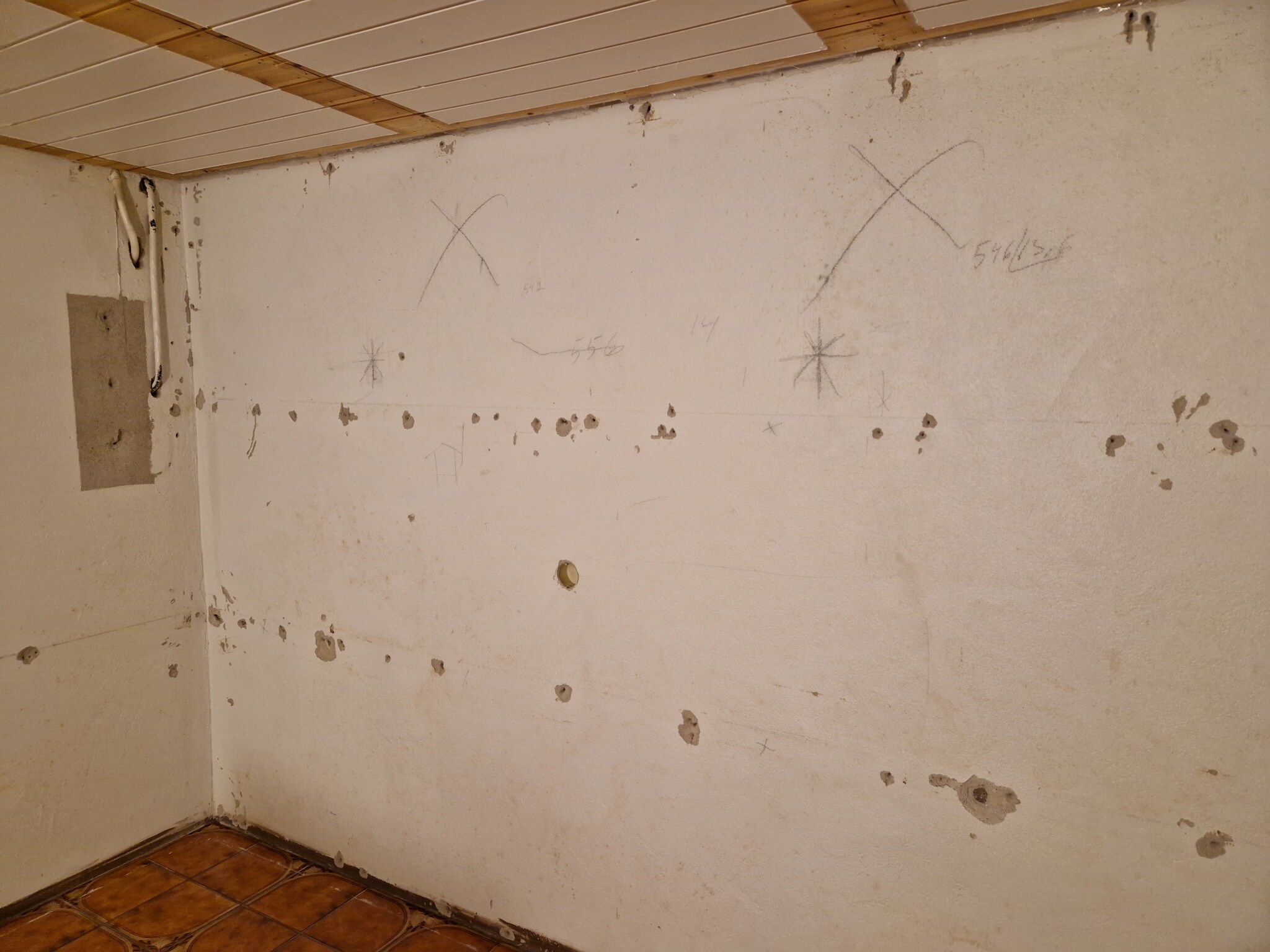
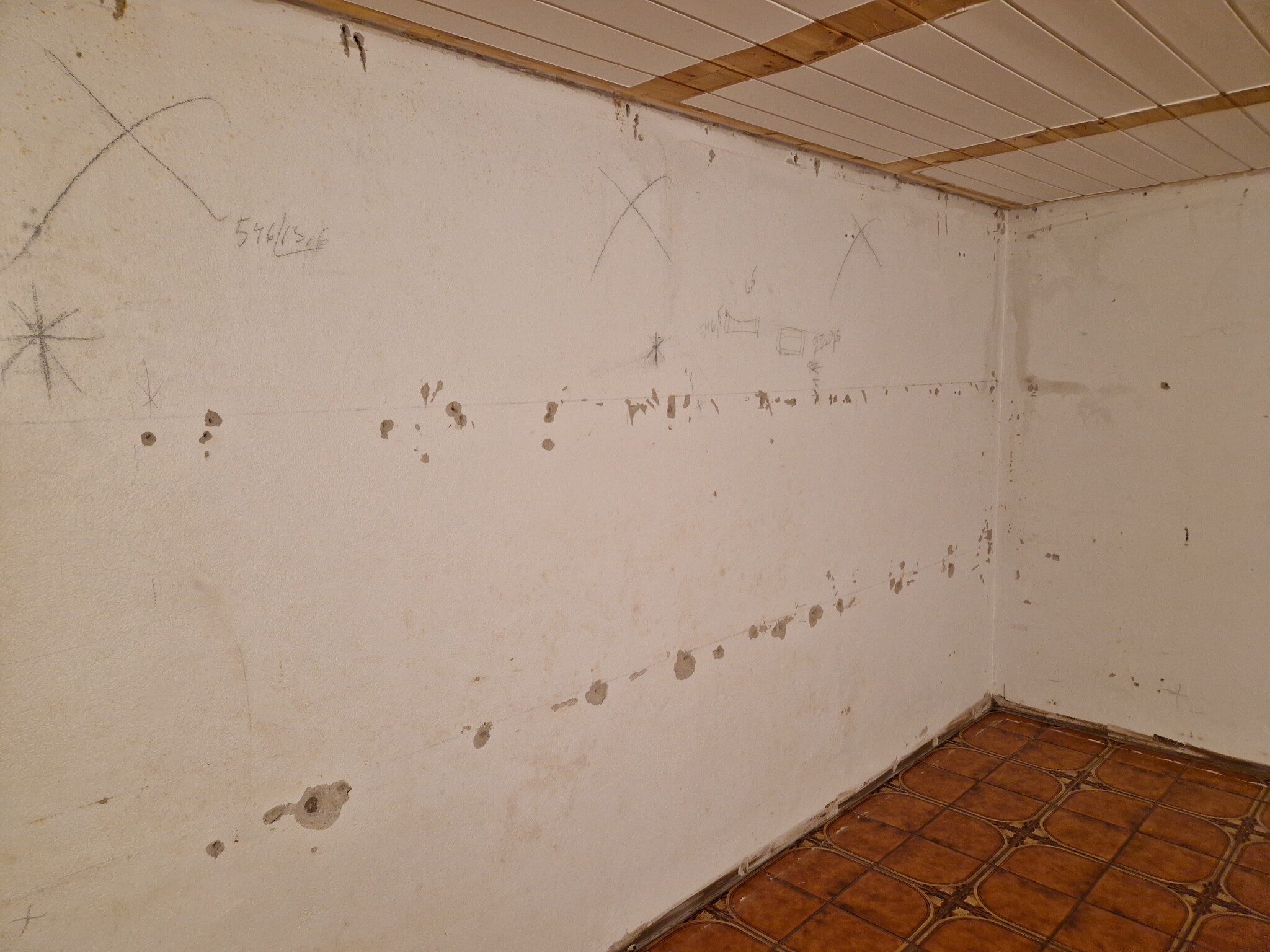
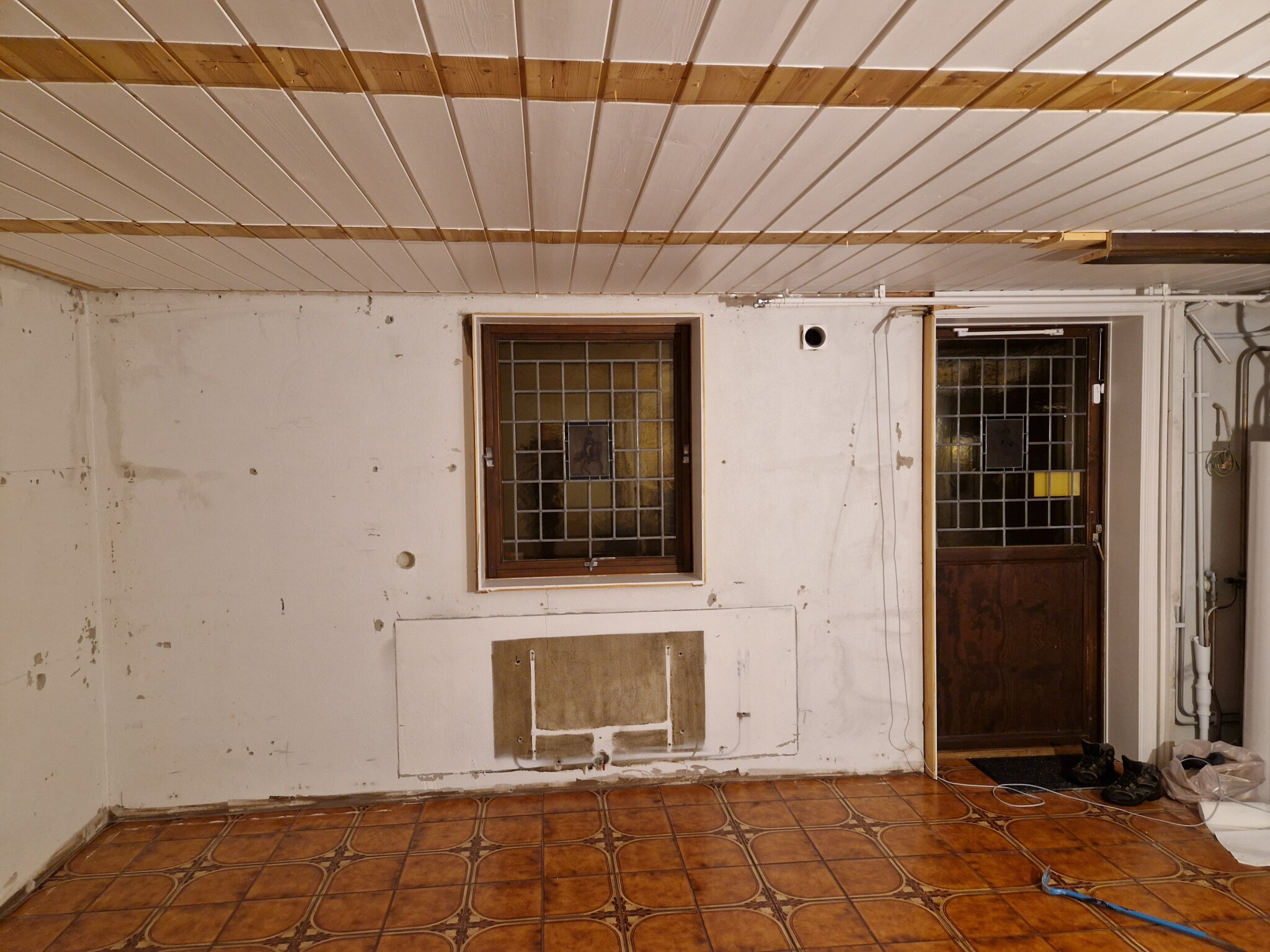
What I have learned so far
- It's more work than you think to tear down
- Mineral wool itches
- It hurts and bleeds if the crowbar slips and you get the end in your head
- You feel really satisfied when you're done and actually tackled the last rule instead of leaving it
- Crowbar and Excel should be humanity's best inventions
- Large and mini crowbar are highly recommended
Demolition complete, time to build up
- It's more work than you think to tear down
- Mineral wool itches
- It hurts and bleeds if the crowbar slips and you get the end in your head
- You feel really satisfied when you're done and actually tackled the last rule instead of leaving it
- Crowbar and Excel should be humanity's best inventions
- Large and mini crowbar are highly recommended
Demolition complete, time to build up
Last edited by a moderator:
Tiles but I haven't checked specifically in this room, but in other rooms on the ground level, they are directly on the slab.Viktor.J said:
And since it's the same tiles used everywhere, I assume it's not raised in this room either.
No flex anywhere.
So I'll leave the floor as it is 😊
Insulation or just a concrete slab?huch said: