

Hej (engelsk version finns längst ner),
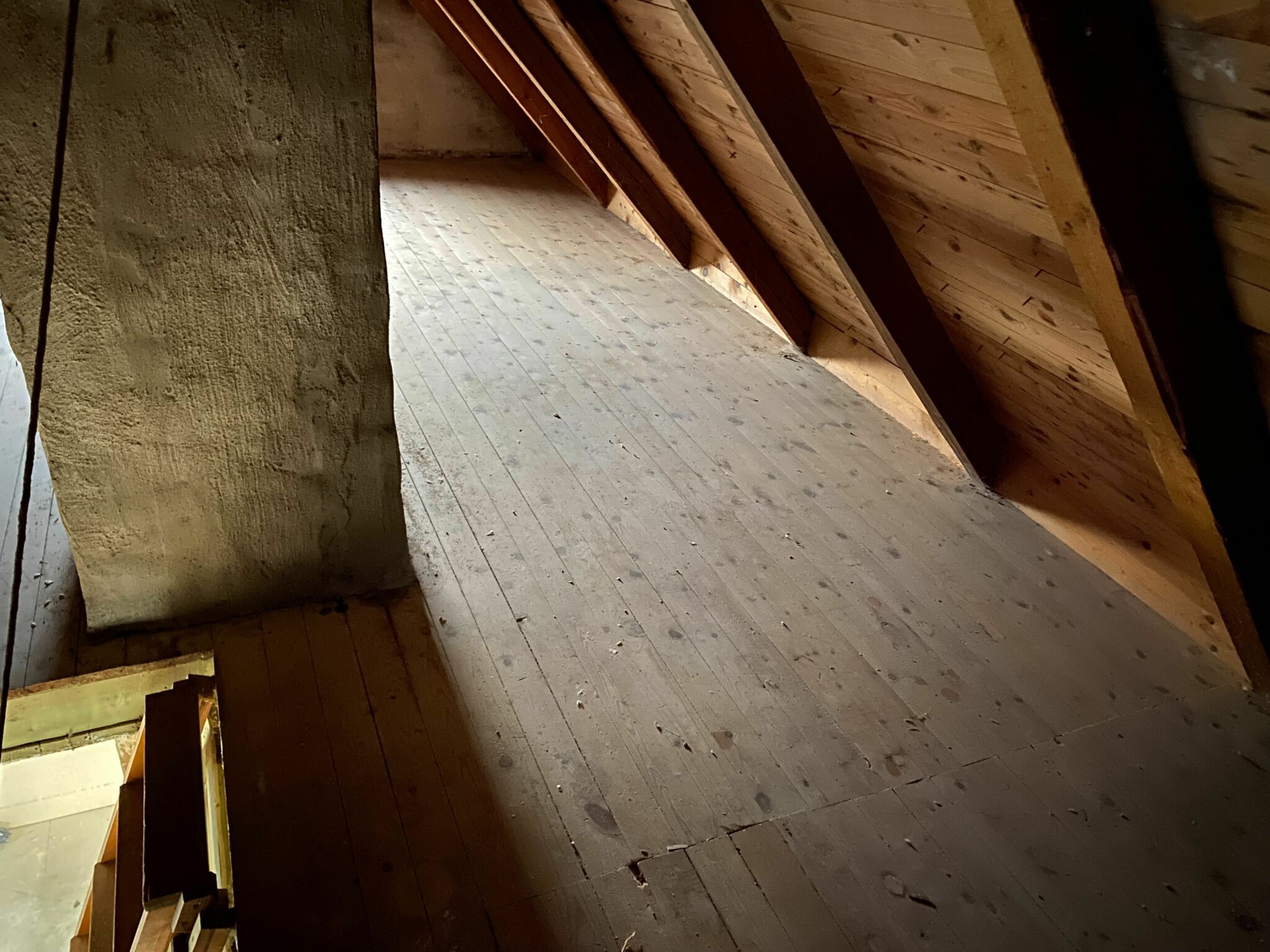
Nybörjare här . Vi håller på renovera ovanvåningen i ett stenhus från 30-talet i Skåne (110m2, 55m2 ovanvåning). Huset har ganska stort energianvänding (typ 30.000kwh/år) så vi funderar att isolera snedtaket och mellan golvbjälkar på vinden (finns bara lite mossa i dagsläget).
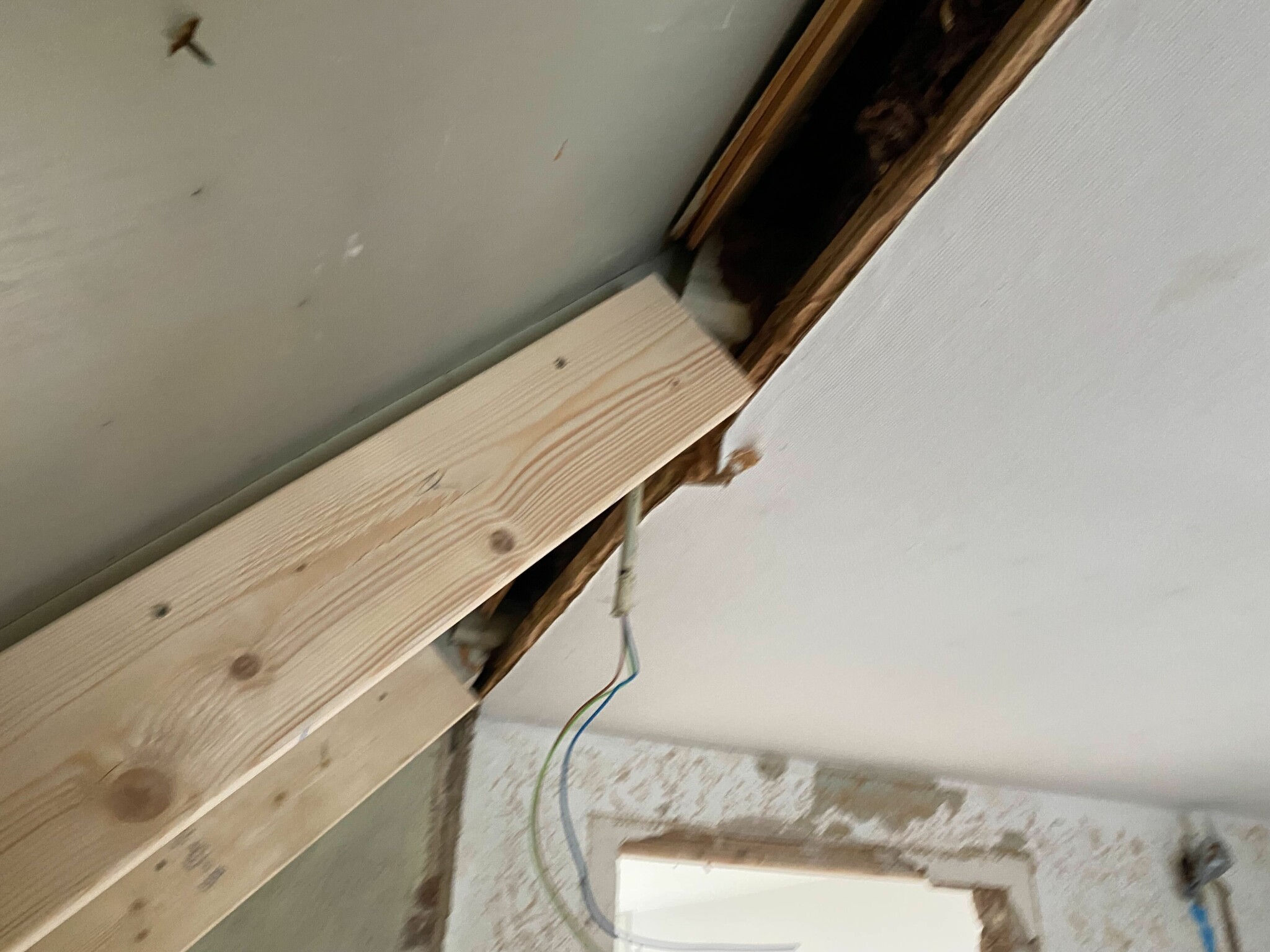
Vi frågade ett isoleringsföretag och de sade att vi bara behövde ta bort golvet/plankor på vinden och sätta lite plast op insidan av de horisontella reglar på bild 1 så att de kan spruta ?lösull/cellulose?. Plasten är bara för att isoleringen stannar på plats, inte som ångbroms/ångspärr.
Nu har jag lite fundering kring detta, jag läser nästan överallt att man behöver ångbroms när mar isolerar (och ibland luftspalt, men det är inte så viktigt med lösull för att det är organiskt material som kan andas).
Hur viktigt är det faktiskt med ångbroms? Om det behövs, är det bara snedtaket eller också vindsgolvet/ovanvåningsinnertak? Hur tät måste det vara? Vi har badrummet på ovanvåningen som vi kommer renovera nästa år (så ingen isolering där tills dess).
Vad hade ni gjord?
--------------------------
Hey,
Unexperienced renovator here. We are currently renovating our upper floor in an old brick house from the 30's (110m2, 55m2 on the upper floor). Since the energy usage of the house is quite high (30.000kwh/year) we were thinking about insulating the roof and between the floor beams on the attic (there is just some moss now).
We got a company here that does insulations with spraying loose insulation (cellulose?) and they told us to just put some plastic on the inside of the horizontal wooden frame so that if they spray the insulation it would stay in place. The plastic was purely for that and not as a moisture blocker).
Now I was wondering, almost everywhere I read, people say you should have some kind of moisture blocker when insulation (also a airgap but that doesn't seem that important with cellulose, since its breathable).
How important is it to have a moisture blocker? If we should have it, should we have it only on the diagonal roof or also on the floor in the attic/ceiling of the upper floor? Is it really important that it's all really 'closed' since we also have a badroom on the upper floor that we will renovate maybe next year (so there is no insulation there right now).
Any ideas?
Nybörjare här
. Vi håller på renovera ovanvåningen i ett stenhus från 30-talet i Skåne (110m2, 55m2 ovanvåning). Huset har ganska stort energianvänding (typ 30.000kwh/år) så vi funderar att isolera snedtaket och mellan golvbjälkar på vinden (finns bara lite mossa i dagsläget).Vi frågade ett isoleringsföretag och de sade att vi bara behövde ta bort golvet/plankor på vinden och sätta lite plast op insidan av de horisontella reglar på bild 1 så att de kan spruta ?lösull/cellulose?. Plasten är bara för att isoleringen stannar på plats, inte som ångbroms/ångspärr.
Nu har jag lite fundering kring detta, jag läser nästan överallt att man behöver ångbroms när mar isolerar (och ibland luftspalt, men det är inte så viktigt med lösull för att det är organiskt material som kan andas).
Hur viktigt är det faktiskt med ångbroms? Om det behövs, är det bara snedtaket eller också vindsgolvet/ovanvåningsinnertak? Hur tät måste det vara? Vi har badrummet på ovanvåningen som vi kommer renovera nästa år (så ingen isolering där tills dess).
Vad hade ni gjord?
--------------------------
Hey,
Unexperienced renovator here
. We are currently renovating our upper floor in an old brick house from the 30's (110m2, 55m2 on the upper floor). Since the energy usage of the house is quite high (30.000kwh/year) we were thinking about insulating the roof and between the floor beams on the attic (there is just some moss now).We got a company here that does insulations with spraying loose insulation (cellulose?) and they told us to just put some plastic on the inside of the horizontal wooden frame so that if they spray the insulation it would stay in place. The plastic was purely for that and not as a moisture blocker).
Now I was wondering, almost everywhere I read, people say you should have some kind of moisture blocker when insulation (also a airgap but that doesn't seem that important with cellulose, since its breathable).
How important is it to have a moisture blocker? If we should have it, should we have it only on the diagonal roof or also on the floor in the attic/ceiling of the upper floor? Is it really important that it's all really 'closed' since we also have a badroom on the upper floor that we will renovate maybe next year (so there is no insulation there right now).
Any ideas?
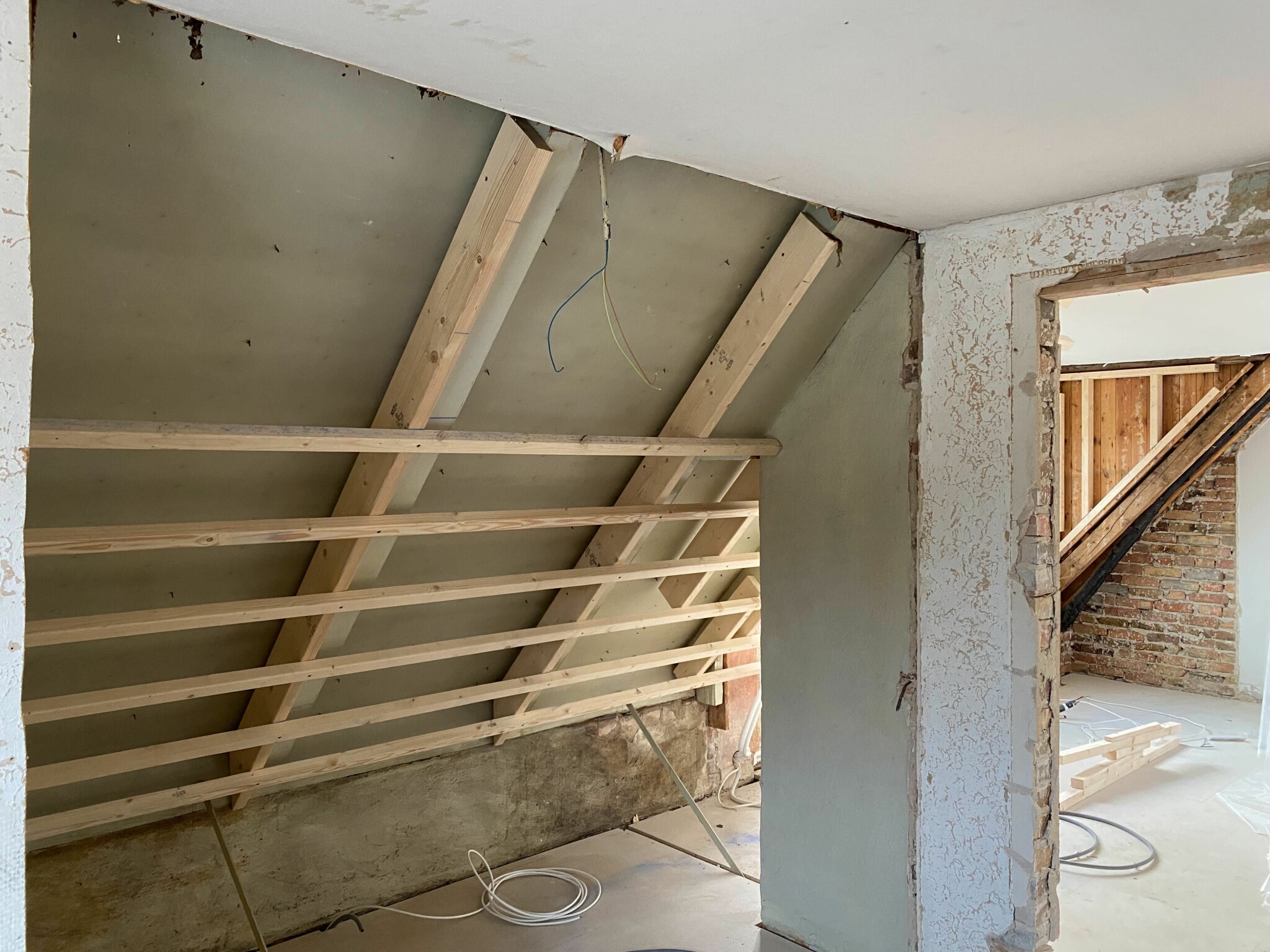

Jag hade satt/häftat en ångbroms/folie på de nya horisontella reglarna på yttertaket.
Och isolering innanför.
Innergolvet är ju mer tveksamt. Det är i så fall om man vill ha olika uppvärmningsnivåer på under/övervåning, irriteras av stegljud/knarr och möjligen i del mot yttervägg, vid problem med kallras.
Och isolering innanför.
Innergolvet är ju mer tveksamt. Det är i så fall om man vill ha olika uppvärmningsnivåer på under/övervåning, irriteras av stegljud/knarr och möjligen i del mot yttervägg, vid problem med kallras.
Klicka här för att svara