I've been thinking about this a bit, and I'm neither a designer nor a skilled carpenter, but I have a thought that others have touched upon that I want to bring up. While you have access, I think you should address the poor joints. My non-scientific gut feeling tells me that the joints are on the edge during the worst winters and that it could be a significant reason for the sagging you see today, i.e., the joints have pulled apart a bit. If the latter is true, you should be able to see a gap at the bottom behind the nail plate.
I absolutely think you should prop up and squeeze together the underarm (or whatever it’s called) so that it's free of gaps and then apply a suitable joint. Others can correct this, but my thoughts go to one of the following methods:
- Nail plates on both sides, either fully nailed/screwed or intended for trusses with "spikes" that are nailed/pressed into place
- Plywood strips, about 21mm, on both sides with substantial wood screws or through screws + nuts
- Timber on both sides with substantial nails - however, it builds up quite a bit and isn't a favorite, but it's a classic sustainable building method
Others know better than me about dimensioning. But I would argue that the most important load to consider is the tensile forces in the joint that want to pull apart. If you solve that correctly, the moment load from the weight should become secondary.
Thereafter, follow Justus and others' advice to build a separate floor frame between the trusses for your storage purposes!
A beam adjustment to fit the attic hatch could look like the sketch below shows. It may be necessary to adjust the distance between the laminated beams by a few cm to fit the large stair variant. The adjusting studs don't need to be laminated timber, but it's practical to have the same height.
A modification to accommodate the attic hatch could look like the sketch below shows. You may need to adjust the distance between the glulam beams by a few cm for the large stair variant to fit. The alternating studs don't need to be glulam, but it's practical to have the same height.
[image]
Wow nice justusandersson I assume according to your image that one of the rafters is cut and offset against the glulam beams. Feels like you need help with such a solution but I now understand how it's done. If you place it in the other direction, the center-to-center distance will be slightly longer between 2 glulam beams than cc120, is that acceptable considering the floor and flex?
If a couple of full-length glulam beams need to be inserted, the simplest way might be to remove some facade boards above the garage door and slide them in that way. Provided that it can be done without ruining the paint.
If a couple of full-length glulam beams are to be inserted anyway, the simplest way might be to remove some facade boards above the garage door and bring them in that way. Provided it can be done without ruining the paint.
Yes, very good suggestion, I hadn't thought of that . But as Bossespecial says, it's doubtful they will twist in their place in each compartment.
Start by propping up the ceiling in the garage so it is level + a few mm for settling.
Install the perforated tapes, if there's an opportunity to fold them around the beam it's preferable.
Use the designated screw instead of nails, then you can adjust a loose band afterward.
Such a band can carry several hundred kilos.
In an industry, everything hangs from the ceiling with such bands.
I would have tried the simplest and cheapest solution first.
See the image in post #83, but used perforated metal strap!
[link]
Start by propping up the roof in the garage so it is level + a few mm for settling allowance.
Install the perforated metal straps, if there is an opportunity to fold them around the beam that is preferable.
Use the intended screws instead of nails, then you can adjust a slack strap afterwards.
Such a strap can be loaded with several hundred kilos.
In an industry environment, everything hangs from the ceiling with such straps.
Perforated metal straps are all well and good, but the sum of all forces will be the same anyway and the bottom chord will be stressed similarly but perhaps more evenly. The problem is that the truss is calculated to bear the roof and nothing more. As it stands, it barely supports any snow either.... Having storage up there should have been considered much earlier, and even if you add glulam, it will likely still sag considerably.
Hålband, in all honor, but the sum of all forces will be the same anyway, and the underrail will be similarly loaded but perhaps more spread out. The problem is that the truss is calculated to carry the roof and nothing more. As it looks, it barely supports any snow either .... Having a storage up there should have been considered much earlier, and even if you add glue-laminated timber, it will probably sag quite a bit anyway.
When I had the garage built, the whole idea from the beginning was communicated that I wanted to have an attic up there in the future, then why it ended up with such flimsy timber, I don't know. But do you mean it will sag with the solution with glue-laminated timber 56x225 that is supposed to support the floor? Several have calculated that here .
My spontaneous feeling says:
1. Stamp up, get plumb on existing trusses (how do I measure that ??)
2. Screw on my new finger-jointed 45x145 on the sides of the existing trusses to brace/reinforce.
3. Order glue-laminated timber 56x225 and place between the trusses to support the floor in the attic to not affect the existing trusses.
4. Screw in tongue-and-groove flooring, preferably 32-36mm boards.
When I had the garage built, the whole idea from the beginning was to be able to have an attic up there in the future; why it ended up with such flimsy wood, I don't know. But are you saying it will sag with the solution of using laminated wood 56x225 to support the floor? Others have calculated it here .
My spontaneous feeling says:
1. Brace up, get plumb on existing trusses (how do I measure that ??)
2. Screw my new finger-jointed 45x145 alongside the existing trusses to reinforce/stabilize.
3. Order laminated wood 56x225 and place between the trusses to support the attic floor without affecting the existing trusses.
4. Screw down tongue-and-groove flooring, preferably 32-36mm boards.
Opinions on the above?
With mason's line and a water-tube level, you can handle most things.
With mason's string and hose water level, you can fix most things.
Ah ok, never used it ... sounds a bit old-school but surely awesome. But I do have mason's string so you could stretch it tightly around the stays and see if it bends in the middle.
What I also have right now is a Black and Decker cross laser (not a top-notch model exactly). Also a 180 Hultafors level.
Ah ok, never used it.. sounds a bit old-fashioned but I'm sure it's great. But I have mason's line so I could tighten it around the stands and see if it bends in the middle.
What I also have right now is a Black and Decker cross laser (not a top-notch model exactly). Also a 180 Hultafors level.


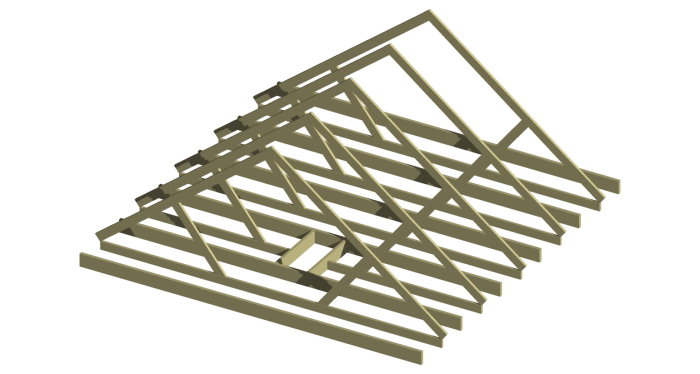
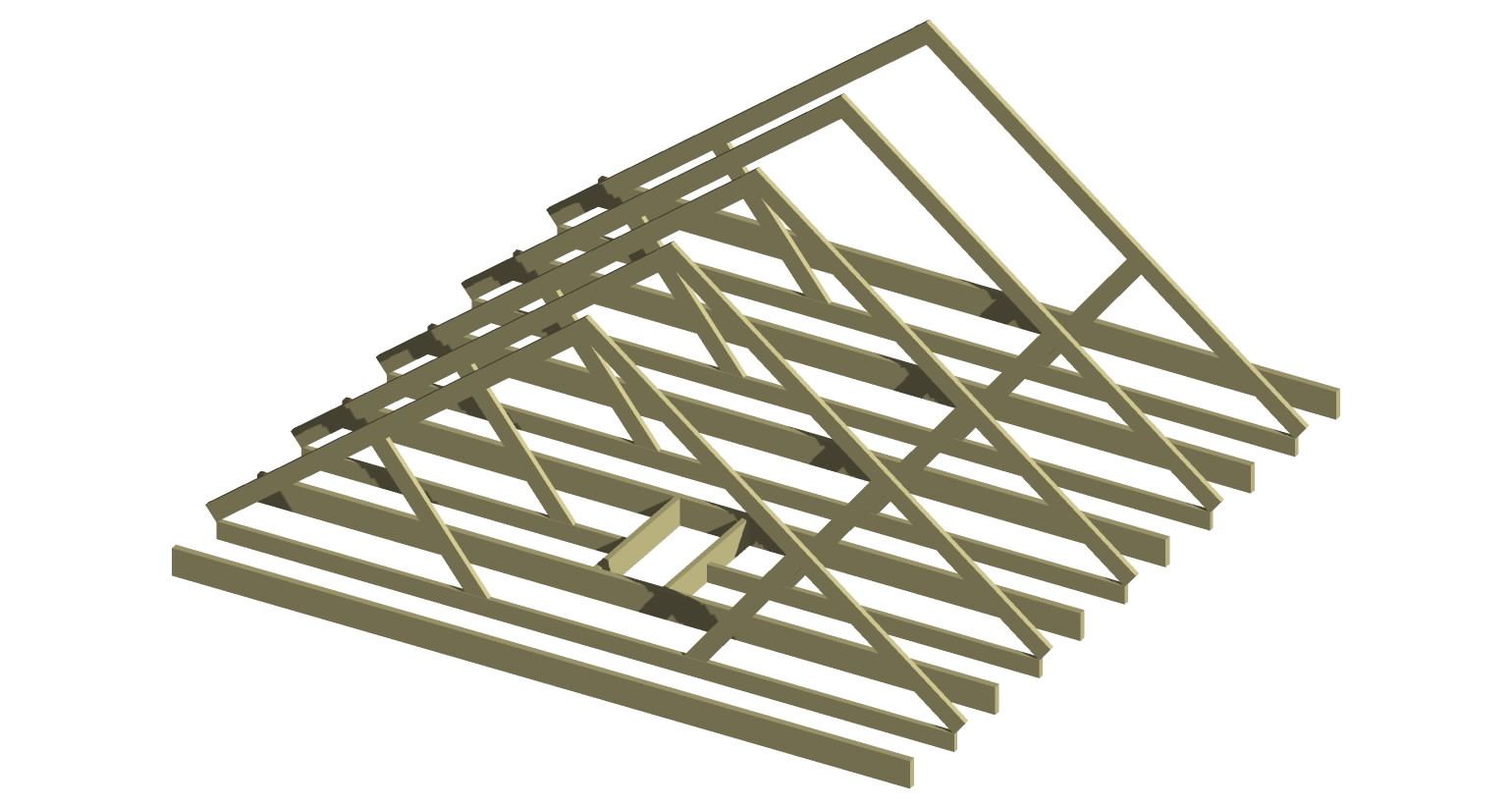
 I assume according to your image that one of the rafters is cut and offset against the glulam beams. Feels like you need help with such a solution