
7,871 views ·
24 replies
8k views
24 replies
Switch load-bearing wall
To the right in the first image, it looks like a more interesting section, please attach this too. A HEB200 sounds like a substantial beam at 2.7m, by the way. Have you received the calculation? In industrial and construction design, they don't skimp on dimensions like they do in house construction

I am not clear about how you are thinking, but here are some comments as input.
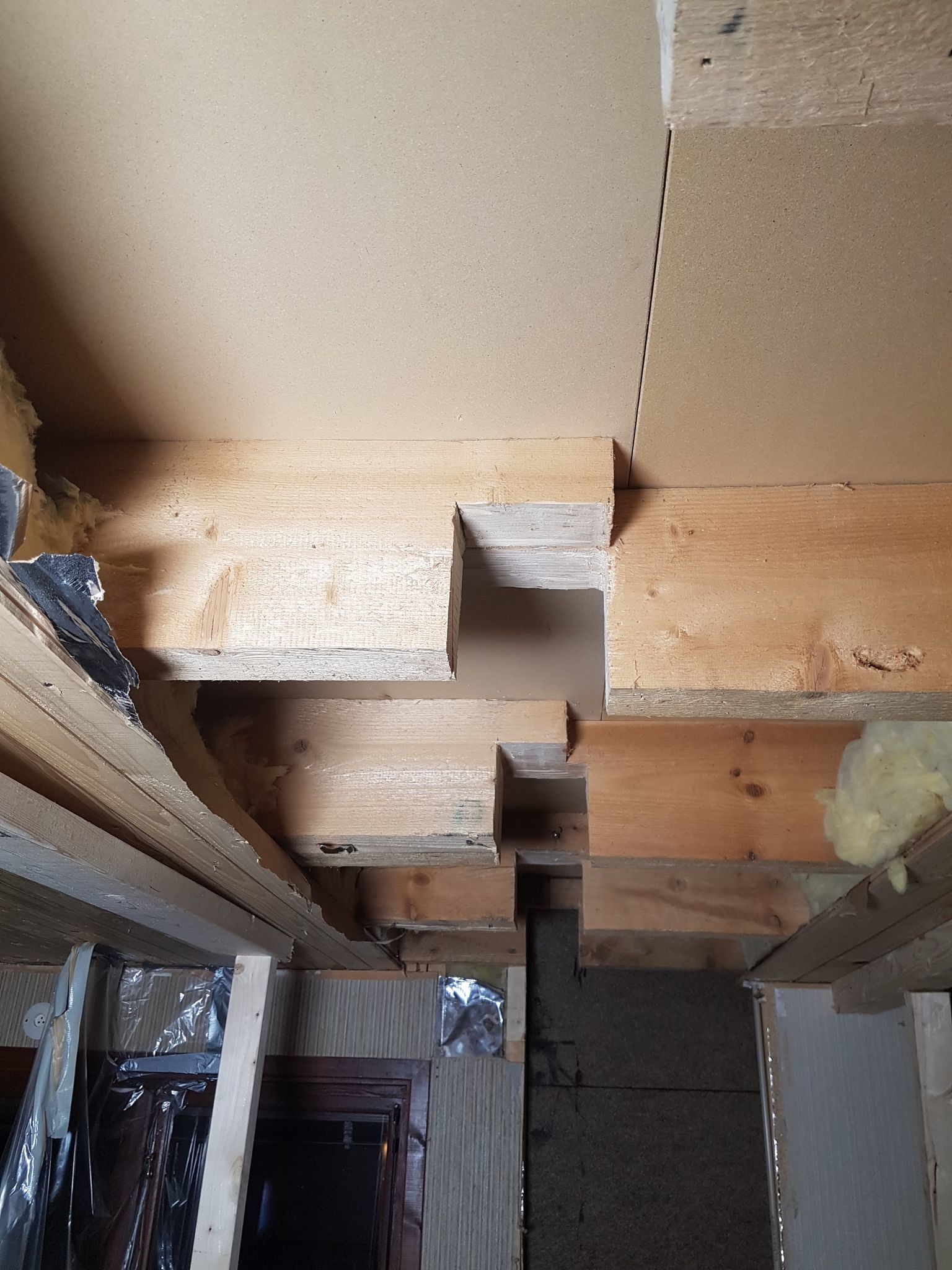
With two load-bearing walls in the house, a HEB 200 must be an excessive overdimensioning. In a building notification, you must be able to present your calculation. It's not enough to just estimate even if it's on the higher side. From the section (first image in post #15), it's clear that the middle part of the current floor joist has a different height. 11/2"x8" instead of 11/2"x7" as it is on the respective side parts. The joists in the last example image are made of glulam. Despite being cut-out, there is still a lot of material that will end up on the top of the beam.
With two load-bearing walls in the house, a HEB 200 must be an excessive overdimensioning. In a building notification, you must be able to present your calculation. It's not enough to just estimate even if it's on the higher side. From the section (first image in post #15), it's clear that the middle part of the current floor joist has a different height. 11/2"x8" instead of 11/2"x7" as it is on the respective side parts. The joists in the last example image are made of glulam. Despite being cut-out, there is still a lot of material that will end up on the top of the beam.
How is it offset in the living room?
According to the drawing at the beginning of the thread, it's completely open there.
According to the drawing at the beginning of the thread, it's completely open there.
He will come back with the calculation in the coming days. I'll attach it here. But his first instinct was that an HEB200 works. From that, I can figure out how to make a smooth ceiling. If he reduces the dimension, that's even better!J justusandersson said:I am not clear on how you think, but here are some comments as input.
With two heart walls in the house, an HEB 200 must be a massive overdimension. In a building report, you must be able to present your calculation. It's not enough to just make an estimate, even if it's on the high side. From the section (first image in post #15) it appears that the middle part of the floor joist in question has a different height. 11/2"x8" instead of 11/2"x7" as it is on either side. The beams in the last example image are made of glulam. Even though they are cut out, there is a lot of material left that will end up on the top side of the beam.
Does it matter that there is material left that will end up on the top side of the beam?
I think that if I weld on sturdy beam supports in the HEB beam, they will rest there.
This type of mounting I was thinking of. But instead of bolting, I fully weld.
https://www.byggahus.se/forum/threads/dimensionering-och-tillverkning-av-unik-balksko.215844/
I'm super thankful that you take your time and share your knowledge. Always fun to learn new things in the construction industry for a hobby carpenter like me.
He hasn't calculated it. It was just his first instinct, I guess. He would calculate it in the coming days. Unless you have a Calculation?B bossespecial said:To the right in the first image, it looks like a more interesting section, feel free to attach this as well. An HEB200 sounds like a hefty beam at 2.7m, by the way. Have you received the calculation? In industrial and construction design, they don't spare on dimensions like they do in house construction
I attach the image you wanted. also one more that was on the same paper
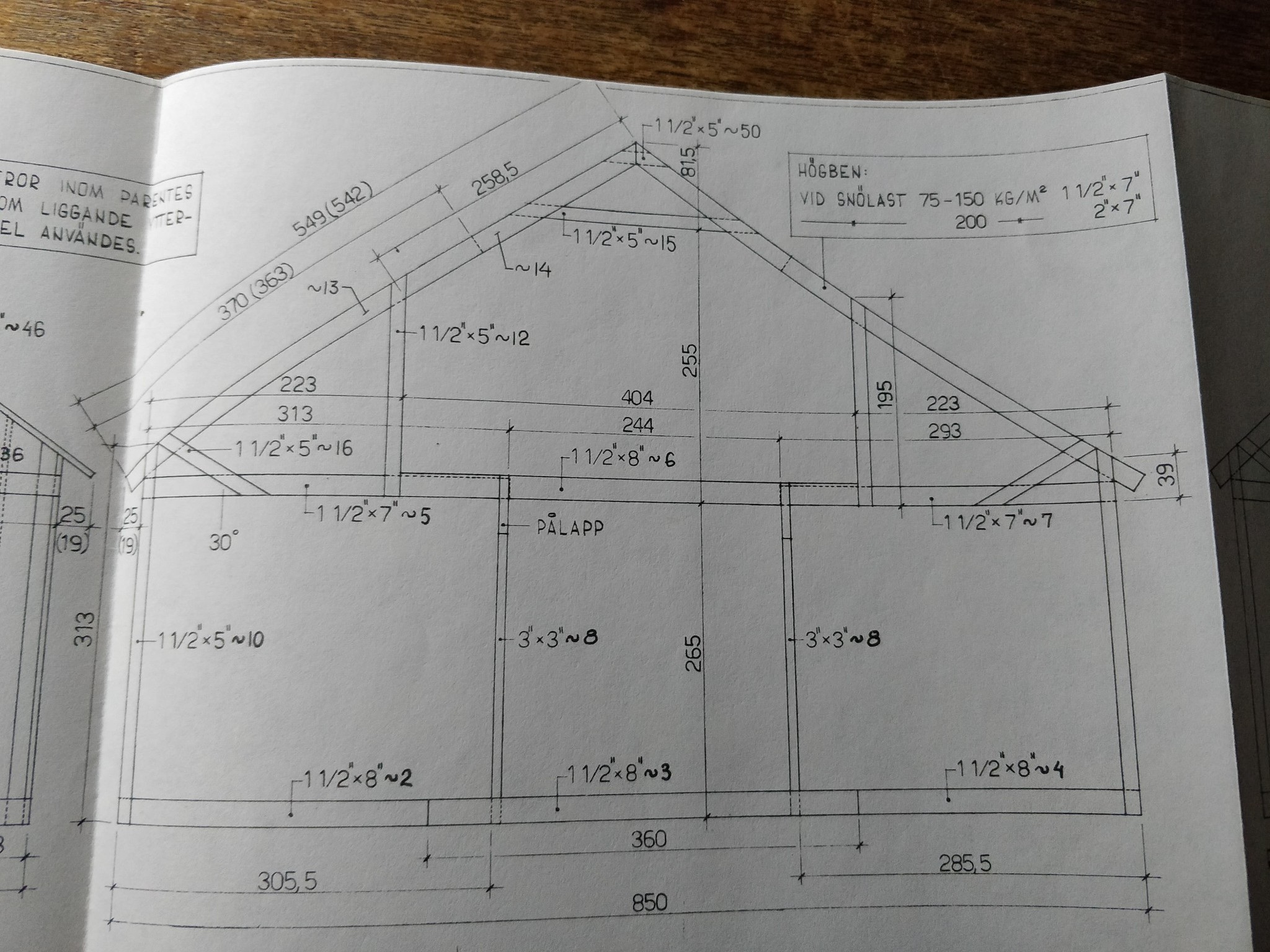
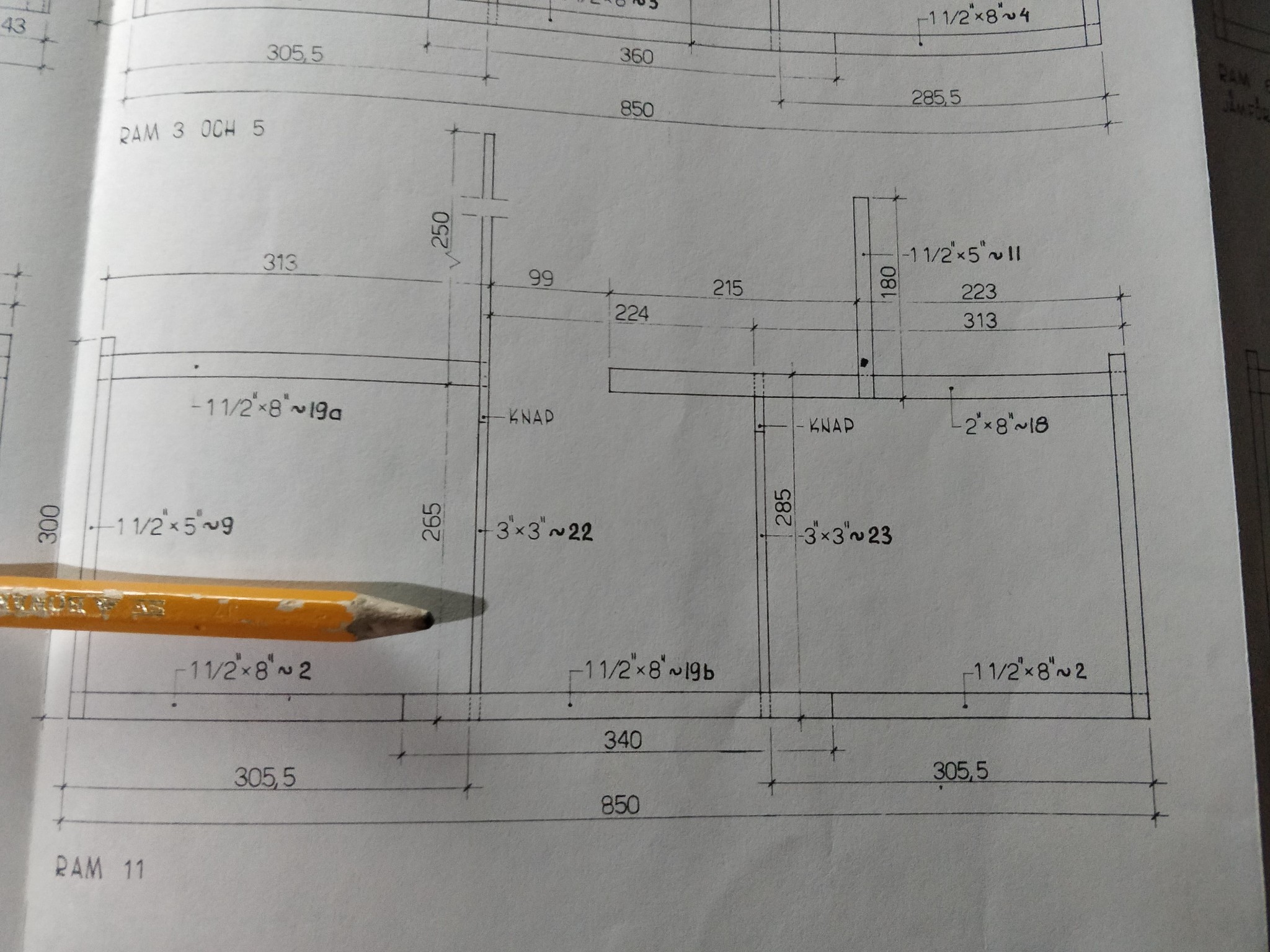
The joists are running the other way there. Therefore, it is possibleF Jukkasjärvi said:
As mentioned at the beginning of the thread, it could be interpreted that the overlap of the floor joists was to achieve continuity in the flooring. With the new section, it is evident that this is likely not the case, but rather that the 8in rule "merely" cantilevers from the heart wall to level the top of the flooring on the upper floor. The floor in the “cold loft” is somewhat lower. Notching the beam should not affect the 8in rule since the span is longer on the other gable. However, your contact should also check the floor joist in the cold loft and the roof truss, as the load here increases when notching the beam. The attachment of the joist to the steel beam needs, in addition to vertical load, to also be able to transfer tensile forces between the floor joists.
How did it go?
It has gone very well. I am working on processing an HEA120 beam that I am welding homemade beam shoes onto in 8mm L-profile. I'll return at the end of the week with pictures and resultsB bossespecial said:
I will get the calculation a bit later from the constructor. I'll post it then too
Fun that it's moving along We look forward to some pictures of the beauty
We look forward to some pictures of the beauty Originally, there should have been 2 glued screws 45x95 at both ends. But it became 45x120 as a pillar on one side. On the other side, it became a modified 45x120 that is cut in width down to 45x105, solely to match the width of the existing studs including chipboard. Plaster will be put up on all walls later. Then it turned out that, after some discussion with the designer, there was already a 70x70 stud on one side. I asked if it was okay to glue screw a 45x105 against it. And that was okay. Even though he was a bit skeptical about the beam only resting on one pillar at that time (see picture).B bossespecial said:
We also shimmed up one of the joists by 5 mm in connection with this.
What do you think?
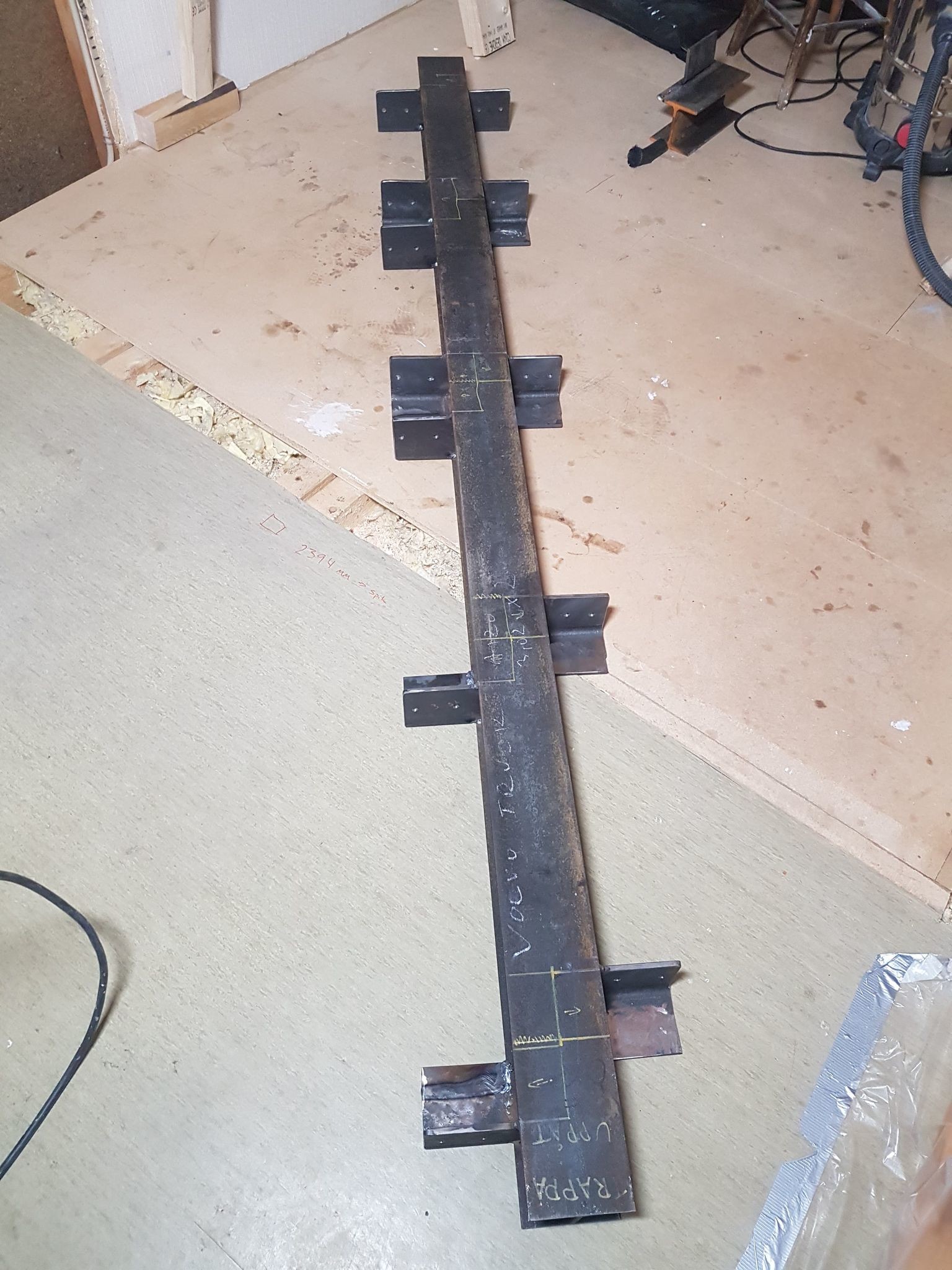
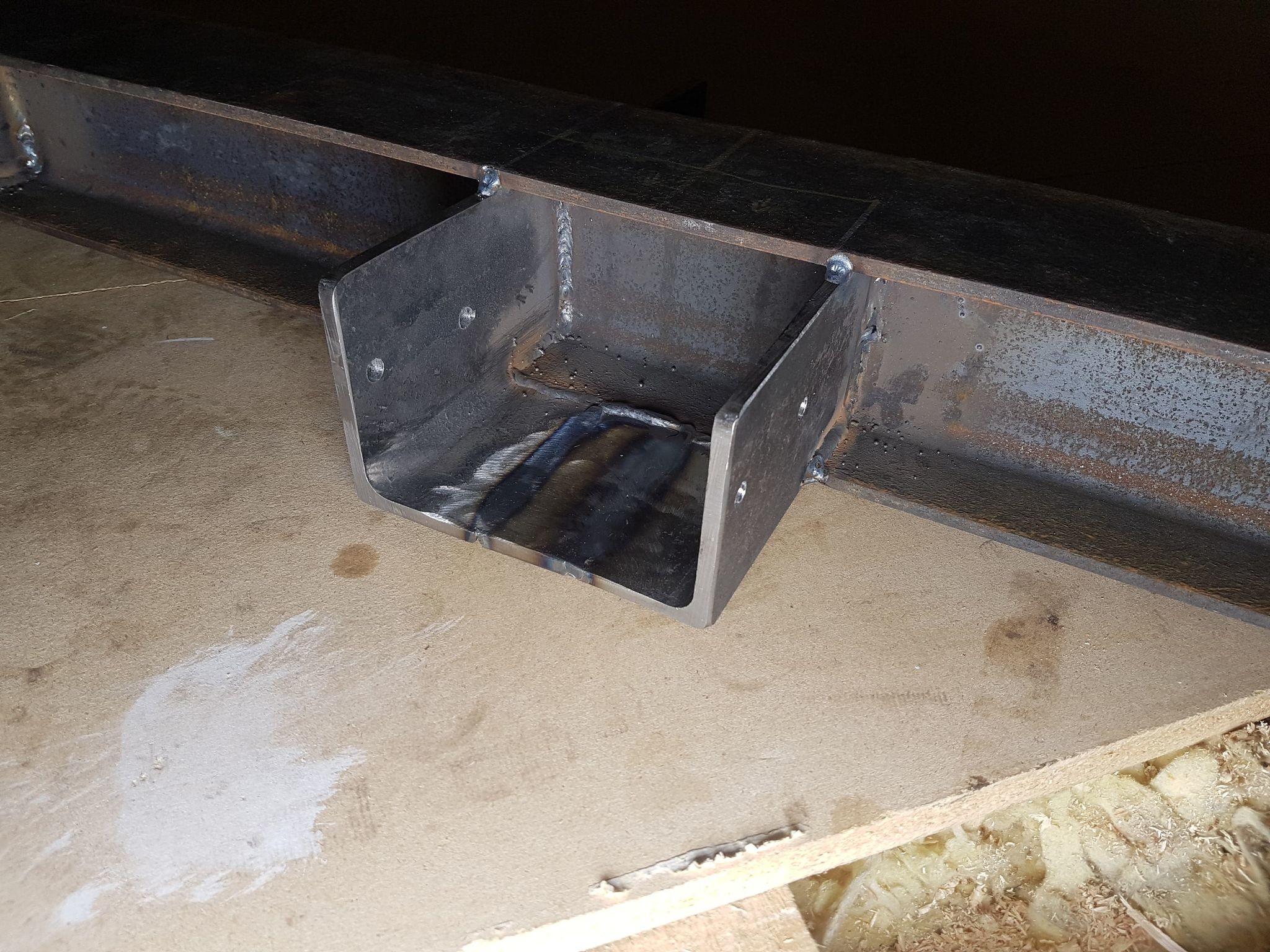
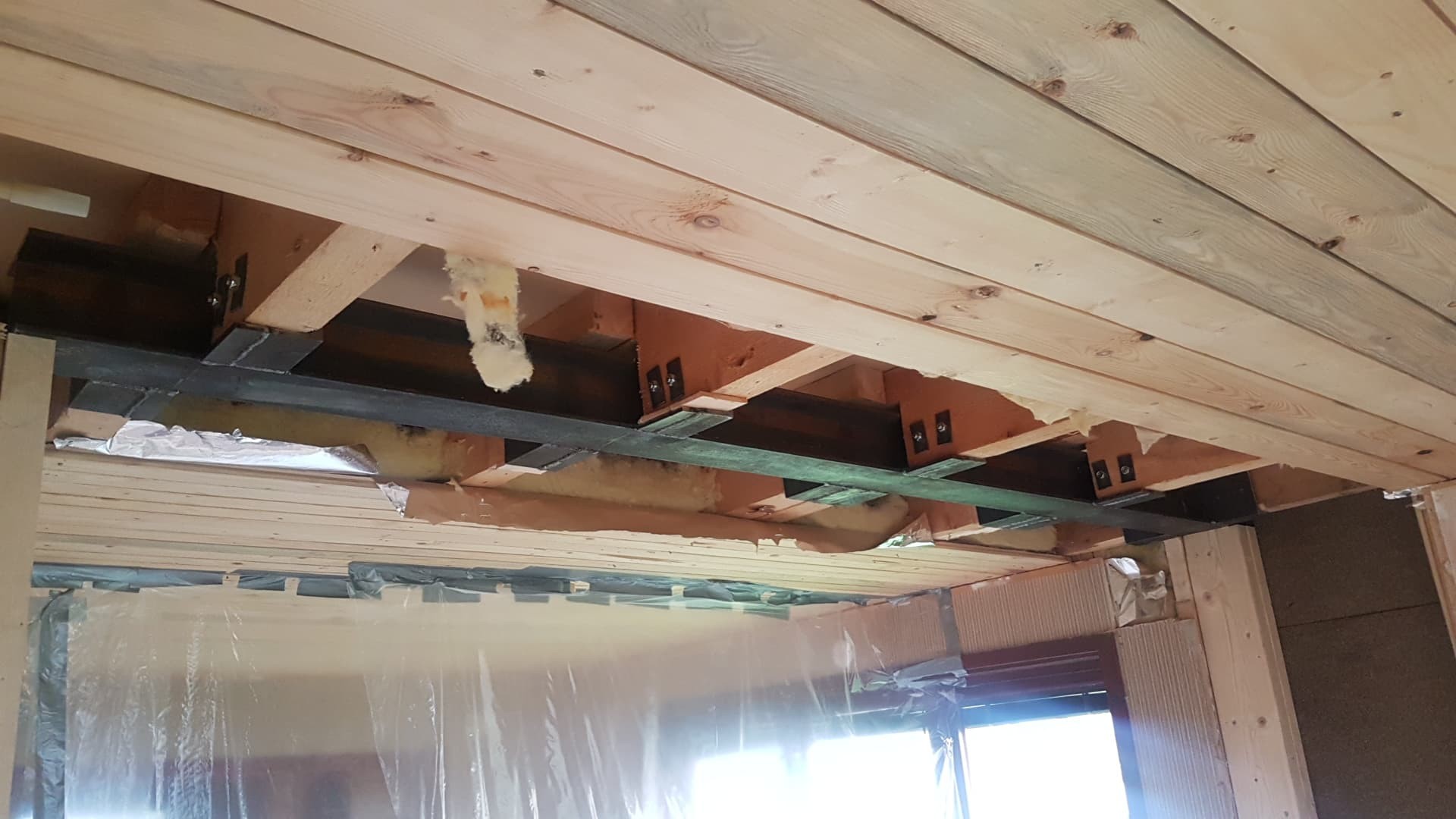
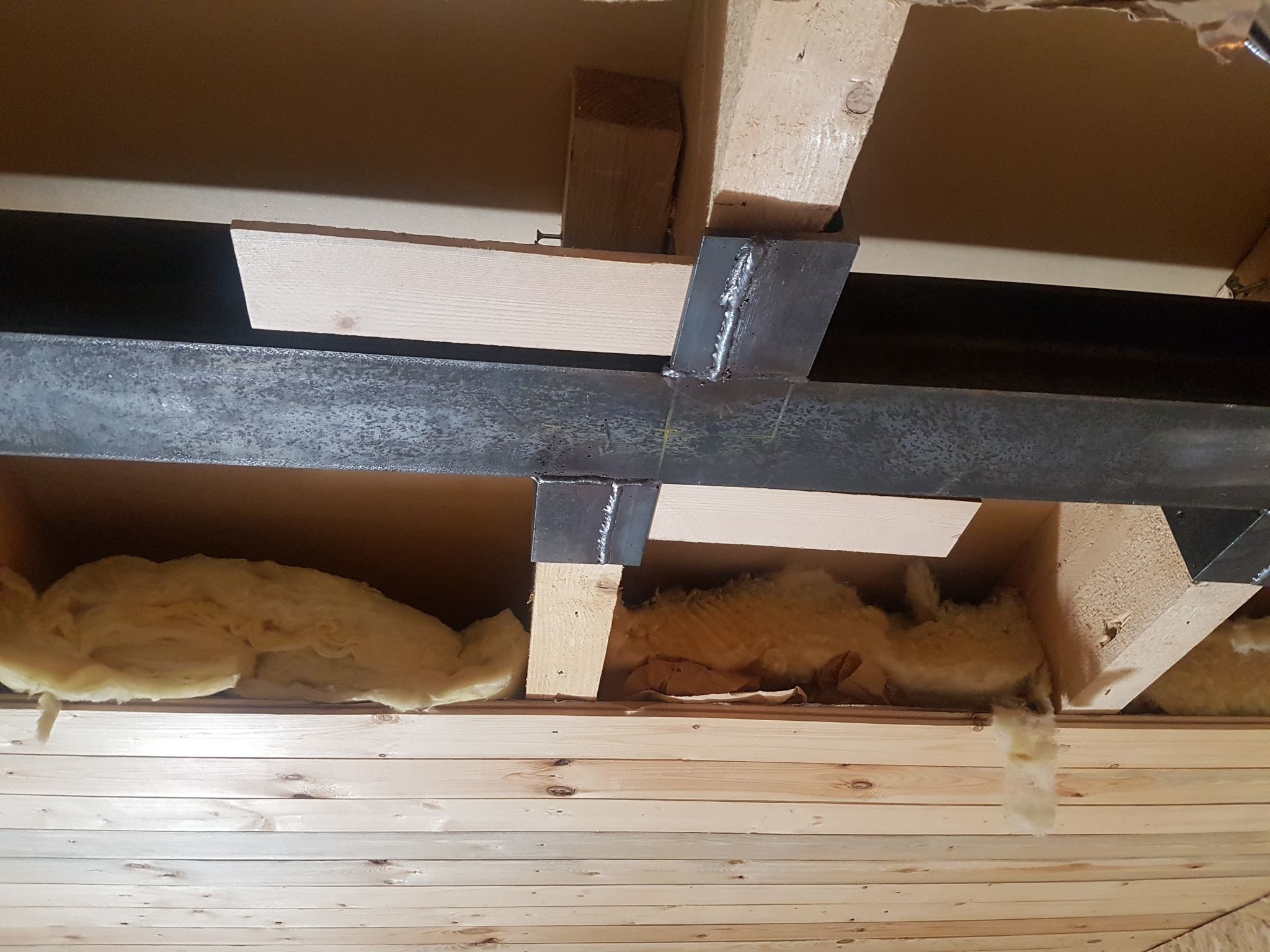
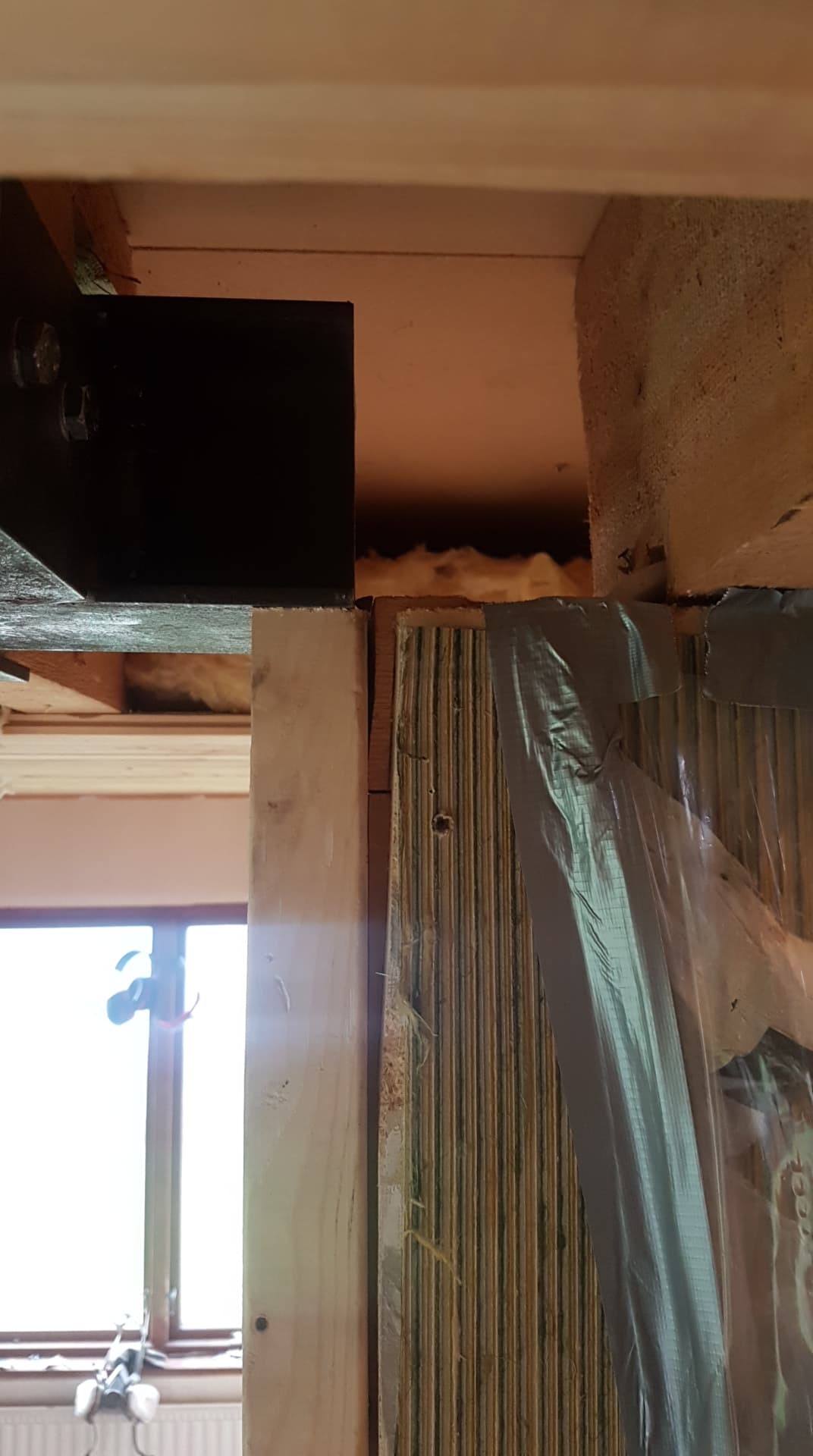
Last edited:
Clear overachievement!
Click here to reply