I am not very fond of expanding foam at all. You seem to have an old fine house and I think one should use traditional methods with stone and mortar. Now, maybe Leca isn't so traditional, but it's easier to shape compared to concrete or brick. I also believe it will crack in the filler/plaster if you only have expanding foam behind.
Thanks for the explanation! The idea is to place tiles on the inside on top of the plaster (perhaps that should be added).
I would have pressed in a cut-to-size block of foam plastic and plastered/spackled the last bit. Foam sealant probably works well too.
I would have chipped away the grate on the outside as well, but mostly because I think it feels strange to leave it there.
Leca, as suggested, I see no advantages with whatsoever.
Update about a year later
I used foam sealant from the inside; first, I glued a new insect net to the inside of the grille, then taped it over with silver tape and filled the hole with foam sealant.
Then a bit of plaster on it and tiles. The grille on the outside remains in case I, for some inexplicable reason, want to reopen the hole again in the future. I have also documented the measurements so that it's possible to find the center of the sealed hole from the inside.
@Rostig_9000i_-88 Have you noticed any problems whatsoever with your solution? Considering doing something similar but won't be tiling on the outside, so I'm a bit worried about potential cracking as mentioned above.
@Herman85 No, no problem at all.
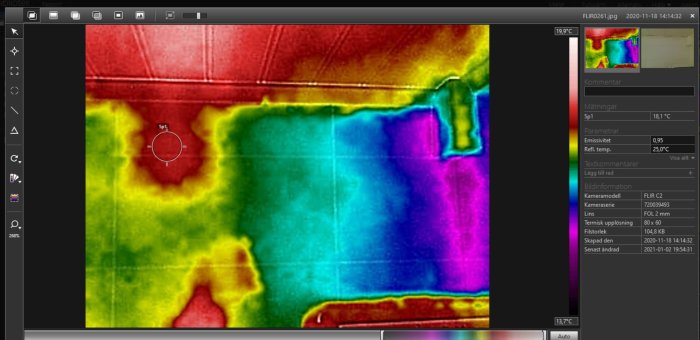
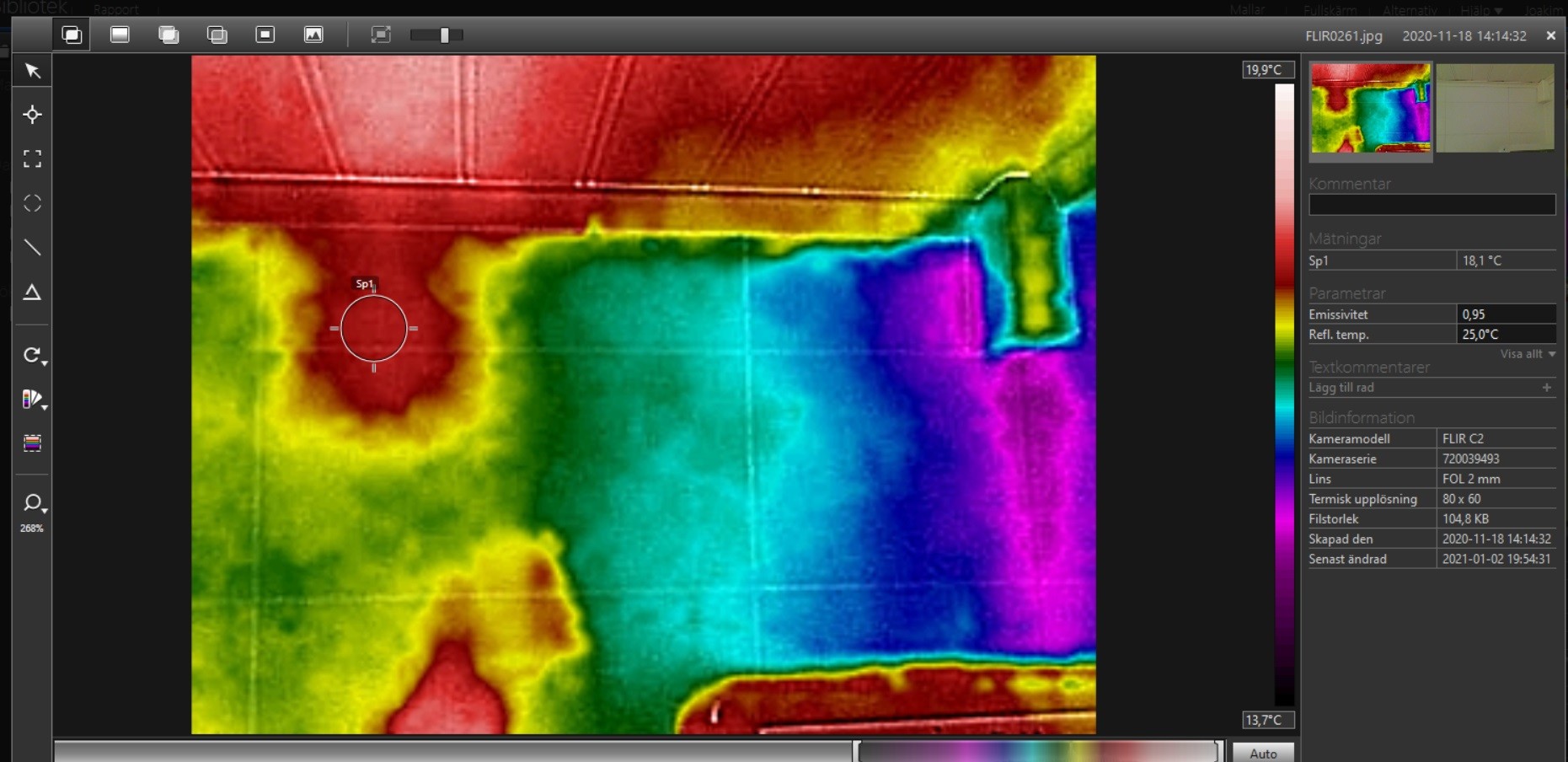
For fun, I tried taking a photo with a thermal camera on the wall (mostly curious to see if I could see where the vent had been) and the fact is that where the old vents have been sealed, it's 1 degree warmer than the other exterior walls.
See the image, where the cross with "Sp1" is located is the sealed vent.
@Herman85 No, no problems at all.
Just for fun, I tried taking a thermal camera photo of the wall (mostly curious if I could see where the vent had been) and the fact is that where the old vents have been sealed, it is 1 degree warmer than other outer walls.
See picture, where the cross with "Sp1" is located is the sealed vent.
[image]
Considering a similar solution, sealing old ventilation holes with foam sealant. In my case because ftx-ventilation is now installed though. What type of foam sealant did you use?
Considering a similar solution, to fill old ventilation holes with foam sealant. In my case, because FTX ventilation is now installed though. What type of foam sealant did you use?
I don't know if the question was directed at me or @Rostig_9000i_-88 but I suspect you can use more or less any kind. I didn't really think much about what type of foam sealant I used. Perhaps I checked that it withstands cold/outdoor climate.
Thinking about a similar solution, to seal old ventilation holes with foam sealant. In my case because ftx-ventilation is now installed though. What type of foam sealant did you use?


-RB- said:
I am not very fond of expanding foam at all. You seem to have an old fine house and I think one should use traditional methods with stone and mortar. Now, maybe Leca isn't so traditional, but it's easier to shape compared to concrete or brick. I also believe it will crack in the filler/plaster if you only have expanding foam behind.