Plastered walls need to be treated to prevent absorbing too much paste/glue (patents) when wallpapering. If the plaster is smooth, there might be no need to fill in. Regarding the reinforcement of leca walls or not, one should follow the manufacturer's instructions. These can vary somewhat. If the existing brick wall is a standard full brick wall, its thickness is about 25 cm. However, there used to be a lot of brick of varying sizes, so this must be checked. If the brick wall is 25 cm, you should choose 20 cm leca to accommodate plaster on the outside. U-blocks with cast-in fittings are indeed an excellent solution. A door mounted in a plastered wall does not require moldings. Only cover strips that are nailed into the frame. The frame is attached directly to the masonry wall.
There are plenty of different fittings you can cast in. You can also use bolts with the open end facing upwards. You then need to drill holes in the top plate for the bolt and then attach the top plate with a washer and nut. A good method that requires some precision. The easiest way is to cast in soft steel bands which you then fold and attach to the top plate. Use your imagination.
What is the workflow for washer nut bolt? I assume you cast in the bolts first and then the tricky part is drilling holes in the right places and lifting the entire wall plate at once..?
Does the wall plate need to cover the entire width of the wall, or is a 145mm stud sufficient?
What about a combination of dowel plug, metal straps embedded in the horizontal joints of the lecans, and bolts with washers and nuts. Spacing of the fastenings?
Do all metal parts and screws need to be suitable for outdoor use?
Honestly, which fastening would you choose? I missed the strength lessons in school. Think about load-bearing capacity first, not cost, in this case
The Hammarband does not need to cover the full width of the wall. 95 mm is sufficient. It is only a support for the roof truss. The difficulty with embedded fastenings is finding a simple work method. Embedded bolts are good partly because they are strong and partly because you can relatively easily determine the hole spacing for them in the Hammarband. I think you have to calculate with nail plugs. The tensile strength is probably not the best. Hole bands in horizontal joints can become a bit messy. Other embedded irons can be troublesome if you miss slightly. I think galvanized brackets are sufficient.
What do you think about flipping bolts upside down and then cutting a square metal sheet with a hole in so the bolt gets more grip in the concrete?
For the ceiling, I'm thinking of a simple thin pine panel that I will whitewash. Is it fine to nail it directly to the rafters' crossbeam, spaced at 120 cm? Should there be any fabric/plastic or something between the ceiling panel and the insulation?
If you really want to, it is possible to attach boards on the inside of the lecablocks with aerated concrete screws as "studs" and then attach drywall if you really want to, e.g., in the bedroom. Does the leca still need to be plastered then, or can I staple windproof fabric on the boards?
When I talk about embedded bolts, I mean that the head of the bolt should be embedded. A sheet of metal with a hole is certainly good. c/c 120 cm is a bit sparse for thin pine paneling. You would probably need to consider an extra stud in between in that case. Always use a wind barrier above the paneling. If using mineral wool as insulation, a vapor barrier can replace the wind barrier. However, I recommend cellulose fibers as insulation, in which case use a wind barrier but no vapor barrier. With today's large insulation thicknesses, it often gets cold and damp in the attic. Cellulose is much better at absorbing moisture than mineral wool. It's fine to attach drywall to nail battens on a leca wall. The wind barrier then replaces the plaster.
Understood that the head should be cast in. However, perforated strap in the horizontal seams should be more or less as strong as bolts? Additionally, the perforated straps are lower down in the wall itself. But these straps should be galvanized?
Okay, what do you think of this solution:
Masonry leca in the inner wall adjacent to the outer walls. These are equipped with boards + plaster on the walls that will not be tiled. (the bedroom) The walls that are tiled are plastered on the leca (long wall in the bathroom, long wall in the laundry room/hall).
Inner walls between the bedroom and bathroom, as well as between the bathroom and laundry room, are framed with 95mm studs and plastered.
In the laundry room/hall, there will be a washing machine and dryer. Would you install a floor drain here or just be satisfied with a 50 mm drain pipe for the washing machine?
You asked what I thought, and I replied that bolts look better than metal straps. From a structural standpoint, it's probably irrelevant. Your solution is okay with the addition that there should be windproofing inside the gypsum on the exterior walls. 70 mm studs are sufficient for interior walls if they won't be subjected to greater loads. If possible, there should always be a floor drain in the laundry room. All washing machines may need to be emptied manually at some point. Difficult without a floor drain.
When it comes to fastenings in lecasten, check the manufacturers' websites. Lecasten is not a clearly defined product. All paw options are okay except number 2. Of course, you can add a rule later with option 1.
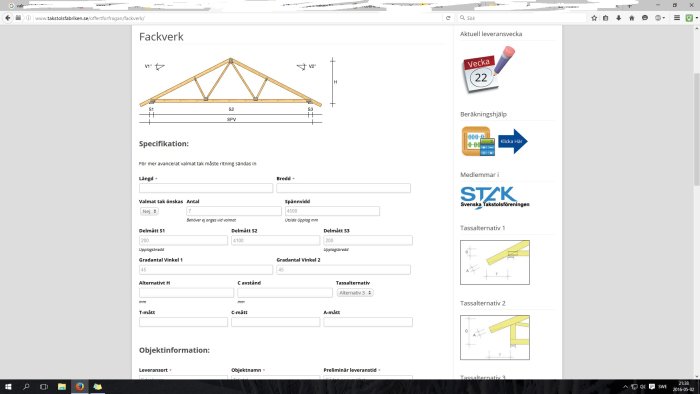
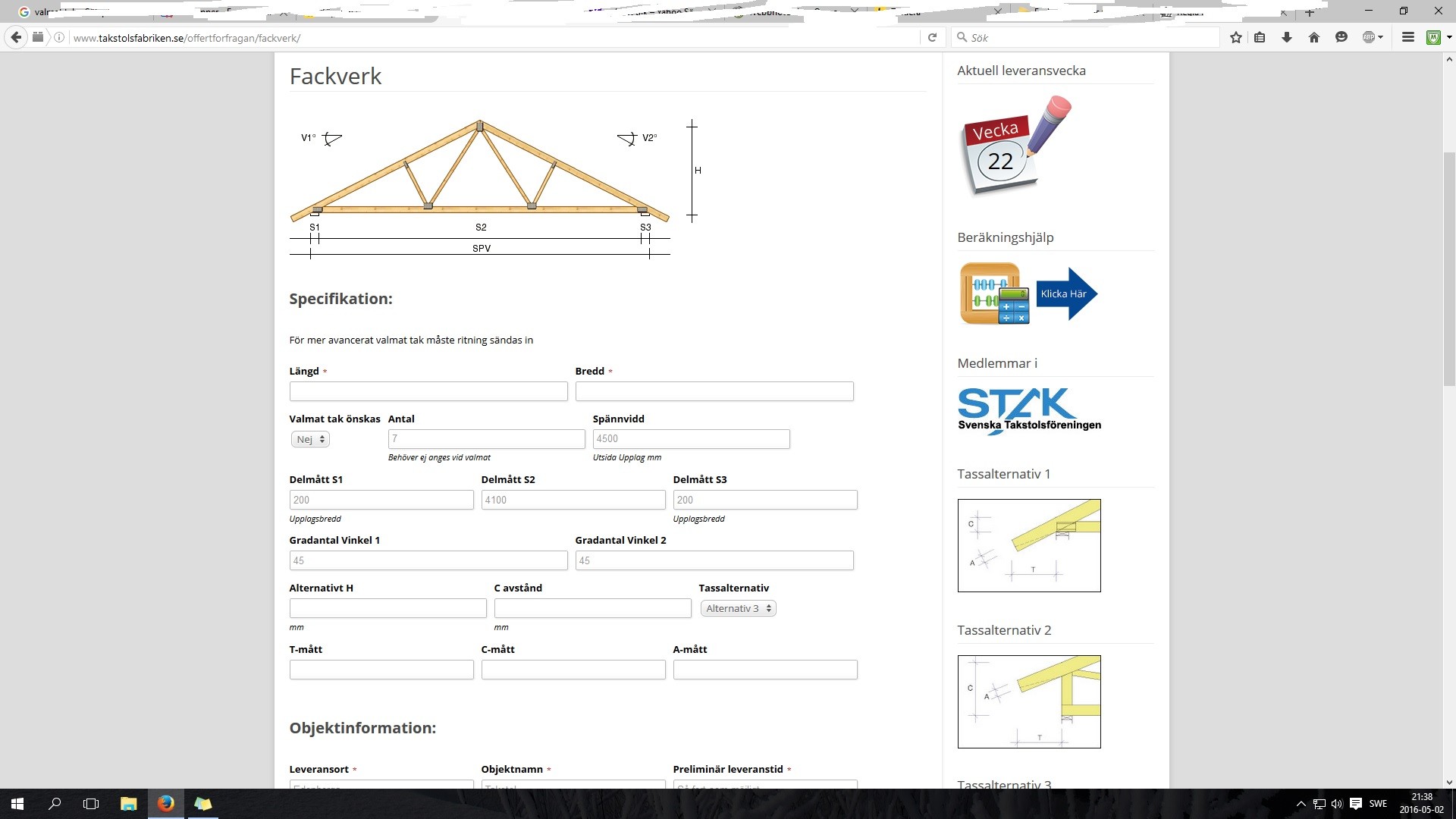
I believe that length means the length of the building structure, i.e., the number of roof trusses, and width means the width of the building structure.
Vi vill skicka notiser för ämnen du bevakar och händelser som berör dig.