13,100 views ·
83 replies
13k views
83 replies
Milling down particleboard in floor joists?
You mean if a beam needs to be cut to make room for the stairwell? It can, for example, be solved with columns that transfer the load downwards or a bridging (meaning that the load is transferred to the adjacent beams, which are then adapted to carry this extra load).catherineb said:
Homeowner
· Västerbottens län
· 775 posts
Homeowner
· Västerbottens län
· 775 posts
In our case, it's 3 beams that never reach a load-bearing wall. How does that work?Bernieberg said:

First and foremost, the joists must be sufficiently stable along the length of the joists, between their supports (the span). Here, one must choose sufficiently high joists until it's enough.But if we then ignore the current level difference and pretend that everything was at the same height. First, sheets and underfloor heating pipes need to go down, then some kind of board, then electric underfloor heating on top of that, then a waterproofing layer, and then self-leveling compound, followed by tiles. What height can I expect from that setup?
If the joists alone are sufficient, you can then lay a sparse panel or whatever you like; it doesn’t matter.
But if the joists alone aren’t sufficient (due to a long span combined with the height of the joist), you can glue and screw down a chipboard, which adds additional strength, as the chipboard contributes with extra height to the entire beam.
If you don’t glue the chipboard, there’s no such reinforcing effect; the same applies if you place a sparse panel—then you don’t gain any additional strength either.
And here we start approaching the crux of the matter. Since one almost never builds with larger studs than 220x45, the possible span ends at around 3 meters, after which it becomes too shaky.
And most houses are wide enough that you have to resort to also screwing and gluing the chipboard to the studs to make it strong enough without having to add more load-bearing beams in the ceiling of the ground floor or place load-bearing walls closer on the ground floor.
But once the strength is sufficient, you can then start building up the floor construction on the joists/floor.
Then comes underfloor heating, which is cast in self-leveling compound, with 12 mm self-leveling compound over the underfloor heating pipes, then a waterproofing layer, adhesive, and tiles.
And if you want to save some height, you can buy chipboard with pre-cut grooves for the underfloor heating pipes.
The minimum height (next to the floor drain) then becomes about 20mm higher than the floor was before you built up the surface. (and the floors in adjacent rooms often also have, for example, laminate flooring, parquet flooring, or something similar and build up 10-20 mm as well).
Then the maximum height depends on how much slope you have on the floor and how big the bathroom is. But it usually can manage with about 10 mm more.
So if you optimize the construction with pre-grooved chipboards, you should manage with a 25-35 mm build-up in the bathroom from the chipboard surface.
And adjacent rooms ought to also get a build-up of at least 10mm.
This is resolved with a bathroom threshold (which may need to be propped up a few mm) and then pouring self-leveling compound up to the inside of the threshold.
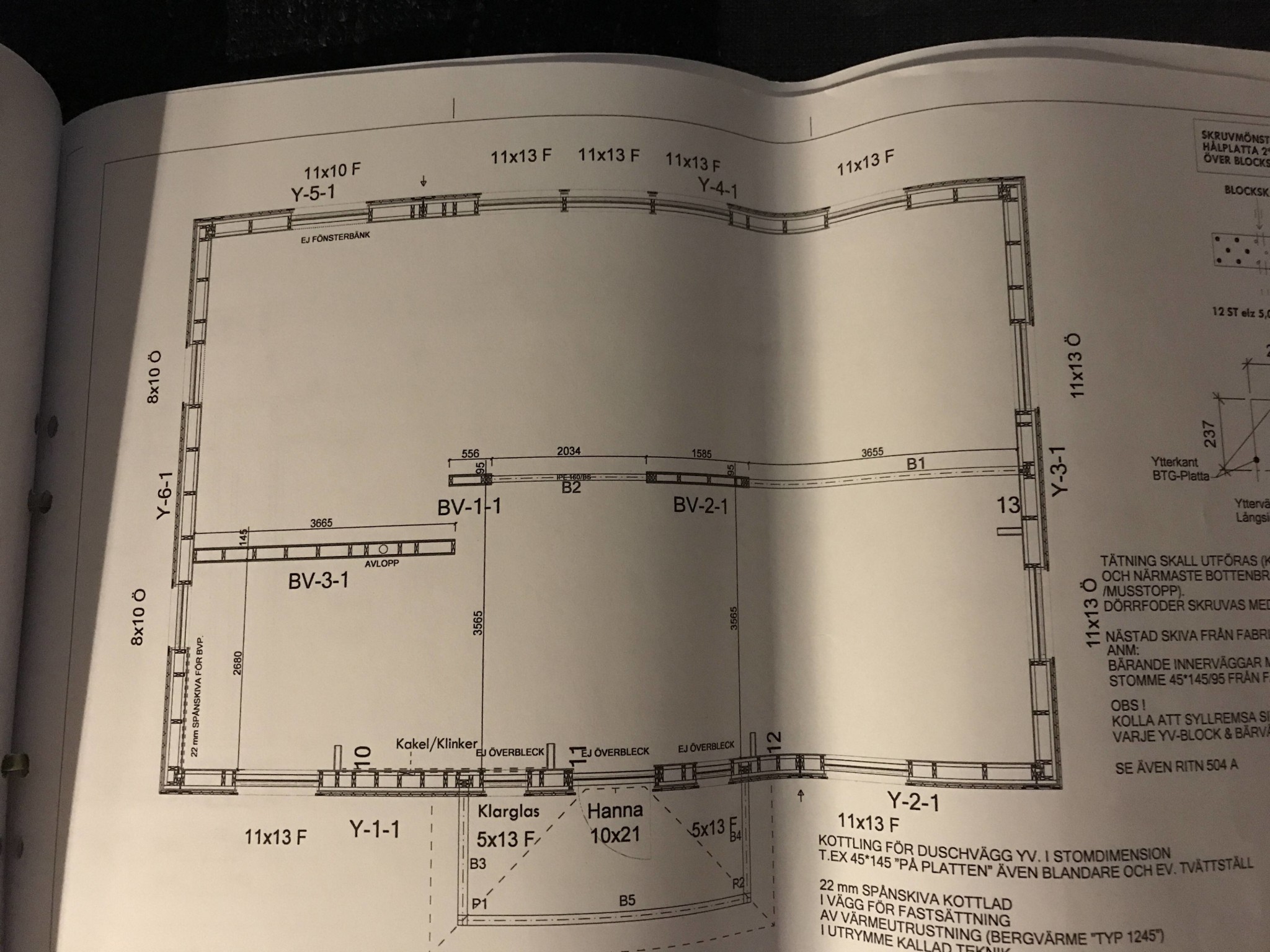
A closer consideration of this: where did you get 2.9 m from? Do you have a drawing showing the joist structure? If you have only measured the length or width of the room on the floor plan, it's not necessarily the same as the span, the walls might be sitting directly on a beam.
Homeowner
· Västerbottens län
· 775 posts
I measured the distance from the outer side of the outer wall to the load-bearing wall = 2.9 m. No, I don't have a drawing that shows the joist.
Homeowner
· Västerbottens län
· 775 posts
Where did you read that then? Share as much info as you can and want, and it will be easier to give good advice.
Homeowner
· Västerbottens län
· 775 posts
Homeowner
· Västerbottens län
· 775 posts
Internal measurement between load-bearing wall and outer wall is 2680.
Homeowner
· Västerbottens län
· 775 posts
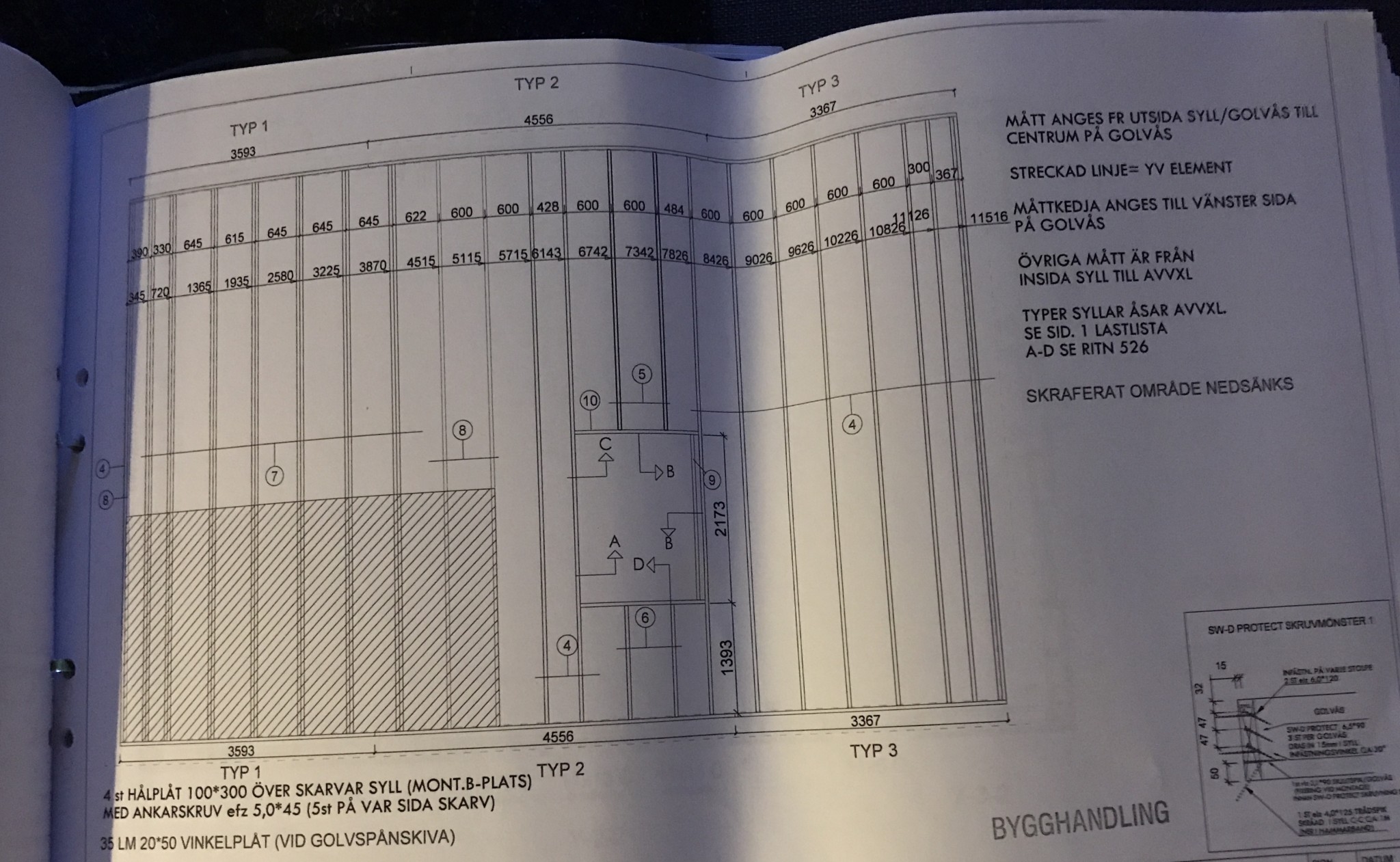
Now I found something.
Homeowner
· Västerbottens län
· 775 posts
Homeowner
· Västerbottens län
· 775 posts