
26,482 views ·
25 replies
26k views
25 replies
Lower ceiling 45 + drywall with wooden studs or metal studs
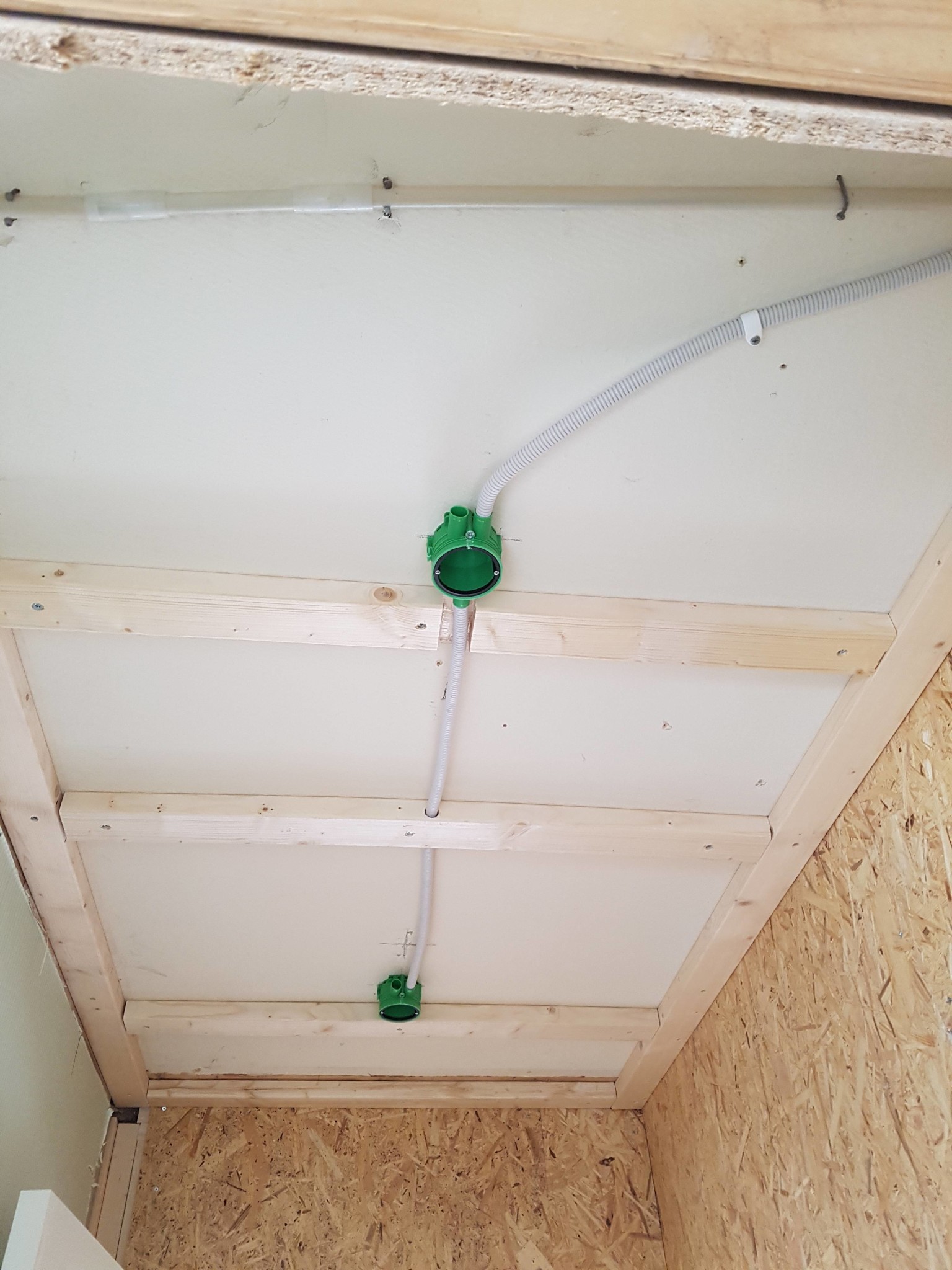
Yes, absolutely, I mostly meant that he should consider whether there are spotlights he likes at that depth. One of the few that I felt suited my purpose was 60mm deep.P Peter_K said:
It completely depends on how you frame, how you lay the drywall seams, room conditions, if you use mesh tape or paper tape in the seams, etc. etc. I have single-layer drywall throughout the apartment; you can't tell it's been redone unless you have spotlights.henke_benke said:
There are also spots with a low installation depth, so 28x70 is enough..
We have Hide-A-Lite halogen spots throughout the entire ground floor, nearly 100 of them. They work perfectly and not a single one has broken after 6 years...Installation depth 22 mm.
We have Hide-A-Lite halogen spots throughout the entire ground floor, nearly 100 of them. They work perfectly and not a single one has broken after 6 years...Installation depth 22 mm.
If the ceiling you are screwing into is stable, you can divide the suspension into, for example, two 21 mm crossed layers with 30 cm spacing. This way, you avoid breaking the 70 mm beam to pass through the vp pipes.
That's smart thinking, saves me that step. Do I need to frame the first layer with cc 300, or can I use cc 600? I'll obviously do the second layer with cc 300.M MagHam said:
Can I use outer panel 21x70? https://www.byggmax.se/virke/ytterpanel/21x70-ytterpanel-p08021070
It should work with cc 60 in the first layer, but it should be remembered that 21 mm outer panel does not have the same bending stability at all (the second layer must not sag!).
I have installed it in the rooms on the upper floor with the first layer cc 40 because it was suitable to attach every second one in the beam line and every other in between. It has held perfectly without the slightest settling or cracking.
I have installed it in the rooms on the upper floor with the first layer cc 40 because it was suitable to attach every second one in the beam line and every other in between. It has held perfectly without the slightest settling or cracking.
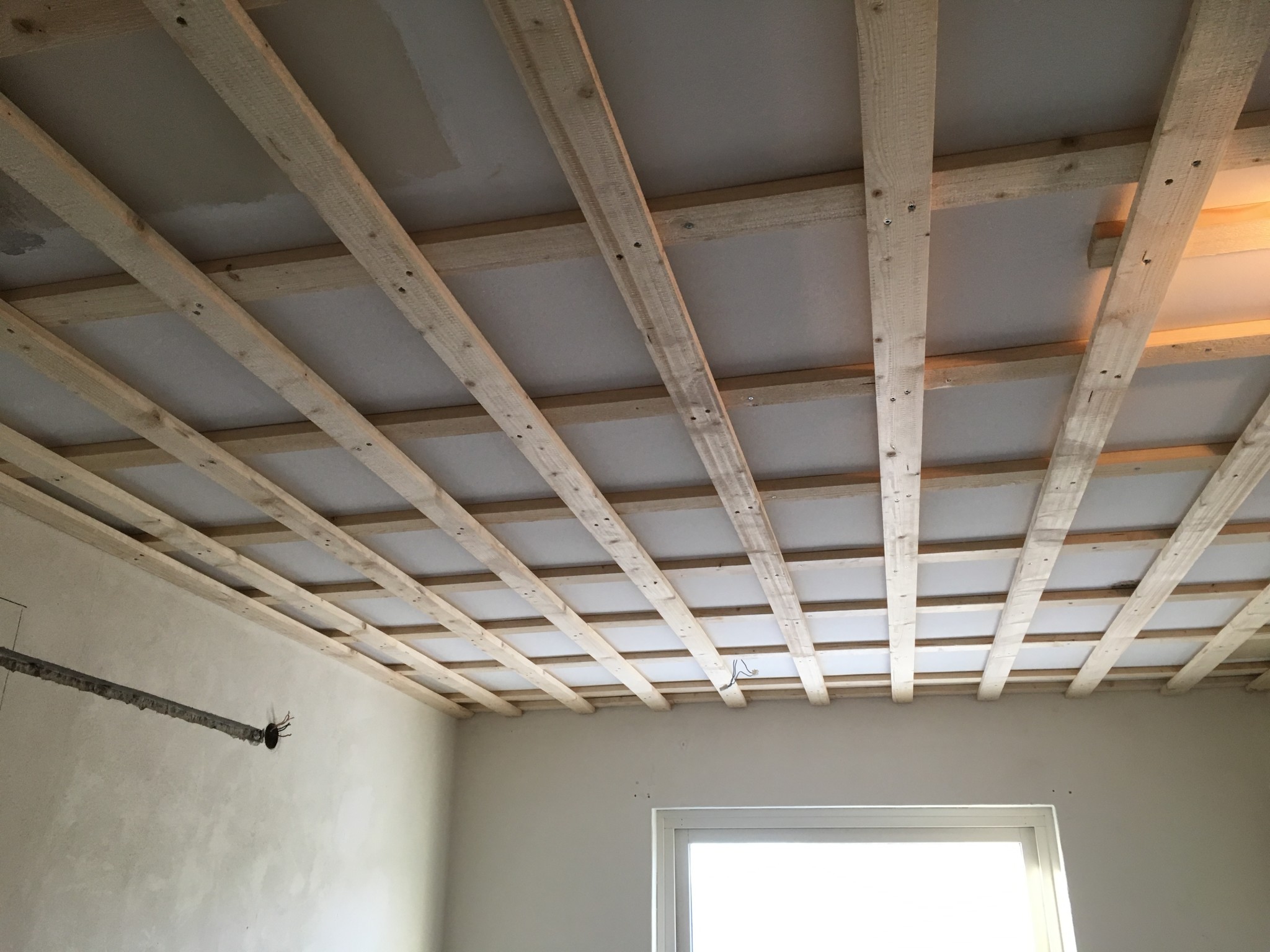
There we go, the ceiling frame is done and ready for spotlights and gypsum 
I used 21x70, first laying a layer crosswise with 450 centers. Fastened each beam with 5 pieces of 6x60 nail plugs, extremely secure. Then I screwed the second layer lengthwise with 300 centers using wood screws.
Thanks for all the tips and suggestions!
I used 21x70, first laying a layer crosswise with 450 centers. Fastened each beam with 5 pieces of 6x60 nail plugs, extremely secure. Then I screwed the second layer lengthwise with 300 centers using wood screws.
Thanks for all the tips and suggestions!
Me like...
Now you bring forward VP pipes in all directions without cutting into the framework.
21 outer panel holds the weight of plaster perfectly with those short center-to-center distances.
You have a concrete ceiling, but if the ceiling were wooden in a wooden house, you would find the joist line and let every other first board follow them. The crisscrossing in a wooden house has an additional advantage, which is that the ceiling "floats," decoupled from movements in the house = rarely movement cracks in the plaster.
A small detail that makes it easier is to set short stubs along the wall. It's easier if you're going to add ceiling molding later. Otherwise, you have to keep track of where the lines go.
Now you bring forward VP pipes in all directions without cutting into the framework.
21 outer panel holds the weight of plaster perfectly with those short center-to-center distances.
You have a concrete ceiling, but if the ceiling were wooden in a wooden house, you would find the joist line and let every other first board follow them. The crisscrossing in a wooden house has an additional advantage, which is that the ceiling "floats," decoupled from movements in the house = rarely movement cracks in the plaster.
A small detail that makes it easier is to set short stubs along the wall. It's easier if you're going to add ceiling molding later. Otherwise, you have to keep track of where the lines go.
Click here to reply