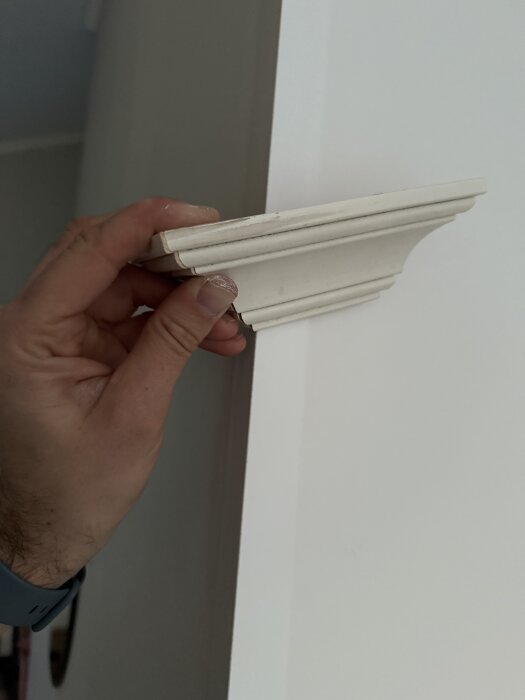
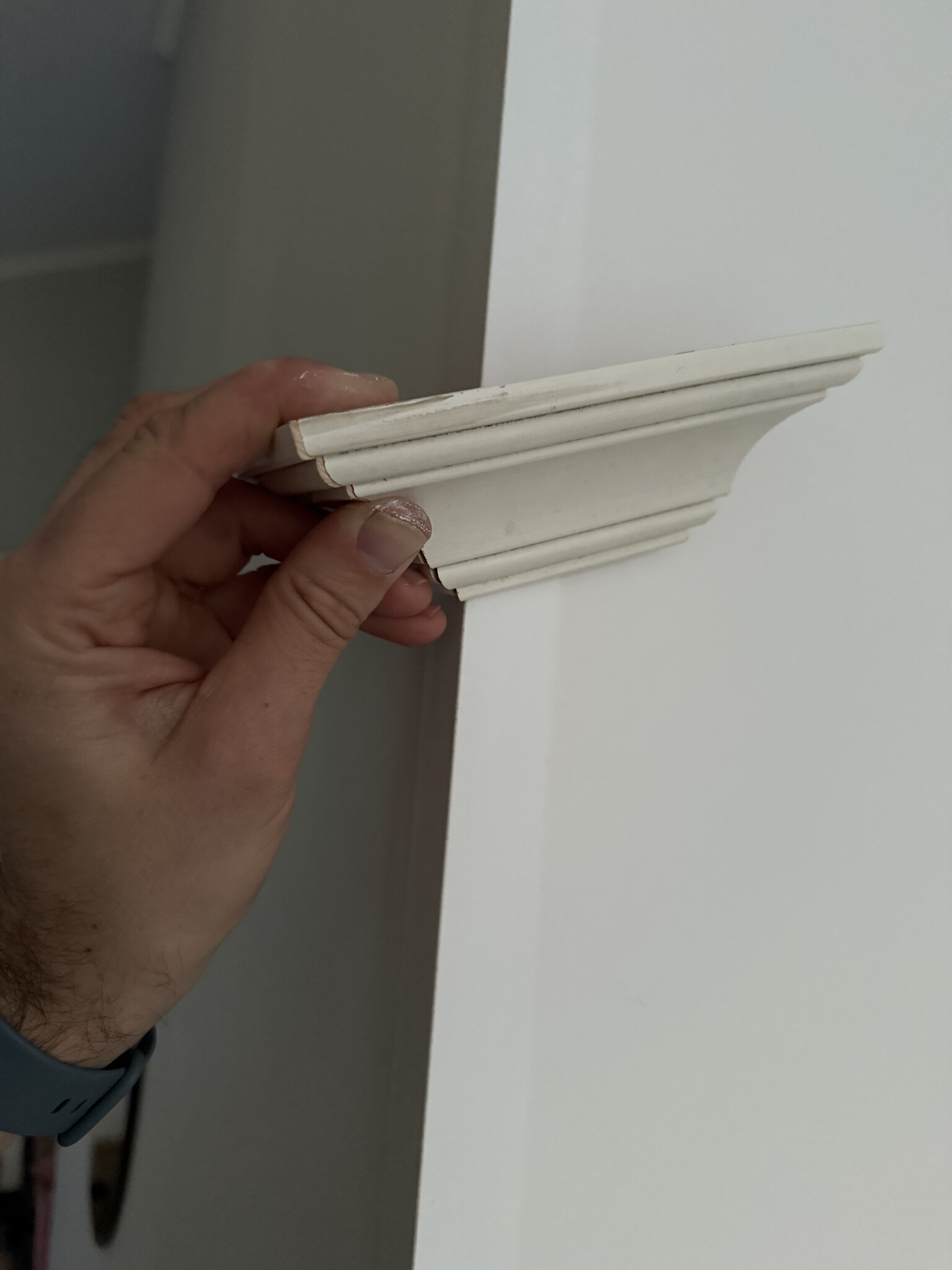
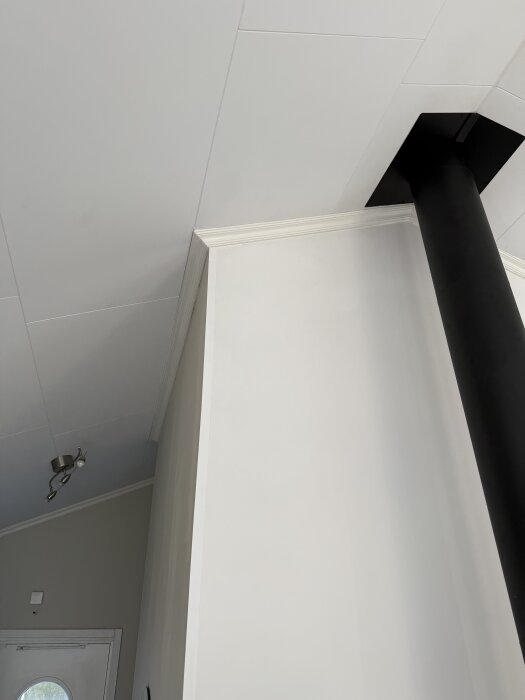
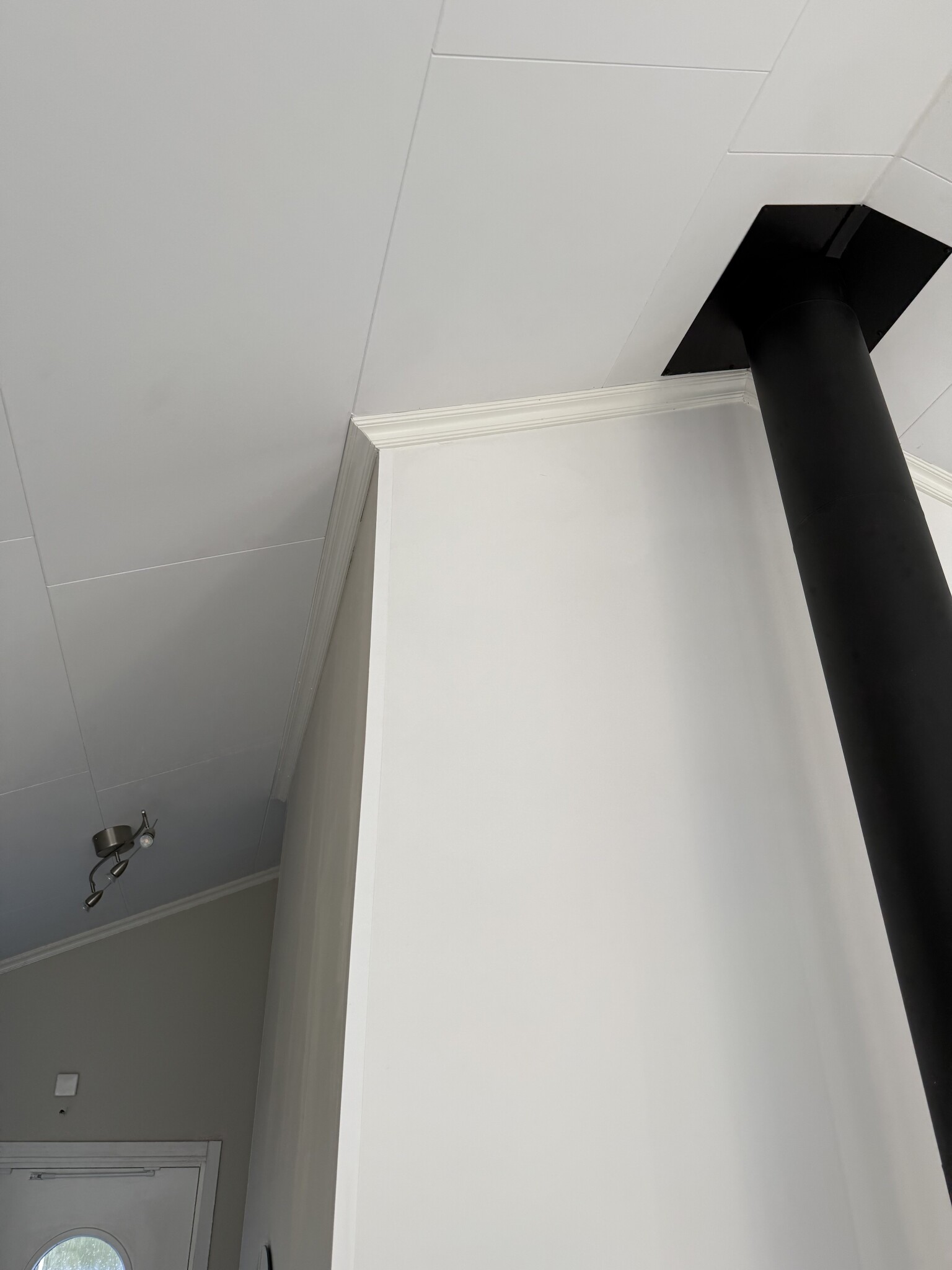
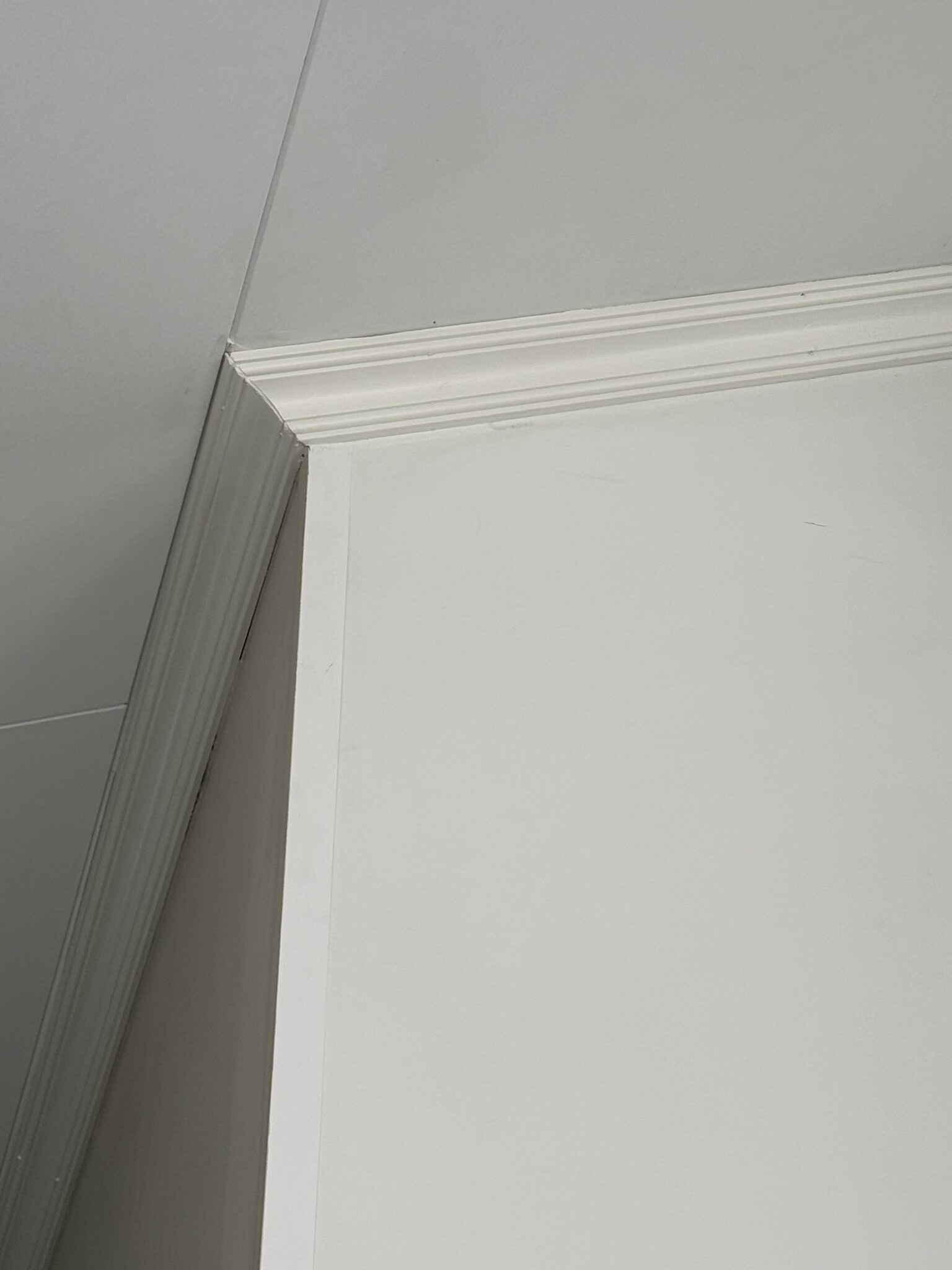
The easiest way is to miter 45 degrees as if the ceiling were horizontal and then angle the long strips slightly so they fit together with the short one.
The easiest way is probably to try with a few scrap pieces and see if it's possible to get right. It will be a compound cut, a 45° miter and at the same time tilt the saw at half the roof pitch angle.
I've made some scrap pieces now and am testing it out. Please explain the last part a bit more... I understand 45-degree miter.
Then I tilt the saw so that I get an angled/sloped cut at the same degree as the roof pitch?
So it forms a cut with both these angles?
I have made some test scraps now and am experimenting. Please explain the latter a bit more... 45-degree outer miter I understand.
Then I tilt the saw so that I get a diagonal/angled cut at the same angle as the roof pitch?
So it creates a cut but with both of these angles?
If you just make an outer corner with two 45° cuts and place them in your corner, the miter will gap due to the roof pitch. You must also find the angle that the slanted trim has in relation to the horizontal and split that angle between two cuts. Yes, your trims should be mitered with a cut in two different angles simultaneously; both turning and tilting the miter saw.
I have manufactured some scrap pieces now and am experimenting. Please explain the latter a bit more.. I understand cutting a 45-degree bevel on the outside edge.
Then do I tilt the saw so that I get an angled/cut in the same number of degrees as the roof angle?
So it creates a cut with both of these angles?
It's not possible to fit together two moldings that don't lie on the same plane. But you can cut at 45 degrees to create a 90-degree corner and place both moldings against the ceiling. That works.
It doesn't work to join two lists that are not on the same plane. But you can cut 45 degrees to get a 90-degree corner and place both lists against the ceiling. That works.
If you only make an outer corner with two 45° cuts and place them in your corner, the miter will gap due to the ceiling angle. You therefore need to also find the angle that the sloping molding has in relation to the horizontal and divide that angle between two cuts. Yes, your moldings need to be mitered with a cut in two different angles at the same time; both twisting and tilting the miter saw.
And the penny dropped..
I couldn't figure out the "double" saw angles.
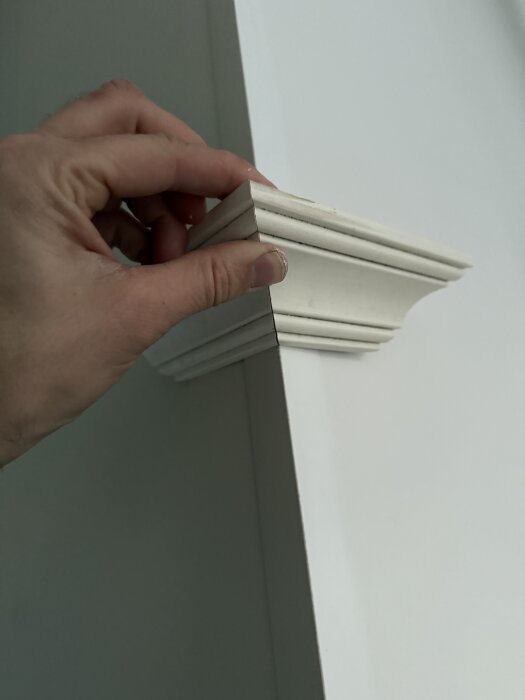
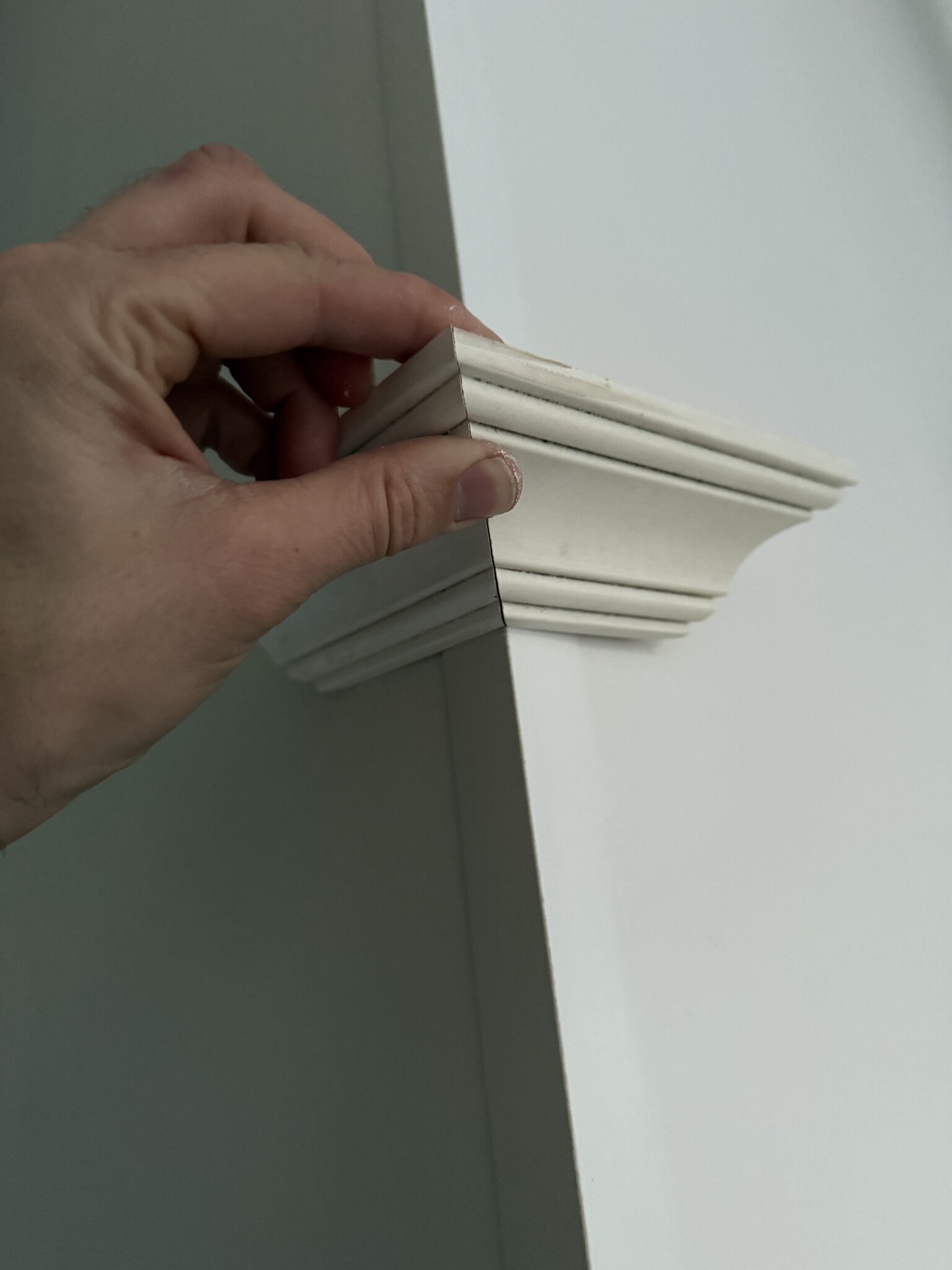
But. If I make two 45-degree cuts, I get a regular 90-degree corner.
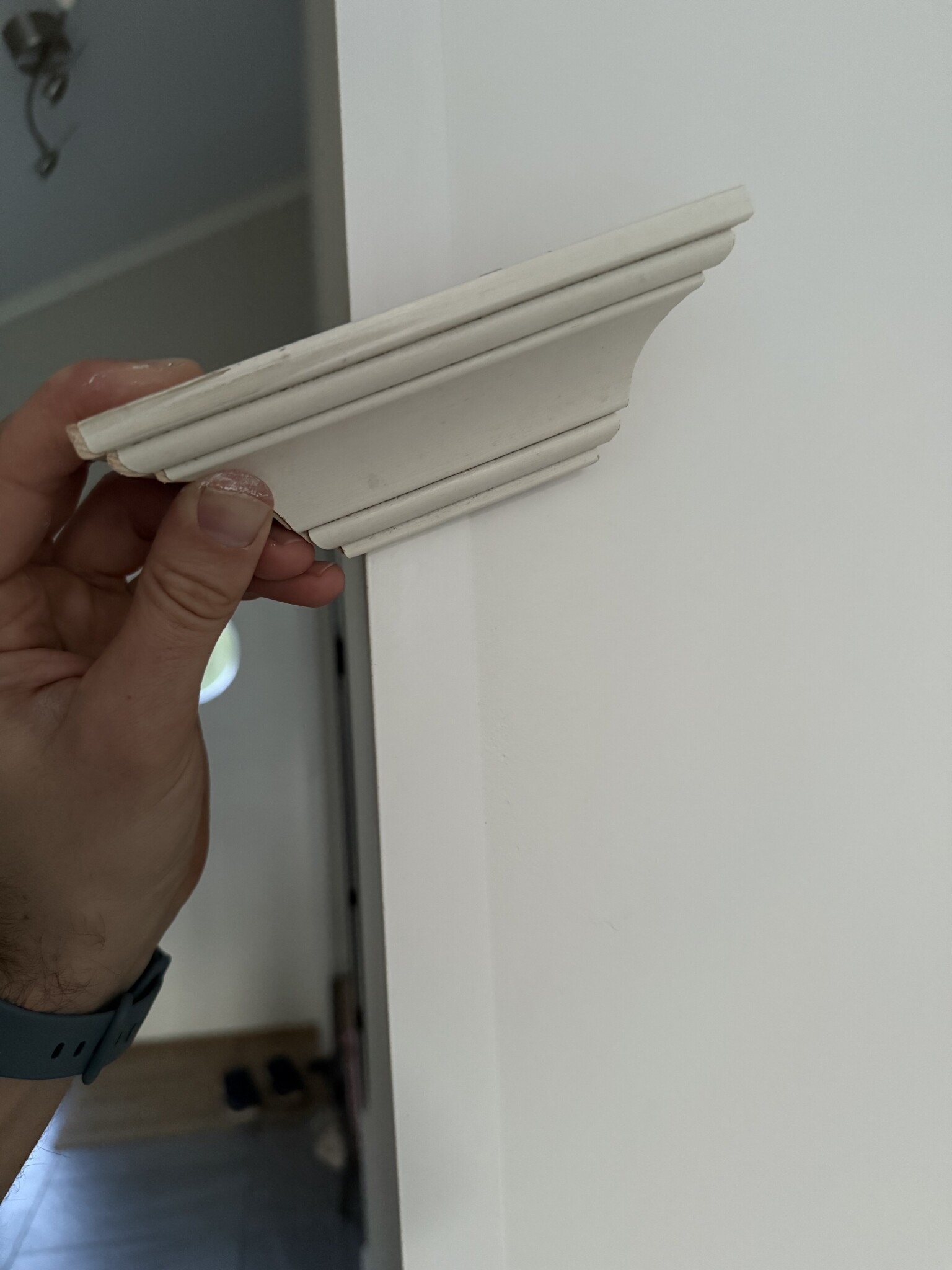
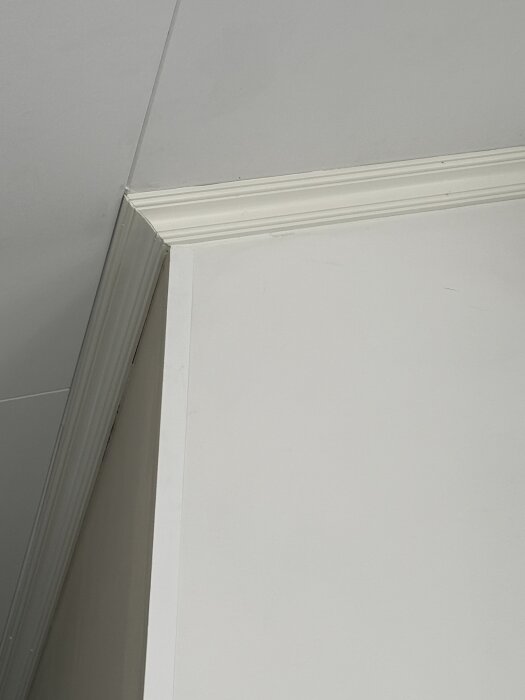
If I then angle the piece that is supposed to sit against the ceiling, following the ceiling's slope, the corner doesn't look good. As you can see.
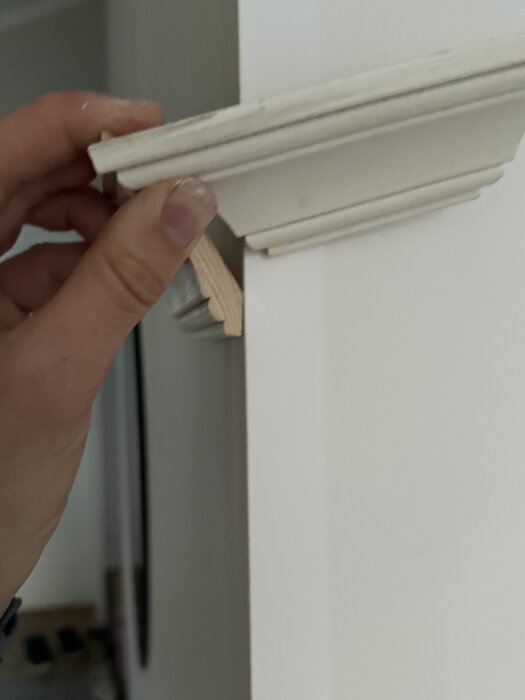
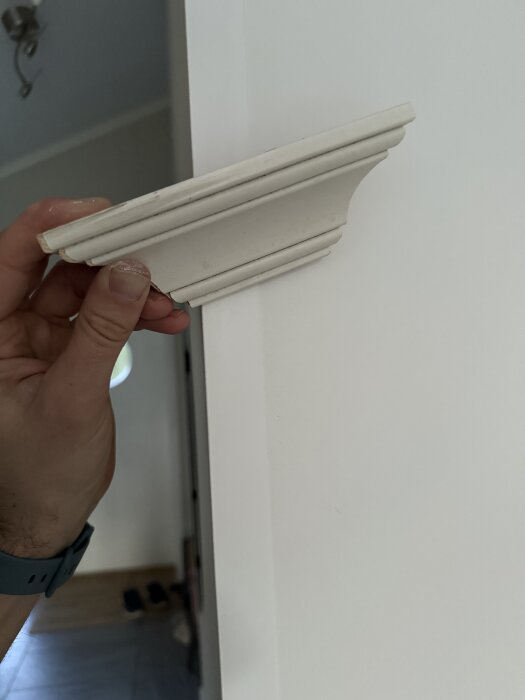
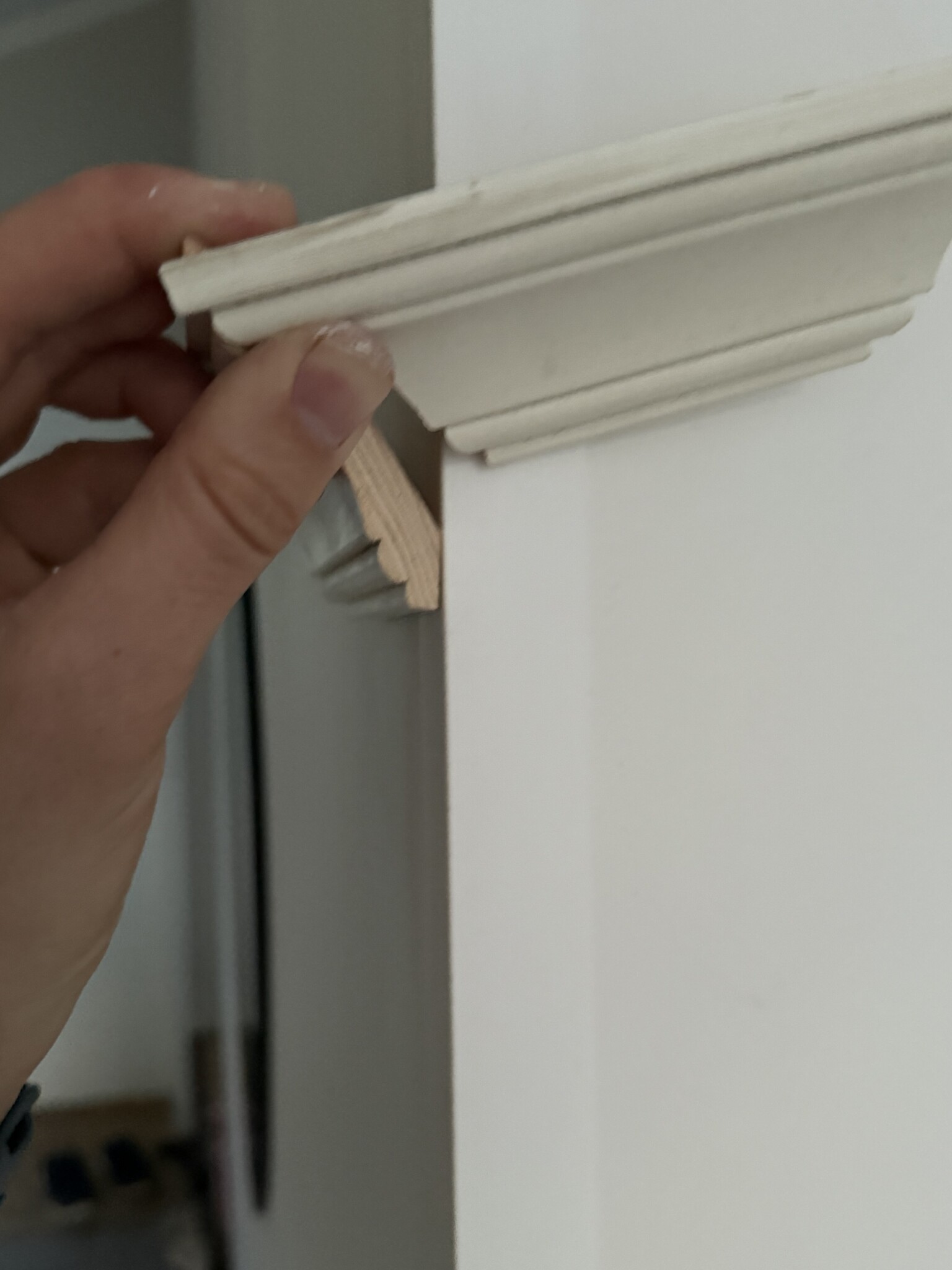
But, if I then move the left piece, which sits horizontally, a bit out from the ceiling, I get a good corner. But I suspect that I need to remove a piece from the bottom of the molding to make it flush with the wall. And how do I do that most easily?
No, you have a point, maybe it's not. Since I angle it out at the top, there is no gap at the bottom. But I should be able to attach it at an angle in a good way, which should be more difficult if it doesn't lie "dikt an" the wall.
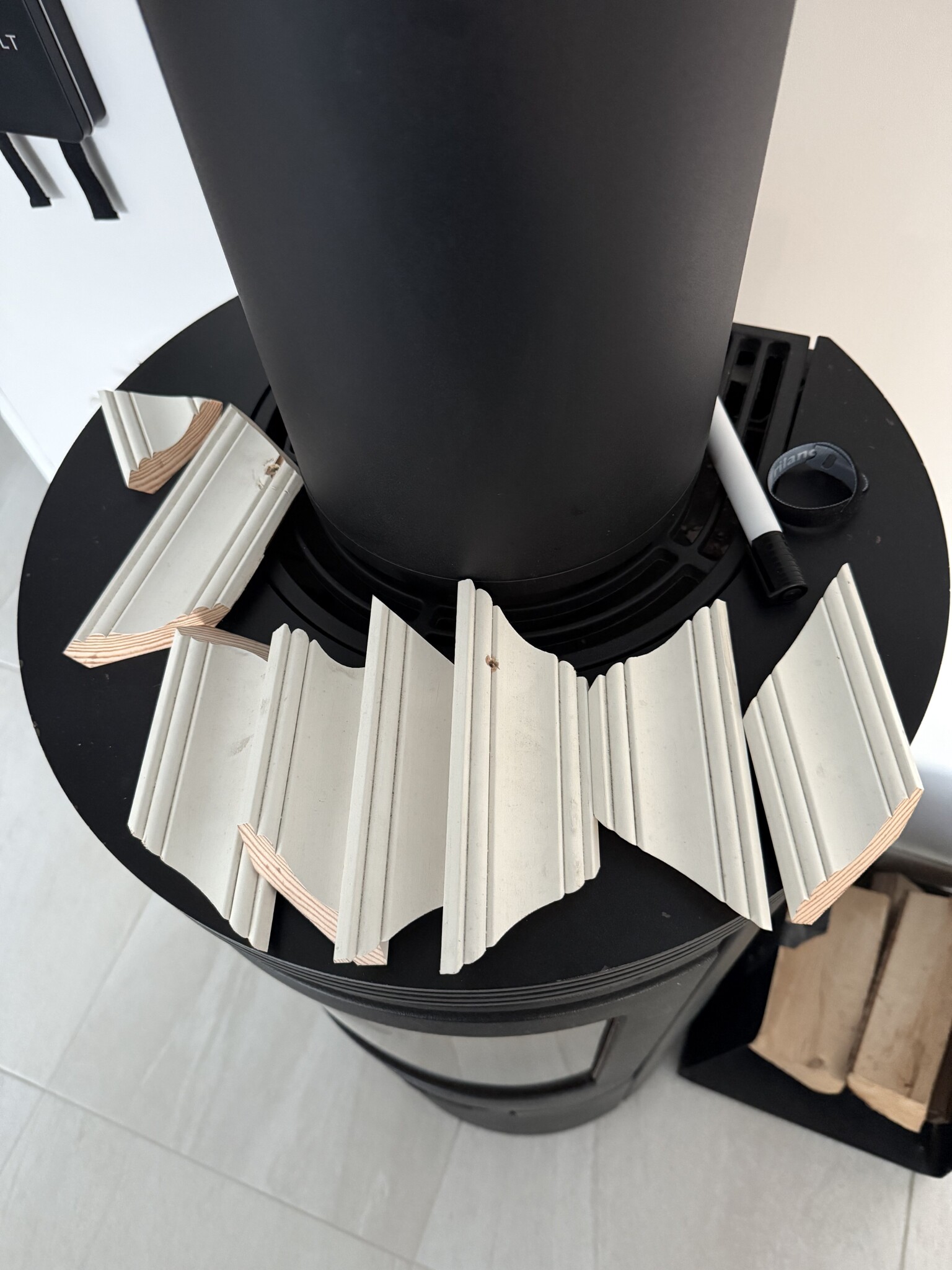
Managed quite well by cutting the left strip in place and then spending an unreasonable amount of time getting the right one together since no angles are as you imagine.
Test pieces and more test pieces until both sides were ok.
The problem is that all the strips are fofade and it becomes some work to remove, clean off joint residue, and put back.



Nilsanni said: