
36,416 views ·
102 replies
36k views
102 replies
Help! The wall plate is loose, will the roof collapse???
Most would guess that the facade isn't load-bearing. Even professionals might make the same mistake. It's not always the case that there are drawings or other documents showing the problem.Matti_75 said:
Thanks, it turned out well in the end.Henningelvis said:
Either that, or like someone else in this thread did, replaced the old modules with reglar. However, that's not something I would try myself, if so, I would hire a company.
Inside where? It's the eave boards that sit on the panel, you can't access them from the inside the way the house is built.
It's probably sufficient to take it in small sections and support it from the outside.
Yes, but this reply came after the original poster had already rebuilt the wall. If you read earlier replies in the thread, you can see suggestions for help during the process.Bananskalare said:
I understand that you're trying to help, but please take it in when I say that it's not possible to do so based on the way the house is built.
The rafters and the wall have (had) no contact at all; you can support the wall or the ceiling as much as you want, it will not affect the rafters or prevent this from happening.
To access the rafters from the inside, you would have to demolish most of the interior of the upper floor.
As I wrote, everything can be supported from the outside.
You must understand that it's the lower frame of the truss you need to brace. The rafters are just at the outermost part of the truss and are the part you see. Read my first post in the thread and Google truss so you see what I mean.Tinker_cat said:
I understand that you're trying to help, but realize when I say that it can't be done the way the house is built.
The rafters and the wall have (had) no contact at all, you can support the wall or the ceiling as much as you want, it won't affect the rafters or prevent this from happening.
To access the rafters from the inside, you would need to dismantle most of the interior of the upper floor.
As I wrote, everything can be supported from the outside.
Your first post says, "The trusses stand on the top plate of the wall." And what I'm saying is, the trusses have no contact with the wall.
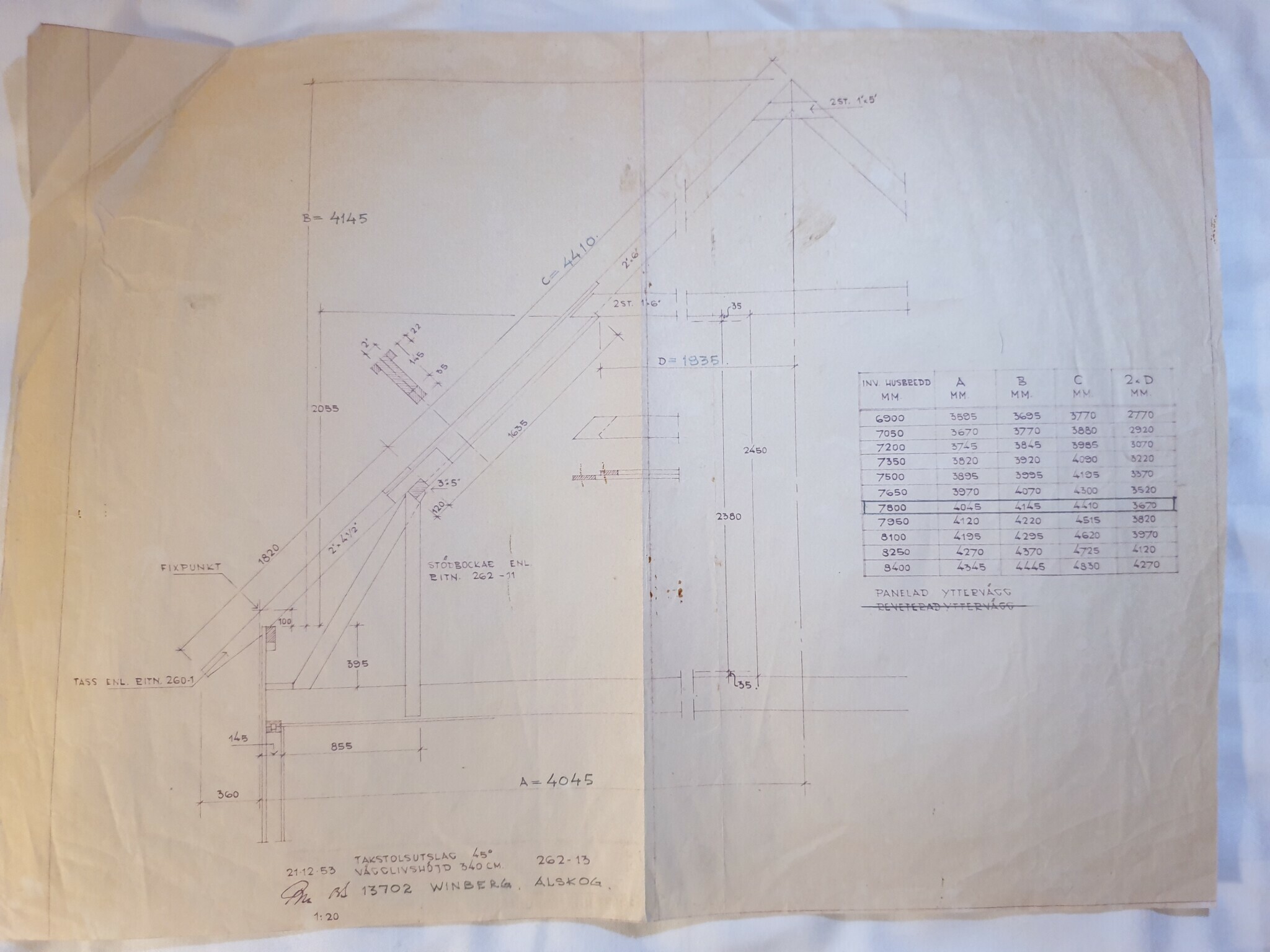
The floor joists to the upper floor lie on the wall, and the trusses go with support beams and braces down to the floor joists. As I said, the wall hasn't moved, nor have the floor joists. If you support inside against the ceiling, you're only supporting the joists that have always had support from the wall.
On the upper floor, there's no ceiling that far out, it's a small knee wall beneath which is an empty cavity where the only support after the brace has been the paneling. It's here that you need to support, and you can't reach it via any ceiling.
Ok I give up, no point in explaining further.Your first post says "The trusses stand on the top plate in the wall." And that’s what I’m saying, the trusses have no contact with the wall.
The upper floor joists rest on the wall, and the trusses go with supports and diagonal braces down to the joists. As I said, the wall hasn’t moved, and neither have the joists. If you put support on the interior ceiling, you're just supporting the joists that have always been supported by the wall.
There's no interior ceiling so far out on the upper floor, there’s a small kneewall there under which is an empty cavity where the only support after the diagonal brace has been the paneling. It's here that you need to brace, and you can’t reach this through any interior ceiling.
Click here to reply