
5,532 views ·
11 replies
6k views
11 replies
"Facade replacement" and integration of cassette in masonry fireplace
Hello,
Trying to write my first post here. I've been reading the forums for a long time and learned a lot from the others.
Now to the problem I've encountered.
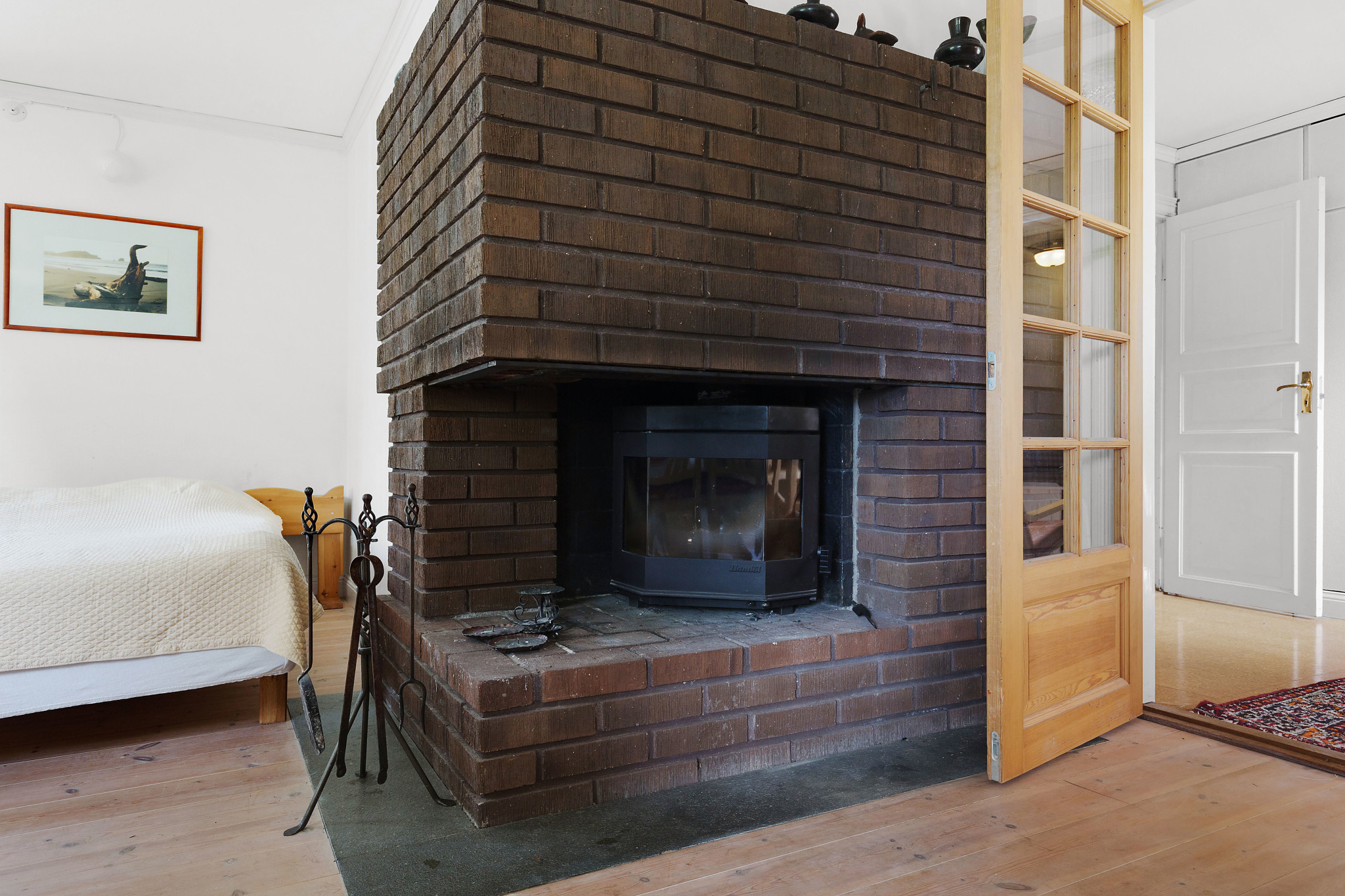
I recently bought a house that had a large ugly masonry fireplace with a small insert down in the basement.
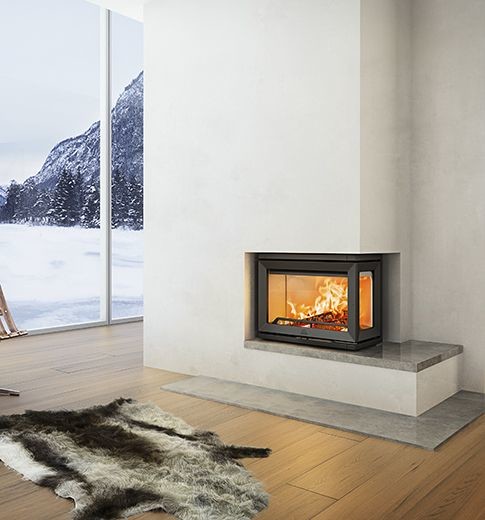
My plan was to remove the outer layer of brick from the fireplace to reduce the volume, as well as to smooth it out, make it look nice, and put in a much larger insert. Basically, change the proportions of the fireplace/stove from a gigantic brick lump with a small fire to a more modern, sleek, and smooth look with a larger stove.
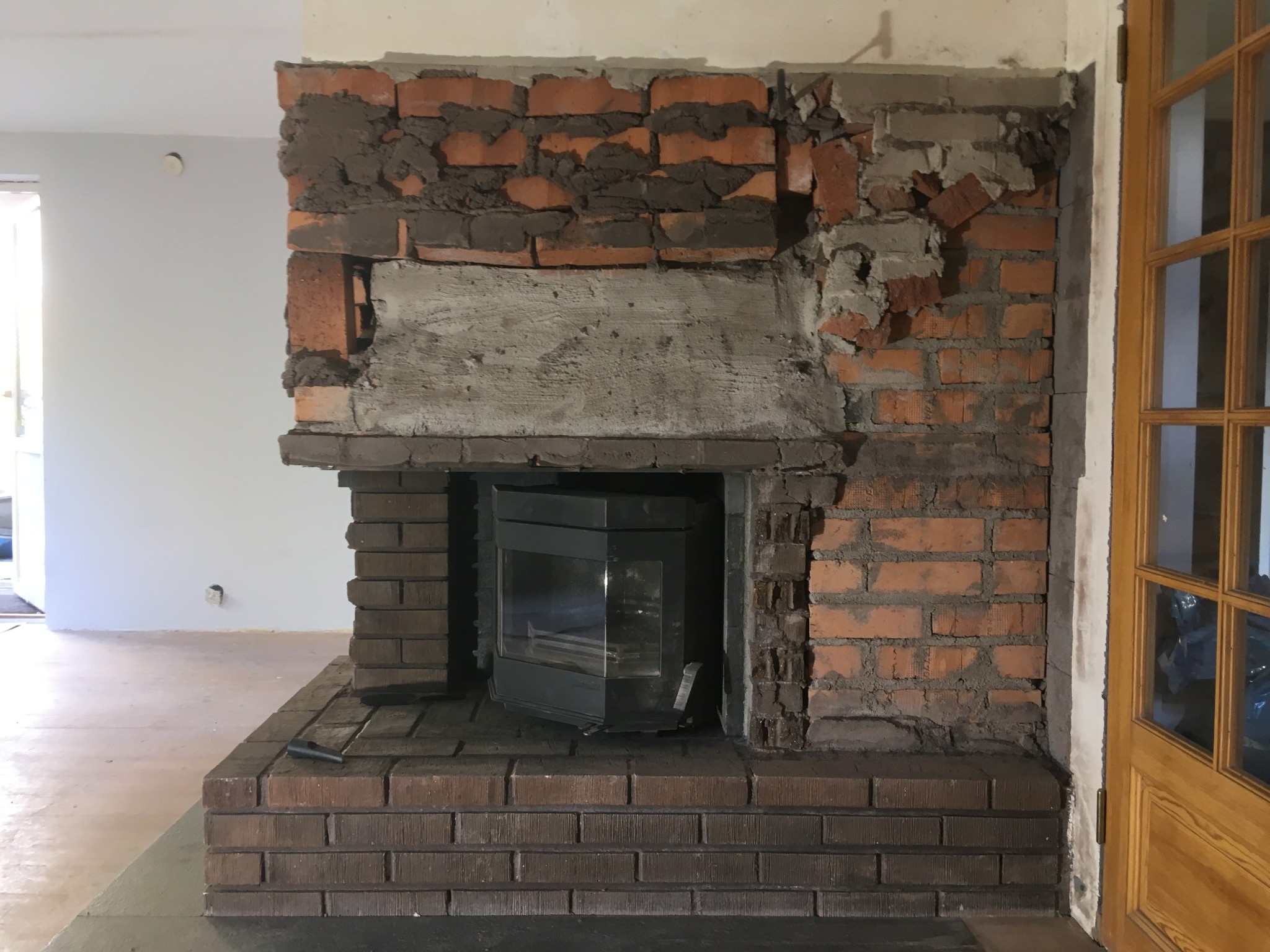
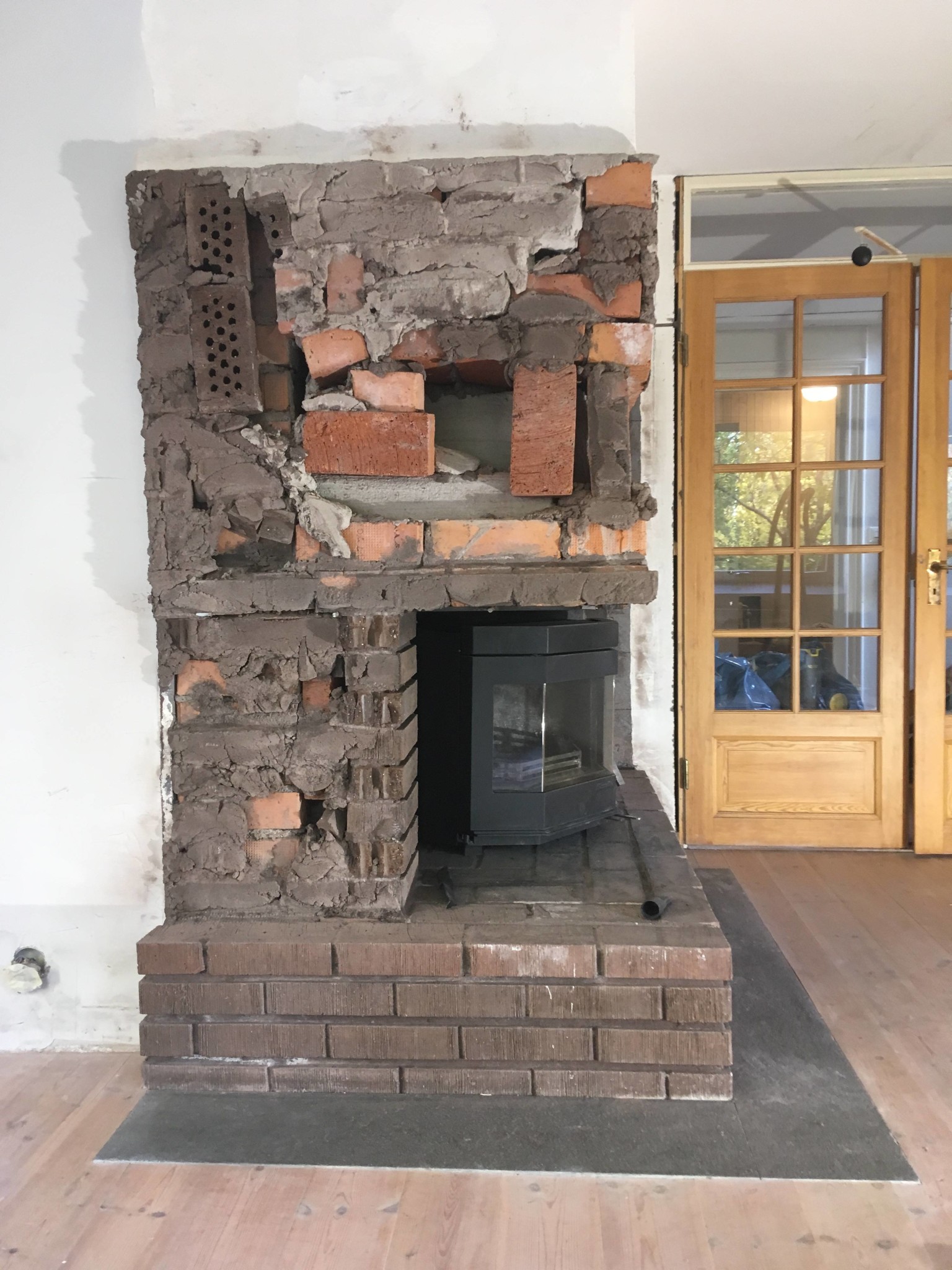
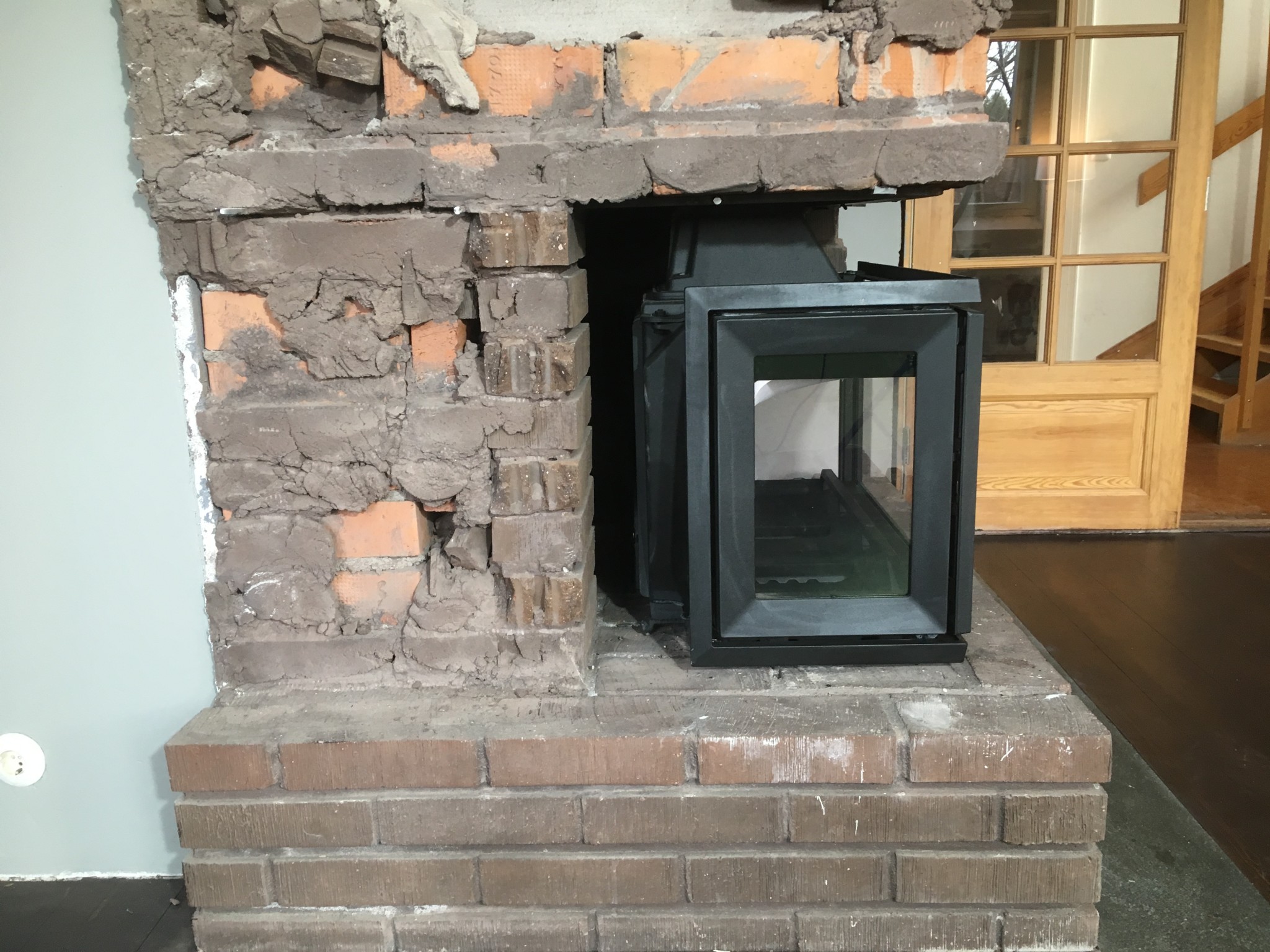
It went well to remove the bricks, I expected to encounter another layer of bricks behind it, which in turn could be plastered. But the problem was that under the decorative bricks there was poor workmanship, with large gaps between the actual fireplace/hood underneath and the "facade" in front.
Now I'm not quite sure how to proceed. But the ideas I have are the following.
Install fireproof boards and clad the fireplace, plaster the seams, and paint everything to make it smooth and uniform. The problem is that everything I find about building a fireplace with board material points to silicate boards like silca/sica. These are sold by most stove retailers, but they are firstly expensive and also thick (50mm), which means I regain some of the volume I've worked so hard to reduce. The alternative that I thought would work was to install minerit boards, which appear to be thinner in thickness and cheaper, which should be perfect? But after googling and researching, the fireproof boards cannot be plastered.
The alternative is to build up the cavities and plaster everything with mesh. But there I don't really know what to use as filler. The cavities to be filled are between 6-8cm deep, so I hardly think you can use mortar in such thick holes. I also can't use bricks directly to brick up. One thought was that there ought to be something like crushed brick that can be mixed with mortar, slightly larger pieces that make it hold?
As you can hear, I'm a complete novice with masonry, and I appreciate any tips and ideas I can get regarding this.
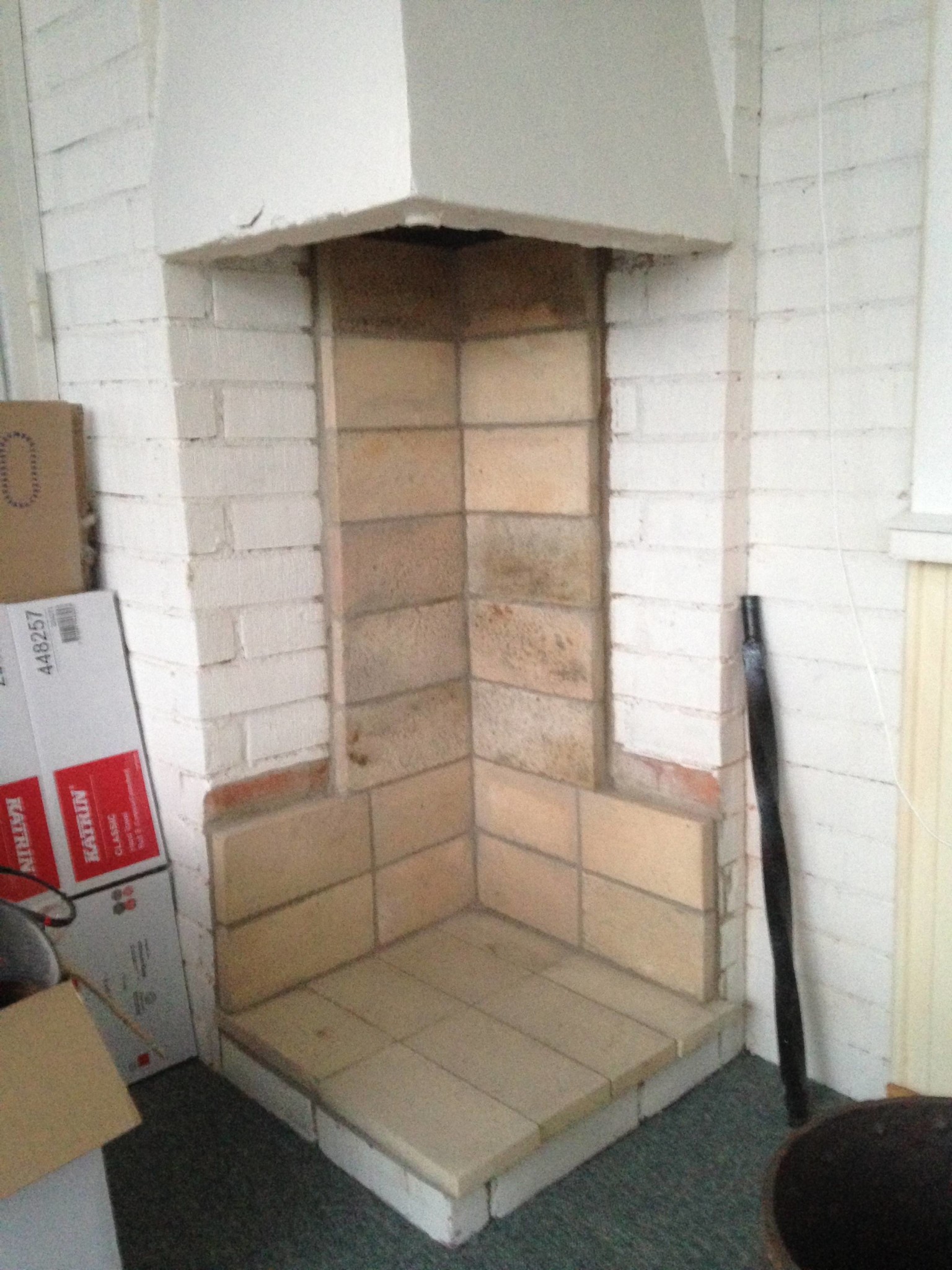
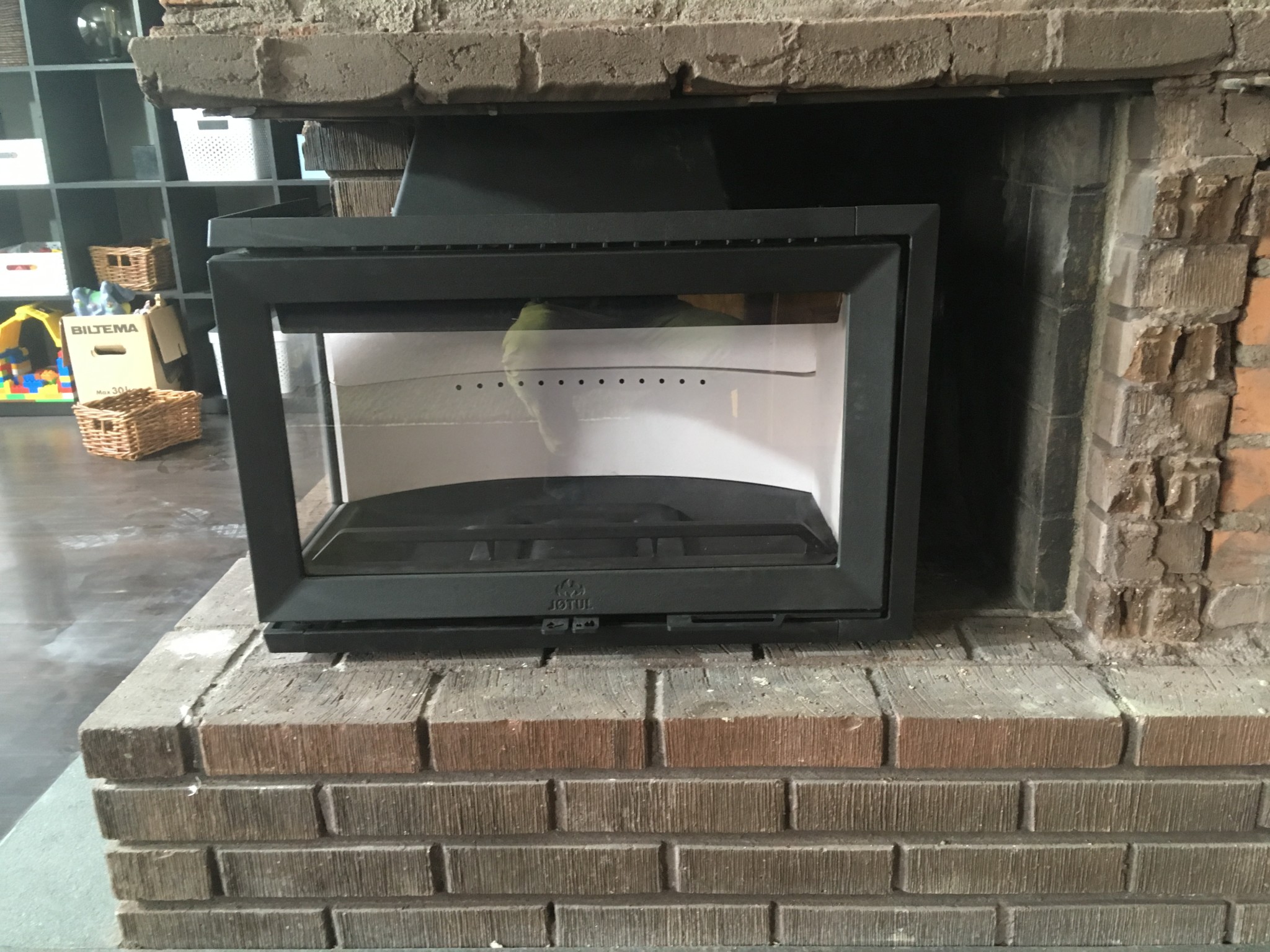
Attached are pictures, the first picture is how it looked before I removed the bricks, the other two after.
Trying to write my first post here. I've been reading the forums for a long time and learned a lot from the others.
Now to the problem I've encountered.
I recently bought a house that had a large ugly masonry fireplace with a small insert down in the basement.
My plan was to remove the outer layer of brick from the fireplace to reduce the volume, as well as to smooth it out, make it look nice, and put in a much larger insert. Basically, change the proportions of the fireplace/stove from a gigantic brick lump with a small fire to a more modern, sleek, and smooth look with a larger stove.
It went well to remove the bricks, I expected to encounter another layer of bricks behind it, which in turn could be plastered. But the problem was that under the decorative bricks there was poor workmanship, with large gaps between the actual fireplace/hood underneath and the "facade" in front.
Now I'm not quite sure how to proceed. But the ideas I have are the following.
Install fireproof boards and clad the fireplace, plaster the seams, and paint everything to make it smooth and uniform. The problem is that everything I find about building a fireplace with board material points to silicate boards like silca/sica. These are sold by most stove retailers, but they are firstly expensive and also thick (50mm), which means I regain some of the volume I've worked so hard to reduce. The alternative that I thought would work was to install minerit boards, which appear to be thinner in thickness and cheaper, which should be perfect? But after googling and researching, the fireproof boards cannot be plastered.
The alternative is to build up the cavities and plaster everything with mesh. But there I don't really know what to use as filler. The cavities to be filled are between 6-8cm deep, so I hardly think you can use mortar in such thick holes. I also can't use bricks directly to brick up. One thought was that there ought to be something like crushed brick that can be mixed with mortar, slightly larger pieces that make it hold?
As you can hear, I'm a complete novice with masonry, and I appreciate any tips and ideas I can get regarding this.
Attached are pictures, the first picture is how it looked before I removed the bricks, the other two after.
Should it be used a lot, i.e., as a primary heat source?
If you're going to build it up, use solid bricks instead of perforated ones, and there's no problem cutting them to get the desired width/size.
I created the desired size by first making the space even larger and then lined it with firebrick.
I used regular mortar because it's supposed to be a stove there.
Following the thread
If you're going to build it up, use solid bricks instead of perforated ones, and there's no problem cutting them to get the desired width/size.
I created the desired size by first making the space even larger and then lined it with firebrick.
I used regular mortar because it's supposed to be a stove there.
Following the thread
To TS. I think it's fine to chop the bricks into smaller pieces and use regular mortar to secure them in your larger gaps.
You are going to have an insert, and probably? also a hose/pipe from this going up a bit in the chimney. Hence, you don't need to use fireproof mortar. It'll just be warm air from the insert on the inside of the hood.
I recommend placing a grill high up so the heat can disperse more easily.
Then you can plaster the exterior as intended.
//AA
You are going to have an insert, and probably? also a hose/pipe from this going up a bit in the chimney. Hence, you don't need to use fireproof mortar. It'll just be warm air from the insert on the inside of the hood.
I recommend placing a grill high up so the heat can disperse more easily.
Then you can plaster the exterior as intended.
//AA
It won't be used much or as a primary heat source, mostly for the cozy factor as it's located in our recreation room, which is intended to function as a second living room.B BiggeTheKing said:Will it be used a lot, i.e., as a primary heat source? If you're going to build it up, don't use perforated bricks but solid bricks, and it's no problem to cut them to get the desired width/size. I created the desired size by first making the space even larger and then lining it with fireproof bricks. I used regular mortar because it's going to be a stove there. Following the thread
Interesting that you mention that if you build it up, you shouldn't use perforated bricks. I actually had a chimney sweep look at it briefly, and he said the same thing—if you want to get heat out of the chimney, it should be properly constructed, but he agreed that if it's just for the cozy factor, you can use calcium silicate boards, as these will shield the heat.
@BiggeTheKing, did you also make the hood above the fireplace? It looks like plastered brick?
Ah, ok, so the idea of breaking bricks and using the pieces with mortar is reasonable, then, I thought maybe I was way off with that idea? A perhaps strange question, but where does one buy (cheap) bricks that can be crushed?S saiter said:To TS. I think it works well to break down bricks into smaller pieces and mortar them in place with regular mortar in your larger cavities. You are going to have a cassette and probably? also a hose/pipe from it and up a bit in the chimney. Therefore, you don't need to use fireproof mortar. It will just be hot air from the cassette inside the hood. I recommend putting a grid high up so the heat comes out more easily.
Then you can plaster as intended on the outside.
//AA
If you shouldn't use hollow bricks, are solid bricks easy to split? When I took mine down, I had to cut a few pieces and they were hollow; it was very easy with a hammer drill, they split almost immediately. Hence my first thought would be hollow bricks because they’re easier to break into small pieces.
Isn't it possible to buy mini bricks somewhere else? that are about 5cm deep?
Dry-cut stones with a diamond blade on the angle grinder. Works fine, those who are skilled split with the hammer.

Ok, thanks for all the tips. I'll have to find cheap brick on Blocket and cut it into small pieces then.
Another question, how thick can you apply mortar? Can you do it in several rounds to make it thick? I see several places where I would like to smear on mortar as filler instead of small bricks and mortar. As I said, I have no experience with mortar, only putty, so I know roughly how thick you can apply that.
Another question, how thick can you apply mortar? Can you do it in several rounds to make it thick? I see several places where I would like to smear on mortar as filler instead of small bricks and mortar. As I said, I have no experience with mortar, only putty, so I know roughly how thick you can apply that.
A small update, the project has been on hold while other things have been going on at home. But today we got the new cassette installed.
Posting picture.
Talked to the installers who were also masons.
They were completely on board with the idea of using Minerit boards and applying regular broad filler and wall paint on them. So now I'm back to that idea.
Minerit boards/cement fiber boards cost nothing and are easy to put up. I’ll look further into this option. Does anyone here have any opinions or experience with it?
The idea is to let the boards come close to the cassette and enclose it so that the gaps around disappear.
To be continued.
Posting picture.
Talked to the installers who were also masons.
They were completely on board with the idea of using Minerit boards and applying regular broad filler and wall paint on them. So now I'm back to that idea.
Minerit boards/cement fiber boards cost nothing and are easy to put up. I’ll look further into this option. Does anyone here have any opinions or experience with it?
The idea is to let the boards come close to the cassette and enclose it so that the gaps around disappear.
To be continued.
Hi, it ended up being minerit boards. However, I haven't put them up yet, summer came in between, but the material is purchased.HannaML said:
The tricky part that's left is that I'm planning to use steel studs to assemble it, and I'm unsure about which plugs to use to fasten them. All brick plugs are made of plastic, so I'm unsure what temperatures they can withstand.
Click here to reply