
21,186 views ·
27 replies
21k views
27 replies
Drilling in hole concrete without a hammer drill?
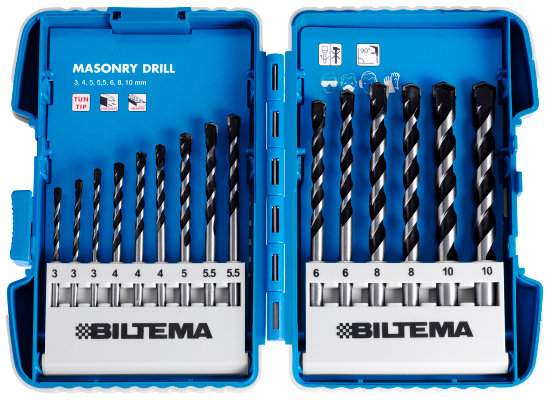
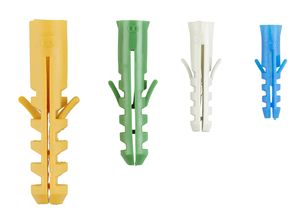
It is first plaster, so I can't really see the stone well, but the rotary hammer cuts into it like butter as mentioned, and the paperwork states that it's lightweight concrete (the reason we did a radon measurement before moving in).tommib said:TS, is it lightweight concrete or concrete hollow block (two different things)? Can you break off the edges of the hole with your fingers or a small nail? If so, it's lightweight concrete.
If it's like drilling into butter, I guess it's lightweight concrete and I would do as anders07 suggests. I use the same tactic at home for larger holes. For red plugs (6mm) I use an old Phillips screwdriver that happens to be the right size and just drive it into the wall. The advantage is it compresses the lightweight concrete around the plug so it holds better.
For heavy things (like shelving rails, kitchen cabinets) I use Fischer GB lightweight concrete plugs. They hold like a rock.
So you mean I shouldn't buy specific concrete drill bits but use my wood drill bits?
Regarding the plugs, should I return the ones I bought at Clas Ohlson and buy others of better quality and perhaps a different design?


Try using a wood drill bit. Buy the cheapest stuff you can find at Ö&B because you'll break them anyway after 10-20 holes. If you can drill with a wood drill bit, then it's aerated concrete. You should absolutely not use the hammer function when doing this. The advantage of a wood drill bit versus a concrete drill bit in aerated concrete is that it creates much cleaner holes with the wood drill bit since they are sharp and give clean edges (for 10-20 holes...).
Regarding plugs, I can't comment because it doesn't specify what will be mounted. Personally, I like Thorsman plugs that are color-coded (red = 6, brown = 8, blue = 10, etc.), they work well for me. I buy EssVe's version but I suspect that it's Thorsman who manufactures them...
For heavier items, for me, it's Fischer GB.
Regarding plugs, I can't comment because it doesn't specify what will be mounted. Personally, I like Thorsman plugs that are color-coded (red = 6, brown = 8, blue = 10, etc.), they work well for me. I buy EssVe's version but I suspect that it's Thorsman who manufactures them...
For heavier items, for me, it's Fischer GB.
Thank you very much for the help! I will try with regular wood drill bits first, but I'll still purchase concrete drill bits in case it doesn't work.
Regarding plugs and screws, it feels better to have it in another thread, so please help me here: https://www.byggahus.se/forum/byggm...n-skruv-och-plugg-till-detta.html#post2406702
Once again, thank you so much for your input!
Regarding plugs and screws, it feels better to have it in another thread, so please help me here: https://www.byggahus.se/forum/byggm...n-skruv-och-plugg-till-detta.html#post2406702
Once again, thank you so much for your input!
Member
· Västra Götaland
· 145 posts
If you want to know if it's real concrete or some variant of lightweight concrete/light-aggregate concrete, just drill without impact. If it's real concrete, it will come to a complete stop as soon as you've drilled through the plaster, and you definitely won't damage a concrete drill bit by doing it this way (as long as you don't wear down the drill against the concrete for an extended period, that is).
Usually, you also look at what comes out of the hole to determine if it is concrete or lättbetong. The material that comes out when drilling in lättbetong is more "grainy" while concrete becomes more like a fine powder.
As mentioned, if it's like drilling into butter, it's probably not concrete; there is usually some resistance even if you have a massive hammer drill...
As mentioned, if it's like drilling into butter, it's probably not concrete; there is usually some resistance even if you have a massive hammer drill...
I have just drilled roughly 50 holes with a single metal bit using a regular power drill. It did get a bit harder towards the end, but no major problems. The only resistance is the plaster, once you get through that it's smooth sailing.
Edit: In lättbetong, of course.
Edit: In lättbetong, of course.
The good thing about the wood drill bit is that it (usually) has a center point that provides almost perfect precision when drilling your hole. Metal drill bits do not have this. If you are careful, of course, it doesn't matter.
Okay, the 3 brackets are in place, the shelf itself needs a couple more layers of paint before it can be put in.
The first hole in the middle was quite easy to drill with the regular corded drill, a bit slow at the end but it worked. The second hole also started quite easy but the last 2 cm were quite tough, had to use the percussion drill which is probably not so good for these drills. The third hole was really difficult! Tried for a while both with and without percussion, also tried putting in a new 8 mm drill but same thing. Eventually, I had to get the Makita machine and use a 6 mm drill which took 2-3 seconds and then drill the rest with the regular drill again. It took time but it worked. What comes out is quite gray and fine-grained. It feels like there are 3 different layers, plaster, lightweight concrete, and then something harder.
Worth mentioning is that on the other side of the wall is the boiler room, I don't know if the walls are reinforced in some way over there?
Anyway, it feels stable so far, I could probably hang on these without a problem. If anything gives, it would likely be the glued board that's being painted.
I thought I would upload some new picture but I don't have my phone here so that'll be later.
I never used the concrete drill I bought, probably should have used it instead when I used the percussion drill.
The first hole in the middle was quite easy to drill with the regular corded drill, a bit slow at the end but it worked. The second hole also started quite easy but the last 2 cm were quite tough, had to use the percussion drill which is probably not so good for these drills. The third hole was really difficult! Tried for a while both with and without percussion, also tried putting in a new 8 mm drill but same thing. Eventually, I had to get the Makita machine and use a 6 mm drill which took 2-3 seconds and then drill the rest with the regular drill again. It took time but it worked. What comes out is quite gray and fine-grained. It feels like there are 3 different layers, plaster, lightweight concrete, and then something harder.
Worth mentioning is that on the other side of the wall is the boiler room, I don't know if the walls are reinforced in some way over there?
Anyway, it feels stable so far, I could probably hang on these without a problem. If anything gives, it would likely be the glued board that's being painted.
I thought I would upload some new picture but I don't have my phone here so that'll be later.
I never used the concrete drill I bought, probably should have used it instead when I used the percussion drill.

There was probably a concrete wall somewhere that you were drilling, and then only concrete drill bits will do. As a note, a bit too late unfortunately, there are also concrete drill bits with round shanks and more pronounced tips that I use for small holes in dimensions 5, 5.5, and 6 mm, they are also slightly different in the design of the drill spiral. They wander less and provide more precise holes.
Aha, yes, then maybe I should have used a concrete drill after all.
Here are some pictures, the shelf itself is still being painted:




Unfortunately, the middle hole slipped a bit during drilling, but luckily these brackets can be adjusted somewhat in height. The difficult part is getting them to hang completely straight vertically.
Hopefully, the shelf can be mounted this evening after another round of painting (I'm using matte ceiling paint which apparently dries very quickly).
Here are some pictures, the shelf itself is still being painted:
Unfortunately, the middle hole slipped a bit during drilling, but luckily these brackets can be adjusted somewhat in height. The difficult part is getting them to hang completely straight vertically.
Hopefully, the shelf can be mounted this evening after another round of painting (I'm using matte ceiling paint which apparently dries very quickly).
Click here to reply
Similar threads
-
Hur borra ett axialt hål genom ett rundblock utan metallsvarv?
Metall - stålkonstruktioner, svets och smide -
Hur borra hål i plastvattentunna utan att den spricker?
Trädgård allmänt -
Balcony: find solution for wall panel/trellis without drilling into the facade
Building Materials and Construction Technology