
21,190 views ·
27 replies
21k views
27 replies
Drilling in hole concrete without a hammer drill?
Page 1 of 2
Hello,
I have a rotary hammer that cuts through our lightweight concrete (hollow blocks) like butter, but the problem is that the holes tend to be much larger than intended, and the smallest possible drill size is 6 mm.
Is there something else I can drill with (even if it takes more time), for example, could I use regular hardened drills without percussion or hammering?
Maybe one of these would work:
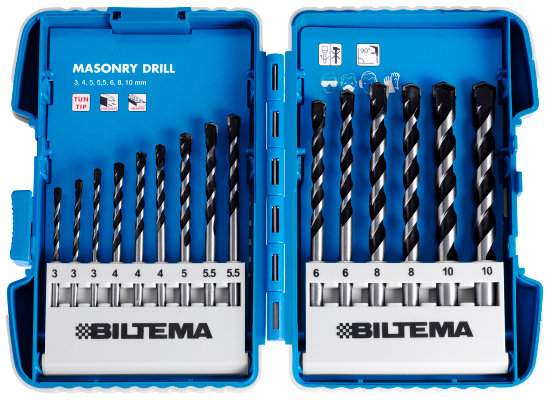
http://www.biltema.se/sv/Verktyg/Skarverktyg/Betong--och-kakelborr/Betongborrsats-15-st-2000024060/
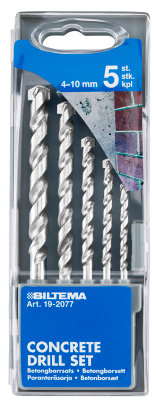
http://www.biltema.se/sv/Verktyg/Skarverktyg/Betong--och-kakelborr/Betongborrsats-5-st-2000016860/
Also available brands here: http://www.harald-nyborg.se/dewalt-betongborrset.html
I have a rotary hammer that cuts through our lightweight concrete (hollow blocks) like butter, but the problem is that the holes tend to be much larger than intended, and the smallest possible drill size is 6 mm.
Is there something else I can drill with (even if it takes more time), for example, could I use regular hardened drills without percussion or hammering?
Maybe one of these would work:
http://www.biltema.se/sv/Verktyg/Skarverktyg/Betong--och-kakelborr/Betongborrsats-15-st-2000024060/
http://www.biltema.se/sv/Verktyg/Skarverktyg/Betong--och-kakelborr/Betongborrsats-5-st-2000016860/
Also available brands here: http://www.harald-nyborg.se/dewalt-betongborrset.html
Bosch has a drill that is quite good. I use it myself for drilling in tiles.
http://www.bohlin-nilsson.se/produk..._-_universalborrsats_bosch_multi_construction
Search for Bosch multi construction if the link misbehaves.
http://www.bohlin-nilsson.se/produk..._-_universalborrsats_bosch_multi_construction
Search for Bosch multi construction if the link misbehaves.
Last edited:
I can add that the drills I have today are from Makita as follows

http://www.proffsmagasinet.se/verkt...-d-20111-sds-plus-borrar-och-mejslar-13-delar
But the problem with them is that the holes become unnecessarily large as mentioned.
The Bosch box dextrocell refers to resembles those from Biltema a lot and quality can of course play a crucial role, however, it might be difficult to get hold of them today, I think. Have you drilled in hollow brick with them? How do the holes turn out?
http://www.proffsmagasinet.se/verkt...-d-20111-sds-plus-borrar-och-mejslar-13-delar
But the problem with them is that the holes become unnecessarily large as mentioned.
The Bosch box dextrocell refers to resembles those from Biltema a lot and quality can of course play a crucial role, however, it might be difficult to get hold of them today, I think. Have you drilled in hollow brick with them? How do the holes turn out?
Found this from Bosch:
http://www.jula.se/catalog/verktyg-...kiner/borr/borr-for-betong/betongborr-181752/
It says, however, that you nevertheless need a hammer drill? I don't have that on my regular drill (or screwdriver). My thought was whether there is a drill that can be used without a hammer drill and rotary hammer?
http://www.jula.se/catalog/verktyg-...kiner/borr/borr-for-betong/betongborr-181752/
It says, however, that you nevertheless need a hammer drill? I don't have that on my regular drill (or screwdriver). My thought was whether there is a drill that can be used without a hammer drill and rotary hammer?

Ordinary drill/driver with concrete/stone drill bits. I have also used a regular drill with the SDS drill bits you have in the lower image on lightweight concrete, even brick, and then without hammering at low speed.

There are indeed SDS drill bits in smaller sizes than 6mm. For example, 4mm, 5mm, 5.5mm - Among others, Jula has a selection of these.
SDS Drill Jula
Concrete block can be drilled with the bits you linked to above, but I would then recommend that you use a machine with hammer action if you want it to be easy. The concrete block is quite hard - I myself drilled 8 holes yesterday with a tile bit of the type you linked to above but at that time with a hammer drill.
If, on the other hand, it's Aerated concrete you have, these bits work excellently with a machine completely without hammer action, and I often use this variant since it's more convenient with a battery-powered machine and, as you say, the holes are neater and tighter.
SDS Drill Jula
Concrete block can be drilled with the bits you linked to above, but I would then recommend that you use a machine with hammer action if you want it to be easy. The concrete block is quite hard - I myself drilled 8 holes yesterday with a tile bit of the type you linked to above but at that time with a hammer drill.
If, on the other hand, it's Aerated concrete you have, these bits work excellently with a machine completely without hammer action, and I often use this variant since it's more convenient with a battery-powered machine and, as you say, the holes are neater and tighter.

I have now gone down to take a look and these are the machines I have (apparently there is also a hammer drill feature on the simpler machine)
Black & Decker CD501CRE 500W

Makita HR2610

Bosch GRS 14,4-2-LI

Makita DDF453SYE 18V (though not yet unpacked)

I know that the Black & Decker didn't work well at all in the apartment when we were trying to drill holes in the ceiling for a lamp, but it was also very hard solid concrete. Here, we had to borrow a Bosch hammer similar to the HR2610 above.
Which of these should I use?
Black & Decker CD501CRE 500W
Makita HR2610
Bosch GRS 14,4-2-LI
Makita DDF453SYE 18V (though not yet unpacked)
I know that the Black & Decker didn't work well at all in the apartment when we were trying to drill holes in the ceiling for a lamp, but it was also very hard solid concrete. Here, we had to borrow a Bosch hammer similar to the HR2610 above.
Which of these should I use?
But isn't there a big risk of damaging the Makita bit if I use it without hammer? Then it might be better to buy some cheaper bits at Biltema to drill these 4 holes with?AndersS said:
My regular drill doesn't have an SDS attachment, so I'll need to buy different bits for that one anyway.
Aha, yes look at that, they do exist! Then you could first drill with those, then use a 4mm drill and then with a 5.5 to finally put in a 6mm plug? But the problem likely remains, the drill I have cuts through the wall like butter, so it's very difficult to get a nice round hole where the plug can just be pushed in.slacker said:There are SDS drills in smaller sizes than 6mm. For example, 4mm, 5mm, 5.5mm - Among others, Jula has a selection of these.
SDS Drill Jula
Concrete hollow block can be used with the drills you linked above, but I would recommend having a machine with a hammer function if you want it to go smoothly. The concrete hollow block is quite hard - I did 8 holes myself yesterday with a tile drill of the type you linked to above but just then with a hammer drill.
However, if it is Lightweight Concrete you have, then it works great with these drills and a machine without a hammer function, and I often use that option myself as it is more convenient with a cordless machine and, just as you say, the holes become finer and tighter.
The simpler corded drill I have apparently has a hammer drill function, so I could use that one then, the question is just which drills should I buy?
I'm pretty sure it's some form of lightweight concrete actually, it says so in the description at least and considering the large machine cuts through in no time, it's likely.
Yes, if you buy a couple of bits from Biltema it should work, but it still feels wrong to buy wood bits for concrete walls?anders07 said:

Any of the drills you linked to + a "regular" drill without hammering works in aerated concrete.snowjim said:Hello,
I have a rotary hammer that cuts through our lightweight concrete (hollow brick) like butter, but the problem is that the holes tend to be much larger than intended and the smallest possible drill size is 6 mm.
Is there something else I can drill with (even if it takes more time), for example, could I use regular hardened drills without hammer or percussion?
Could perhaps any of these work:
[bild]
[link]
[bild]
[link]
Brands are also available here: [link]
The simplest and best option is a reliable corded drill with a hammer function and a drill with a carbide tip. And to operate it slowly. For 6 mm, you don't need to pre-drill. And buy decent plugs, Fischer or Mitsutomo.
In the ceiling and floor, however, you need a type of hammer drill to be able to drill at all. Something like a Makita 2610 since the arches are cast in place and are therefore of a harder type. For lightweight concrete, any drill will do.
When it comes to holes, I always use 5.5 for a 6mm plug, 7 for an 8mm plug, I rarely use any other type of plug—especially if it's lightweight concrete—it grips like crazy!
I never use a center punch, just start slowly.
When it comes to holes, I always use 5.5 for a 6mm plug, 7 for an 8mm plug, I rarely use any other type of plug—especially if it's lightweight concrete—it grips like crazy!
I never use a center punch, just start slowly.


TS, is it aerated concrete or is it concrete block (two different things)? Can you break off the edges of the hole with your fingers or a small nail? If so, it's aerated concrete.anders07 said:
If it feels like drilling into butter, I guess it's aerated concrete, and then I would do as anders07 suggests. I use the same tactic at home for larger holes. For red plugs (6mm), I use an old Phillips screwdriver that happens to be the right dimension and just hammer it into the wall. The advantage is that it compresses the aerated concrete around the plug, so it holds better.
For heavy items (like shelving rails, kitchen cabinets), I use Fischer GB aerated concrete plugs. They hold like a rock.