
793 läst ·
16 svar
793 läst
16 svar
Håltagning i bjälklag, söker synpunkter och erfarenhet.
Hej
Vi skall byta trapp i vårat nya hus och samtidigt vända på den.
I samband med detta behöver vi ta upp trapphålet 100cm brett och 70-80cm djupt.
Bjälklaget är av betong (betongvalv?) och är 300-350mm tjockt.
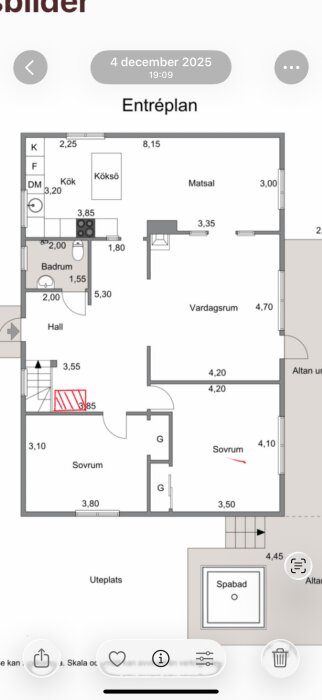
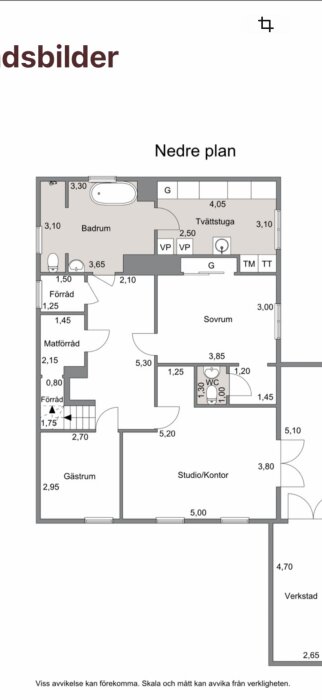
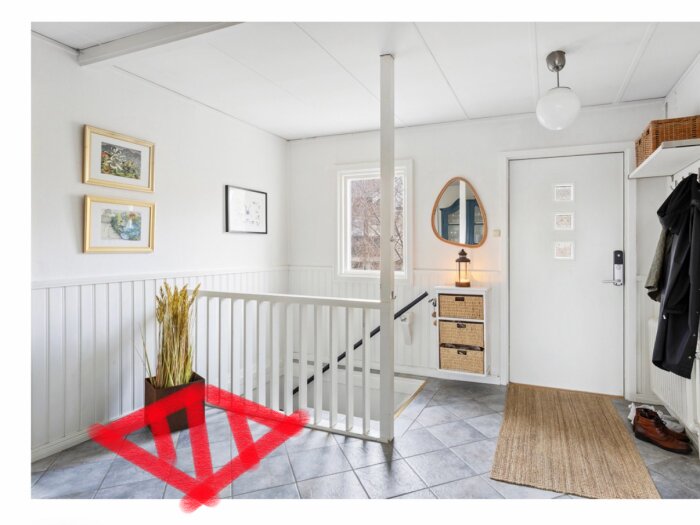
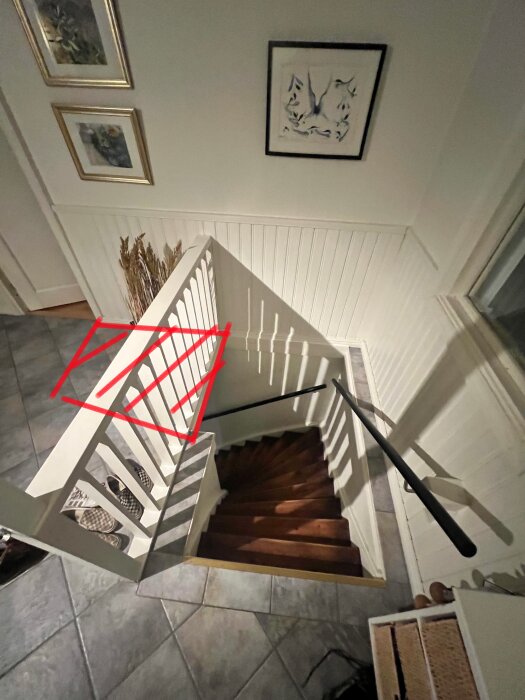
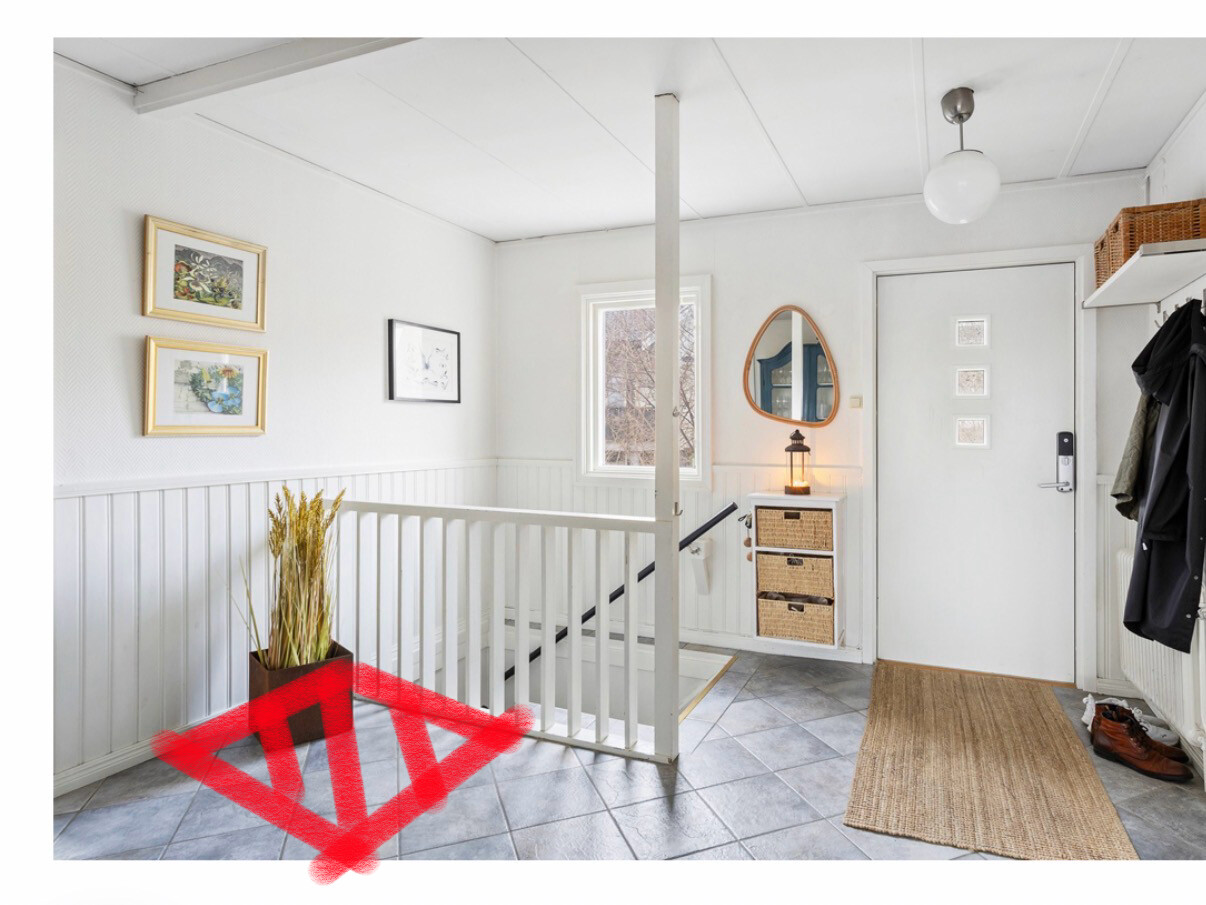
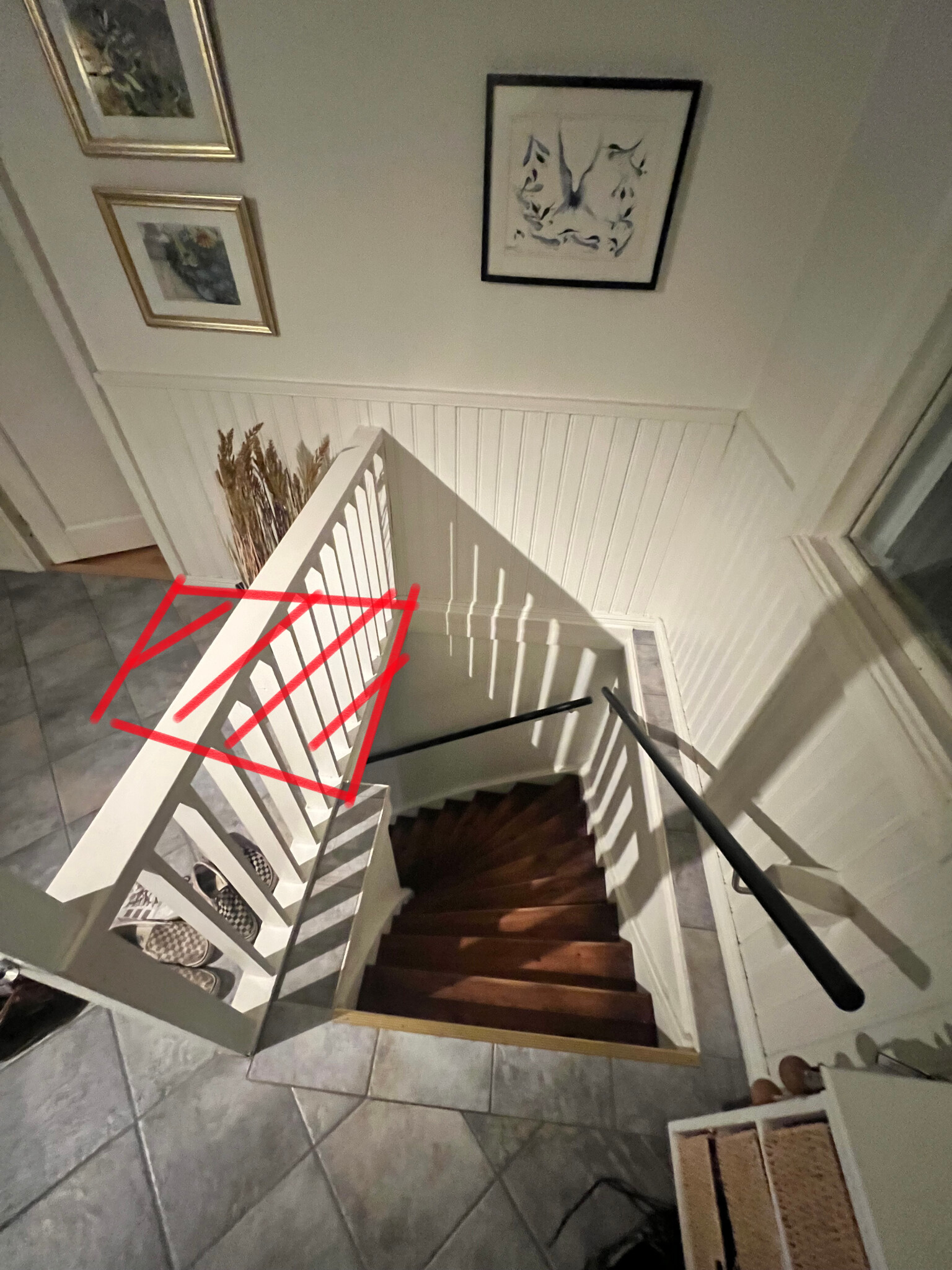
Vi behöver ta upp hålet enligt röd markering på bilder. Är det någon som kan säga något lm det påverkar bärigheten utifrån bilderna?
Jag själv har svårt att tro det då det ”bara” är en golvyta, den vilar inte på någonting. Samt att det är bara 100cm brett som skall tas och på båda sidor har du direkt innerväggar som bär.
Finns inga originalritningar på huset att tillgå tyvärr. Det är sadeltak och takstolarna ligger på varje långsida så att säga.
Tar tacksamt emot all form av feedback.
Vi skall byta trapp i vårat nya hus och samtidigt vända på den.
I samband med detta behöver vi ta upp trapphålet 100cm brett och 70-80cm djupt.
Bjälklaget är av betong (betongvalv?) och är 300-350mm tjockt.
Vi behöver ta upp hålet enligt röd markering på bilder. Är det någon som kan säga något lm det påverkar bärigheten utifrån bilderna?
Jag själv har svårt att tro det då det ”bara” är en golvyta, den vilar inte på någonting. Samt att det är bara 100cm brett som skall tas och på båda sidor har du direkt innerväggar som bär.
Finns inga originalritningar på huset att tillgå tyvärr. Det är sadeltak och takstolarna ligger på varje långsida så att säga.
Tar tacksamt emot all form av feedback.
-
 Inloggade ser högupplösta bilderLogga inSkapa kontoGratis och tar endast 30 sekunder
 -
 Inloggade ser högupplösta bilderLogga inSkapa kontoGratis och tar endast 30 sekunder
 -
 Inloggade ser högupplösta bilderLogga inSkapa kontoGratis och tar endast 30 sekunder
 -
 Inloggade ser högupplösta bilderLogga inSkapa kontoGratis och tar endast 30 sekunder
 -
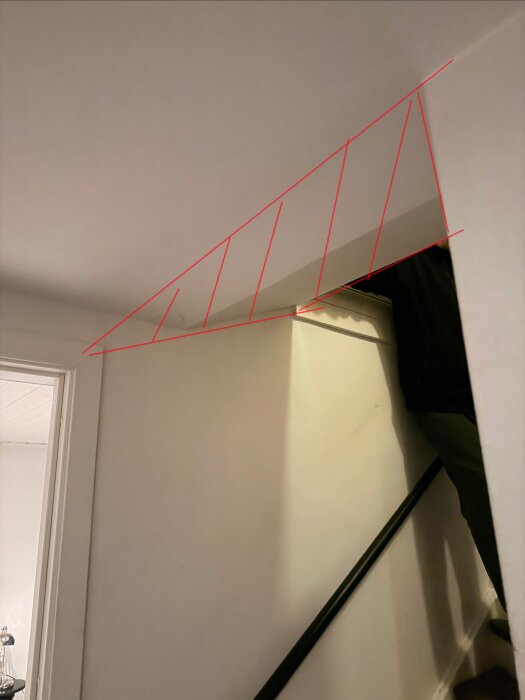 Inloggade ser högupplösta bilderLogga inSkapa kontoGratis och tar endast 30 sekunder
 -
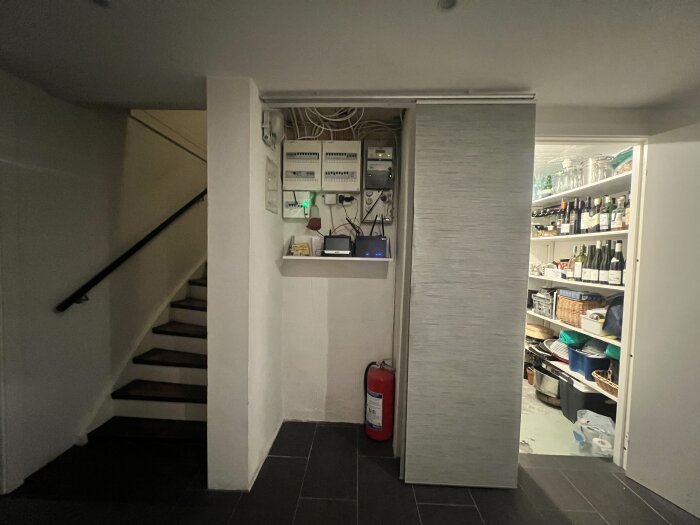 Inloggade ser högupplösta bilderLogga inSkapa kontoGratis och tar endast 30 sekunder
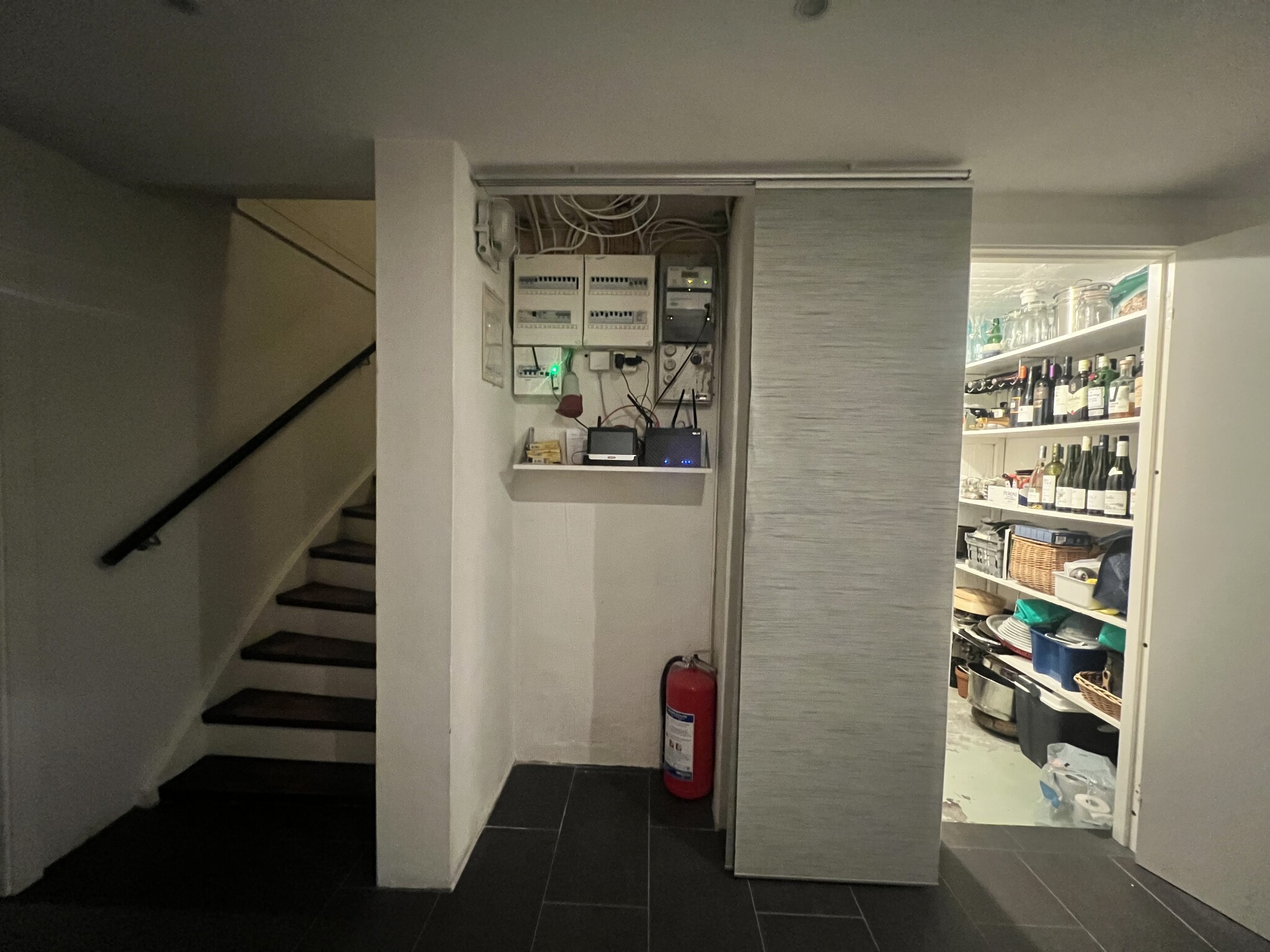
Du bör nog kolla lite bättre om det verkligen är så tjock betong. Det kan vara Siporexplank eller ev sk håldäck av betong. Väggen runt elcentrralen på bottenvåningen verkar vara stödjande. Med tanke på elcentralen kan du också ha en del el där. Du bör nog ta hjälp av någon kunnig.
Det är svårt att undersöka innan trappen är riven tyvärr. Vi tror också att den är tunnare.N Nissegandhi skrev:
Absolut kan el gå där, det får vi försöka utesluta innan vi sätter i kapen helt enkelt.
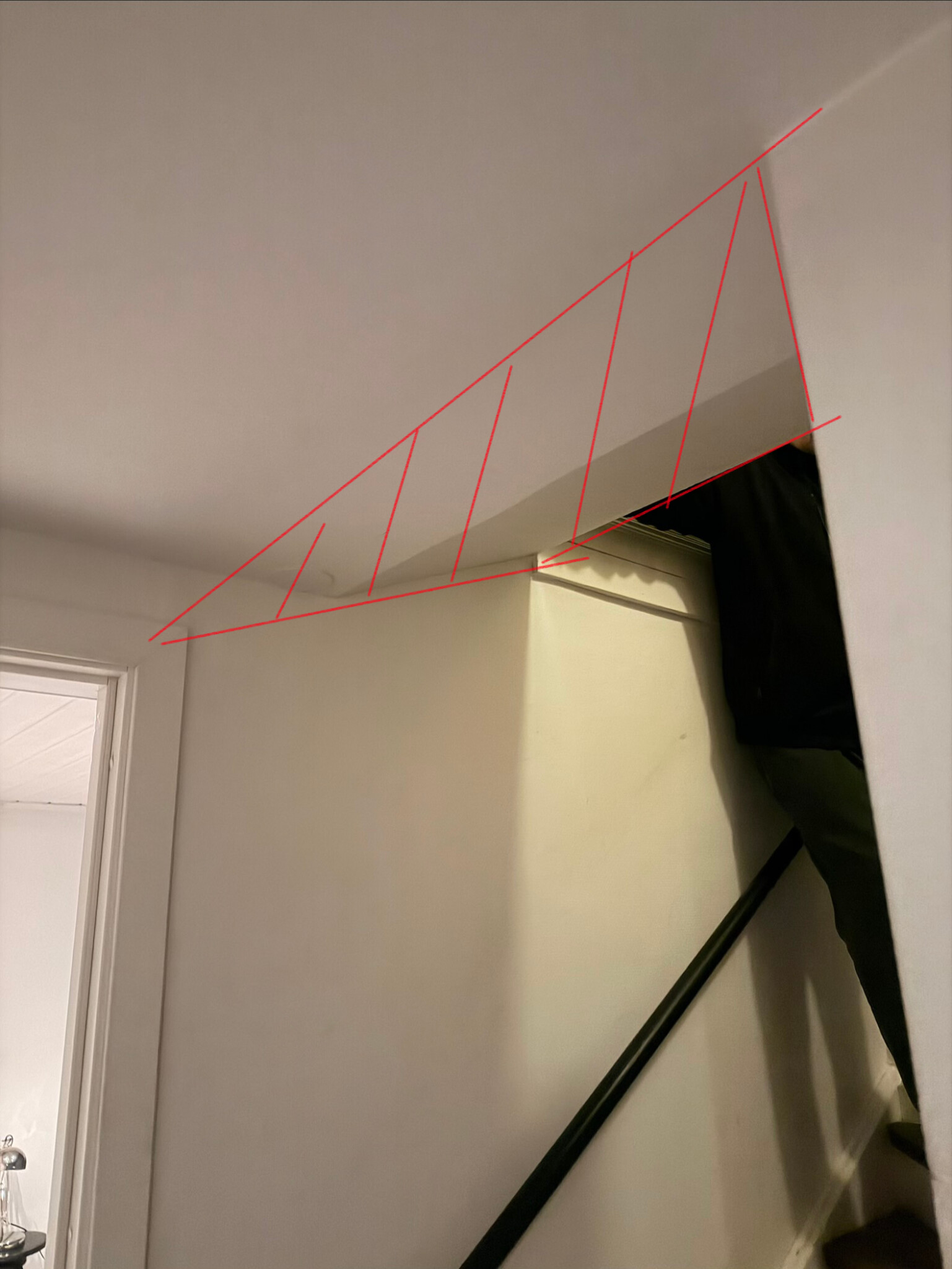
På bilden nedan ser du hur innertaket set ut på platser där nytt intertak inte är monterat. Vet inte om ”brädmärkena” kan ge någon hint om vad de består av.
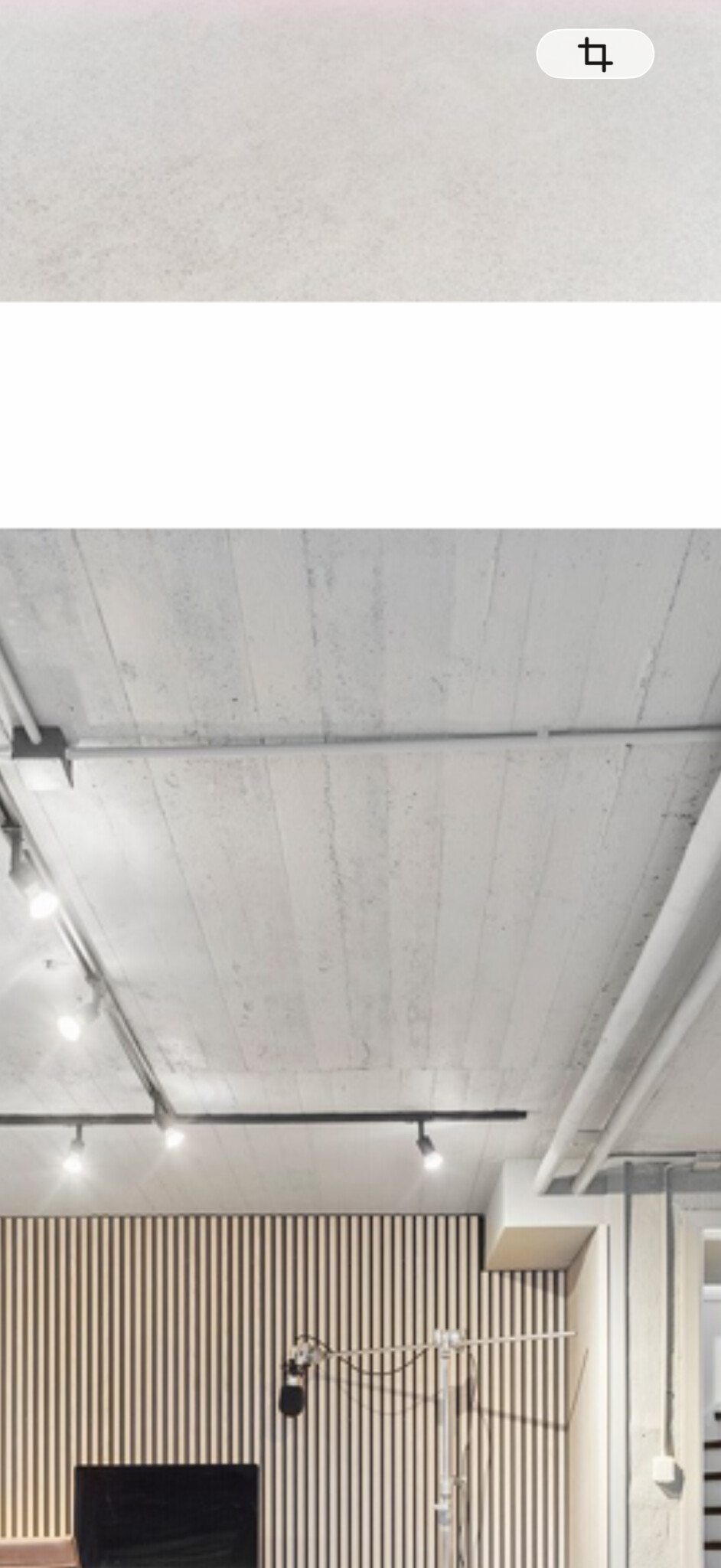
Brädmärkena är från gjutformen alltså är valvet platsgjutet. Det är nog uppreglat på ovanvåningen därav tjockleken. Sedan du tagit bort trappen ser du hur det ser ut och om du river uppifrån ser du ev eldragning. Du bör säkerställ bärighet på valvet först.
Tack, kan så vara.N Nissegandhi skrev:
Har skickar iväg det till en konstruktör för att se. Men då det inte finns några originalritningar så är det lite svårare. Men av snickare som varit på plats så ska det inte vara några problem.
Bumpar denna tråd för att se om någon kan vara behjälplig.
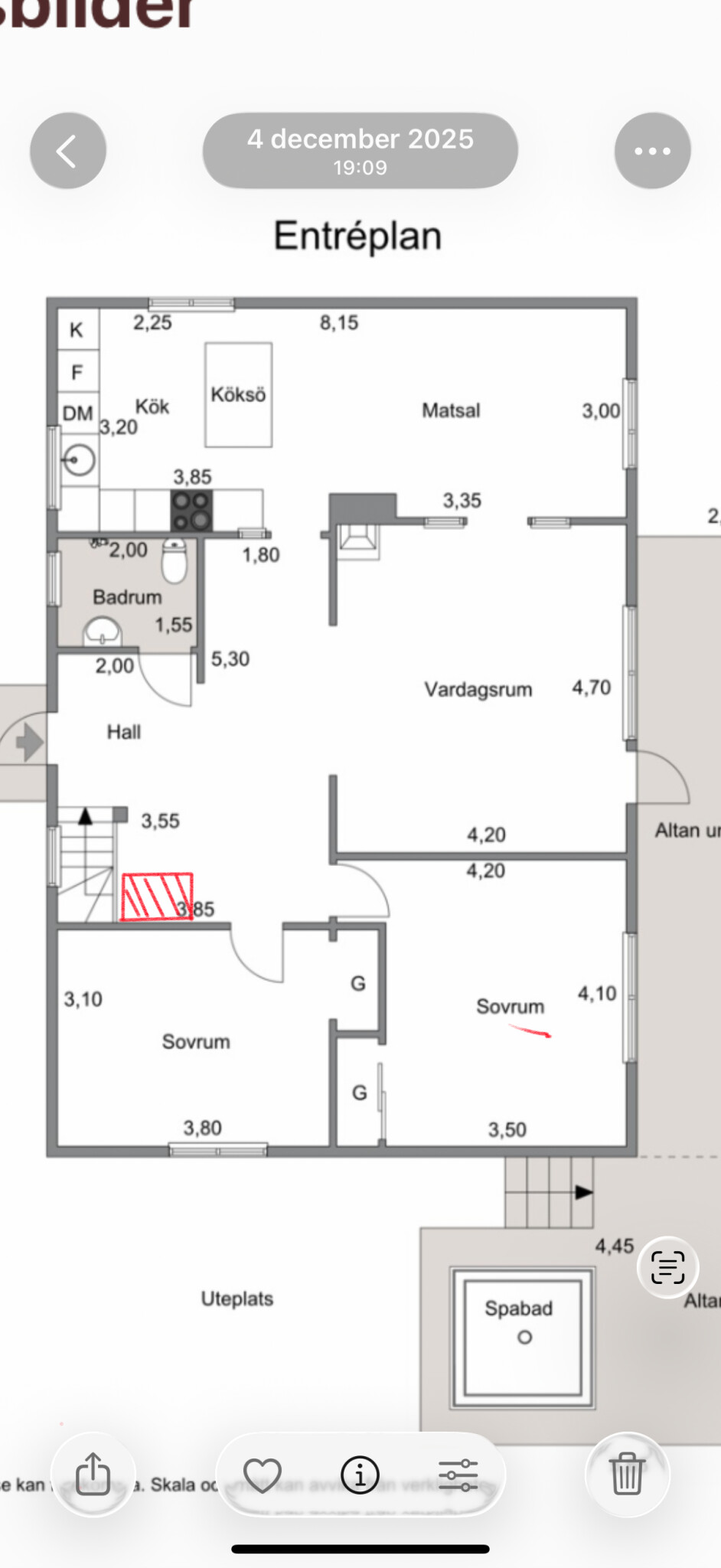
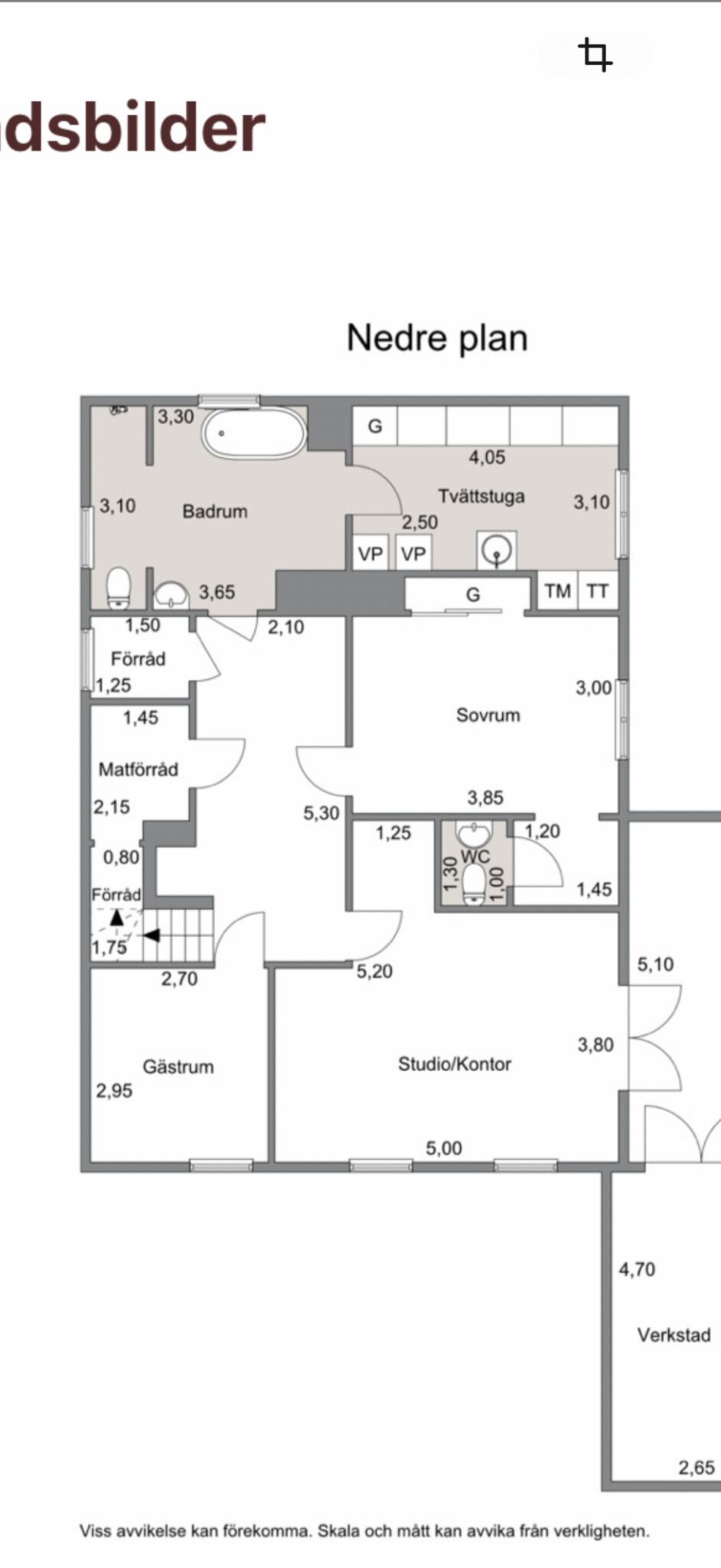
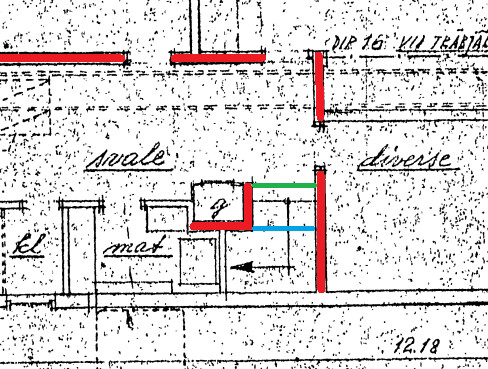
Har skickat allt jag har till en byggnadskonstruktör men han kan inte säga något baserat på de ritningar som finns, bifogar de nedan.
Någon som har något tips.
Har skickat allt jag har till en byggnadskonstruktör men han kan inte säga något baserat på de ritningar som finns, bifogar de nedan.
Någon som har något tips.
Inloggade ser högupplösta bilder
Logga in
Skapa konto
Gratis och tar endast 30 sekunder
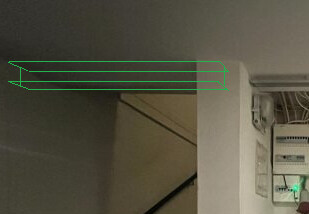
The drawings indicate that the middle of the wall is a load-bearing wall. The same applies to the wall around the electrical box. Since this is a cast ceiling and you don't have a reinforcement drawing, you can do it as follows. You need to install a beam that will support the new ceiling edge and support it on the side walls by cutting out sockets for it. No deeper than half the wall thickness. The beam can be steel, precast concrete, or cast reinforced concrete, but I don't recommend this. Only after the concrete on the sides of the stabilizing beam has dried can you remove this section of the ceiling. Of course, you first need to check the cables!!! And you need to ask someone to calculate the beam. And one more thing: if you're unlucky, there might be a solid steel profile on the blue edge. Green line is new floor edge.
Inloggade ser högupplösta bilder
Logga in
Skapa konto
Gratis och tar endast 30 sekunder
Sorry men detta känns som en väldigt märklig grej att lägga tid och energi på. Att börja göra större ingrepp i en massiv betongkonstruktion för att vända en trappa, är det värt det? Tänk på alternativkostnaden här, vad du skulle kunna göra istället...🤔
You might not be "read" from the photos, but it's really low down there! You could hit your head on the ceiling, that's why the bottom edge is chamfered.Farstatjej90 skrev:
Than you for a great answer. A few questions. Do you really think i need to install a beam? I mean, the peiece i want to remove is just ”resting in the air” today and i will only shorten it?S sturnus skrev:[bild]
The drawings indicate that the middle of the wall is a load-bearing wall. The same applies to the wall around the electrical box. Since this is a cast ceiling and you don't have a reinforcement drawing, you can do it as follows. You need to install a beam that will support the new ceiling edge and support it on the side walls by cutting out sockets for it. No deeper than half the wall thickness. The beam can be steel, precast concrete, or cast reinforced concrete, but I don't recommend this. Only after the concrete on the sides of the stabilizing beam has dried can you remove this section of the ceiling. Of course, you first need to check the cables!!! And you need to ask someone to calculate the beam. And one more thing: if you're unlucky, there might be a solid steel profile on the blue edge. Green line is new floor edge.
[bild]
If i need to place a beam i need to shorten the lenght so i can put it in the wall next tonthe electric fuse box.
My plan was to lengthen the hole so the new edge ends in line with the door on the bottom floor. And because of that i dont have a wall to put the beam in.
Otherwise i was thinking building a wall under the stair, is that enoug to support?
Det är väldigt värt tiden och pengarna eftersom trappan idag är otroligt brant med ett plansteg på 17cm.
Ska ungarna springa i den kommer det sluta illa.
Dessutom är den direkt innanför ytterdörren så hallen är minimal.
Redigerat:
A beam is definitely necessary for the duration of the work. It's unclear what the reinforcement is, what the load-bearing elements (e.g., I-beams or reinforced beams) are, and how they're arranged. Maybe you're lucky and what you're planning will be possible. But no engineer will give you permission without securing the opening against collapse. Moving the depth of the opening is a completely different matter. Building a wall won't help because there's no foundation beneath it, and the loads will transfer to the floor, potentially causing it to crack.I Inteno- skrev:Than you for a great answer. A few questions. Do you really think i need to install a beam? I mean, the peiece i want to remove is just ”resting in the air” today and i will only shorten it?
If i need to place a beam i need to shorten the lenght so i can put it in the wall next tonthe electric fuse box.
My plan was to lengthen the hole so the new edge ends in line with the door on the bottom floor. And because of that i dont have a wall to put the beam in.
Otherwise i was thinking building a wall under the stair, is that enoug to support?
Hmm okay…S sturnus skrev:A beam is definitely necessary for the duration of the work. It's unclear what the reinforcement is, what the load-bearing elements (e.g., I-beams or reinforced beams) are, and how they're arranged. Maybe you're lucky and what you're planning will be possible. But no engineer will give you permission without securing the opening against collapse. Moving the depth of the opening is a completely different matter. Building a wall won't help because there's no foundation beneath it, and the loads will transfer to the floor, potentially causing it to crack.
But the problem is that if i lenghten the openong as much as needed the eventually new support beam has no place to rest on as i want the opening to be in line with rhe door downstairs.
Therefore my question about to build a support wall with 2 45x120 put together in the roof and then 45x90 tight together down to the floor. You dont think its possible?
And i still cant see how the bigger hole will affect the construction so much.
I also think the concrete only is 10-15cm thick
Redigerat:
You can't use wood due to its low dimensional stability and limited durability compared to concrete. If you must, use steel profiles. Unfortunately, I don't have the time to provide you with extensive training in the methods and types of materials used in ceiling reinforcement. However, this unsupported edge must now have a reinforced beam or a steel truss profile supporting the main reinforcement located between the load-bearing walls. As I mentioned earlier, beams can be spanned between these walls, and then we're dealing with a situation where it might be possible to achieve the opening you envisioned, but this requires demolition work to determine what's inside or the use of specialized equipment to x-ray the ceiling. Costs. So, I've given you a quick and inexpensive solution. You want a larger opening, the higher the cost.I Inteno- skrev:Hmm okay…
But the problem is that if i lenghten the openong as much as needed the eventually new support beam has no place to rest on as i want the opening to be in line with rhe door downstairs.
Therefore my question about to build a support wall with 2 45x120 put together in the roof and then 45x90 tight together down to the floor. You dont think its possible?
And i still cant see how the bigger hole will affect the construction so much.
I also think the concrete only is 10-15cm thick
Inloggade ser högupplösta bilder
Logga in
Skapa konto
Gratis och tar endast 30 sekunder
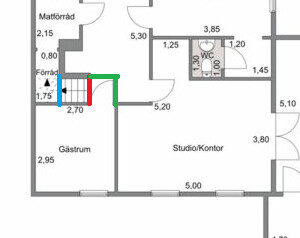
Besides, you can't enlarge the opening beyond the basement door (green lines) as you want, because you'll cut off access to the door upstairs. The red option is easy and won't cost you a fortune.
Redigerat:
Okay.S sturnus skrev:You can't use wood due to its low dimensional stability and limited durability compared to concrete. If you must, use steel profiles. Unfortunately, I don't have the time to provide you with extensive training in the methods and types of materials used in ceiling reinforcement. However, this unsupported edge must now have a reinforced beam or a steel truss profile supporting the main reinforcement located between the load-bearing walls. As I mentioned earlier, beams can be spanned between these walls, and then we're dealing with a situation where it might be possible to achieve the opening you envisioned, but this requires demolition work to determine what's inside or the use of specialized equipment to x-ray the ceiling. Costs. So, I've given you a quick and inexpensive solution. You want a larger opening, the higher the cost.
So just so i understand. If there is a beam in the end of the opening now i need to replace it with a new, and if there is no there is maybe no need to place one if i larger the hole?