
1,859 views ·
9 replies
2k views
9 replies
Yet another thread about the load-bearing capacity of stair pillars

I'm a new homeowner who will have a lot of questions, unless I've already found the answer during my searches. In this case, there are a bunch of threads about stairs and their columns, but they are all of different nature (please correct me if I'm wrong), so here's another thread.
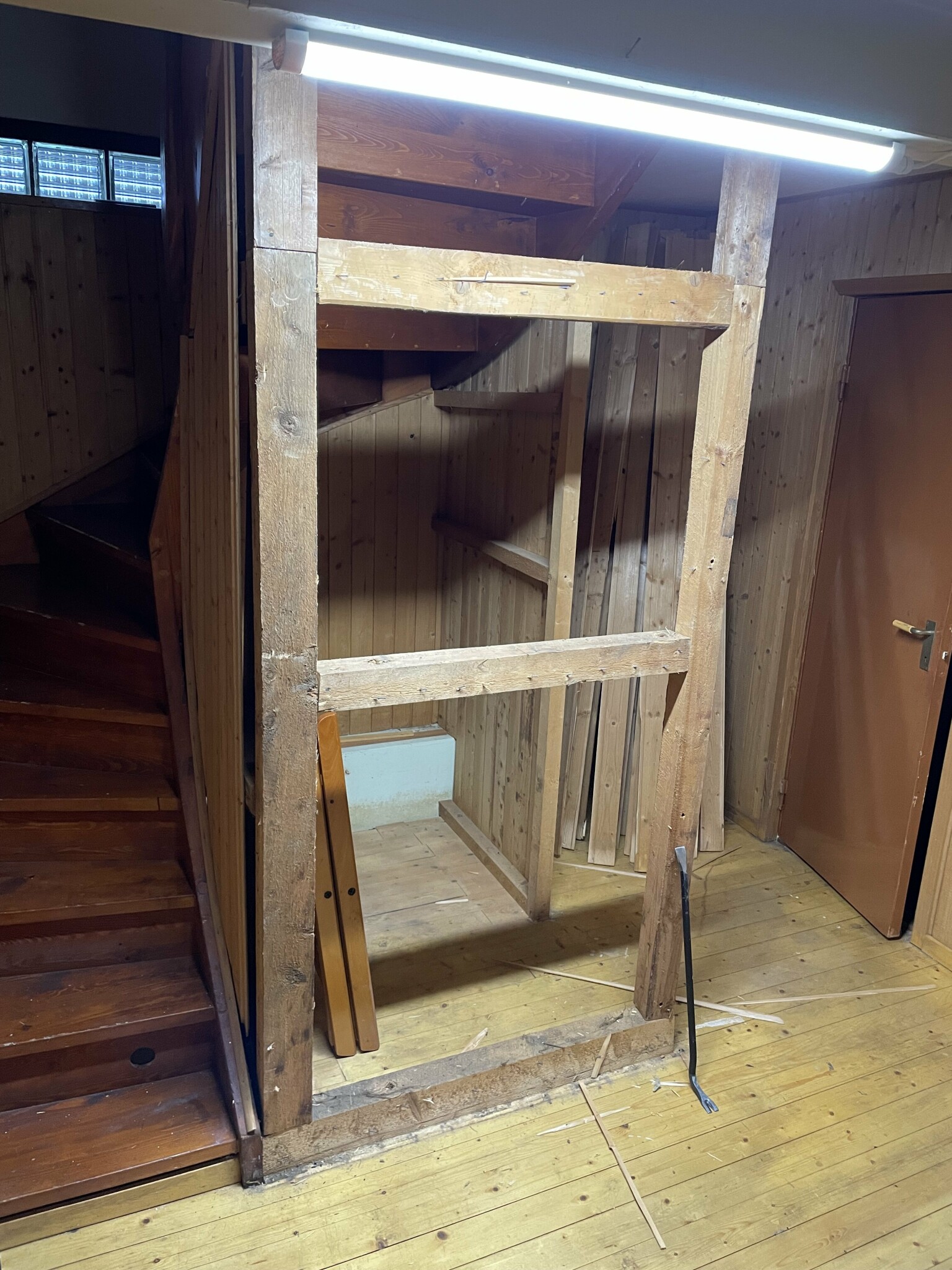
I started tearing down a panel wall in the basement mainly to create a more open space and a less cramped “hall.”
Once I removed the panel, these (type) columns emerged, and my first thought was, “No, I hope these aren't load-bearing for the stairs.”
After looking at them a bit and feeling them (see video), I suspect they are not, but it’s better to ask one time too many than have to use the basement entrance every time you go down (when the stairs have collapsed, that is).
What I'm primarily wondering is if there's an easy way to see if they are load-bearing for the stairs.
Do I need to open up the "nice" basement ceiling and check, or can I see it in the staircase construction?
Grateful for answers, tips, or just general cheers.
I started tearing down a panel wall in the basement mainly to create a more open space and a less cramped “hall.”
Once I removed the panel, these (type) columns emerged, and my first thought was, “No, I hope these aren't load-bearing for the stairs.”
After looking at them a bit and feeling them (see video), I suspect they are not, but it’s better to ask one time too many than have to use the basement entrance every time you go down (when the stairs have collapsed, that is).
What I'm primarily wondering is if there's an easy way to see if they are load-bearing for the stairs.
Do I need to open up the "nice" basement ceiling and check, or can I see it in the staircase construction?
Grateful for answers, tips, or just general cheers.


Know-It-All
· Västra götaland
· 11 025 posts
If you place 4 sumo wrestler friends on the step above the "pillar" and do the same thing as in the movie, what happens then?
Unfortunately, I only had a lightweight sumo wrestler friend nearby at the time, but the pillar behaved the same way then.
Even when I, who almost weigh 0.1 ton, stood on the top step right above the pillar, it was wobbly.
But as I said, better to ask one time too many 😉

If you have a cellar entrance from the outside, it "" can "" be a job to get a staircase indoors, and then they have put in props to support the joists. No real offsetting in the joists. You should try to see how it looks where the staircase goes through, if there's anything visible that might give a clue about remodeling. That it can be folded, but how is the other post.

Feel the second post, if it is the same it won't work. But it can't hurt to have a post closest to the stairs, because you need a railing there and with a new stylish post, the railing can advantageously be attached to it. There might be some scrap wood in the area under the stairs, and the reason for the cupboard being made can only be speculated on. The stringer visible on the right looks sturdy and has taken on a hue that suggests it's been there for a long time. Is there a post in the crease of the stairs? It seems to be a U-shaped staircase and they can creak quite a bit, as the inside is kind of hanging in the air.
The staircase is from the house's beginning.J jonaserik said:Do you have a basement entrance from outside, it "" can "" be a job to get a staircase indoors, and then they have put supports to hold the floor structure. No real alteration in the floor structure. You should try to see how it looks where the staircase goes through, if there is anything visible that can give a hint of renovation. That it can be bent, but how is the other post.
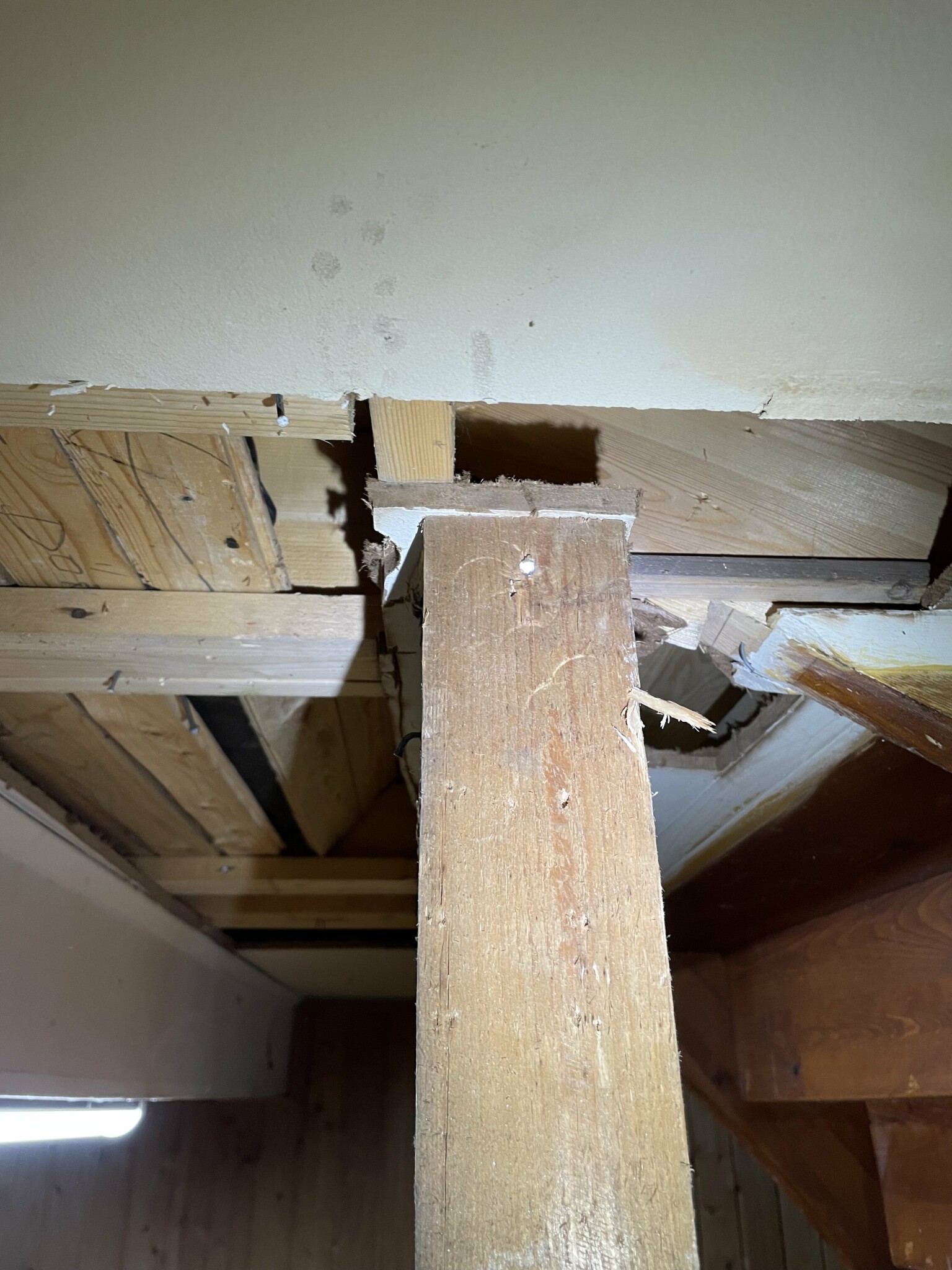
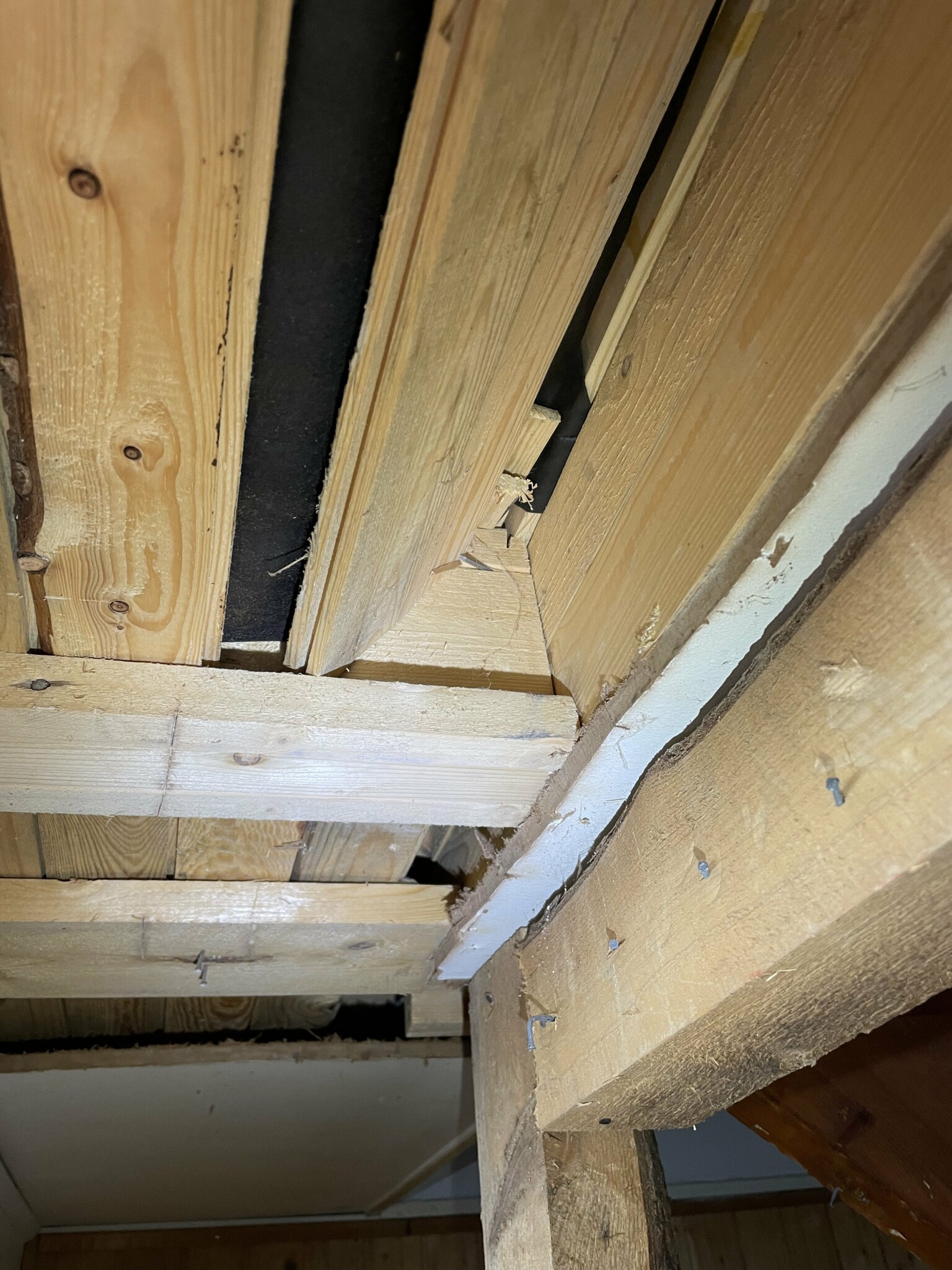
I will open up holes at the pillars and see what it looks like above the pillars.
As seen in the picture (taken "from inside" and underneath the staircase), the pillars do not align with the staircase's structure, so there is a little hope for me 😊

The other post feels a bit more solid, but on the other hand, it is attached to the stairs with a bracket.J jonaserik said:Feel the other post, if it's the same then it's not bearing. But it can't hurt to have a post nearest the stairs, because you need a fence there and with a nice new post, the fence can advantageously be attached to it.
There is probably some rough timber in that part under the stairs and why the cupboard has been made, one can only speculate. The stringer visible to the right looks substantial and has assumed a hue that says long ago. Is there a post in the fold on the stairs, it seems to be a U-staircase and they can creak/squeak quite well, since the inside is kind of hanging in the air.
Since the columns are spliced, I also believe the space is built with leftover material.
I'll add a few more pictures here since a picture says more than my words 😉
In the future, there will surely be a nice pillar to attach a railing to; the main thing for us now was to open up the area to make it airier.



Click here to reply