
842 views ·
2 replies
842 views
2 replies
Wine cellars/walls against brick inner walls in basement with underfloor heating
Hello! I'm pretty new here on the site but I feel that I will be more and more active in the future with various projects in the pipeline. I hope to both expand my knowledge and share my experiences. I see myself as quite handy but have relatively little experience in doing things professionally, which I would like to do for bigger projects in the future.
I am going to build a wine cellar, or rather a climate-controlled wine wall, in a basement. The choice of location and design is based on it being visually appealing as well as suitable for proper long-term storage, in the style of this or this. After many hours here, on finewines.se and other sites, I am well-read on what is important and how others have done it. As all situations are different and I still have some construction-related questions I haven't been able to resolve, my questions end up in this part of this forum.
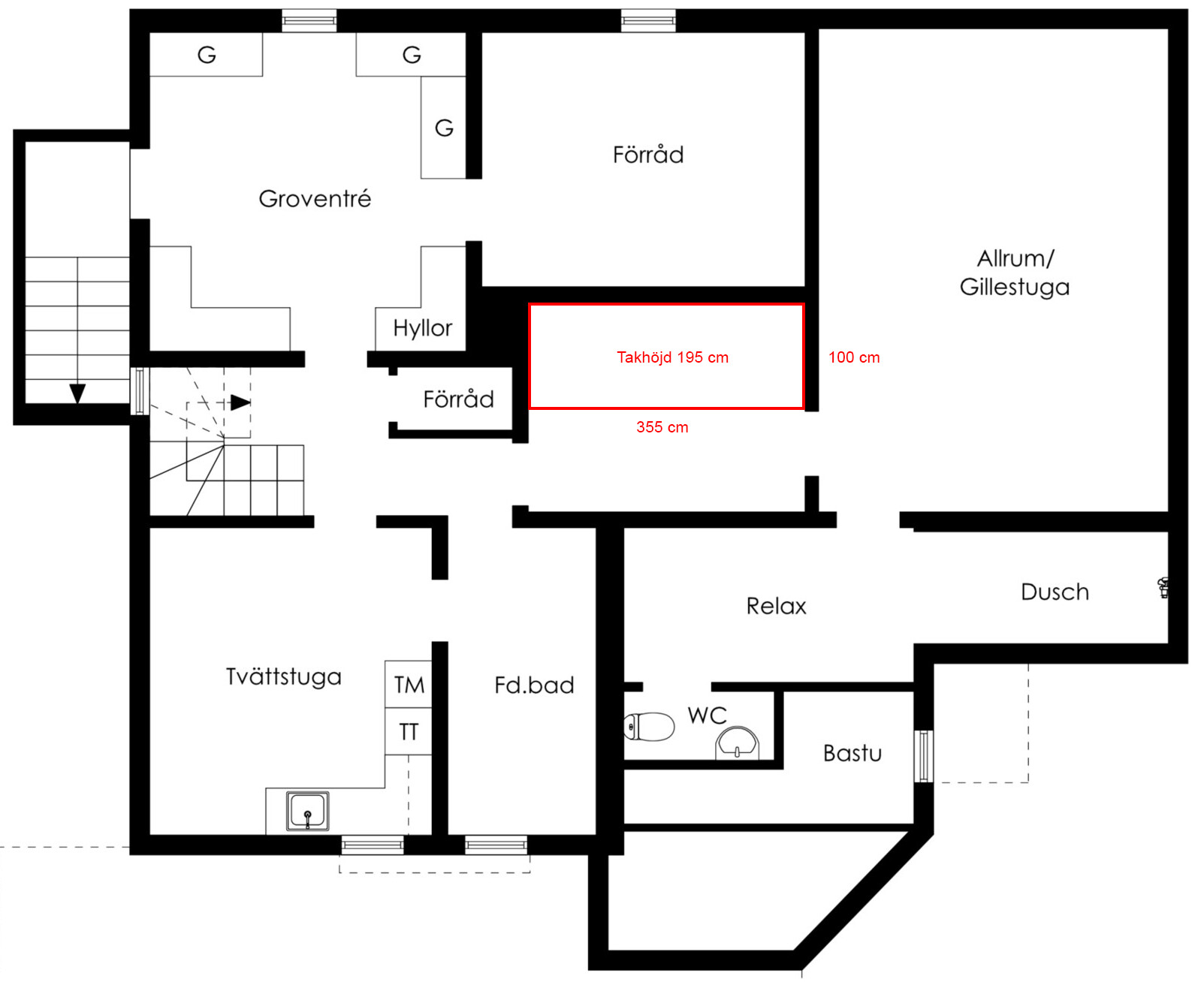
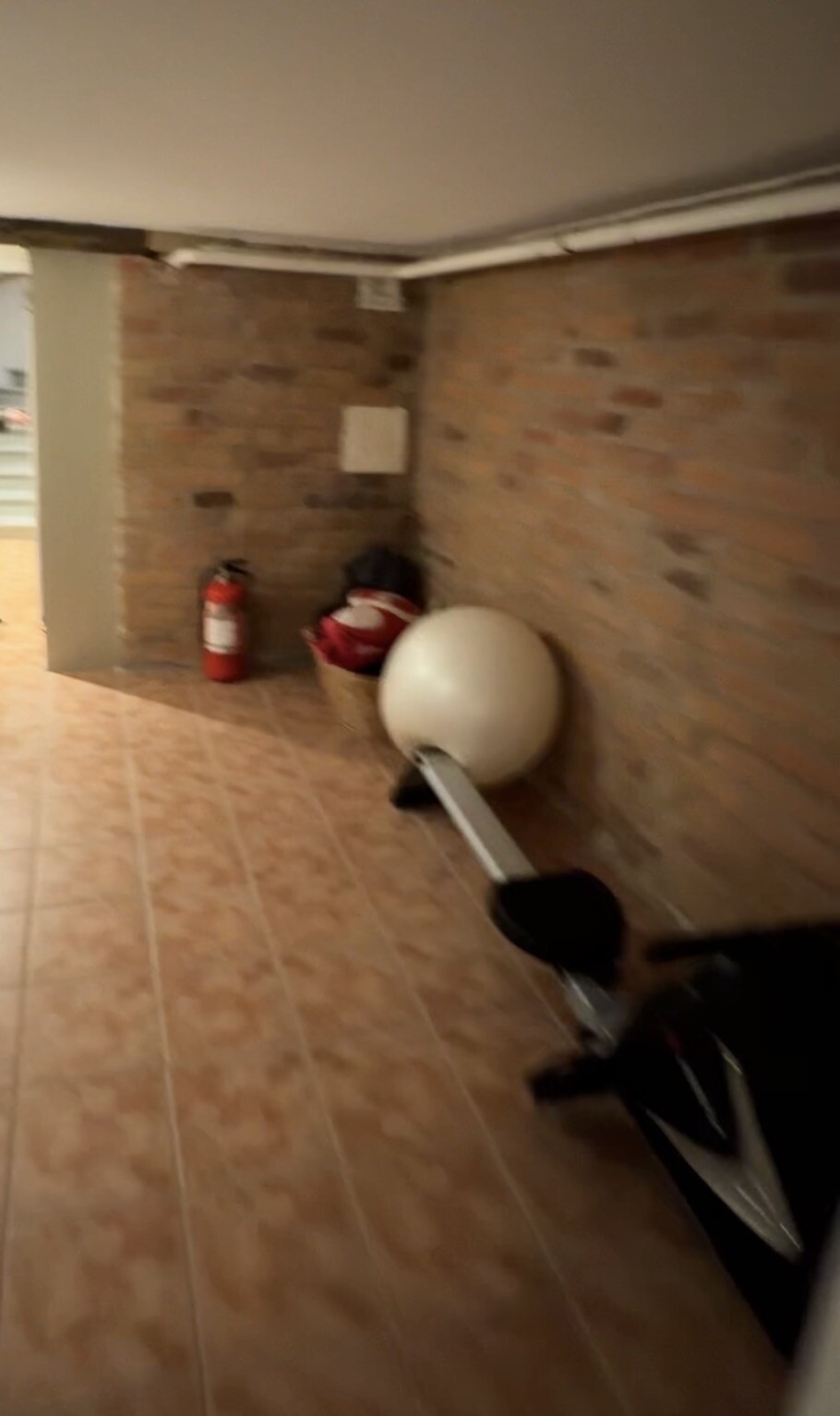
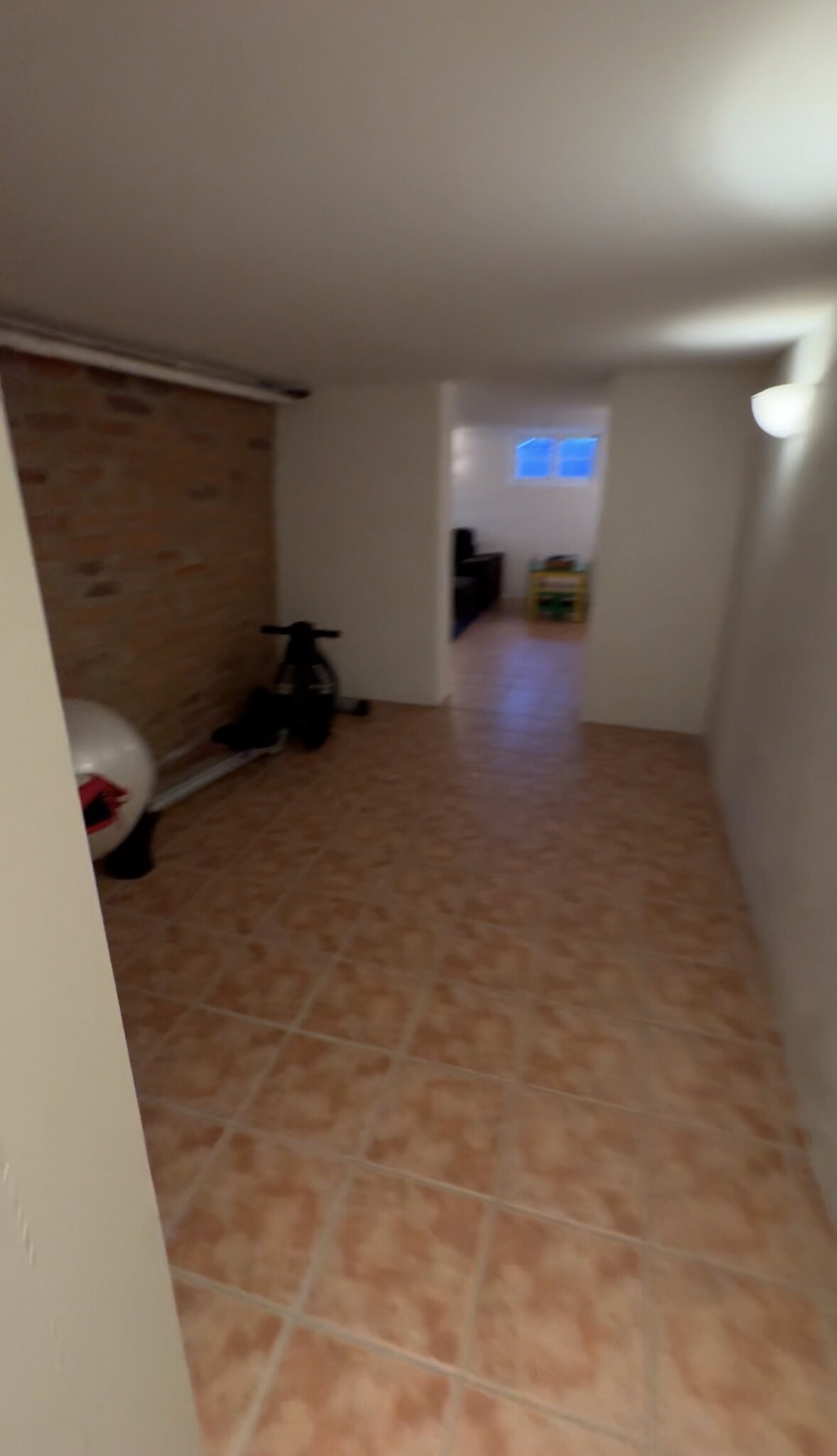
The location is a "corridor" in the middle of a heated and furnished basement, see the drawing. The walls are brick and concrete, see pictures (apologies for the quality, they are screenshots from a video). The entire basement, including the corridor, has a concrete slab with waterborne underfloor heating and tiles. Concrete beam structure with waterborne underfloor heating in the room above.
All your invaluable expertise on the above points and generally would be greatly appreciated!
I am going to build a wine cellar, or rather a climate-controlled wine wall, in a basement. The choice of location and design is based on it being visually appealing as well as suitable for proper long-term storage, in the style of this or this. After many hours here, on finewines.se and other sites, I am well-read on what is important and how others have done it. As all situations are different and I still have some construction-related questions I haven't been able to resolve, my questions end up in this part of this forum.
The location is a "corridor" in the middle of a heated and furnished basement, see the drawing. The walls are brick and concrete, see pictures (apologies for the quality, they are screenshots from a video). The entire basement, including the corridor, has a concrete slab with waterborne underfloor heating and tiles. Concrete beam structure with waterborne underfloor heating in the room above.
- The door will be a custom-made three-part sliding door, Willab Garden WG 62 Eco, running from wall to wall. Can the floor rail be glued to the tiled floor? While floor heating can be mapped with a thermal camera, I prefer to avoid it and would like to have the door in a specific place to maximize the depth of the space.
- Cooling unit, likely Thermocold EC10, will be installed on the long brick wall (preliminary builder's statement says a hole there is okay). The warm air will then go out into the storage on the other side. This is heated, but I think a little extra warm air there neither benefits nor harms?
- Regarding the floor for the wine wall, my idea is that the underfloor heating in the corridor is mostly run at a maintenance heat of 10-12 degrees and that floor insulation is not needed. Is this okay?
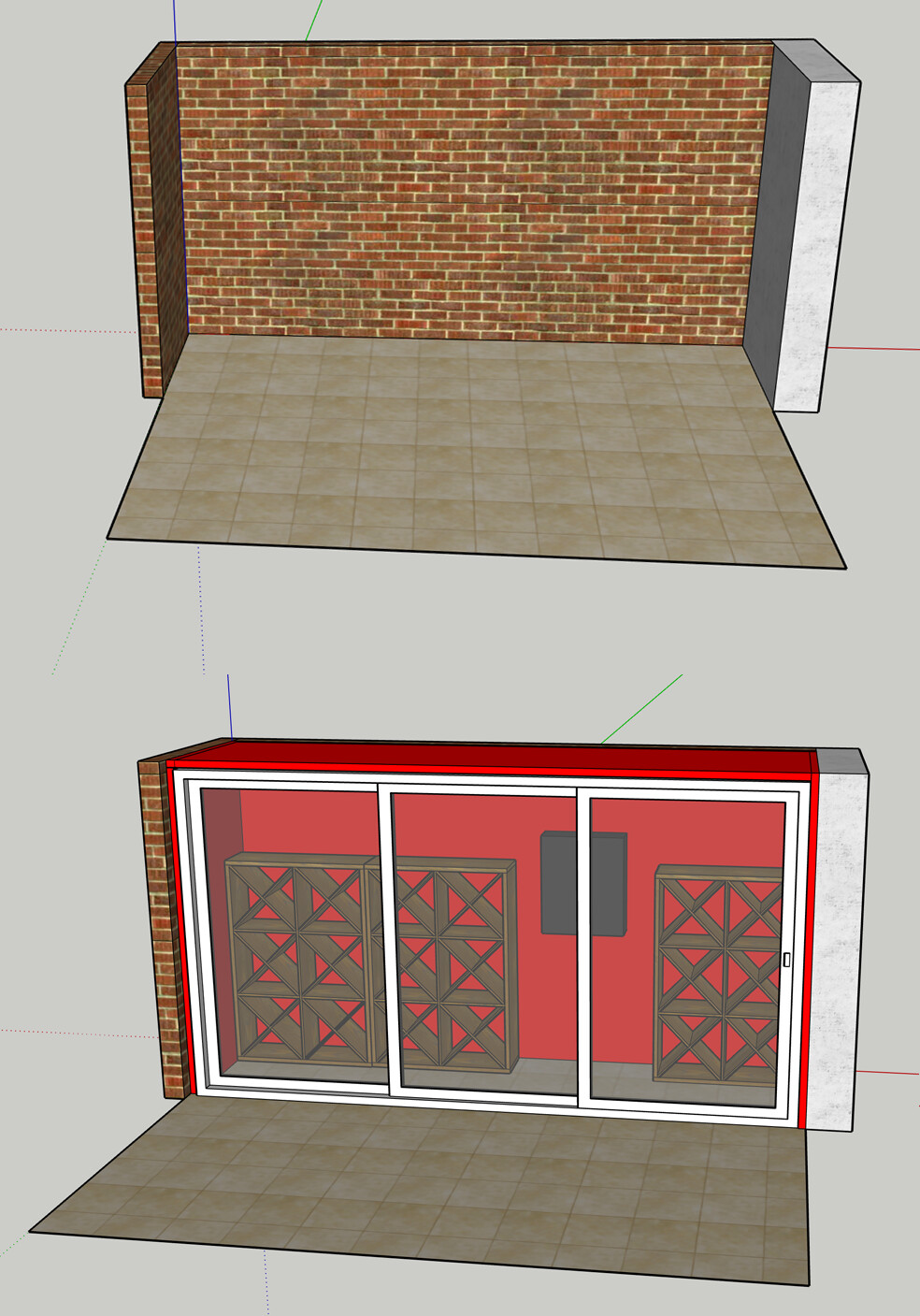
- I want to achieve 14 degrees and 60% RH with the intention of being able to long-term store, and will therefore insulate walls and ceiling and install a vapor barrier on the warm side. The red in the 3D drawing illustrates possible air gap, studs, and insulation. Here most of my questions arise. I envision either using steel or wooden studs. Spontaneously, I want to stay away from organic materials in the basement, but maybe this has less significance with heated floors and only interior walls? I would like to build with a maximum of 15 cm on walls and ceiling but there is room for flexibility if needed.
- Is an air gap needed between the house walls and the vapor barrier? Is it sufficient if this runs out at the ceiling and floor, or how should this be solved?
- Wooden studs: Advantages I see are that I can easily attach the studs to the house walls for an air gap, lay the vapor barrier against them, and then cross-stud with insulation, to which I then attach special gypsum board. Am I thinking correctly?
- Steel studs: Advantages I see are that I stick to inorganic material (however, unsure if this is needed according to 4). I then think of screwing the ceiling rail and gluing the floor rail with something like Tec7 (with space to the house wall if an air gap is recommended). However, I don't understand how I would handle the vapor barrier if choosing steel studs? Can it be taped (with double-sided tape for the purpose) to the outside of the steel studs? Then insulation and gypsum board similar to 4.3 on the wine side.
- Ceiling: I imagine the same solution as for the walls (4.2 or 4.3), but when and how it is done depends on whether an air gap is needed and how it should run (4.1). Seeking clarity on this.
All your invaluable expertise on the above points and generally would be greatly appreciated!
Cool project!
I'm a bit puzzled when you say that the underfloor heating is at 10-12 degrees. What is the temperature in the basement? If it is over 12, then the underfloor heating shouldn't be on at all, right? Does the floor feel warm? It's unfortunate to have different energy-consuming systems working against each other in terms of temperature.
I'm a bit puzzled when you say that the underfloor heating is at 10-12 degrees. What is the temperature in the basement? If it is over 12, then the underfloor heating shouldn't be on at all, right? Does the floor feel warm? It's unfortunate to have different energy-consuming systems working against each other in terms of temperature.
Thanks, it will be fun to see how I solve it!P Perplexus said:Fun project!
I'm a bit curious when you say that the underfloor heating is at 10-12 degrees. What is the temperature in the basement? If it's over 12, shouldn't the underfloor heating be off anyway? Does the floor feel warm? It's unfortunate to let different energy-consuming systems compete against each other in temperature.
Each room has its own pipe, though only one per room. The basement maintains normal indoor temperature year-round and is used as living space. However, I don't have a need for underfloor heating in that corridor, so it will probably be turned off. The comment about "at most" 10-12 degrees was just in case it would be needed for some reason. As you say, the systems should not compete against each other!
Click here to reply