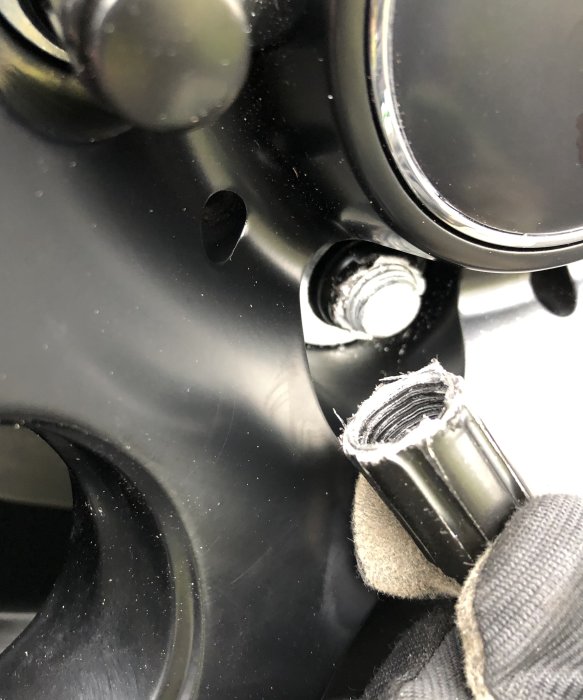
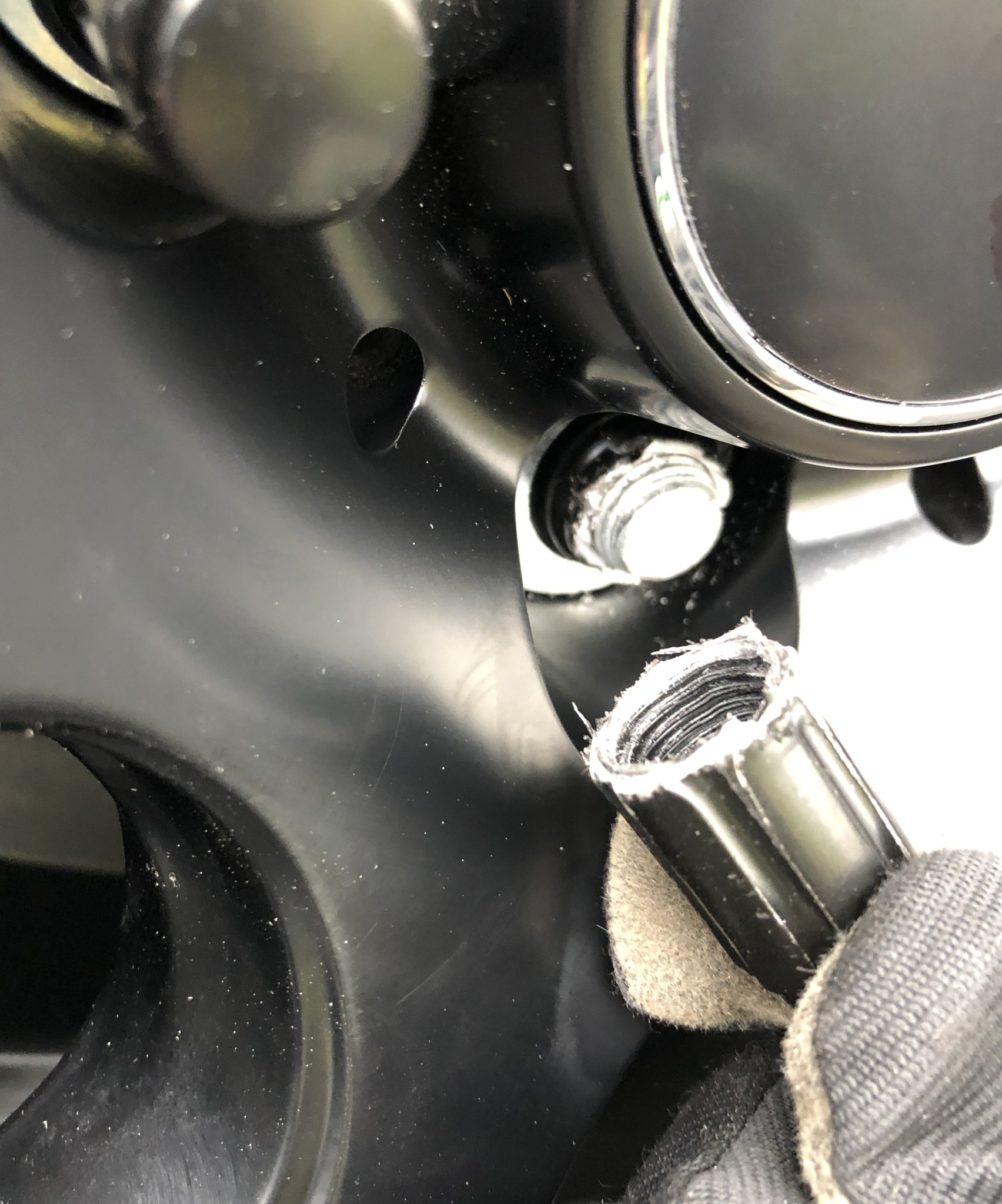
You should always have at least five threads of the screw in the nut to ensure the strength of the joint.. that looks like someone tightened it "like crazy" after having issues with the nuts coming loose (since there are too few threads to achieve sufficient friction with the correct tightening torque)
Lol it's amazing how many preconceived notions one can have. There are more than 5 threads. It's the entire cone inside that is threaded. It's just that it isn't visible because it's tight. No, I haven't had problems with the nuts coming loose. However, it is difficult to insert the socket far enough because it's so tight. Try helping instead of judging.
Lol how many preconceived notions one can have. There are more than 5 threads. It's the whole cone inside that's threaded. It's just that it doesn't show because it's tight.
No, I haven't had issues with the nuts coming loose. However, it's difficult to get the socket in far enough since it's so tight.
Try helping instead of judging.
There are sockets with tapered thickness.
Power sockets usually, but definitely worth not having to struggle.
I bought a set for the workshop..
These are worth their weight in gold for customer wheel changes..
Thin wall power socket 1/2" - Biltema.se https://www.biltema.se/verktyg/hand...afthylsor/tunnvaggig-krafthylsa-12-2000032275
If it's so cramped that you can't get a socket on, there are spiral grooves that grip tightly, then the only option might be to drill out the screw from the center.
Or as maskintok writes, drill at the edge and try to crack the waist.
Otherwise, you can loosen all the others and take a ride no, you shouldn't do that
If it's so tight you can't fit a socket, there's one with spiral grooves that grip, then the only option might be to drill out the screw from the middle. Or as maskintok suggests, drill at the edge and try to split the waist. Otherwise, you could loosen all the others and take a ride no, you shouldn't do that
drill a few small holes around and tap on a socket should work then the socket will crack the nut as you write.. Damn, you know this..
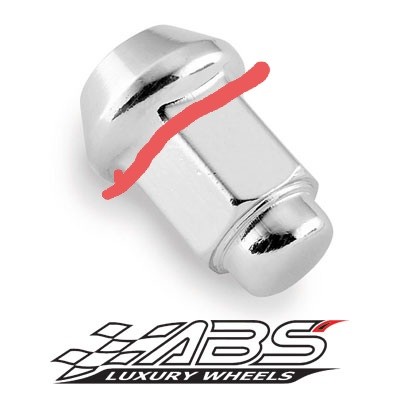
Well, I would probably like to claim that too. But they are the ones that ABSwheels sends as standard. The problem is that the nut is stainless = soft!
I don't really understand what you mean with a drill? Then I would drill the stud as well? You can't just hit the nut, can you? Or how should I drill?
Yes, I meant that you would drill into the stud with the logic that it's too short to be used with these rims anyway. IF I am wrong that the stud is too short for your rims, maybe another method is better, but honestly, I don’t know how that could be done without damaging the rim.
Lol what a lot of preconceptions one can have. There are more than 5 threads. It's the whole cone inside that is threaded in place. It's just that it doesn't show because it's in a tight spot. No, I haven't had problems with the nuts coming loose. However, it is difficult to get the socket in far enough, as it is so tight. Try helping instead of judging.
You have access to a caliper I assume?
Take a wheel nut, measure the length from where the wheel nut is off and to the contact surface on the nut in the rim, measure on the drill, mark with a piece of tape on a drill. Save a few mm to be sure to miss the rim. Measure on a whole nut, it's easiest.
Excuse the choice of words.
But it's not a wheel bolt, it's nuts with studs that are in the hubs.
Why should you drill it out?
It's sufficient to just change the nut and clean the threads on the stud.
You're thinking about the tool, and that's different.
Things are called and named the same in workshops.
Knock out the threaded rod if that word fits better, although it's called a stud in spare parts language.
And replace it with a longer type.
With a thread file, you can easily interpret which type of thread and pitch you need.
I would guess M14x1.25, which is very common for wheel bolts and nuts.
A bolt is by definition something without threads, even though in everyday language it's often used to refer to a coarser type of screw (partly because it's called "bolt" in English).
A tap is a tool used for threading.
And it's not called a "tap" in spare parts language, it's called a "stud bolt," incorrectly referred to as "stud bolt" on many car spare part sites.
A bolt is by definition something without threads, even though in everyday speech it is often used to refer to a coarser type of screw (partly because it is called "bolt" in English).
A tap is a tool used for threading.
And it is not called "gängtapp" in spare parts language; it is called "pinnskruv," incorrectly referred to as "pinnbult" on many car spare parts sites.
It has always been called a tap every time I ordered.
But "pinnbult" is the correct name within the industry, which I don't work in.
A "pinnbult" or screw as you call it has no head..they have threads in the corresponding direction to be threaded into place and tightened with torque without loosening when removing a nut.
These are not threaded in the hub but have splines on the body of the bolt and these should fit in splines in the hub.
Drilling into a hub or a wheel bolt is something one should experience in life before commenting on the matter because they are very hard.
The same thing happened to me last fall. ABS-wheels sent weak nuts. I also have a Model3.
I went to a tire shop and they had a thin, narrow socket with internal cuts that could be hammered on with some force so it gripped.
Vi vill skicka notiser för ämnen du bevakar och händelser som berör dig.

Violina said:
You should always have at least five threads of the screw in the nut to ensure the strength of the joint.. that looks like someone tightened it "like crazy" after having issues with the nuts coming loose (since there are too few threads to achieve sufficient friction with the correct tightening torque)Shibby said:
Lol how many preconceived notions one can have. There are more than 5 threads. It's the whole cone inside that's threaded. It's just that it doesn't show because it's tight.
nino said:
If it's so tight you can't fit a socket, there's one with spiral grooves that grip, then the only option might be to drill out the screw from the middle. Or as maskintok suggests, drill at the edge and try to split the waist. Otherwise, you could loosen all the others and take a ride