


Hello.
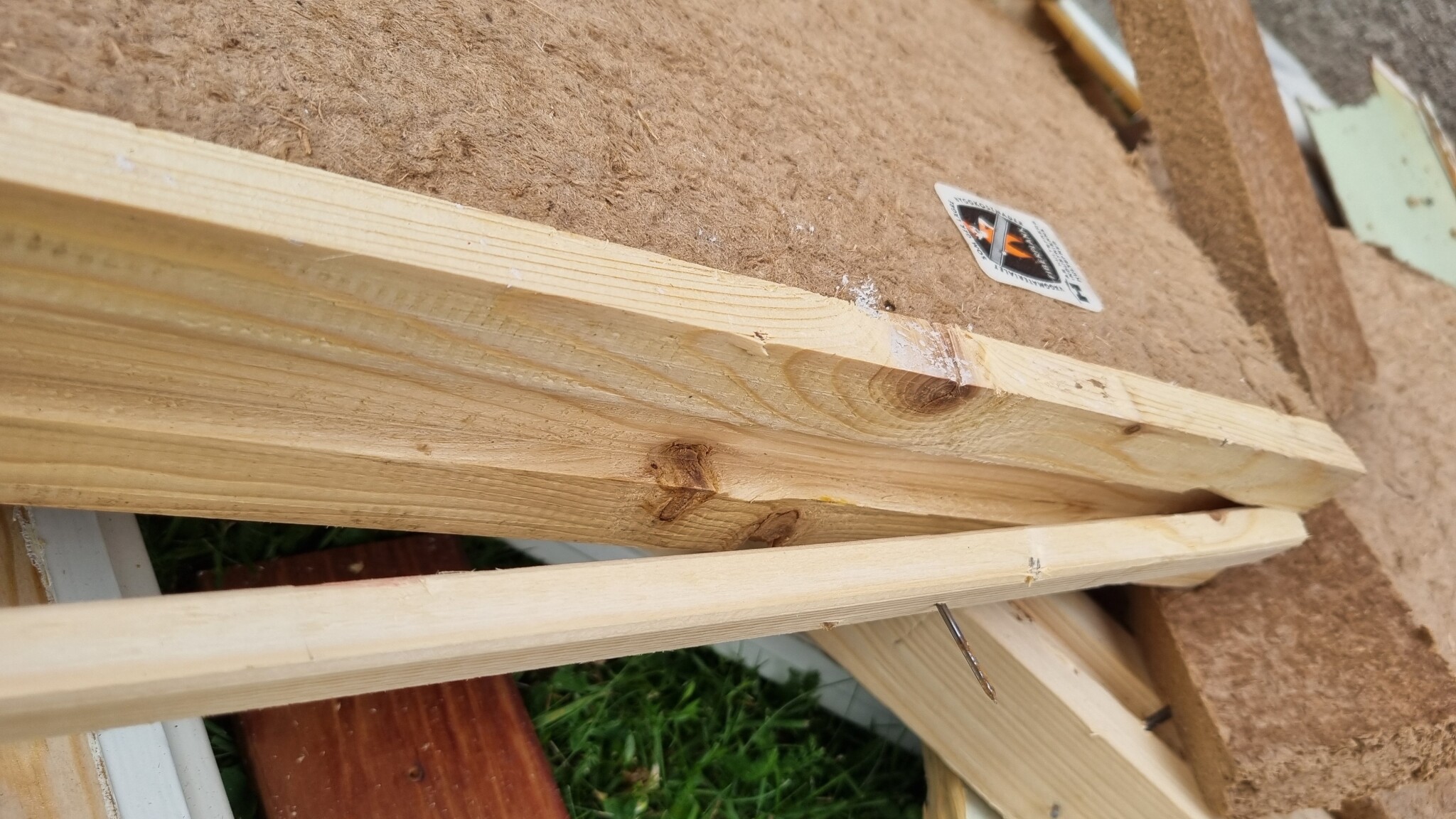
I have cut a hole in the wall and found an insulation material(?) that I don't know what it is, does anyone recognize it from the pictures and can enlighten me? It is a light and porous board, a few cm thick, made of some kind of wood fiber.
From the inside, it is as follows:
- Textured wallpaper
- Some kind of wood fiberboard, a few mm thick
- Styrofoam board
- The unknown insulation to me
- Wind barrier paper
- Exterior panel
The house was built in 1956.
I plan to replace the panel and at the same time add extra insulation from the outside. Is this "insulation" worth keeping, or is it more worthwhile to tear it out and replace it with modern insulation?
Thanks in advance for the response.
/Marcello
Last edited:
When was the house built?
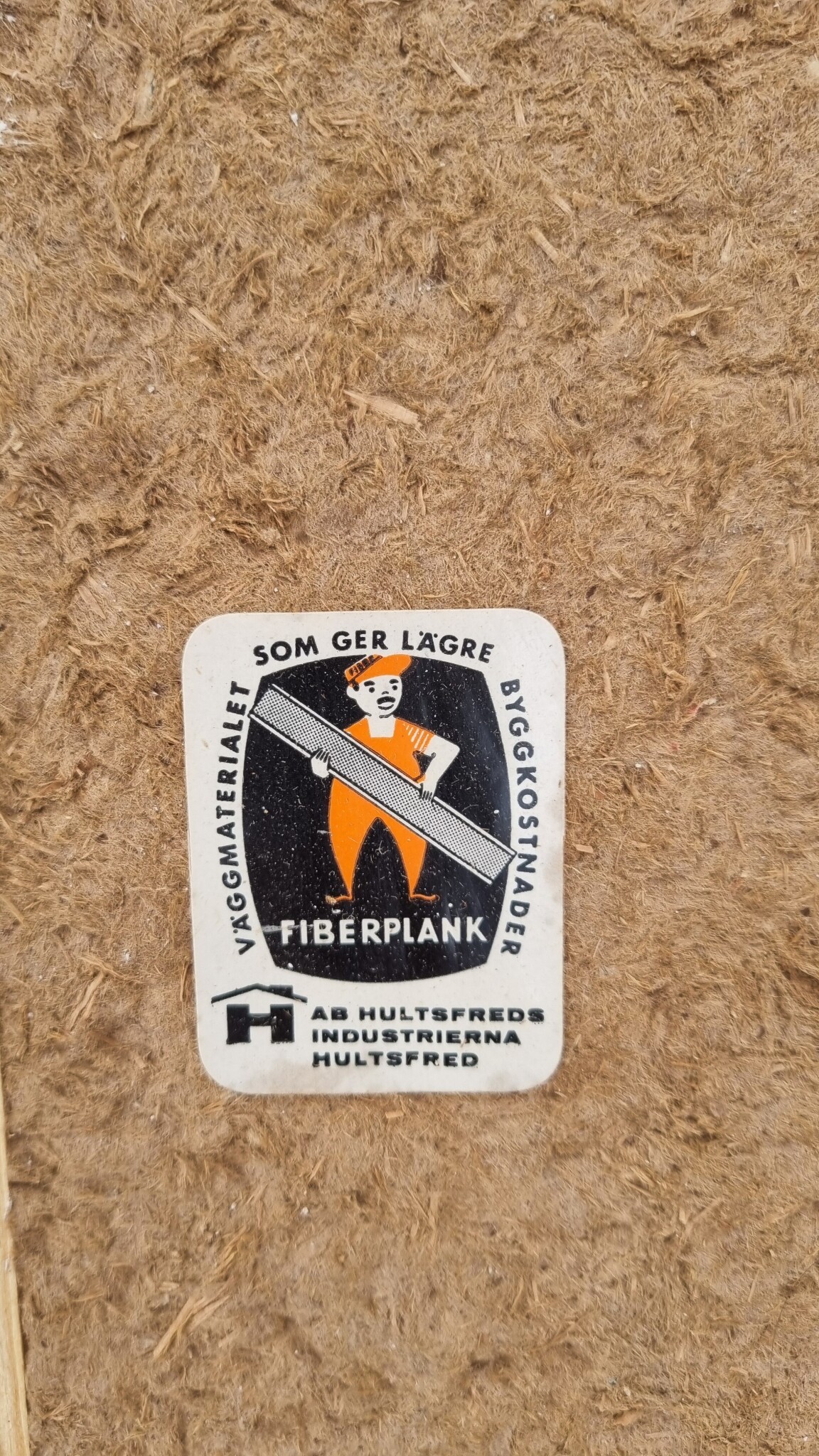
My house from 65 was built with "fiberplank" which is like treetex in 3 and 4" thickness with tongued thin board glued on the sides. 300mm wide. So in my load-bearing outer walls, there are no studs, just these slats with thin wood at cc 300.
Could it be something like that? It will become apparent if you have reason to enlarge the hole.
I've left mine as is and supplemented with mineral wool.
My house from 65 was built with "fiberplank" which is like treetex in 3 and 4" thickness with tongued thin board glued on the sides. 300mm wide. So in my load-bearing outer walls, there are no studs, just these slats with thin wood at cc 300.
Could it be something like that? It will become apparent if you have reason to enlarge the hole.
I've left mine as is and supplemented with mineral wool.
There seem to be studs in the walls; I found one at least when I made the hole seen on the right side in the picture. But maybe it's such a thin board as you mean? The house was built in 1956. I guess I'll find out when I renovate a room and remove the interior fiberboard and styrofoam.Karrock said:
When was the house built?
My house from 65 was built with "fiberplank," which is like treetex in 3 or 4" thickness with a tongue-and-groove thin board glued on the sides. 300mm wide. So in my load-bearing exterior walls, there are no studs, just these lamellas with thin wood at cc 300.
Could it be something like that? It might be noticeable if you have reason to enlarge the hole.
I've left mine as they are and added rock wool.
Thanks for the reply.


The material looks quite similar, I don't know if it's a Hultsfredshus but I will check the little documentation I have about the house to see if it says anything about it there.R Rubb said:
Are these fiber plank load-bearing, if they are indeed such? Because if so, you would need to replace them with studs if you wished to replace them with stone wool insulation?
In the technical specs of my house, it says 3" fiberplank in non-load-bearing walls and 4" in load-bearing. That matches what I've torn out. They must be replaced with studs if you remove them.M Marcello said:The material looks quite similar, I don't know if it's a Hultsfred house but I'll check the little documentation I have on the house to see if it says anything about it.
Are these fiberplank load-bearing, if they are such? Because if so, you have to replace them with studs if you would like to replace them with stone wool insulation?
It's an okay material, replacing it is quite an undertaking. Consider if that's what you want to spend time and money on.
I'm leaning more towards screwing up OSB on the inside so you can hang things heavier than 100 grams on the walls and then adding insulation on the outside when replacing the facade, as you say it's quite a lot of time you could spend on something more rewarding.In the technical spec of my house it says 3" fiber board in non-load bearing walls and 4" in load-bearing. This matches what I've discovered while tearing down. They must be replaced with studs if they're removed.
It's a perfectly fine material, replacing it is quite an operation. Consider carefully if this is what you want to spend time and money on.
Do you know anything about how these fiber boards are affected by additional insulation on the outside? Anything specific to think about regarding moisture? Or is it just to insulate as usual on the outside and vapor barrier on the inside?
Another thing that just occurred to me, what are the battens/facade nailed to if there are no load-bearing studs? You can't really screw anything into those fiber boards, I could barely get the curtain rod to stay.
Thanks for the replies!


We have one from '47, all walls and ceilings on the upper floor are made of treetex. Eventually, all of this will be taken down and out, replaced with osb then plaster (osb behind for easy mounting of various things). A hell of a job certainly, but after seeing how treetex burns (and doesn't want to go out again), my girlfriend and I made that decision.D Denan353 said:
Now it's probably a bit late, but it's likely fiberplank, a form of prefabricated building elements. It provides decent insulation.M Marcello said:[image] [image] [image]
Hello.
I have cut a hole in the wall and found an insulation material(?) that I don't know what it is, does anyone recognize it in the pictures and can enlighten me? It is a light and porous board, a few cm thick made of some kind of träfiber.
From the inside, it is as follows:
- Textured wallpaper
- Some kind of träfiber board, a few mm thick
- Styrofoam board
- The unknown insulation to me
- Windproof paper
- Outer panel
The house was built in 1956.
I plan to replace the panel and at the same time add additional insulation from the outside. Is this “insulation” worth keeping or is it more worthwhile to tear it out and replace it with modern insulation?
Thanks in advance for the answers.
/Marcello
Yes, it seems to be exactly what you’re saying. Decent insulation, yes, but completely useless to try to screw anything into. You can't find the planks with a stud finder either because it doesn't differentiate between the planks and the fiberboards. When it's time to renovate, I'll need to cover the inside with OSB/Plyfa.L LargoGabriel said:
Thanks for the reply 🙂
Click here to reply