
Just drilled a hole in an interior wall to mount a picture. Thought it was a drywall, but the drill dust was completely black (see picture). Inserted a bent steel wire to feel if it was single/double drywall or another board, but it went in over 4 cm without catching the other side. The material was very easy to drill through.
Finally mounted the picture with a nylon plug and screw, it weighs about 4 kg, so hopefully it holds, but it would be interesting if someone knows what it might be.
The building is a multi-family house in Stockholm, built in the late 60s.
Finally mounted the picture with a nylon plug and screw, it weighs about 4 kg, so hopefully it holds, but it would be interesting if someone knows what it might be.
The building is a multi-family house in Stockholm, built in the late 60s.
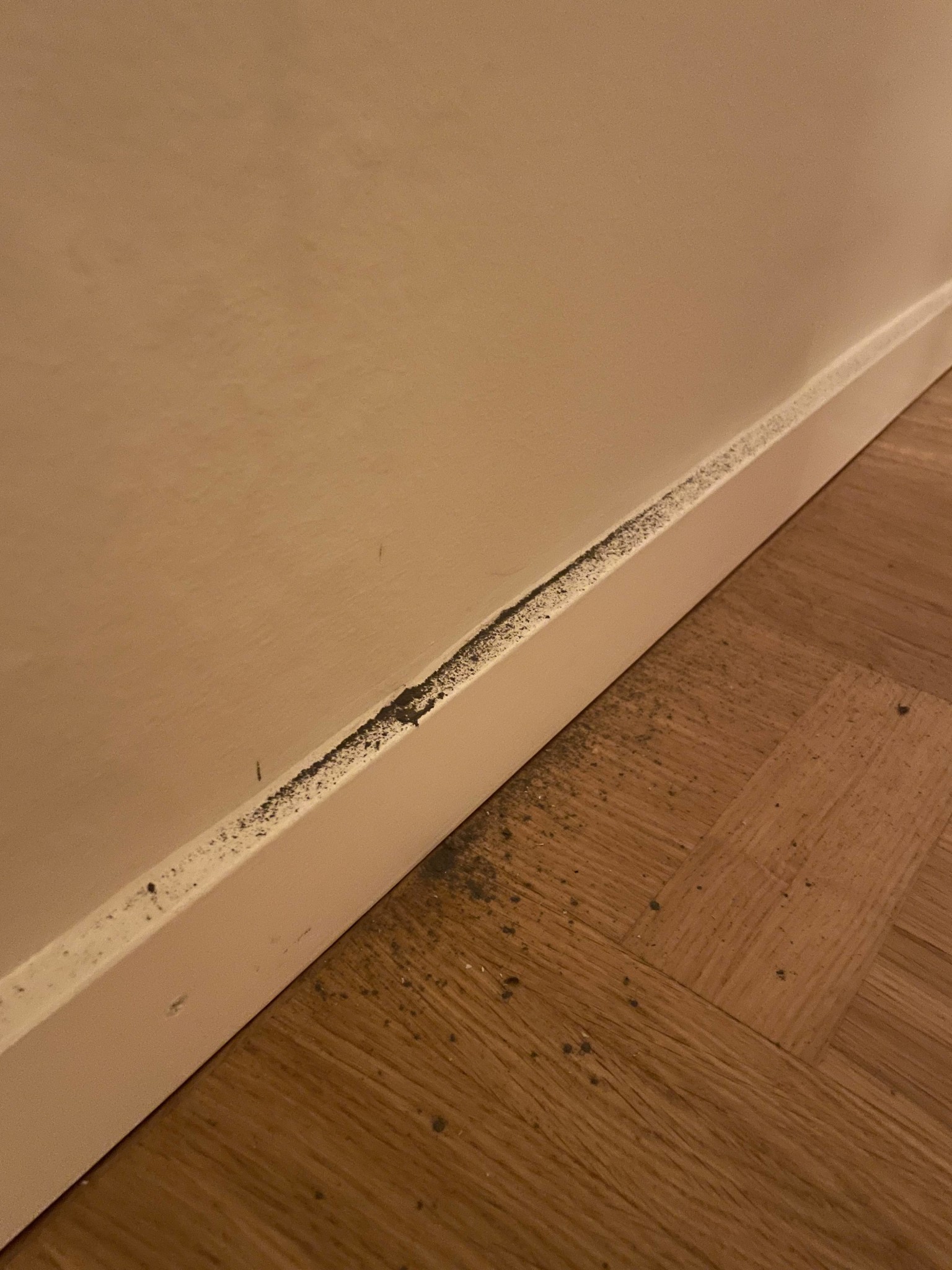
Slag stone yes, had it in our old apartment built in '59. First a thick layer of plaster, then the slag stone. Very irritating material to fasten in.
If you just want to hang something, I found it easiest to just use a fairly sturdy nail (all original fittings, kitchen, moldings, wardrobes, etc., were nailed). For shelves, etc., I mostly used light concrete screws and pre-drilled without hammer function. I avoided plugs as they grip poorly in the crumbly material and could be easily pulled out, but for a painting, it's probably fine.
If you just want to hang something, I found it easiest to just use a fairly sturdy nail (all original fittings, kitchen, moldings, wardrobes, etc., were nailed). For shelves, etc., I mostly used light concrete screws and pre-drilled without hammer function. I avoided plugs as they grip poorly in the crumbly material and could be easily pulled out, but for a painting, it's probably fine.
U
Utsliten och utdömd
Building conservationist
· 2 805 posts
Utsliten och utdömd
Building conservationist
- 2,805 posts
it doesn't sound from your description like you had slagstone, it's hard and compact. definitely not crumbly.H hapazard said:Slagstone yes, we had it in our old apartment built in -59. First a thick layer of plaster, then the slagstone. Very frustrating material to fasten in.
If you're just hanging something, I found it easiest to just use a relatively strong nail (all original furnishings, kitchen, moldings, closets, etc., were nailed). For shelves, etc., I mostly used lightweight concrete screws and pre-drilled without hammer function. I avoided plugs because they grip poorly in the crumbly material and could easily be pulled out, but for a painting, they are probably good enough.
Hm, I might be mixing up the walls between the apartments and the interior walls, in that case, the latter were made of some form of crumbly lightweight concrete.U Utsliten och utdömd said:
Agree, slag stone is hard as hell. More like good concrete. Also dusts enormously. I hung up all sorts of things with regular plugs and screws, held like a rock.U Utsliten och utdömd said:
The slagstone in my parental home, built in the 30s, was mainly gray. My dad really disliked it because it was very uneven, usually quite soft but often brittle so it didn't provide any grip or collapsed so the hole became much larger than he intended, but also had really hard glassy parts here and there that were very difficult to drill into. The variation between the different parts in one single block made it even harder to get straight holes of the right dimension.Viktor.J said:
Is it slag from combustion (coal) or from metal production? The first is compacted ash with a bit more tar, while the second can be hard and comes in different colors. The latter has been used as ballast in concrete as recently as the fifties (the core samples from that house were really fascinating).
Click here to reply