
2,476 views ·
3 replies
2k views
3 replies
What is really happening at the sawmill.

I have seen these small "bumps" on the corners of the studs and have been wondering long enough how they "get there," so now I'm asking the forum:
Attached are 2 pictures from the planed/milled edge of a 120x45 stud. It's not that easy to get it in a photo, but on this particular stud, you can even see extra growth rings on the "bump."
What I don't understand is how the cutter can skip over a small area a little bit, without it showing on the whole plank.
Attached are 2 pictures from the planed/milled edge of a 120x45 stud. It's not that easy to get it in a photo, but on this particular stud, you can even see extra growth rings on the "bump."
What I don't understand is how the cutter can skip over a small area a little bit, without it showing on the whole plank.
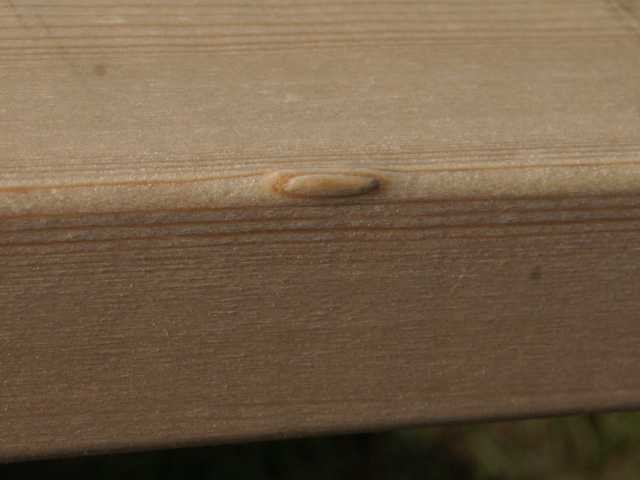
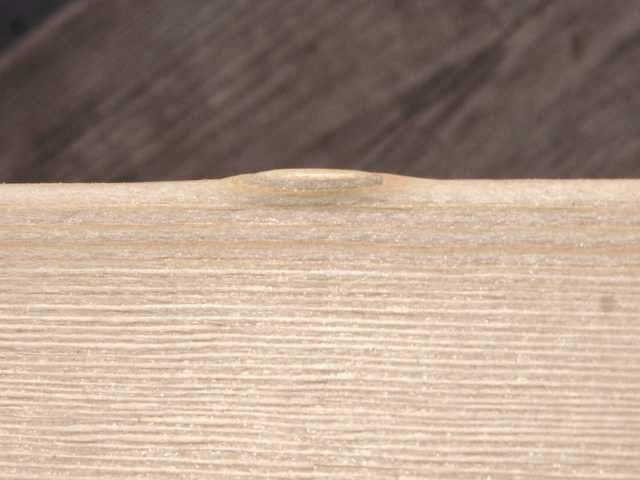
A spontaneous guess: The timber has been clamped/gotten a hit before planing, was flat right after planing but then over time the fibers have risen to the starting position. That the cutter missed just there without traces on the rest of the surfaces seems unlikely.
Yes, that's a good guess, I can imagine.
I've noticed quite a few of these bulges on the corner of the rule, but yesterday I saw two on the plan side of the rule, quite close to each other, but smaller and practically impossible to photograph so you can see what I mean. But then I started to think even more and decided that "someone must know" ...
I've noticed quite a few of these bulges on the corner of the rule, but yesterday I saw two on the plan side of the rule, quite close to each other, but smaller and practically impossible to photograph so you can see what I mean. But then I started to think even more and decided that "someone must know" ...

Diversearbetare
· Göteborg
· 11 258 posts
It is probably the case that the bundle of rough-sawn wood was steel banded during drying, and the band compressed the wood on the outer plank.
Click here to reply