Question 1
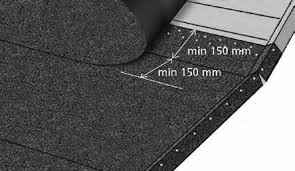
I have seen that there are different techniques when laying roofing felt and underlay felt when it comes to the edge. The common practice is to place a triangular strip at the end. But I've seen that some lay the felt up against the strip a few centimeters and fasten it. Meanwhile, others seem to fold the felt over the strip and then fasten it under the roofing board. Advantages and disadvantages?
Question 2
When it comes to nailing, I have also seen two different methods. Some seem to fasten the roofing felt at the top only with nails in the bottom layer. Then when the next layer comes on, you nail it at the top and the overlap is glued together. So no nails go through both "layers." Meanwhile, others do it the same way but also nail the layers together, in addition to the self-adhesive glue.
Nail in only one layer:
I have a feeling that you are confusing the approach of installing underlay felt with dispatch felt. It is the manufacturer's instructions that apply.
Regarding question 1: it is perfectly fine to have "visible" nails in underlay felt (they will be covered by one more layer). It is worse with felt that is not tight against the base.
Okay, two responses. One advocating for nail-free on the top side and one who nails for better grip.
But there must be more who have installed roofs and can share their opinions?
Admittedly a storage roof, but this is how I did it last spring. I primarily aimed for no nails to be visible.
Nail the underlayment felt at the top edge, zigzag.
When the underlayment felt is joined, nail the seam so it stays down.
I folded it up at the triangular battens and nailed on the outside. The bargeboard and barge cover will cover this later.
I know that the underlayment felt I used required both layers of underlayment felt to be nailed through, i.e. the overlap. I did not do this. Only the top edge so it is covered with adhesive and the overlap from the next strip of underlayment felt.