
We moved into our house just under two months ago and discovered the other day that the kitchen ceiling has come loose (?) and has sunk right where the fluorescent fixture was (I removed it thinking it was the culprit and it was going to be replaced with something nicer anyway). However, this seems to be a solid ceiling with plenty of self-weight.
So, what kind of ceiling is this (that it's even some sort of tongue-and-groove particleboard is quite clear), how is it mounted, and how can I best fix this and get a flat ceiling again?
There are slats about 600 mm c-c that you can screw into, but no screw holes or spackle marks are visible, so I guess it’s some other type of mounting. We aren't planning to repaint or change the kitchen ceiling for a while if it can be helped, even though it might have been nice (having a bathroom and a facade to tackle now in the first year).
Thanks!
So, what kind of ceiling is this (that it's even some sort of tongue-and-groove particleboard is quite clear), how is it mounted, and how can I best fix this and get a flat ceiling again?
There are slats about 600 mm c-c that you can screw into, but no screw holes or spackle marks are visible, so I guess it’s some other type of mounting. We aren't planning to repaint or change the kitchen ceiling for a while if it can be helped, even though it might have been nice (having a bathroom and a facade to tackle now in the first year).
Thanks!
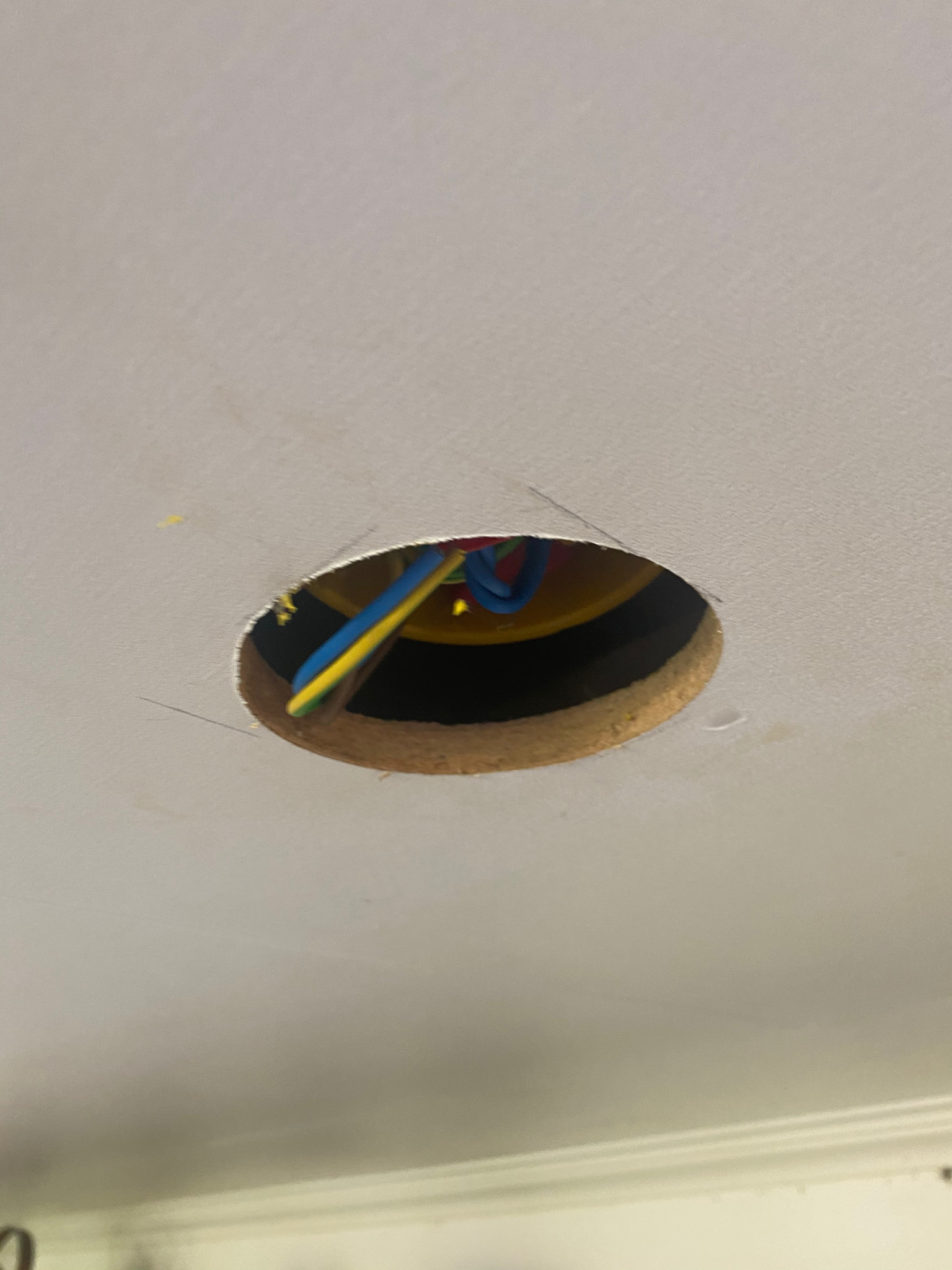
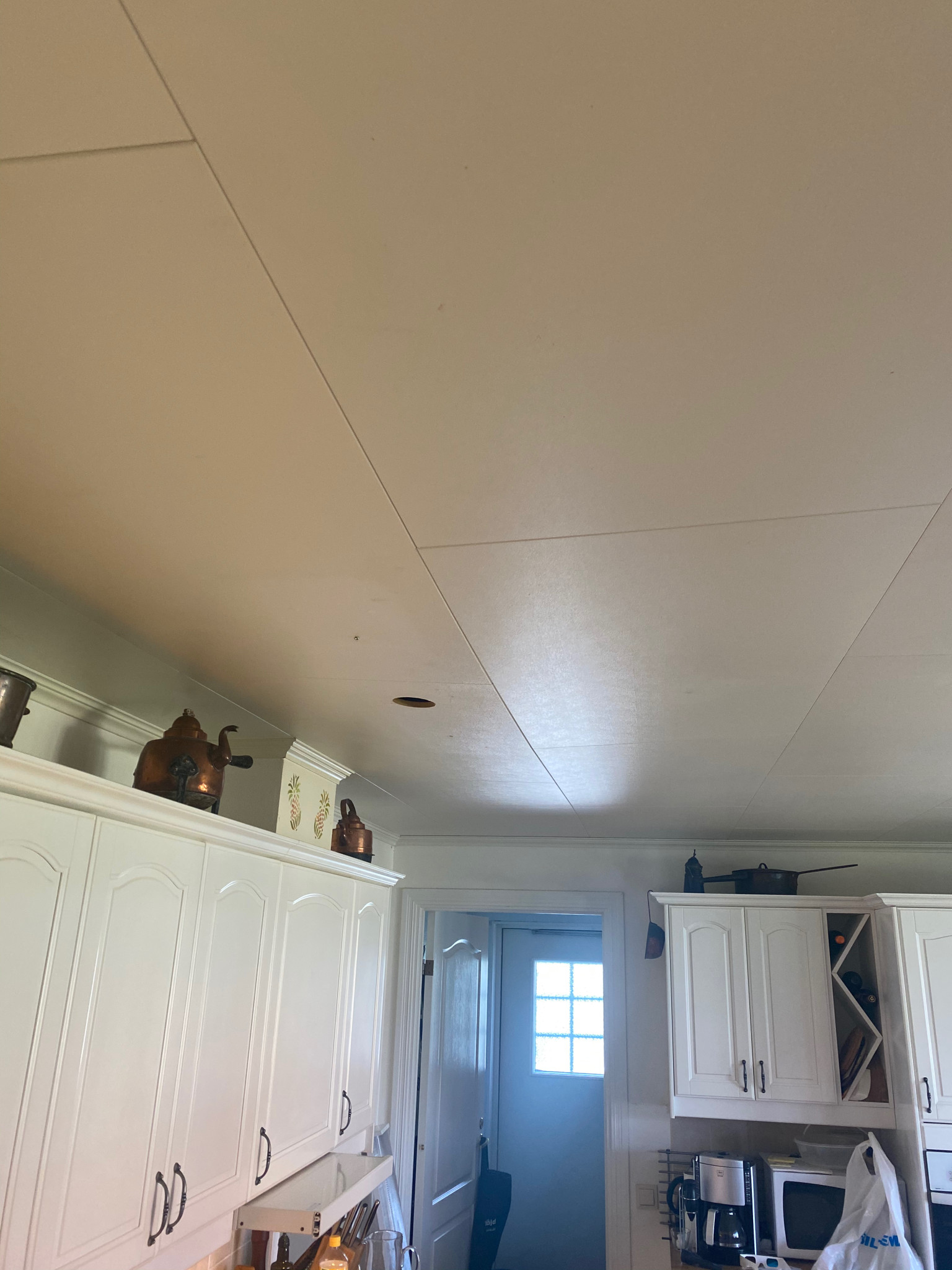

Member
· Västerbottens län
· 18 062 posts
Are you sure the ceiling is coming down so it's not the dosan that is going up.
Check with a straightedge.
Protte
Check with a straightedge.
Protte


I have also installed tongue and groove tretex in a few rooms, which is stapled in the tongue. This has cut through in a couple of places and then started to hang in a similar way. Fixing it invisibly without tearing down the entire ceiling is probably difficult, but I screwed the worst spots in the board edges and filled the heads. It turned out quite OK after painting. Just make sure to hit the furring strips.
It is probably assembled by screwing/nailing along the edge of the panels and then sliding the next panel into a groove to hide the screw, see the video in the link. So, if you want to fix the sunken panels, it's probably just a matter of taking them down one by one. But if you're unlucky, they are either clamped or glued, making them difficult to remove without damaging them. In that case, it's probably best to replace the entire ceiling. Alternatively, you could screw directly through the panels and then putty and paint or hide the screws with a molding
https://www.k-rauta.se/produkt/takskiva-huntonit-brilliant-11x620x1220mm-302m/7055750502017
https://www.k-rauta.se/produkt/takskiva-huntonit-brilliant-11x620x1220mm-302m/7055750502017
Given that you have a joint near the box and what looks like enough space, try to get a small camera or mirror up and see how it looks at the joint. If you find any clips or small plastic pieces on the beam or on the underside of the ceiling, they may have come loose. Another scenario is that you see a thin nail sticking out.
To buy time, you could prop up the ceiling and nail/screw it along the joints (provided these are under the beams). Of course, you might end up with some visible nail/screw heads, but that's better than a ceiling on your head.
To buy time, you could prop up the ceiling and nail/screw it along the joints (provided these are under the beams). Of course, you might end up with some visible nail/screw heads, but that's better than a ceiling on your head.
Click here to reply