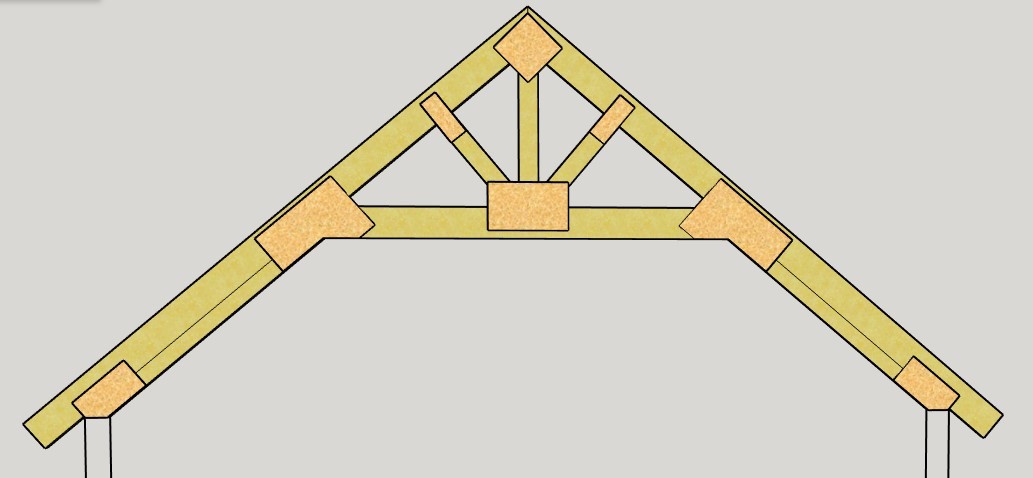
I have combined two sketches that don't quite match in scale to quickly illustrate my thoughts. It takes a bit too much time to draw something that matches your measurements. See it as a very rough sketch.
I have combined two sketches that don't quite match in scale to quickly illustrate what I am thinking. It takes a little too much time to draw something that matches your measurements. See it as a very rough sketch.
[image]
Oh, you're thinking in that direction. That will be quite amusing
I would probably prefer a regular gable roof in the other direction, it should look somewhat decent against the house
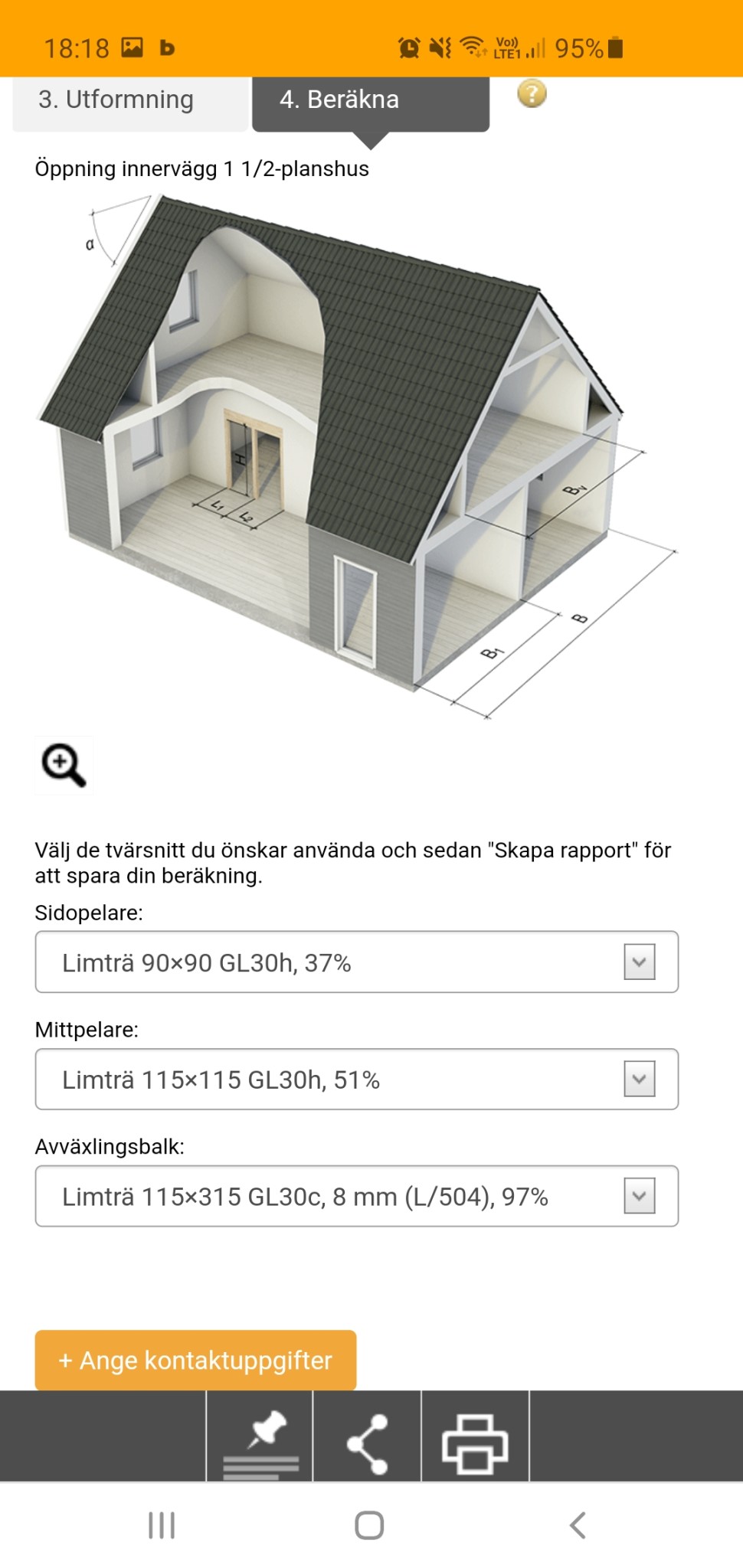
You interpreted my sketch too literally, it was just something I had in the "byrålådan". A standard 11/2 story house with a beam on three columns instead of a load-bearing wall works great. I'm a bit concerned about the calculation. When I calculate backwards, I get the beam load to be about 7.5 kN/m, which seems a bit low. What values did you use for the live load on the loft and the snow load?
You interpreted my sketch too literally, it was just something I had in the "drawer." A regular 1-1/2 story house with a beam on three pillars instead of a heart wall works great. I'm a bit puzzled over the calculation. When I calculate backwards, I get the beam load to about 7.5 kN/m, which seems a bit low. What values did you use for live load on the loft and snow load?
Okay, this is exactly what I've been trying to figure out from the start, but replace the framework with scissors and a simple floor joist instead to try to reduce the building height and the floor joist's height, which doesn't seem like a good idea then?
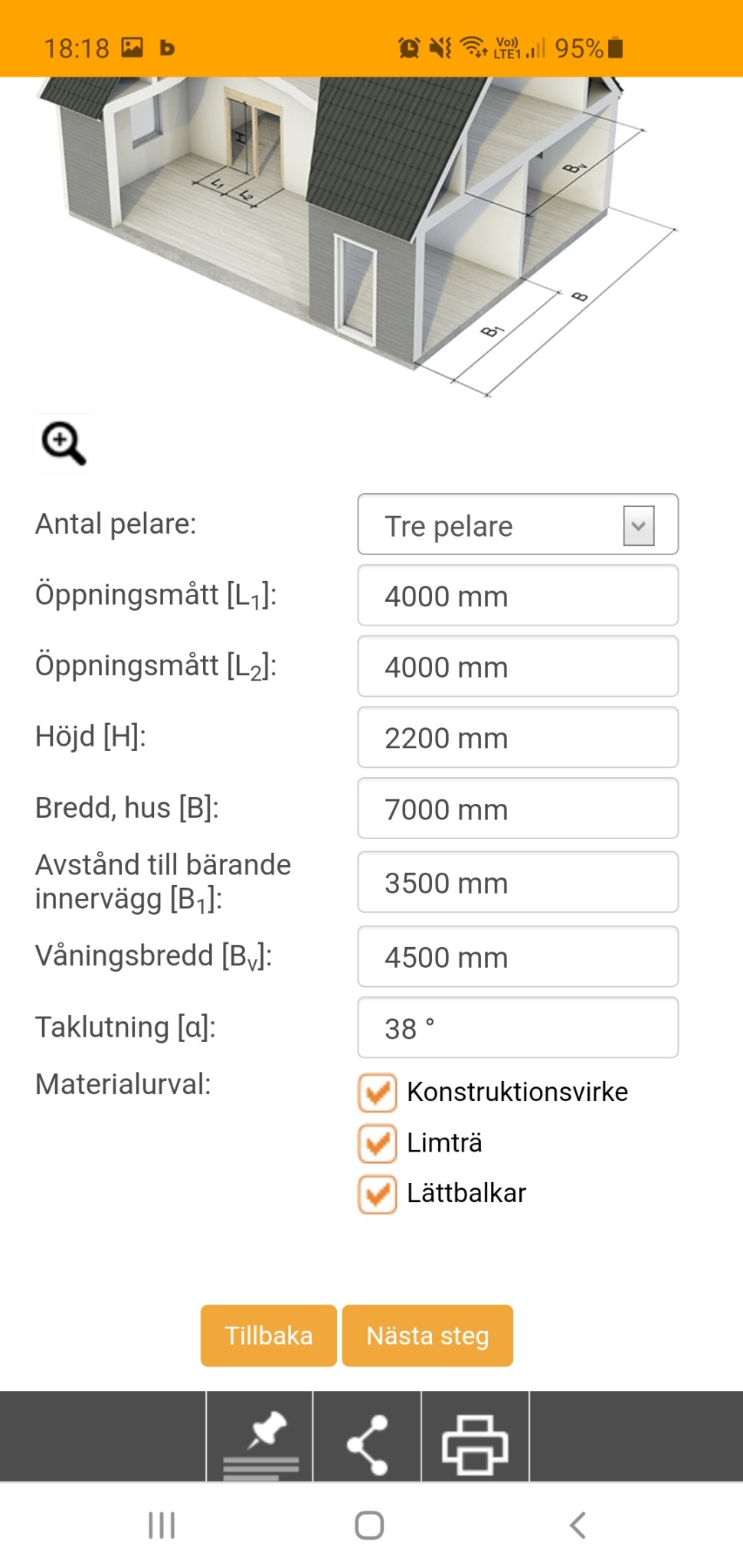
Info about snow load etc. can be seen in picture 1 of 3.
just thought I'd tip about this thread.. https://www.byggahus.se/forum/threads/bygger-hobbygarage.192439/
as you describe your build, I immediately thought of skruffse. you might get some inspiration from there.
otherwise, I also think it's worth looking at how the Americans build larger garages, postframe. I usually watch rrbuildings on YouTube. might be worth checking out.
With the right dimensions on the high legs, you can build roof trusses without support posts. I see no advantage with scissors trusses in your case. If you want to avoid center posts, it's better to use three beams on the short span (7 meters), i.e., parallel to the roof trusses. Increasing the beam width means they don't have to be super tall. In return, you can use regular construction lumber for the floor joists.
With the right dimensions on the main legs, you can build trusses without support legs. I see no advantage with scissors trusses in your case. If you want to avoid center pillars, it's better to use three beams that lie on the shorter side (7 meters), i.e., parallel to the trusses. By increasing beam width, they don't have to be super high. In return, you can use regular construction timber for the floor joists.
That is not an accurate description, but if I say yes, you understand. With three 7 m long load beams of glulam with maxed width, you can use 215x405 mm beams. Between these, you can place 45x120 C 24 in joist hangers at c/c 600. On top of that, screw-glued chipboard flooring.
It is not an accurate description, but if I say yes, you will understand. With three 7 m long load-bearing beams of glulam with maximum width, you can use 215x405 mm beams. Between these, you can place 45x120 C 24 in joist hangers at c/c 600. On top of that, screw-glued floor particleboard.
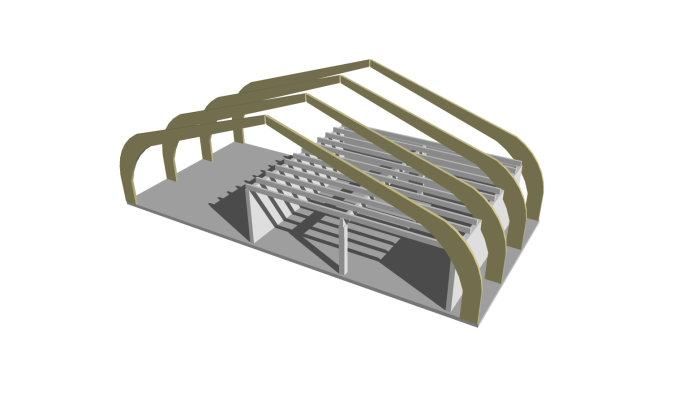
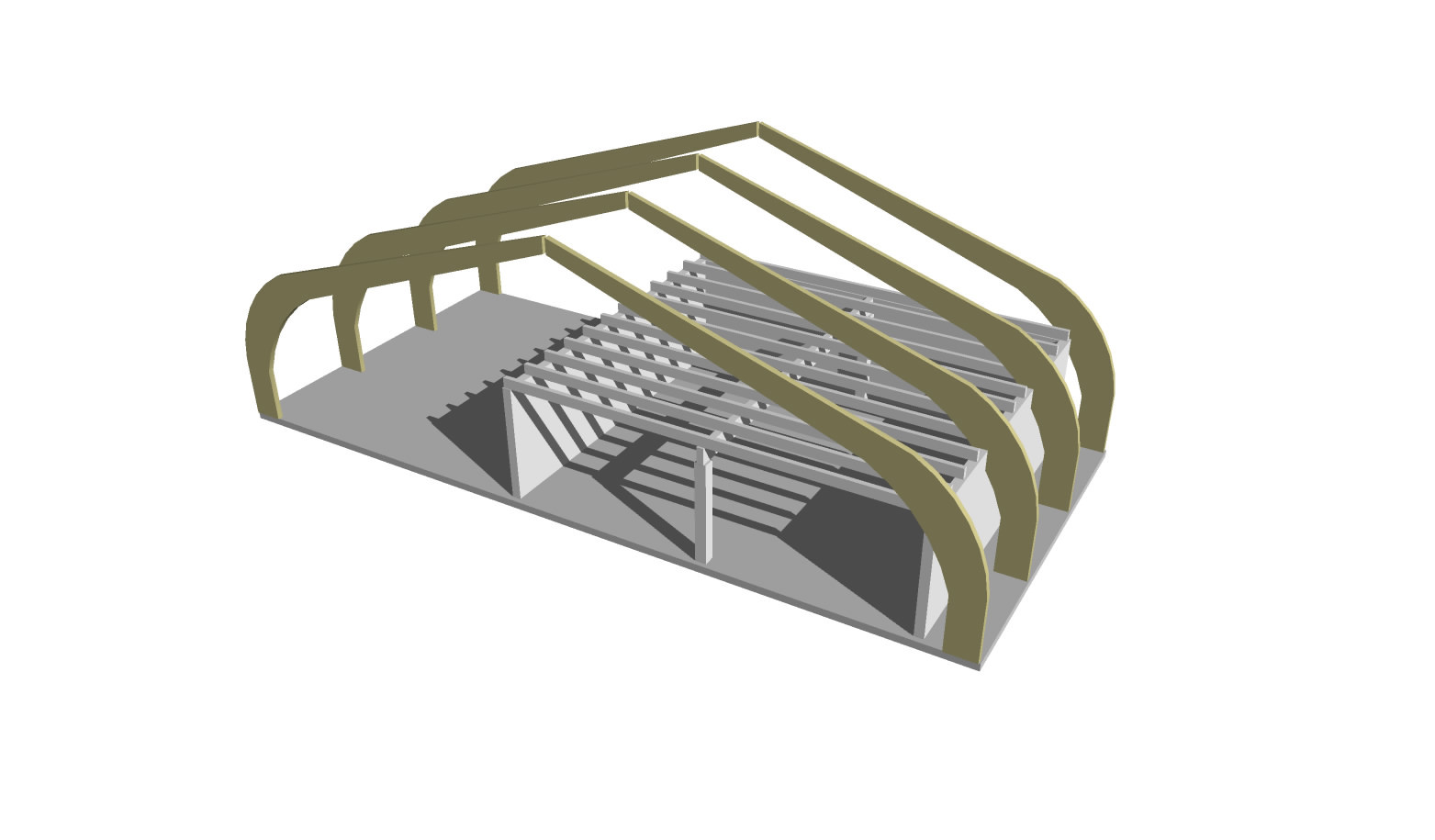
Okay, but how would the trusses look like then, do you think?




Rooth07 said: