A mezzanine floor of 8x8 meters built with glulam beams and a few columns is not a good idea. There will be stability issues, and glulam will be required for the floor joists despite a bearing line. I suggest you rethink the main layout. Reducing the garage depth to 7 meters is a clear simplification.
There is a conflict between your measurement requirements and the ability to build in a simple way. Stability is not only a matter of vertical loads but also support in different lateral directions, e.g., through walls. Everything can be solved if you invest enough. With the help of KL-elements (KL=cross-laminated timber) as a replacement for floor joists etc., you can probably create a stable floor structure. However, you significantly increase the level of difficulty and the costs.
Is it the stability of the flooring or the framework of the construction that becomes unstable?
What are the risks as you see it?
As I said, this is not my area of expertise but I would like to understand
For a building to remain standing and maintain its form over time, stability is required in all three dimensions. In smaller houses, this is primarily achieved through diaphragm action in facades and walls. In larger constructions, you must utilize diagonal braces and similar methods. It is quite easy to stably build large halls. The problems arise when introducing intermediate floors that need to be supported by the main structure, unless you do as I previously suggested, building a house within a house. Even then, the combination of an open garage of 8x8 meters and a residential loft is problematic. The best approach is to work through the whole conceptually even more so that you gain insight into the goal conflicts. The simplest way to solve problems is to avoid them.
Like the house I live in. 1&1/2 story villa. Trussed roof. The house is about 8 meters wide and the central wall downstairs is probably the only load-bearing wall.
Thinking it should be the same thing in the garage then but replacing the central wall with a beam instead?
That is what doesn't work well, replacing an entire heart wall with a beam. Additionally, you have transverse walls that also stabilize. I'll have to think of some pedagogical way to describe your options.
The floor on the upper floor (floor chipboard) should indeed stabilize and distribute loads in the building if only the gables are properly braced or sheeted. But it might not be enough for such large spans. One way could be if you can consider support legs in the middle of the building, angled from the sill and diagonally up to the intermediate joist or all the way up to the rafters on the roof trusses.
The floor on the upper floor (floor chipboard) should indeed brace and distribute loads in the building if only the gables are well braced or sheathed. But it may not be enough for such large spans. One way might be if you can envision support legs in the middle of the building that you angle from the sill and slant up into the floor joists or all the way up to the rafters on the roof trusses.
I think so too. There will be a middle wall after these 8 meters as well. And osb + drywall will be used throughout the entire build.
A friend just built a garage of 8.4x14.4m. However, with regular w trusses. 4m wall height. There they put steel bands diagonally in the frame to brace it. I don't know if it was specifically for stability before he got the paneling on the outside and osb inside. Or if they serve a function when it's completed as well.
He put up a small loft about 8x4 m. However, just for storage, so the ceiling height in the loft is over a meter or so.
There we put up a glulam beam 495*115*8370 that sits about 4 meters in. Then there's a floor joist with 220 with cc 45 between the beam and the gable. That beam hangs only on posts in the walls.
That's what doesn't work well, replacing an entire heart wall with a beam. Additionally, you have transverse walls that also stabilize. I need to figure out a pedagogical way to describe your options.
Hello again
If I now reduce the depth to 7 meters, maybe even the width to 7 meters. So 7x7 meters. What do the possibilities look like then? Would you still want the floor structure to have its own construction or integrate it into the walls?
How would you like it to look with the following conditions:
7x7 or 7x8 meters. Two 3m wide doors on the "long side" Ceiling height in the garage 2.3-2.4 meters. Above this, a reasonable loft for "residence" The garage section should preferably be open without interior walls or posts if possible.
How would you build? Wall height? Type of trusses? The floor structure?
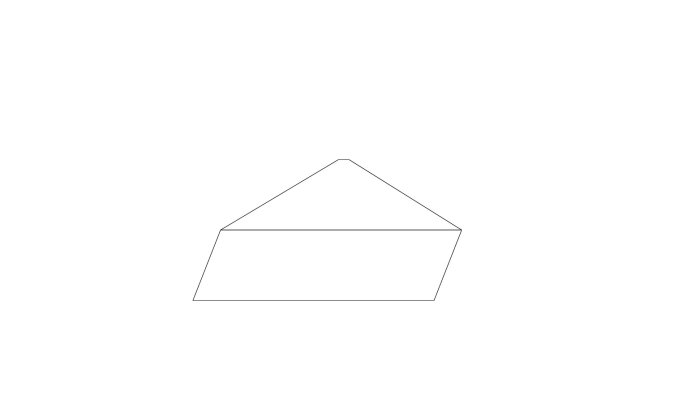
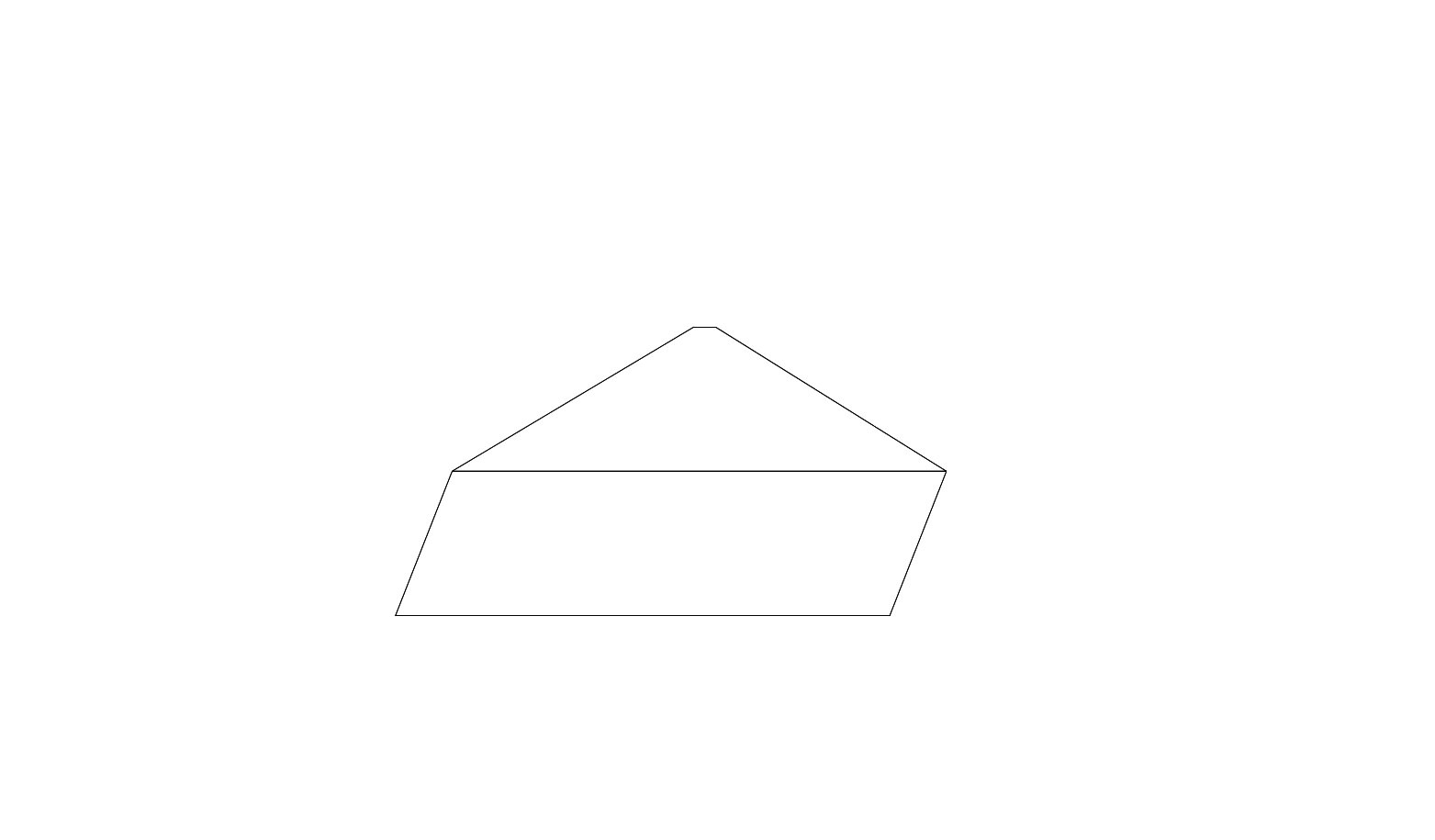
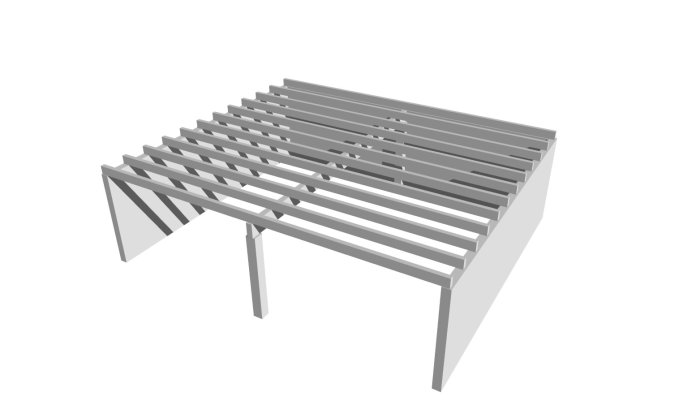
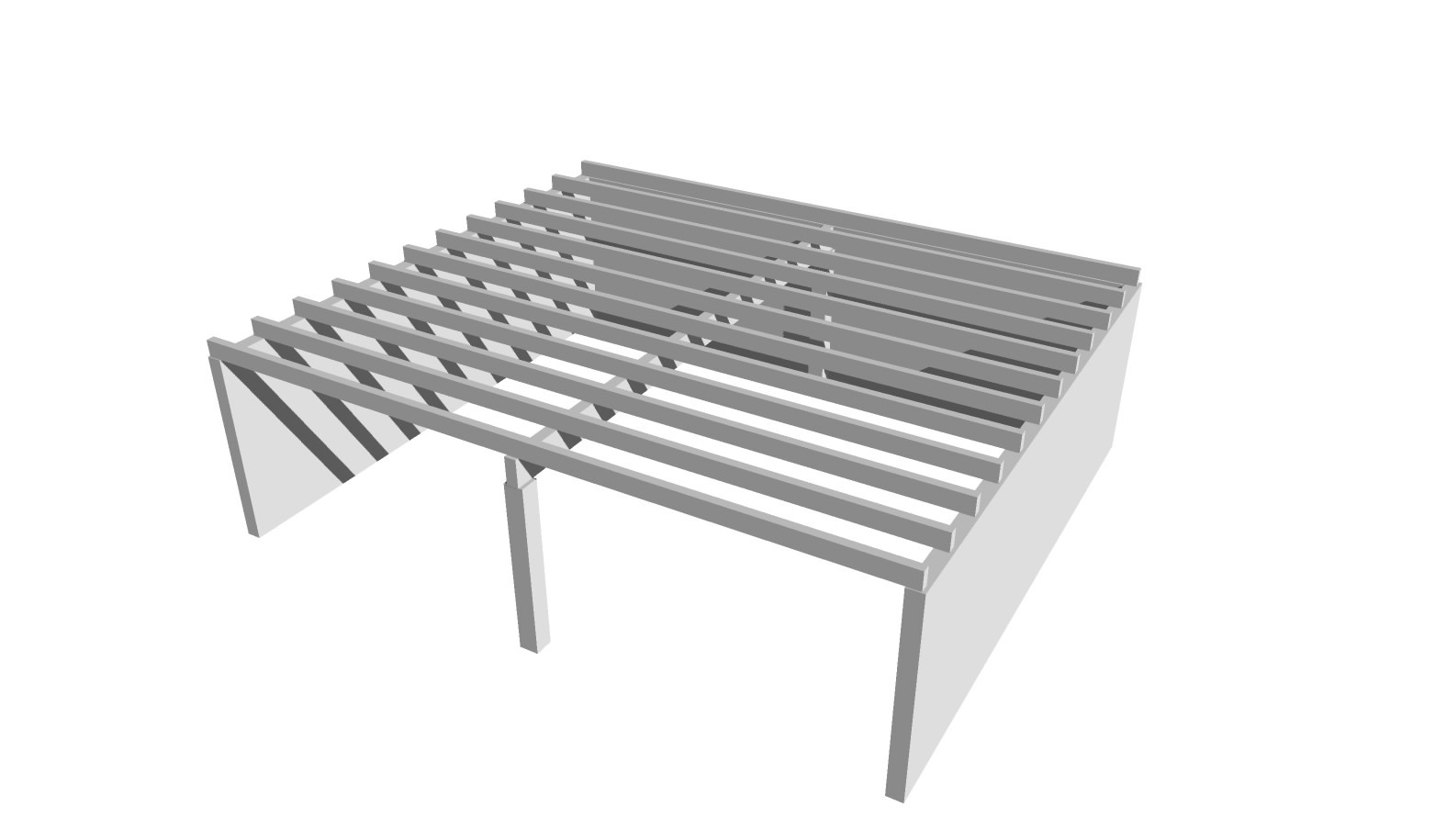
I probably wouldn't involve any living space at all, since it can't get really good layout and lighting conditions. If you still want to do it, 7 m depth is clearly better than 8 m. If the loft has its own supporting structure (see sketch), it can be used to stabilize the hall shell itself. I think you should look at Svenskt Trä's website for some inspiration on how to build halls in a simple way. There is something called three-hinged frames which becomes very stable despite high roof height and span. They are really meant for very large spans, but it's not prohibited to use them in a context like this. Then I don't know anything about your plot or snow zone.
I probably wouldn't have included any living space at all, as it can't get really good floor dimensions and light conditions. If you're going to do it anyway, 7 m depth is clearly better than 8 m. If the loft gets its own supporting structure (see sketch), it can be used to stabilize the actual hall shell. I think you should look at Svenskt Trä's website to get some inspiration on how to build halls in a simple way. There is something called three-hinged frames which become very stable despite large ceiling height and span. They are actually for really large spans, but it is not forbidden to use them in this context. Then I know nothing about your plot or snow zone.
[image]
Jjustusandersson said:
I probably wouldn't have included any living space at all, as it can't get really good floor dimensions and light conditions. If you're going to do it anyway, 7 m depth is clearly better than 8 m. If the loft gets its own supporting structure (see sketch), it can be used to stabilize the actual hall shell. I think you should look at Svenskt Trä's website to get some inspiration on how to build halls in a simple way. There is something called three-hinged frames which become very stable despite large ceiling height and span. They are actually for really large spans, but it is not forbidden to use them in this context. Then I know nothing about your plot or snow zone.
[image]
Jjustusandersson said:
I probably wouldn't have included any living space at all, as it can't get really good floor dimensions and light conditions. If you're going to do it anyway, 7 m depth is clearly better than 8 m. If the loft gets its own supporting structure (see sketch), it can be used to stabilize the actual hall shell. I think you should look at Svenskt Trä's website to get some inspiration on how to build halls in a simple way. There is something called three-hinged frames which become very stable despite large ceiling height and span. They are actually for really large spans, but it is not forbidden to use them in this context. Then I know nothing about your plot or snow zone.
[image]
Jjustusandersson said:
I probably wouldn't have included any living space at all, as it can't get really good floor dimensions and light conditions. If you're going to do it anyway, 7 m depth is clearly better than 8 m. If the loft gets its own supporting structure (see sketch), it can be used to stabilize the actual hall shell. I think you should look at Svenskt Trä's website to get some inspiration on how to build halls in a simple way. There is something called three-hinged frames which become very stable despite large ceiling height and span. They are actually for really large spans, but it is not forbidden to use them in this context. Then I know nothing about your plot or snow zone.
[image]
Perhaps it should not be interpreted as "residence" but more like "guest room" or similar. Maybe no one will ever live there but it just becomes storage. But I would like the possibility to exist when building anyway.
I want a double garage for two cars, and a workshop area for two cars, a car lift, workspaces, toilet, "boiler room/technical room."
Garage about 60 sqm.
And workshop 80-90 sqm.
And preferably a loft over the garage section.
Light intake can always be arranged with a dormer or two.
Vi vill skicka notiser för ämnen du bevakar och händelser som berör dig.