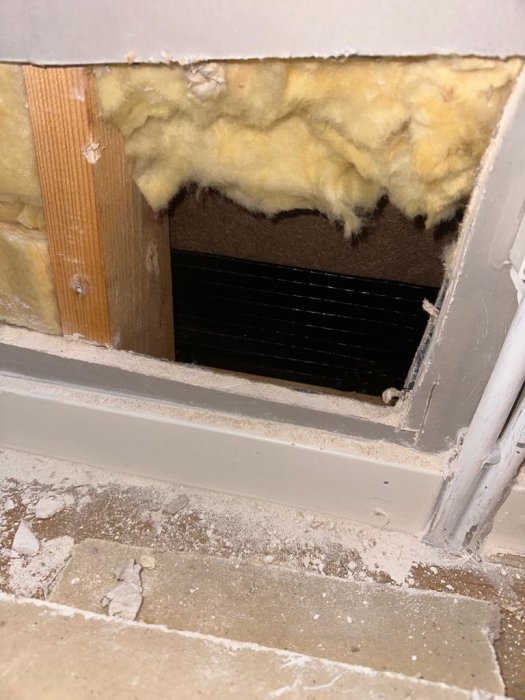
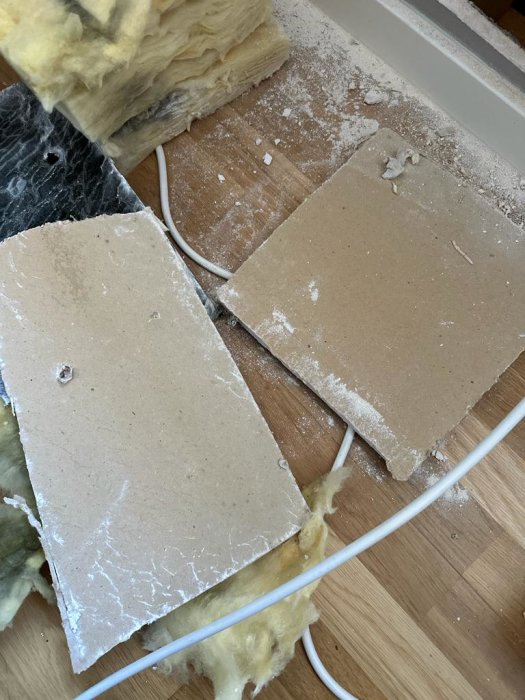
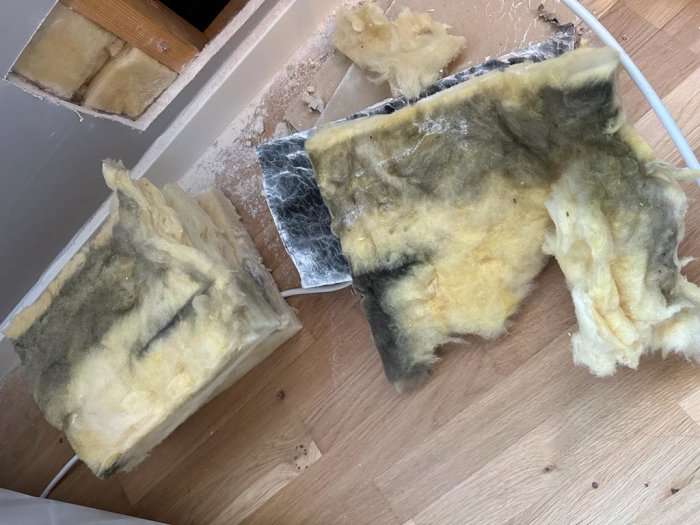
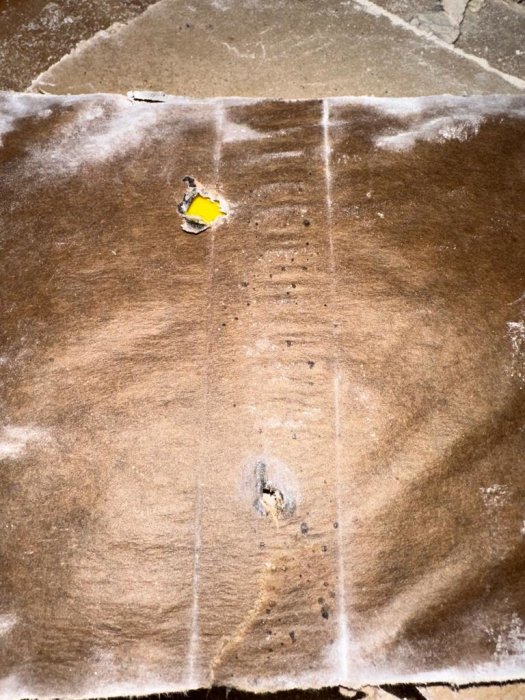
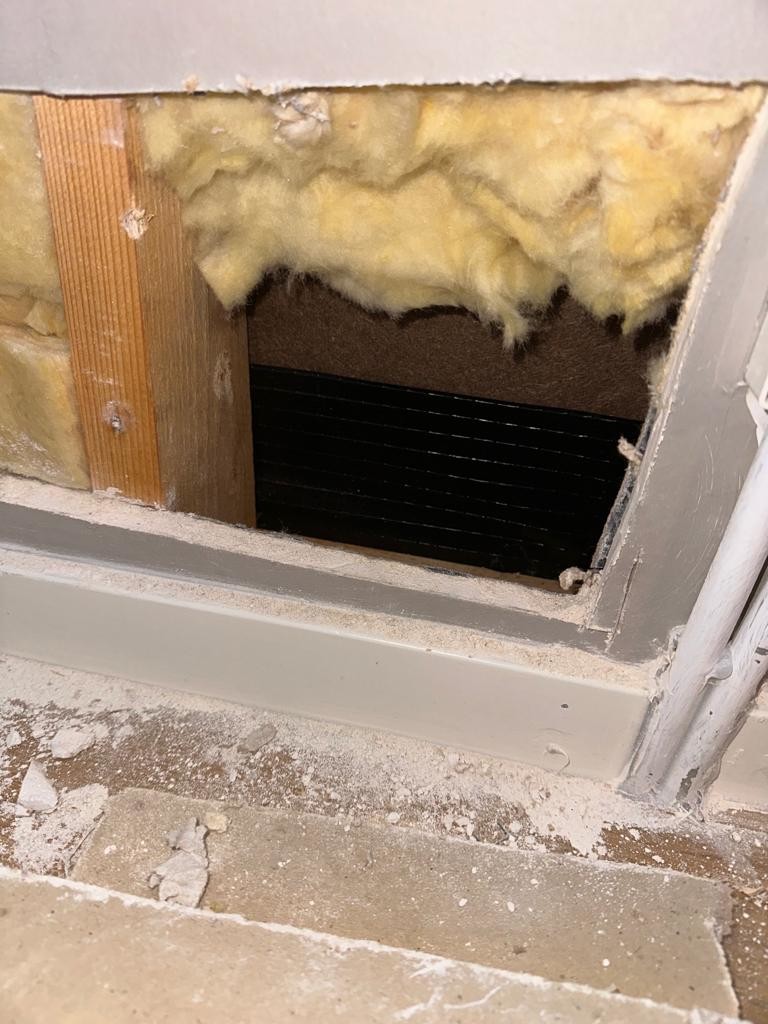
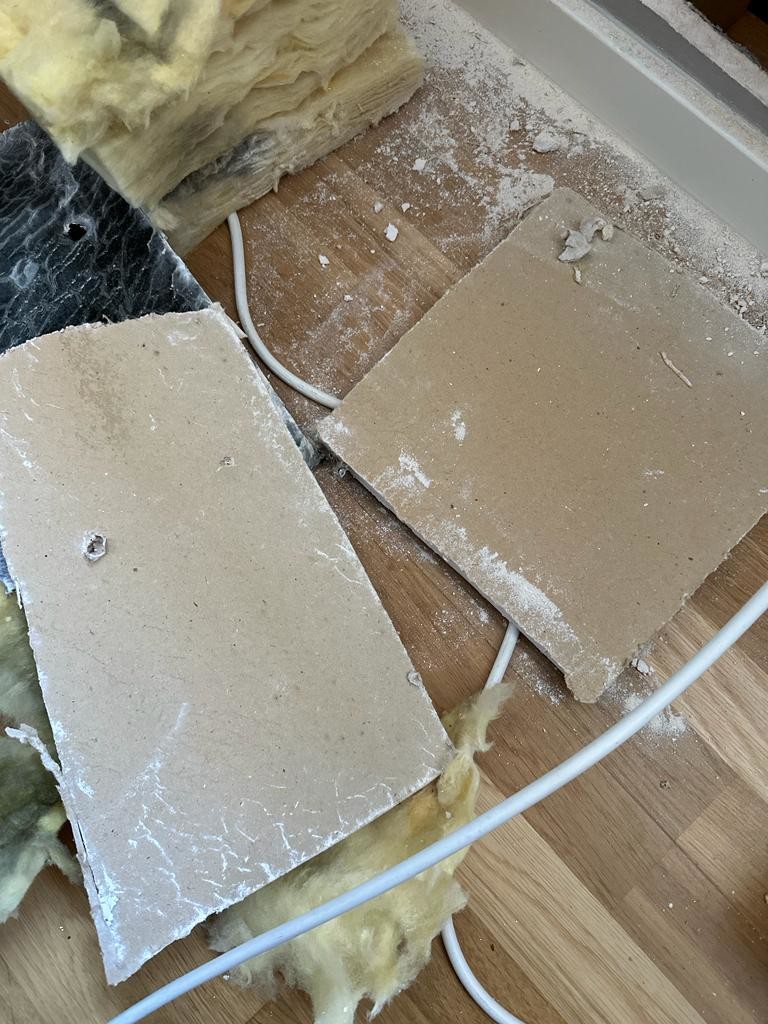
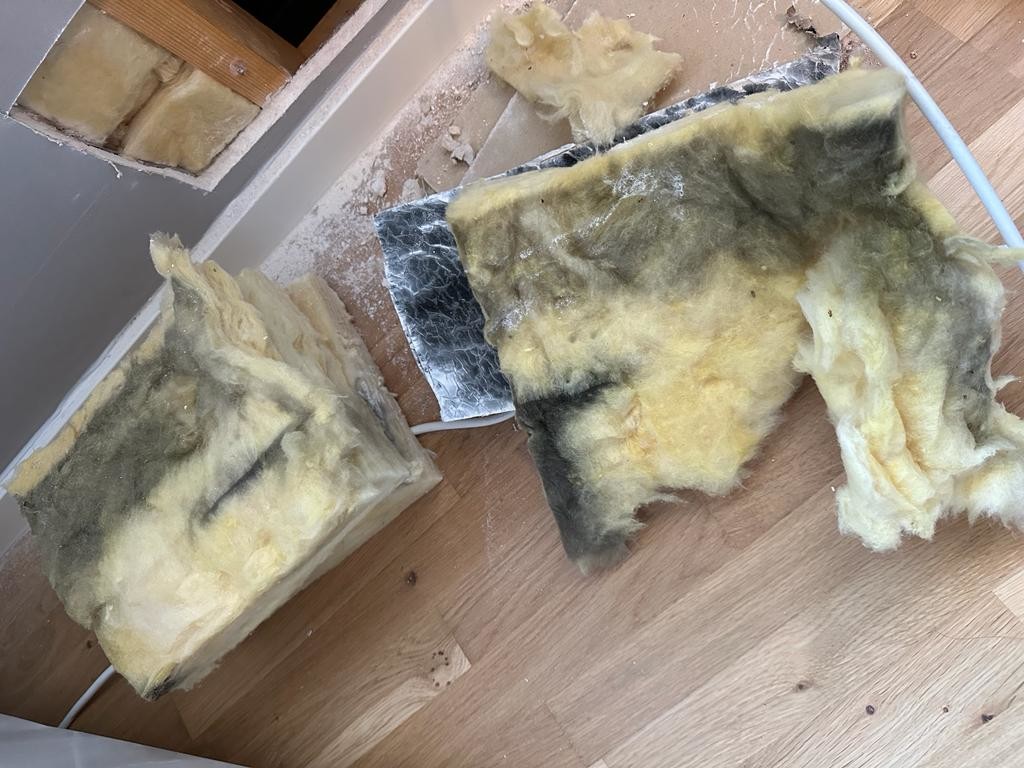
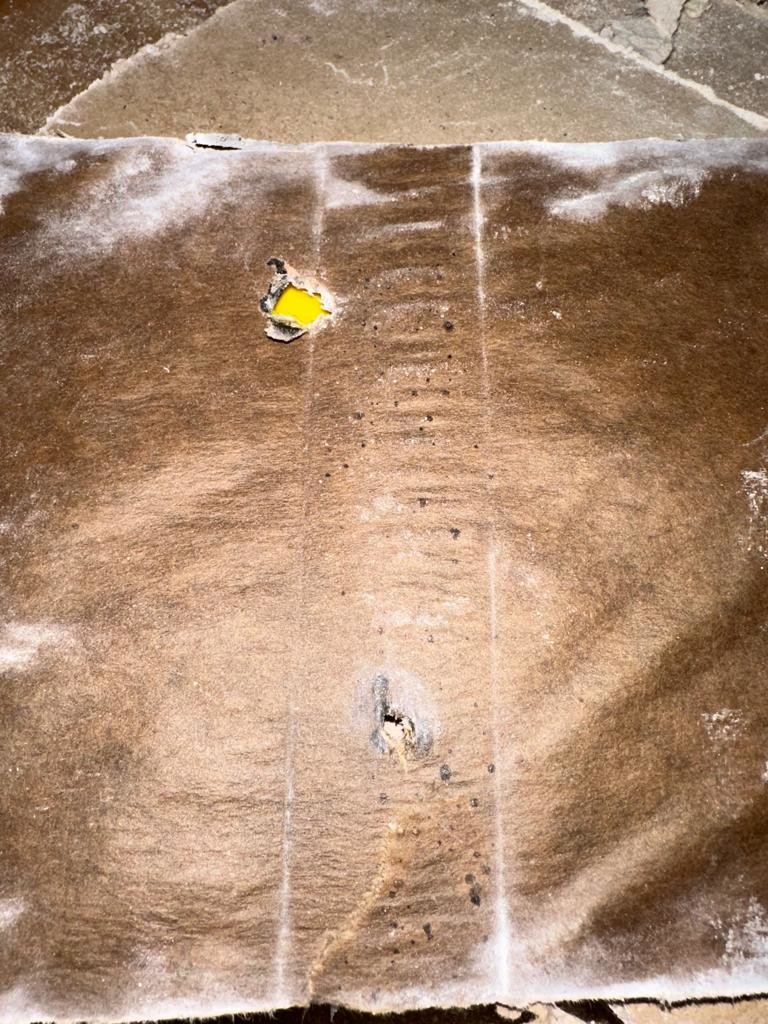
Hello! We moved into a house from 1979 (slab on grade) and from day 1 we smell an odor that clings to clothes and hair. At first, we thought it was just stale since the house was empty for a few months before we moved in, but then people visiting us mentioned their clothes and hair smelled afterward. We had an inspection done during the summer, and everything looked good. Now, we called the inspector again, tore down the walls where we felt the smell was strongest, and we could see that the sills and studs are not pressure-treated and look fine. He recommended that we wait until spring and do drainage around the house. We notice the smell comes from under the baseboards. We checked under the parquet floor, and the concrete slab looks okay. Now we tore down the wall in one area where it smells, and the insulation is a bit black and has an odor. There's something black like windpaper, and then there's wooden paneling. Neither the insulation nor the windpaper seems to be the source of the smell; could the wooden paneling be the cause of the problem? It appears to be some type of pressed wood, hard to tell if it's pressure-treated or not. The insulation is black, but it looks like the windpaper has stained it, it doesn’t really look like mold. What could be the problem and what is emitting the odor?
Difficult to say what might be causing the problem then.. Thinking if it's something that has been embedded in the walls for a long time... I would rent an ozone machine and run it for a day to see if the smell disappears.
Difficult to say what might be causing the problem then... Thinking if it's something from earlier that's stuck in the walls... tried renting an ozone machine and running it for 1 day?
We have bought the ozone machine and run it once a week. Also have a smaller ionizer in the closet. It gets better after the ozone, but then it comes back. It's less than it was before.
Yes exactly, and everything looks ok both in the wall and ground, no signs of moisture. But I can add that we notice rainwater stays on the tiles around the house and that during the fall, the previous owners only used 10 degrees of maintenance heat.
I had test drilled with a hole saw 70 mm here and there and smelled to find the source. There are cover caps for 70mm. This way you avoid making such a big impact on the walls...
There was a manufacturer of asphalt board that had a very strong smell, it was banned at the end of the 70s. It is the board that sits on the outside of the wood frame. If you have the opportunity to break off a few cm of board and put it in a sealed plastic bag, take it to an "odor-free" place outdoors and smell the bag after a week.
A major problem with odors in the house is that there is negative pressure in the house due to only exhaust air vents, then the air must come in through vents but that is not enough, so it also comes through gaps around windows and baseboards!
Make sure that the fresh air vents are not poorly installed, so these have tight ducts through the entire wall and out through the panel/surface layer, otherwise the vent will suck the air that should be still and function as insulation in the wall!
A big problem with odors in houses is that there is negative pressure in the house due to only exhaust air ducts, then the air must come in through vents but that is not enough, so it also comes through the cracks around windows and baseboards!
Check that there hasn't been any cheating with the fresh air vents so that these have sealed ducts through the entire wall and out through the panel/surface layer, otherwise the vent will suck in the air that should be still and function as insulation in the wall!
Thanks for the response, there were no supply air vents on the lower floor so we fixed that a week ago. If it's asfaboard causing the smell, does it stop smelling when it has dried out or does it need to be replaced?
Hello! We moved into a house from 1979 (slab on ground) and since day 1, we notice a smell that sticks to our clothes and hair. At first, we thought it was just stuffy because the house stood empty for a few months before we moved in, but then people visiting commented that their clothes and hair smelled afterwards. We did an inspection during the summer and everything looked fine. Now we called the inspector again, tore down the walls where we felt the smell strongest, and we could see that the sills and studs are not pressure-treated and look fine. He recommended we wait until spring and do drainage around the house. We notice that the smell is coming from under the baseboards. We checked under the parquet floor, the concrete slab looks okay. Now we tore through the wall in one spot where it smells, and the insulation is a bit black, and you can tell it has an odor. There is something black that looks like windpaper behind it, and then comes the wood paneling. Neither the insulation nor the windpaper seems to be the source of the smell; could the wood paneling be causing the problem? It appears to be some type of compressed wood; it’s hard to tell if it's pressure-treated or not. The insulation is black, but it looks like the windpaper has rubbed off on it; it doesn't quite look like mold. What could be the problem and causing the smell?[image] [image] [image] [image] [image] [image] [image] [image] [image]
*
I know of a case similar to this from maybe 30 years ago. There were pressure-treated wooden pieces embedded in the concrete slab. They were placed perpendicularly along the outer edge of the slab at about one-meter intervals. Due to moisture, they began to rot and spread a bad smell throughout the house. The wooden pieces were meant to nail down the wall's wooden sill. It became a big job to lift the floors and remove the wooden pieces. I don't know how the insurance company handled compensation. If you think this could be an explanation, start by lifting a section of the floor to see if there are embedded wooden studs in the concrete slab.
If it is asfaboard that smells, does it stop smelling when it dries out or does it need to be replaced?
Unfortunately, it does not dry out.
In my house from the late 50s, an LB-hus built in 1960, these boards are covered with 11 mm eternit panels that have been painted many times with plastic paint, so the walls are airtight.
In 2019, I had a small excavator to remove a stump by the wall, read in post #103 below to see what happened! https://www.byggahus.se/forum/threads/villa-75-dalig-lukt.262053/page-7#post-3581046
This entire link discusses odors in houses and their causes.
Last edited:
Click here to reply
Vi vill skicka notiser för ämnen du bevakar och händelser som berör dig.

MrJay said:
