
Hello!
To my horror, I discovered that the floor joist/subfloor in part of our house is severely damaged. The affected area is on a crawl space and was built around 1960. The humidity has been very high (over 90%), probably for a long time. We bought the house this summer (release clause, not inspected ). We have reduced the humidity to less than 70%.
But I cannot assess if the "rot" is due to moisture and/or fungus or some insect infestation? I don't see any "mushrooms." I have attached some pictures, please help me evaluate!
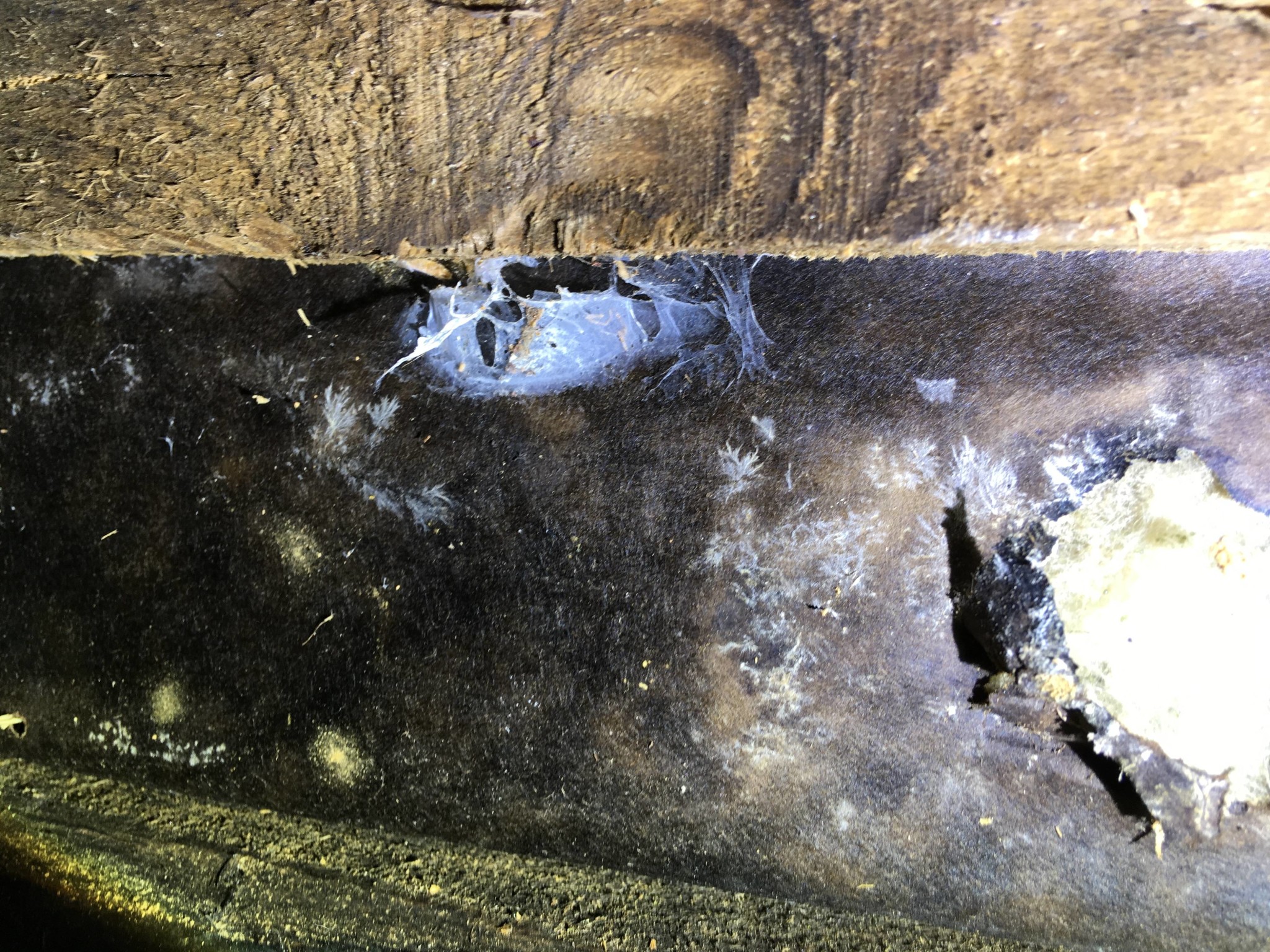
In one of the pictures where I removed a plank, you can see something white on the paper. It mostly looked like some kind of net/cocoon-like structure to me.
From what I can see, all the joists and the sill are not affected. There are wooden planks next to the sill towards the subfloor that are very bad. How can the joists and sill be in good condition and the rest completely rotten? Different type of wood? Treated?
To my horror, I discovered that the floor joist/subfloor in part of our house is severely damaged. The affected area is on a crawl space and was built around 1960. The humidity has been very high (over 90%), probably for a long time. We bought the house this summer (release clause, not inspected
). We have reduced the humidity to less than 70%.But I cannot assess if the "rot" is due to moisture and/or fungus or some insect infestation? I don't see any "mushrooms." I have attached some pictures, please help me evaluate!
In one of the pictures where I removed a plank, you can see something white on the paper. It mostly looked like some kind of net/cocoon-like structure to me.
From what I can see, all the joists and the sill are not affected. There are wooden planks next to the sill towards the subfloor that are very bad. How can the joists and sill be in good condition and the rest completely rotten? Different type of wood? Treated?
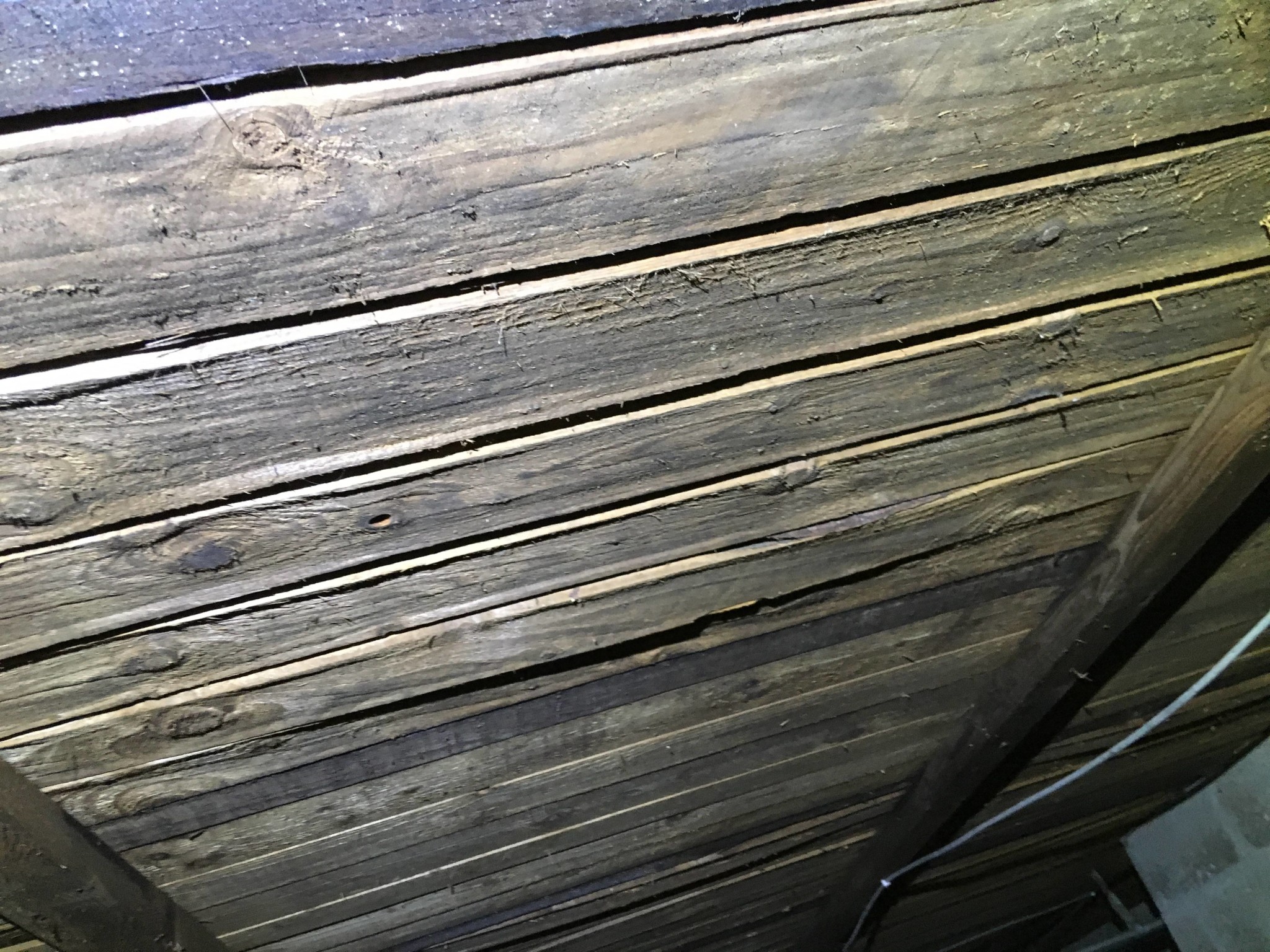
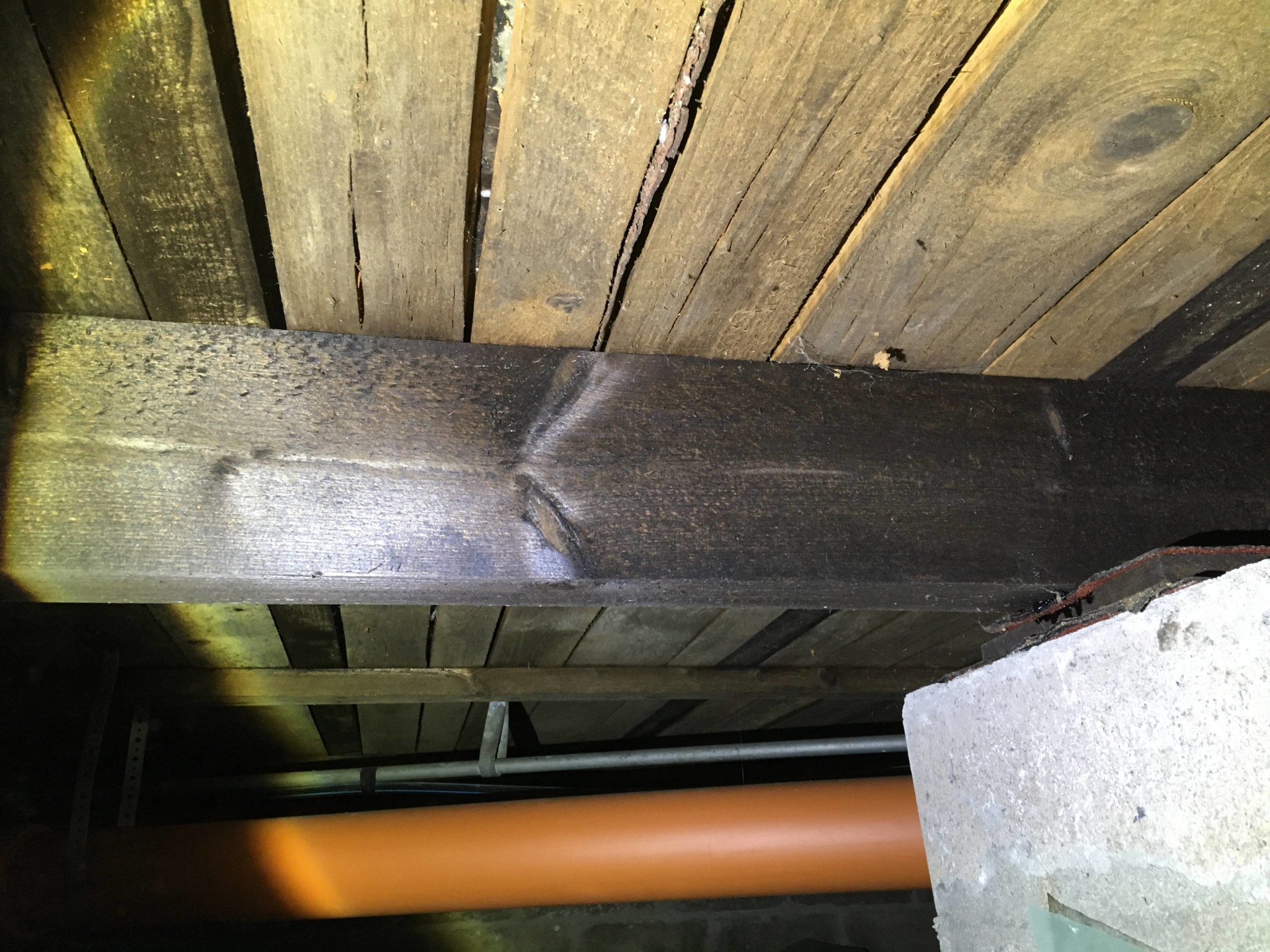
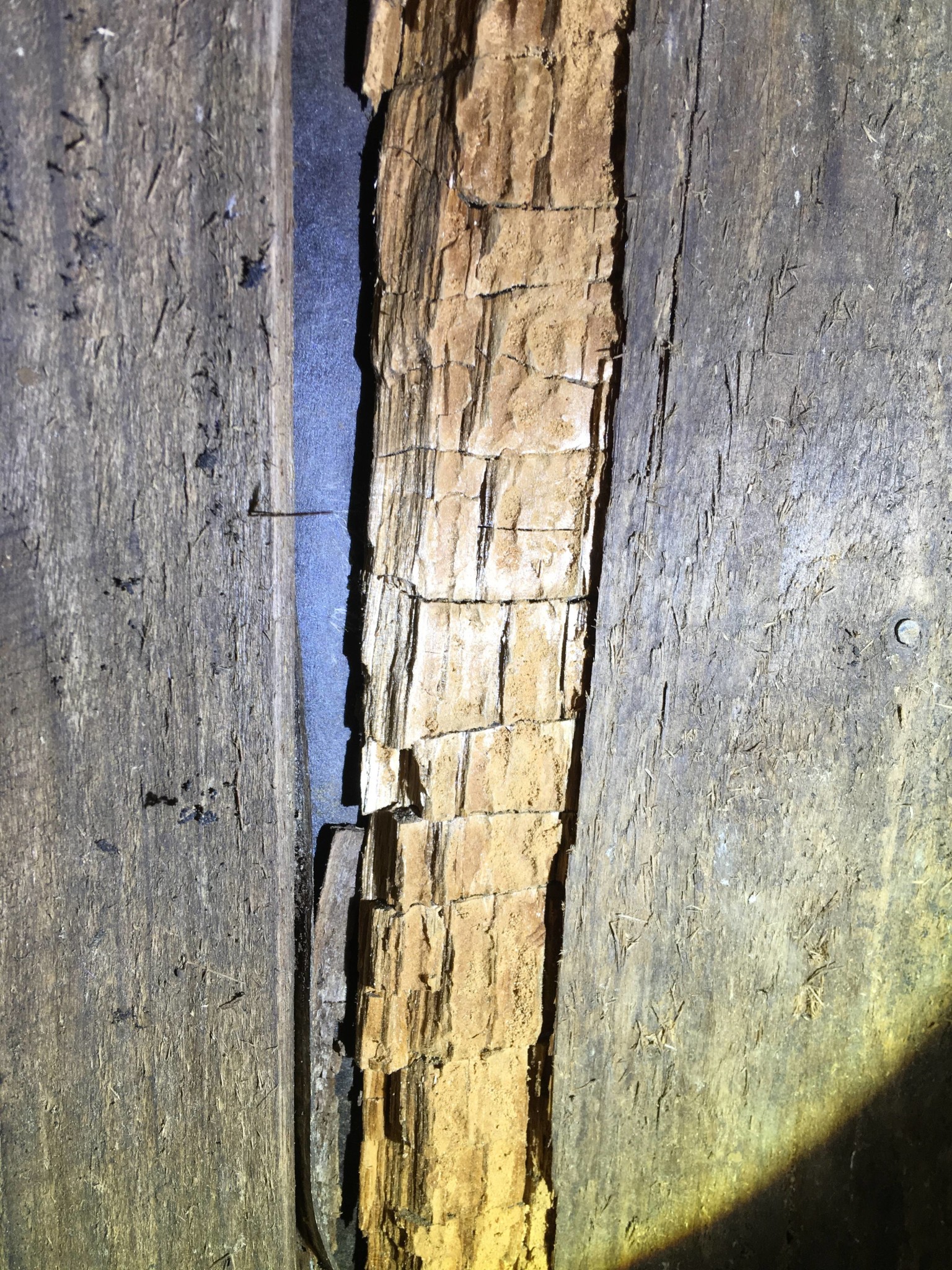

This is actually strange. Do you mean that all beams are healthy and only the undersurface is bad?
The Test
Do you literally mean that it "looks" okay? This isn't necessarily something visible to the eyes; even wood with rot damage can look pretty okay on the surface. With the risk of misunderstanding and if you’ve already checked this: go down to the foundation again with a flathead screwdriver. Jab it into the wood here and there, in different kinds of places. Near the foundation wall, in the middle, high up, underneath. Test systematically in several spots.
If the wood is healthy, with moderate force (not a light tap, but not as hard as if you were trying to shank an enemy in prison) you shouldn't be able to push the screwdriver in more than 5-10mm into the wood. Try it on a piece of wood you know is healthy as a reference point. If the wood is rot-damaged, the screwdriver will go in 1cm or more. You are also likely to bring out "powder" or crumbs rather than splinters.
Also, look at the ground in the crawl space and search for signs there. And measure the moisture content in the wood.
Signs of Damage
Small holes in the wood, either round or slightly elongated = insect infestation. Also, look for the shavings they leave behind on the ground. (I don’t see anything in your photos that suggests this).
Discolored spots on the wood = possible fungus infestation. If it looks like a brown powder on the surface or on the ground, this is also a possible sign of fungus. Black spots or a bit of a blue tint aren't necessarily dangerous; such infestations can occur and die off without much consequence, sometimes as a result of retained construction moisture not ventilated out quickly enough.
What other conditions are present? What type of foundation wall (concrete? Natural stone with or without plaster)? What does the ground look like in the crawl space? Gravel/compacted dirt/concrete/loads of construction debris and sawdust? Covered with diffusion-tight plastic? Is water being pushed in from somewhere?
I'm not a professional, just a somewhat knowledgeable amateur. But as my username might suggest, I have my own battles with these structures and am dealing with similar issues right now.
Further reading:
The Test
Do you literally mean that it "looks" okay? This isn't necessarily something visible to the eyes; even wood with rot damage can look pretty okay on the surface. With the risk of misunderstanding and if you’ve already checked this: go down to the foundation again with a flathead screwdriver. Jab it into the wood here and there, in different kinds of places. Near the foundation wall, in the middle, high up, underneath. Test systematically in several spots.
If the wood is healthy, with moderate force (not a light tap, but not as hard as if you were trying to shank an enemy in prison) you shouldn't be able to push the screwdriver in more than 5-10mm into the wood. Try it on a piece of wood you know is healthy as a reference point. If the wood is rot-damaged, the screwdriver will go in 1cm or more. You are also likely to bring out "powder" or crumbs rather than splinters.
Also, look at the ground in the crawl space and search for signs there. And measure the moisture content in the wood.
Signs of Damage
Small holes in the wood, either round or slightly elongated = insect infestation. Also, look for the shavings they leave behind on the ground. (I don’t see anything in your photos that suggests this).
Discolored spots on the wood = possible fungus infestation. If it looks like a brown powder on the surface or on the ground, this is also a possible sign of fungus. Black spots or a bit of a blue tint aren't necessarily dangerous; such infestations can occur and die off without much consequence, sometimes as a result of retained construction moisture not ventilated out quickly enough.
What other conditions are present? What type of foundation wall (concrete? Natural stone with or without plaster)? What does the ground look like in the crawl space? Gravel/compacted dirt/concrete/loads of construction debris and sawdust? Covered with diffusion-tight plastic? Is water being pushed in from somewhere?
I'm not a professional, just a somewhat knowledgeable amateur. But as my username might suggest, I have my own battles with these structures and am dealing with similar issues right now.
Further reading:
- Göran Gudmundsson’s books on building preservation (he can be a bit snarky, but has good ideas)
- Walking Moisture Radiant Heat by Carl-Eric Hagentoft (a good introduction to building physics; as a layperson, you won't understand everything but much more than before).
- Everything on lfs-web.se. God bless these professionals who share loads of wise information for free! (Of course, with the aim to sell dehumidifiers. But still).
The previous owner had covered the ground with plastic and sealed all vents, and installed an exhaust fan that removes air but did not install a dehumidifier. I understand that this is unacceptable.
There was very high humidity as mentioned, and also the moisture content. Anticimex was here and measured the latter (as part of the insurance) and determined that it was far too humid. However, they never noted the rotten boards.
It has probably been damp for decades (built in the '60s).
I had a nail with me that I was unable to push into the beams. The boards that support the insulation (is the term blindbotten or trossbotten or what?) are completely porous (not all, but probably 50%). However, in the places where I can access the sill, it seems hard.
Now, Anticimex will come tomorrow anyway to conduct a deeper investigation.
There was very high humidity as mentioned, and also the moisture content. Anticimex was here and measured the latter (as part of the insurance) and determined that it was far too humid. However, they never noted the rotten boards.
It has probably been damp for decades (built in the '60s).
I had a nail with me that I was unable to push into the beams. The boards that support the insulation (is the term blindbotten or trossbotten or what?) are completely porous (not all, but probably 50%). However, in the places where I can access the sill, it seems hard.
Now, Anticimex will come tomorrow anyway to conduct a deeper investigation.
Plastic on the ground - Perfectly OK, even recommended! Just make sure the foundation is free from organic material both above and below the plastic, and that it's well-drained around the house.
Blocking all vents and then installing a duct fan that exhausts outwards - NO STOP! This must be the worst possible idea and should reasonably only lead to a) More outdoor air having to pass around the sill, unless it's 100% sealed, which is unlikely and/or b) humid air from inside the house being sucked down into the crawl space where it cools down and deposits its moisture in the foundation structure. Ugh!
The "blindbotten" is what's at the bottom, usually boards or panels attached to the underside of the floor joists. "Trossbotten," if I understand correctly, refers to the entire area from the subfloor (the lowest part visible from inside) down to and including the blindbotten. It refers to the space between the floor joists, not the joists/support beams/studs themselves.
Blocking all vents and then installing a duct fan that exhausts outwards - NO STOP! This must be the worst possible idea and should reasonably only lead to a) More outdoor air having to pass around the sill, unless it's 100% sealed, which is unlikely and/or b) humid air from inside the house being sucked down into the crawl space where it cools down and deposits its moisture in the foundation structure. Ugh!
The "blindbotten" is what's at the bottom, usually boards or panels attached to the underside of the floor joists. "Trossbotten," if I understand correctly, refers to the entire area from the subfloor (the lowest part visible from inside) down to and including the blindbotten. It refers to the space between the floor joists, not the joists/support beams/studs themselves.
Click here to reply