
Hello!
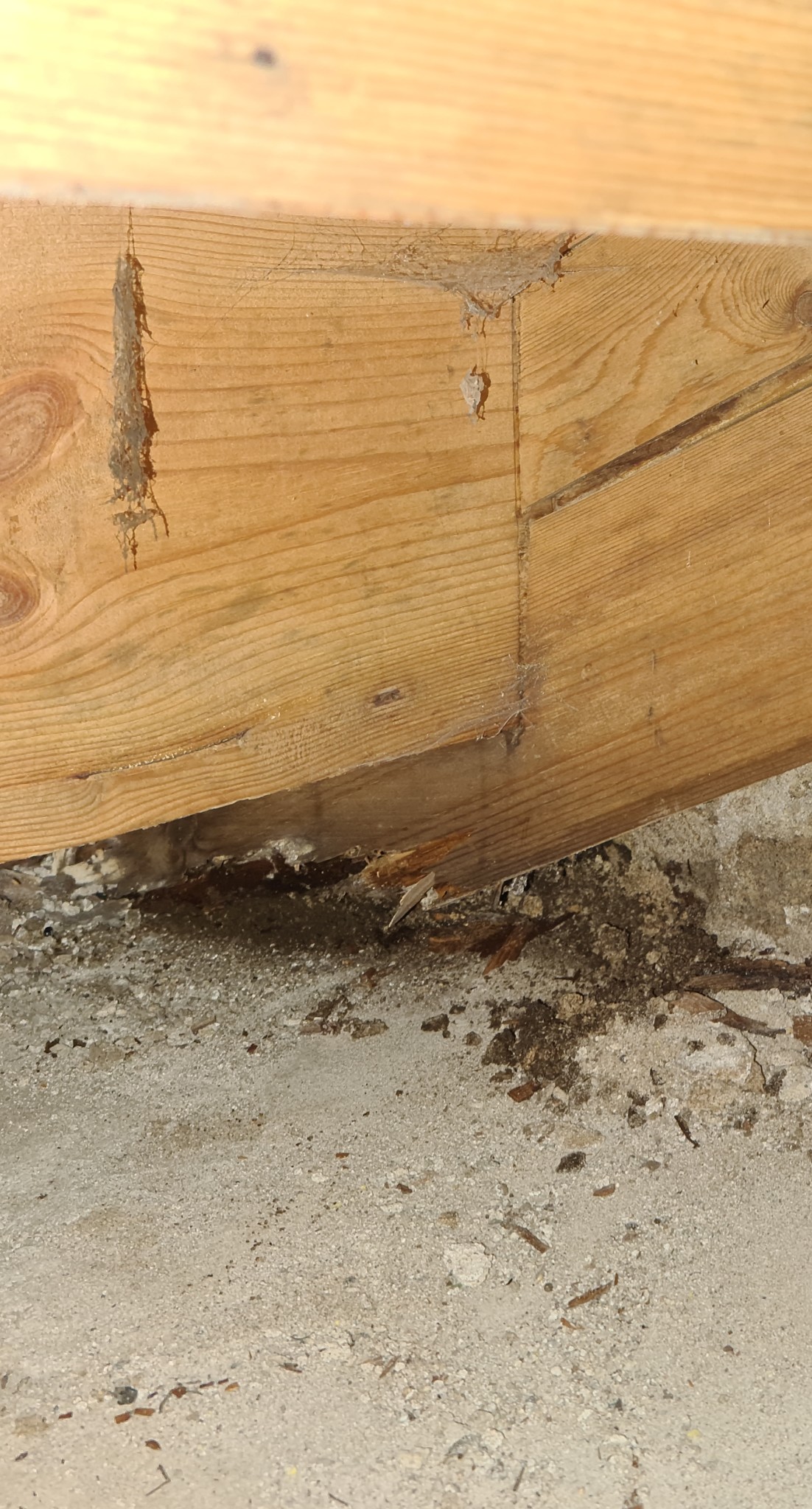
House from 44 with a basement. As the picture shows, a part of the basement staircase resting against the concrete floor is rot-damaged. The room has been a bit damp but is drier now. The damage has probably developed slowly since the staircase seems to be original from 44. However, it has settled a few mm, likely because the lower part in the corner of the picture has simply rotted away. Remedy for this?
I was thinking of lifting the corner a few mm, cutting away the damaged section, and inserting new timber. Will that work? I assume I should also have something between the concrete and the wood?
House from 44 with a basement. As the picture shows, a part of the basement staircase resting against the concrete floor is rot-damaged. The room has been a bit damp but is drier now. The damage has probably developed slowly since the staircase seems to be original from 44. However, it has settled a few mm, likely because the lower part in the corner of the picture has simply rotted away. Remedy for this?
I was thinking of lifting the corner a few mm, cutting away the damaged section, and inserting new timber. Will that work? I assume I should also have something between the concrete and the wood?

seems like the slab is absorbing moisture. But maybe not the end of the world if you need to address it once every 75 years 
Maybe you can have roofing felt or something similar in between, to extend its lifespan somewhat. Or perhaps some plastic shim?
I also have a house from 44 and recently found rot damage high up on a frame, also part of the staircase has been replaced, maybe the same cause. But the rot on the frame is about 30cm up and completely rotted through. Feels strange that it can absorb so much moisture. Maybe a previous owner spilled something? strange anyway.
Maybe you can have roofing felt or something similar in between, to extend its lifespan somewhat. Or perhaps some plastic shim?
I also have a house from 44 and recently found rot damage high up on a frame, also part of the staircase has been replaced, maybe the same cause. But the rot on the frame is about 30cm up and completely rotted through. Feels strange that it can absorb so much moisture. Maybe a previous owner spilled something? strange anyway.
Last edited:
I've been looking at the stairs a bit more now. The lower part of the yttre vangstycket (towards the floor) is completely rotten. It also seems that the lower board in the yttre vangstycket has come loose (from gluing?) and has sunk a few cm. Unfortunately, it's rotten at the top corner too, i.e., at the upper end. The beams in the picture are temporary supports. Suggestions for action? Is it possible to replace the entire yttre, nedre vangstycket without dismantling the stairs, which I think would be difficult.
Construction veteran
· Stockholm
· 340 posts
The staircase isn't fully shown, but changing the vang is a bit tricky. Cut off the damaged part and insert a piece of board with support on the sill paper?
Edit, probably didn't read carefully enough, send clearer pictures?
Edit, probably didn't read carefully enough, send clearer pictures?
Construction veteran
· Stockholm
· 340 posts
Saw the attached pictures now, looks tricky. Spontaneously; lift off, fix, put back.
Do you mean lift enough to get access to change the vange? I don't know how vange/steps are attached to each other, if they even are. The steps rest on notches. I don't see any screws, but of course, there could be some, screwed from the outside in that case. It would be tricky to solve. The steps have moved in relation to the vange, so I’m not sure they are screwed, at least not all the steps.D Daniel Barnaniel said:
Best answer
Construction veteran
· Stockholm
· 340 posts
Yes, that's how the staircase might be constructed. If you release it from its attachments to the wall/joists, it should be possible to lift it away. It may need to be secured with straps or a few screws during the lift. If you have the budget, it might be an option to have a new one made. Demolition and installation of the new one should be doable in a day, and the manufacturer should be able to take measurements with the old staircase in place. A slightly more budget-friendly option might be; release all steps from the affected vang (saw off the pegs) and support them temporarily. Install a new vang and screw-glue wedges where the steps can rest. It won't be particularly attractive but maybe that doesn't matter?

Found this thread as I'm facing a similar problem. How did you solve it?
Click here to reply