
2,959 views ·
1 replies
3k views
1 replies
Roof truss - Conversion or reinforcement of 1 roof truss.
Hi Forum,
I'm going to install a ceiling fan in the kitchen we're completely renovating, hence a new placement for this fan. It's a ceiling-integrated version, which lies flush with the ceiling. Dimensions: 1000x500mm.
Nothing hanging down, that is.
One could have been smart and calculated where the ceiling joists are before planning the entire kitchen based on feelings, but that wasn't the case unfortunately, which I realized when I visited our attic.
- I'm looking for a solution to effectively make that ceiling joist disappear.
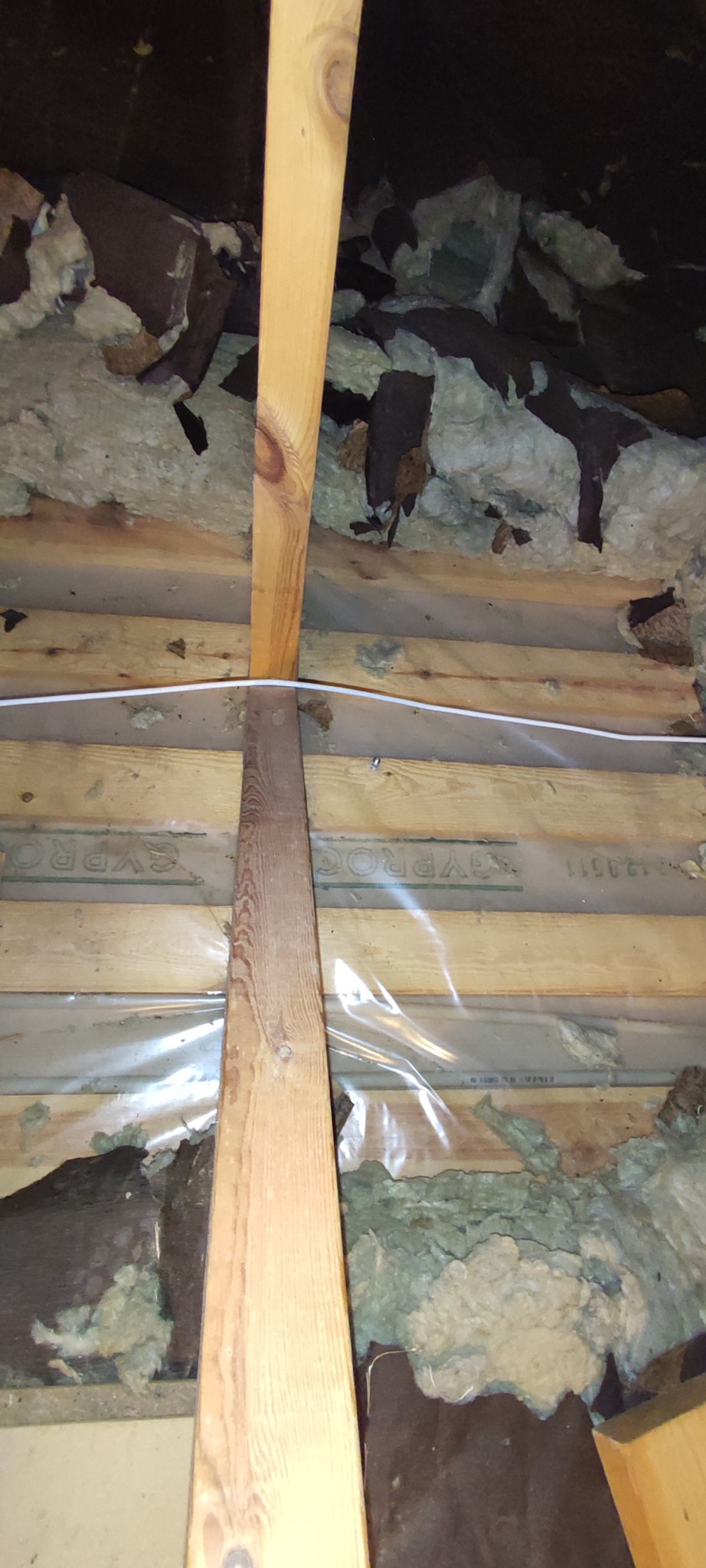
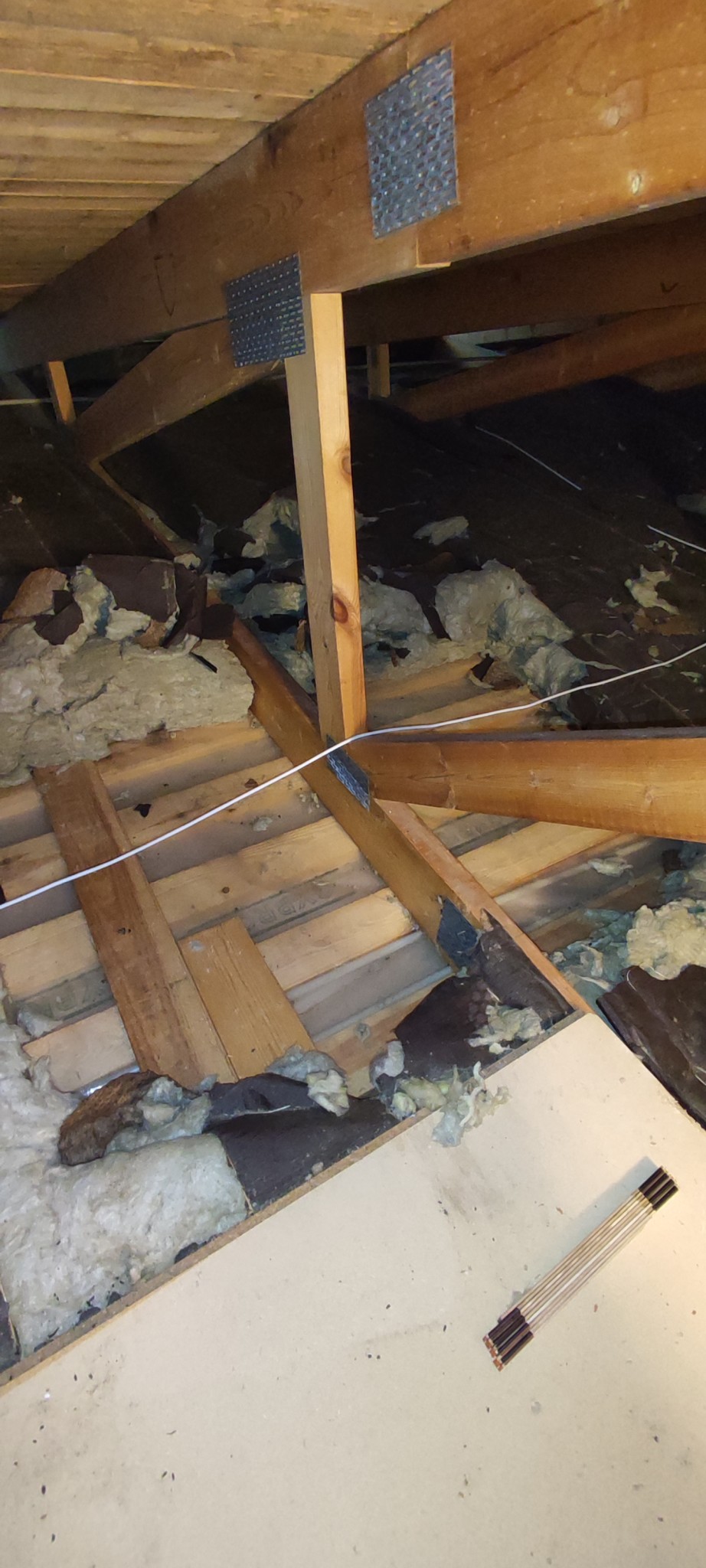
The center of our new fan ends up basically right on a ceiling joist (100mm to the side) as you can see in the picture ceiling_joist_fan_center.jpg where I've inserted a molly plug from the kitchen and hung my drill template on it.
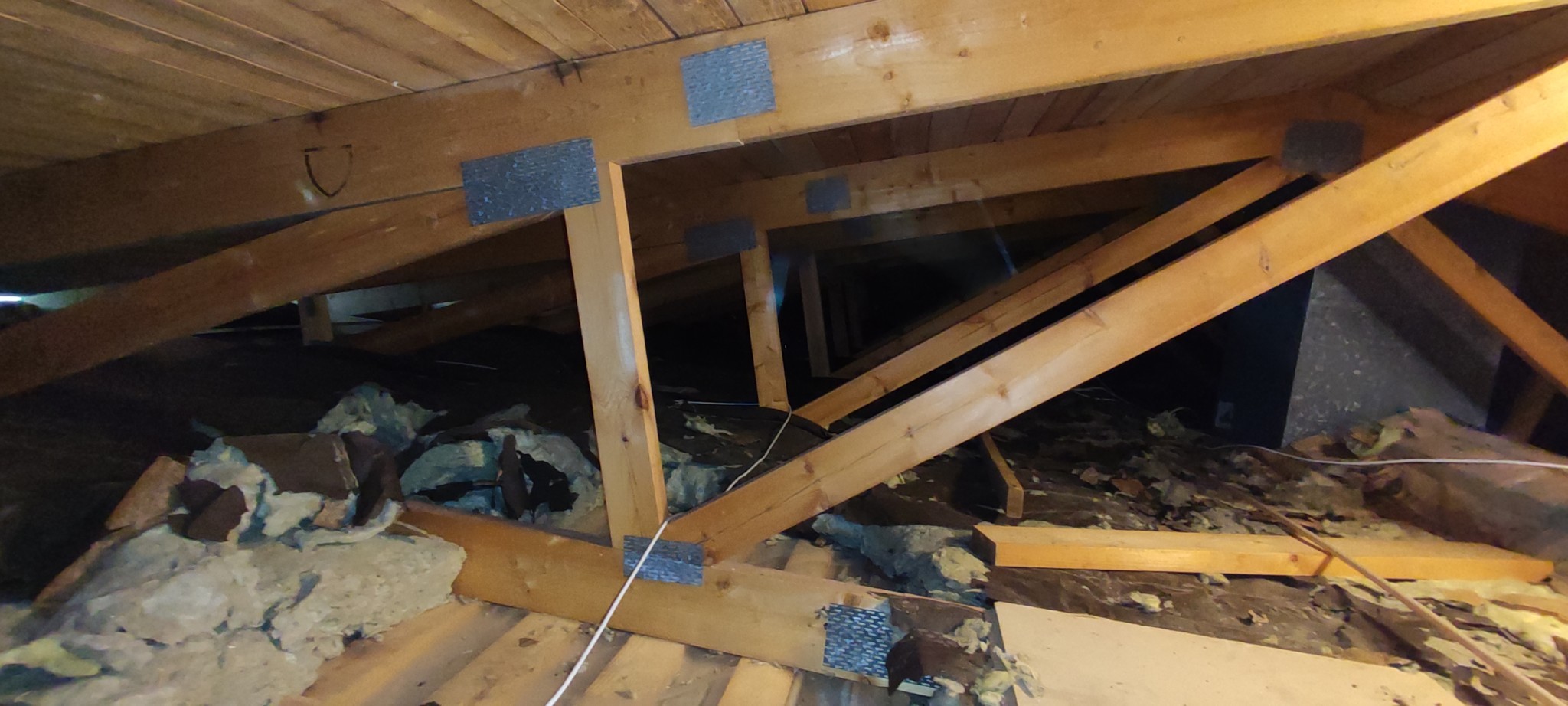
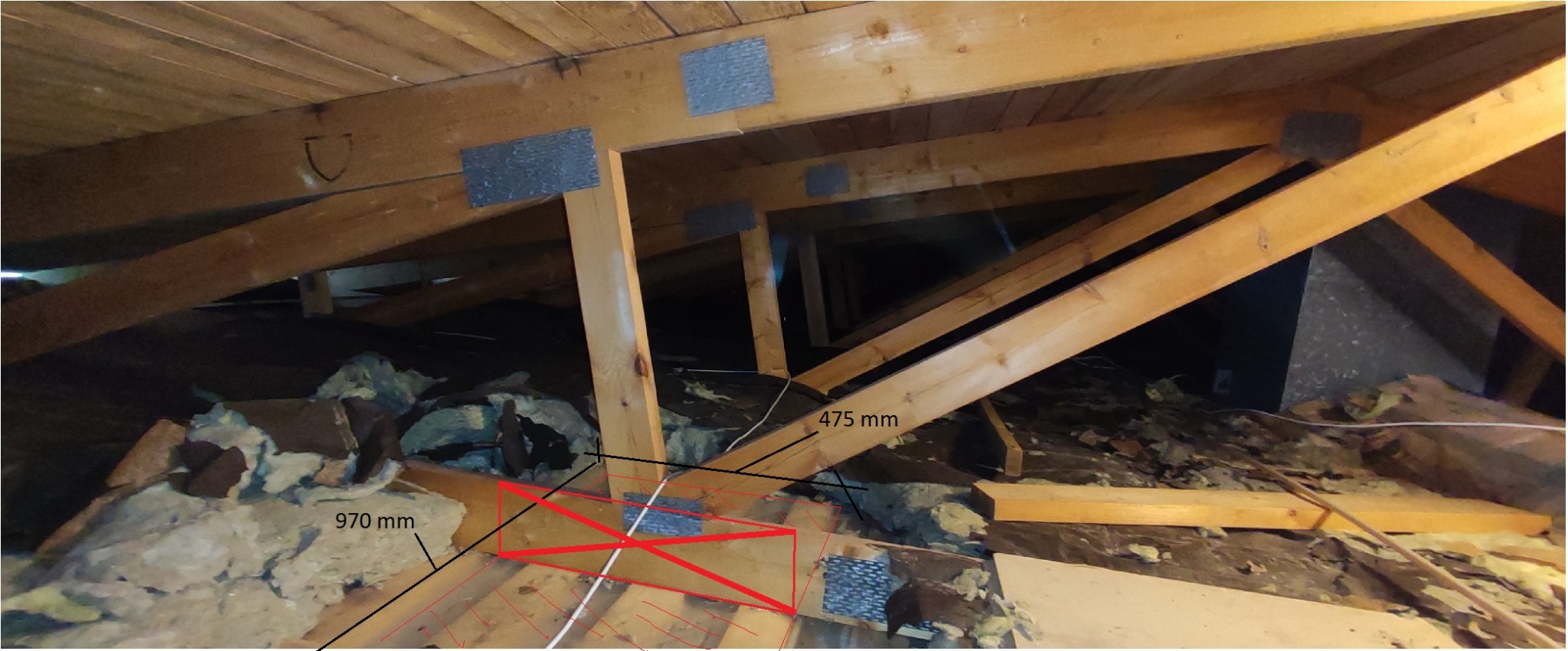
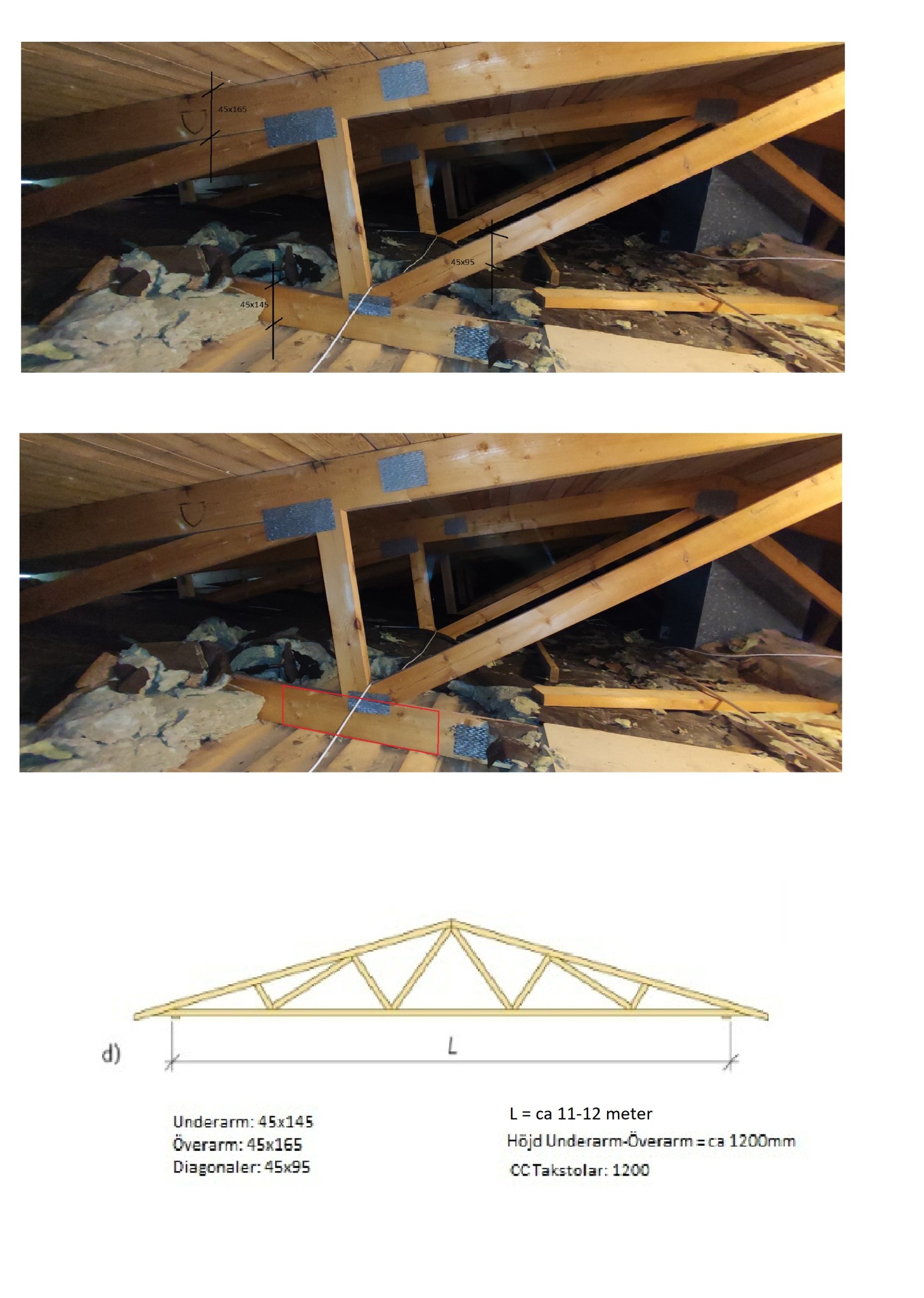
The fan itself is 205 mm in height, so 205mm (minus batten & ceiling about 35mm) must be accommodated in the attic. This leads to some issues since the lower arms of the ceiling joists are 140mm. (or 145 which have shrunk since '71) but it's about 170+ mm that must be in the attic for this to work. This is Option 1 and requires some form of rerouting because the entire lower arm has to go in that spot, which could turn into a project as it's right at a junction. I also can't shift a ceiling joist to the side, as the fan extends 50cm in each direction from the center in the image.
Also note that there's a nail plate on the lower arm and yes, unfortunately, it's a joint.
The fan's "fan housing" has a side outlet, so nothing continues upwards after this intervention but instead goes to an external motor up there, then out through the roof/previous duct.
It's a Hultsfred house built in '71, a split-level house with concrete blocks on the lower floor and wood construction above. Or, well, "wood construction," something called "Fiberplank" 95x300 sections, containing Tretex & insulation inside 21x95 pine planks. Not much bearing capacity or K-value in those. It's some economical crap solution from Hultsfred houses simply, and the reason I'm talking about the walls is because the pressure from the ceiling joists is distributed to these so-called walls.
-Previously, according to information, Eternit tiles were on the roof - but now replaced with industrial roofing felt directly on the roof boards, which at least signifies some reduced load on the ceiling joists I think. We live in Hindås between Gothenburg-Borås which I interpret as Snow Zone 2-3. (Hindås is an old winter sports location!)
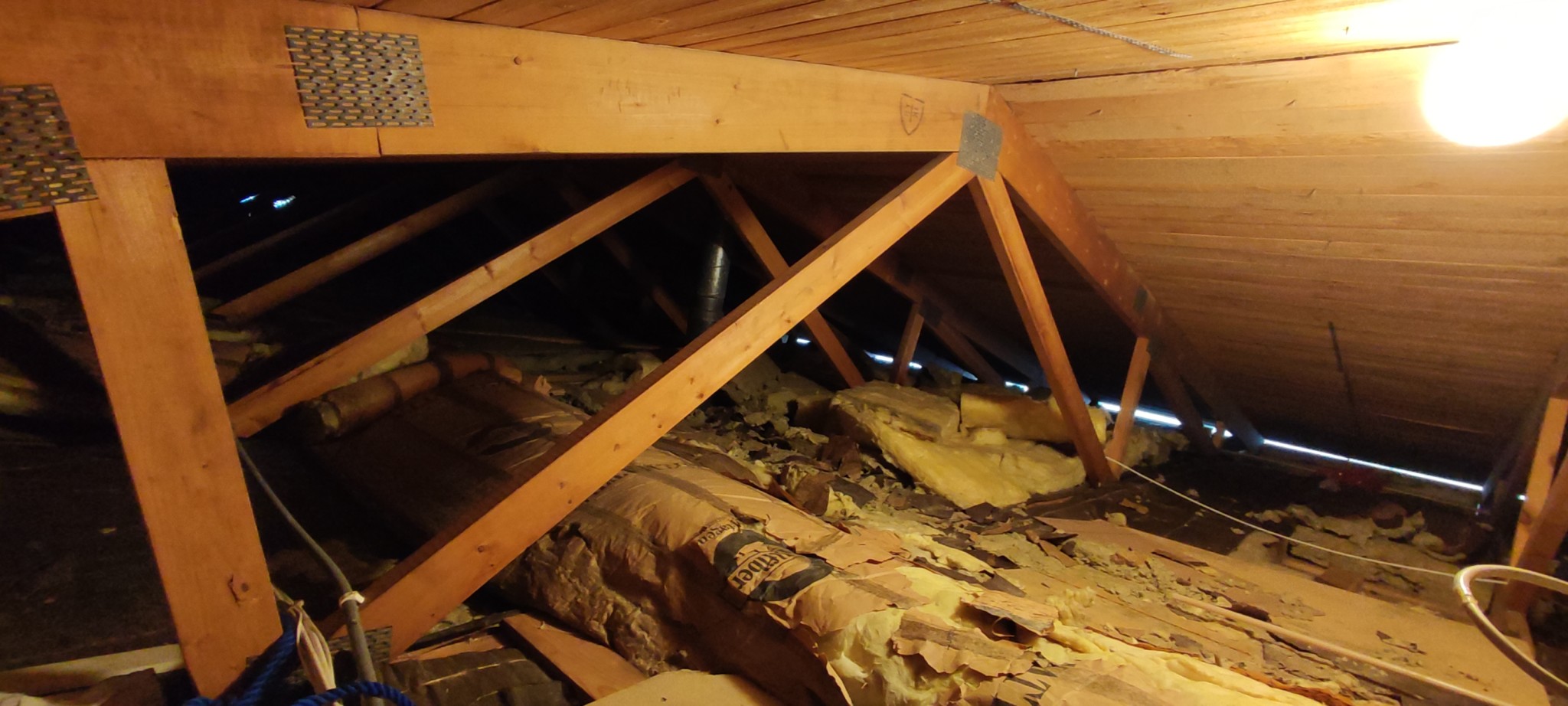
I also interpret my own pictures and what I find on Svenskt Trä to suggest we have:
"Truss roof type 4. Truss (WW-truss). Roof pitch 14 – 30°. Suitable span 9 – 16 meters."
Option 2 - A box in the ceiling.
The fan, as mentioned, has a total height of 205mm - but it's distributed to about 100mm housing + a round fan housing 105mm on top. This housing is centered with approximately 400 mm in diameter. To keep the fan in the intended position - I would need to carve into the ceiling joist with a "bite" that's about 110mm in height and 380mm in width. In this option, I would build a small box of about 100mm in the ceiling and hang the fan in it. A "niche"/fake ceiling if you will.
Option 3 - if both options 1+2 sound completely absurd - is simply to bite the bullet and relocate the fan so it lands between two ceiling joists (cc1200) which is really the simplest solution but means we'd have a fridge a bit too close to our back when cooking...
A huge, huge thank you in advance, folks // Adam
I'm going to install a ceiling fan in the kitchen we're completely renovating, hence a new placement for this fan. It's a ceiling-integrated version, which lies flush with the ceiling. Dimensions: 1000x500mm.
Nothing hanging down, that is.
One could have been smart and calculated where the ceiling joists are before planning the entire kitchen based on feelings, but that wasn't the case unfortunately, which I realized when I visited our attic.
- I'm looking for a solution to effectively make that ceiling joist disappear.
The center of our new fan ends up basically right on a ceiling joist (100mm to the side) as you can see in the picture ceiling_joist_fan_center.jpg where I've inserted a molly plug from the kitchen and hung my drill template on it.
The fan itself is 205 mm in height, so 205mm (minus batten & ceiling about 35mm) must be accommodated in the attic. This leads to some issues since the lower arms of the ceiling joists are 140mm. (or 145 which have shrunk since '71) but it's about 170+ mm that must be in the attic for this to work. This is Option 1 and requires some form of rerouting because the entire lower arm has to go in that spot, which could turn into a project as it's right at a junction. I also can't shift a ceiling joist to the side, as the fan extends 50cm in each direction from the center in the image.
Also note that there's a nail plate on the lower arm and yes, unfortunately, it's a joint.
The fan's "fan housing" has a side outlet, so nothing continues upwards after this intervention but instead goes to an external motor up there, then out through the roof/previous duct.
It's a Hultsfred house built in '71, a split-level house with concrete blocks on the lower floor and wood construction above. Or, well, "wood construction," something called "Fiberplank" 95x300 sections, containing Tretex & insulation inside 21x95 pine planks. Not much bearing capacity or K-value in those. It's some economical crap solution from Hultsfred houses simply, and the reason I'm talking about the walls is because the pressure from the ceiling joists is distributed to these so-called walls.
-Previously, according to information, Eternit tiles were on the roof - but now replaced with industrial roofing felt directly on the roof boards, which at least signifies some reduced load on the ceiling joists I think. We live in Hindås between Gothenburg-Borås which I interpret as Snow Zone 2-3. (Hindås is an old winter sports location!)
I also interpret my own pictures and what I find on Svenskt Trä to suggest we have:
"Truss roof type 4. Truss (WW-truss). Roof pitch 14 – 30°. Suitable span 9 – 16 meters."
Option 2 - A box in the ceiling.
The fan, as mentioned, has a total height of 205mm - but it's distributed to about 100mm housing + a round fan housing 105mm on top. This housing is centered with approximately 400 mm in diameter. To keep the fan in the intended position - I would need to carve into the ceiling joist with a "bite" that's about 110mm in height and 380mm in width. In this option, I would build a small box of about 100mm in the ceiling and hang the fan in it. A "niche"/fake ceiling if you will.
Option 3 - if both options 1+2 sound completely absurd - is simply to bite the bullet and relocate the fan so it lands between two ceiling joists (cc1200) which is really the simplest solution but means we'd have a fridge a bit too close to our back when cooking...
A huge, huge thank you in advance, folks // Adam


The truss systems you have distribute the weight from the roof onto the outer walls so that no walls on the floor below are load-bearing. However, it is complicated to remove or alter one of them. I recommend hiring a structural engineer (www.sbr.se) who can assess the situation on-site to see what can be done and how the problem can be solved.adamhadamh said:
Alterations to load-bearing structures require an approved building notification to the municipality, and it seems quite common for them to demand proper calculations regarding dimensions, etc.
Click here to reply