
6,616 views ·
14 replies
7k views
14 replies
Replace a steep and dangerous basement staircase with an elevator?
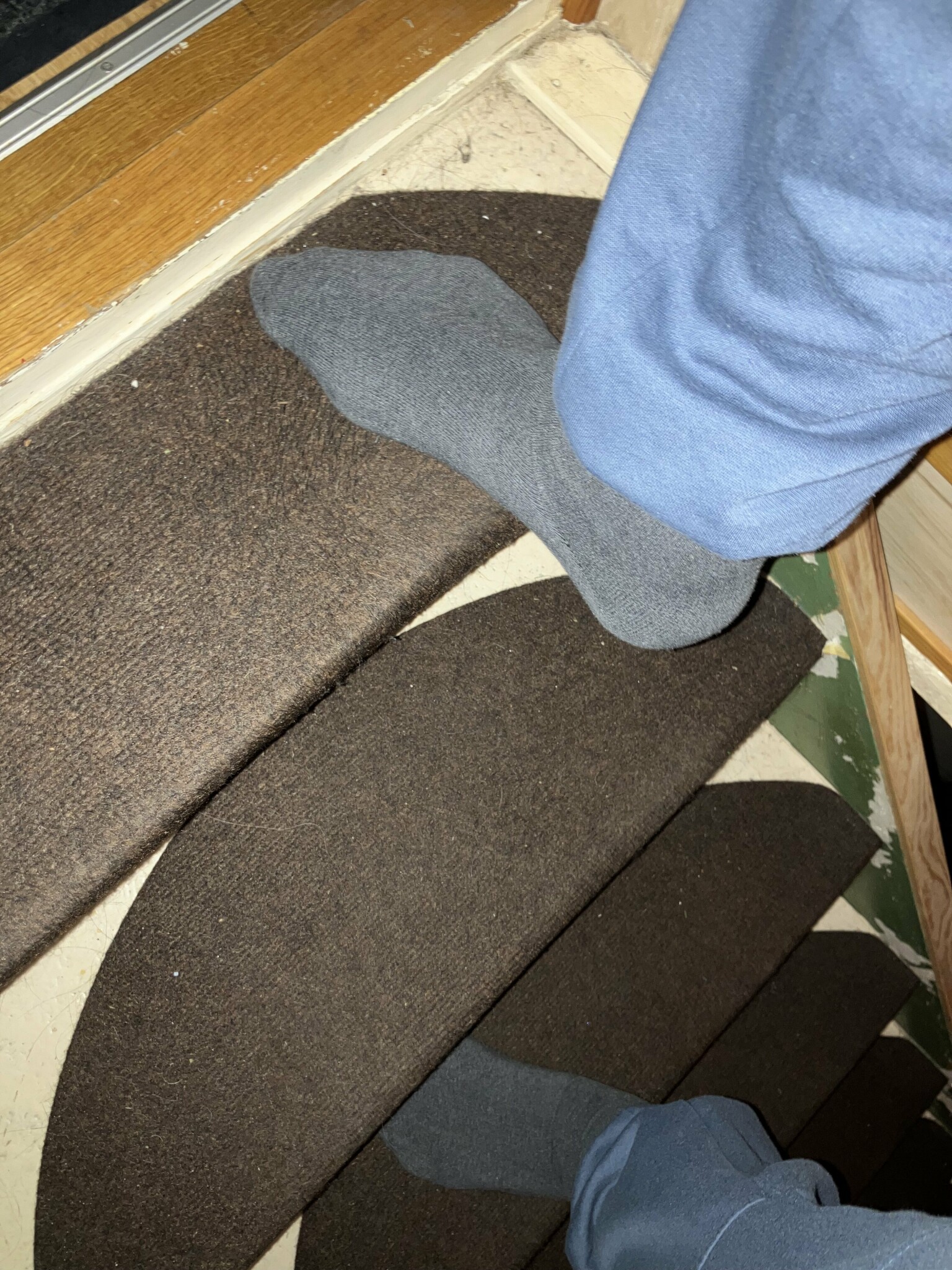
My basement stairs are inclined at 45 degrees and each step is only 20 cm deep. Moreover, the previous owner glued a fitted carpet to the steps. I have slipped and broken toenails when slipping on the stairs because almost only half of the foot fits on the steps. It is almost impossible to use the stairs when carrying something up or down since there is no support for the whole foot. I'm considering whether I could tear down the stairs and install an elevator. The available width is 97 cm. Does anyone know if there are suitable elevators that can be installed by oneself? I'm thinking of something in glass that can simply be placed on the basement floor. How much can one expect such an elevator to cost and which suppliers are there in Sweden?



Tool enthusiast
· Sörmland
· 306 posts
check with https://www.stiltz.co.uk/, they seem to have had a distributor in Sweden before
Another option is to rebuild the stairs? I don't know anything about elevators, but I have an impression that such things are expensive and it can also be difficult to fit larger items into a small elevator if you want the possibility to store furniture or other larger items in the basement.
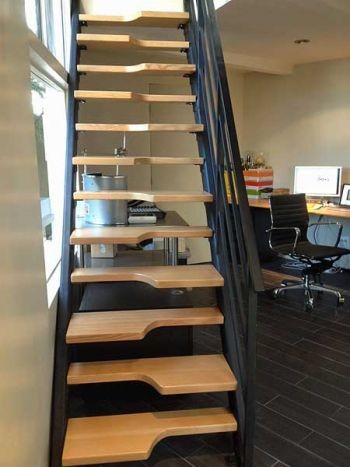
I live in a villa, so I can walk around the house if I need to carry large items down. The problem is that the height between the steps is greater than regular stairs, so when going down, you have to bend your knees properly. I've considered removing the part between the steps so that there's room for the heel when going up the stairs. That way, you won't have to tiptoe going up and walk on your heels going down. The problem is that the hole for the basement stairs is about 90 x 2.5 meters, so if I had a shallower staircase, I would hit my head.

"It is almost impossible to go down the stairs if you have to carry something up or down when you don't have support for your whole foot."N nallepu said:I live in a villa so I can walk around the house if I need to carry large items down.
The problem is that the height between the steps is greater than normal stairs, so when going down you have to bend your knees properly. I've considered removing the part between the steps so that there's room for the heel when going up the stairs. This way, you won't have to tiptoe going up and use your heels going down.
The problem is that the basement stair hole is about 90 x 2.5 meters. If I were to have a shallower staircase, I would hit my head.
"I live in a villa so I can walk around the house if I need to carry large items."
If you yourself think it's just a matter of walking around the house when you need to carry things to the basement, then the first post becomes a bit contradictory.
Post a picture so we can offer good suggestions.
Or, just walk around the house when you need to go down to the basement.

I don't find those fun. My partner's sister quickly replaced one they had in their cottage, and I've tried it at another place too. It feels very awkward to me. We also have a really steep staircase in our 1800s cottage. I've crashed badly there once, so it will be new eventually.T Trrttsch said:

Hi Nallepu,Did you solve the problem with the stairs? We have the same problem, namely.N nallepu said:My basement stairs slope at 45 degrees and each step is only 20 cm deep. Additionally, the previous owner glued a carpet to the steps.
I have slipped and broken toenails when I slipped on the stairs because almost only half of the foot fits on the steps. It is almost impossible to go up or down the stairs when carrying something as you don't have support for the whole foot.
Considering whether I could tear down the stairs and install an elevator.
Available width is 97 cm. Does anyone know if there are suitable elevators that can be installed by oneself? I was thinking of something in glass that you can just place on the basement floor.
How much can one expect such an elevator to cost and which suppliers are there in Sweden?
I couldn't solve the problem without tackling the load-bearing parts of the house. I kept the railing on one side and removed the wall-to-wall carpet. I also removed the part between the steps so I don't have to stand on my toes and heels when going up or down the stairs. I bought ten handles of the type usually found by the bathtub. https://www.jula.se/catalog/bygg-oc...VzlKRBR3tuwFQEAQYCCABEgJOefD_BwE&gclsrc=aw.ds and whether you're going up or down the stairs, you'll have a better grip on these in case you slip since I have them on both sides. If you hold on with both hands and slip on the stairs, I believe you can brace yourself to prevent slipping and falling down the stairs.
Yes, okay, all small improvements mean a lot with such stairs. I've checked with builders about installing a new staircase and cutting up into the living room and placing it somewhere else, but it doesn't work well no matter how I turn it. It runs over 100K, and there's no guarantee everything will be good anyway.N nallepu said:I couldn't solve the problem without affecting the structural parts of the house. I kept the railing on one side and removed the wall-to-wall carpet. I also removed the section between the steps so I don't have to stand on my toes and heels when going up or down the stairs. I bought ten handles of the type usually used by the bathtub. [link] Going up or down the stairs, you get a better grip on these if you slip since I have them on both sides. Holding with both hands and slipping on the stairs, I believe you can hold on so you don't slip and fall.
I've been considering a platform lift instead, which could be good, but it costs 150-200K to get one installed.
Damn stairs you have to maneuver down every morning to shower, etc.👎
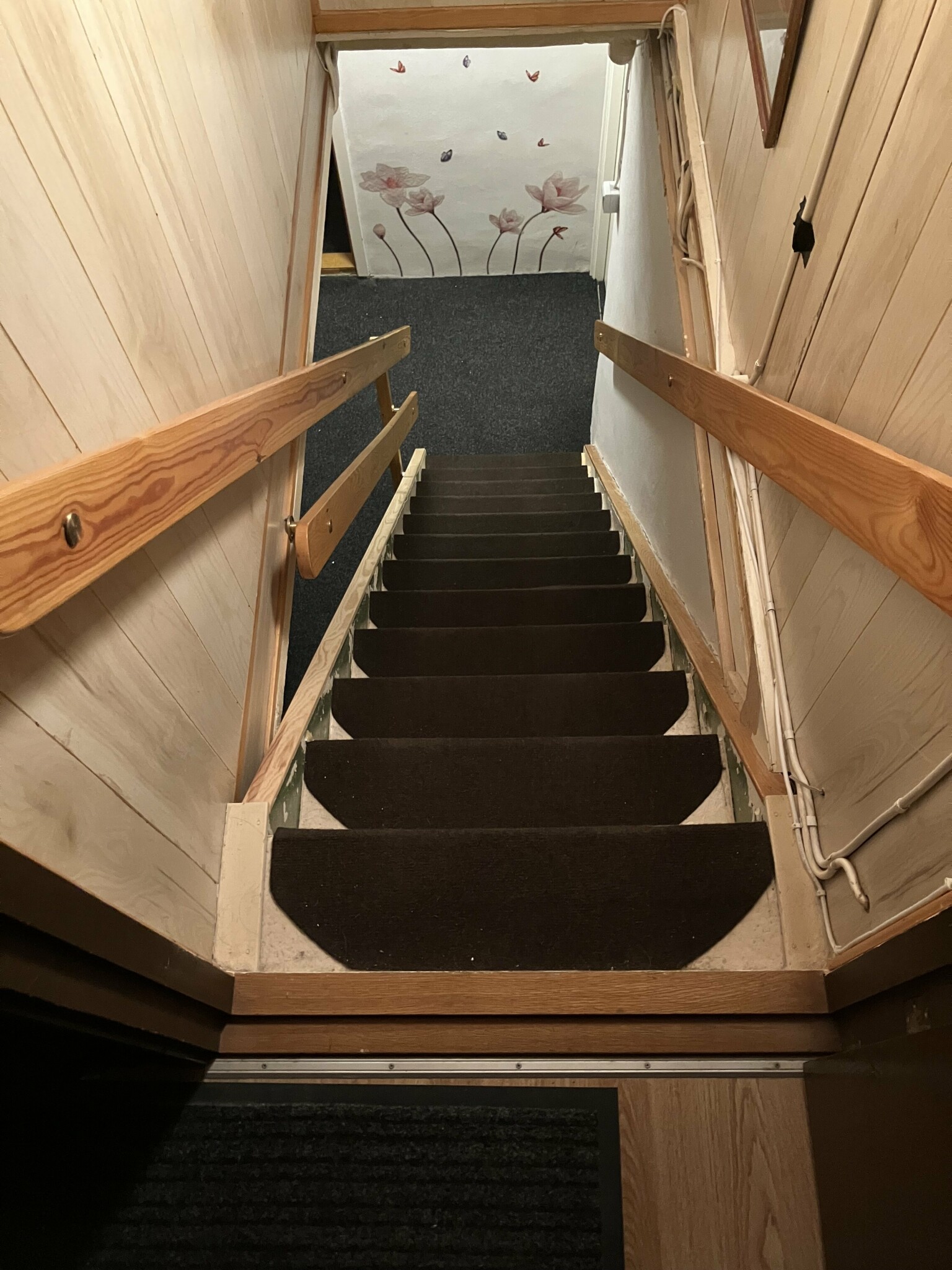
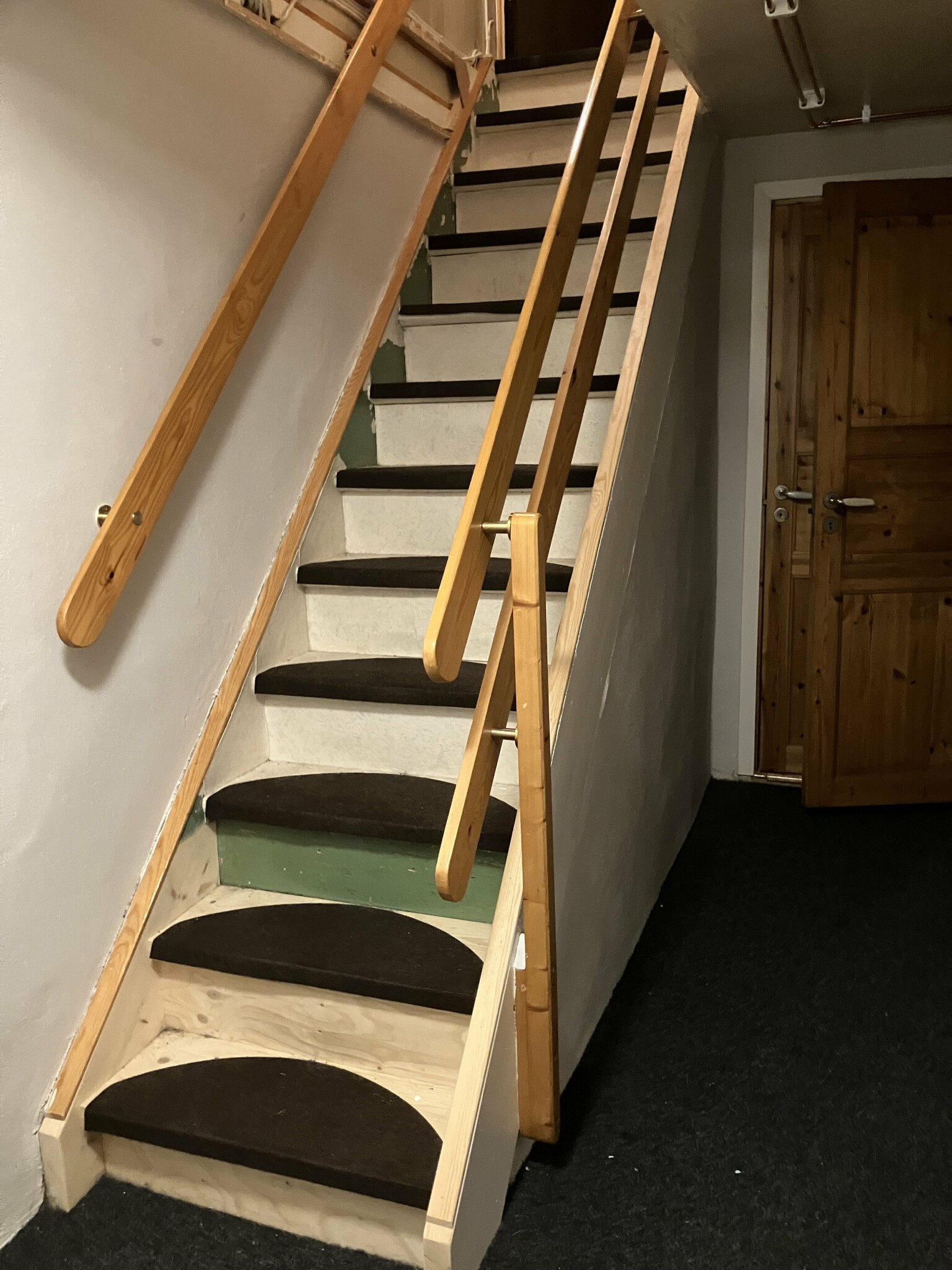
This is what it looks like btw.
Thanks for responding!
Click here to reply