Hello
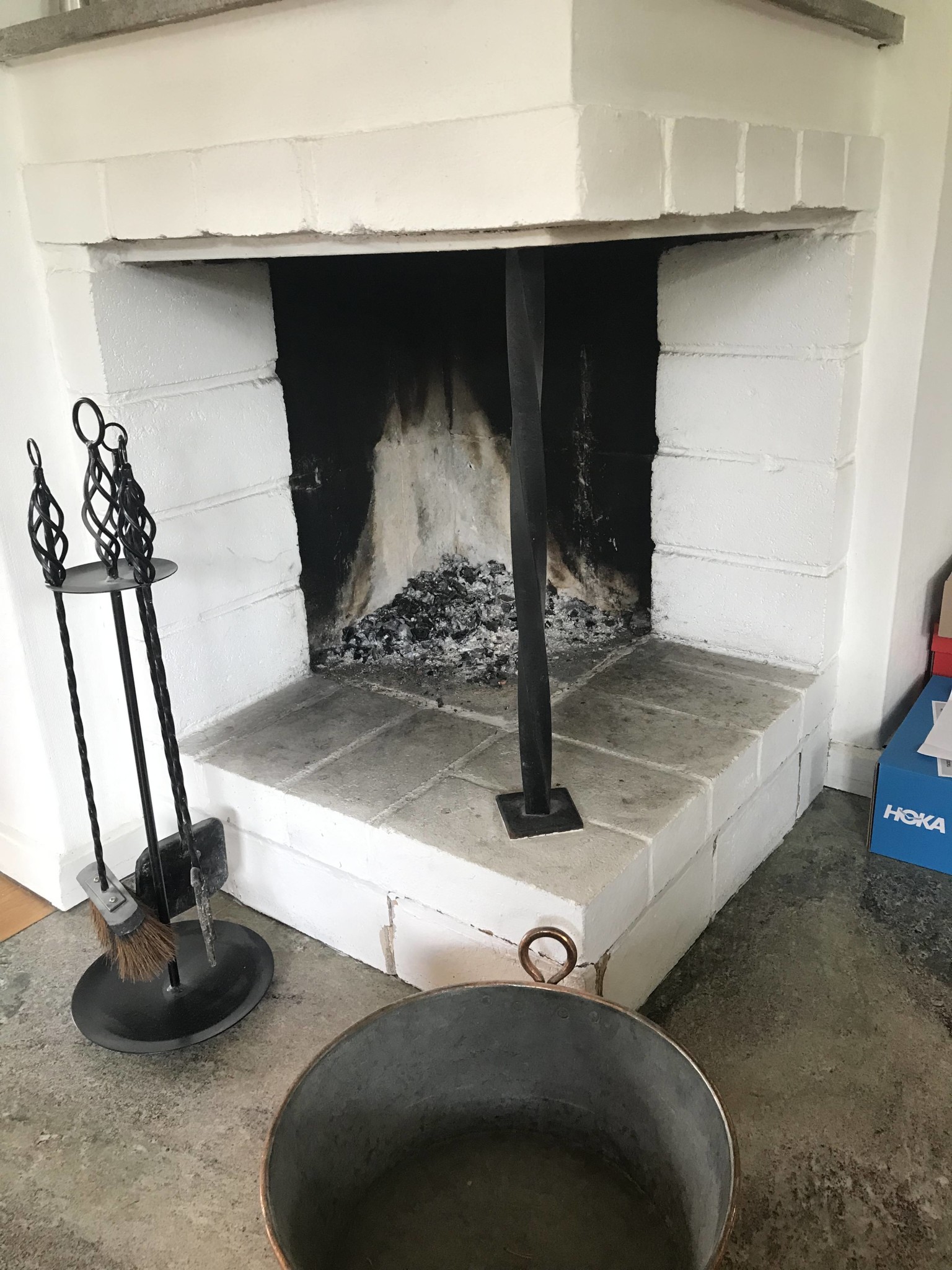
I'm thinking of sprucing up and glazing my open fireplace.
Has anyone done something similar before? I know many people put in a cassette, but I think it's ugly.
My idea is to smooth the surface so you don't see the pattern of the bricks. The question is what type of plaster you can use that withstands heat?
Glass doors with mounts should be able to be made by a glazier? Is there anything else to consider to get it right from the start?
Hello,
I have been reading posts on this forum for several years, but this will be my first comment where I feel I have something to share.
We have a similar fireplace in the bedroom, about a meter away from the bed.
This means we normally never light it, as it quickly becomes too warm to sleep there. Installing a cassette was therefore never an option due to the economic aspect.
We still wanted glass/doors in case of long power outages or extreme cold when you would want to light a fire without needing a separate spark guard or being afraid of falling asleep with a lit fire. Additionally, the birds can make some noise when they try to build a nest above the chimney grille. Glass and doors also feel more modern and "clean."
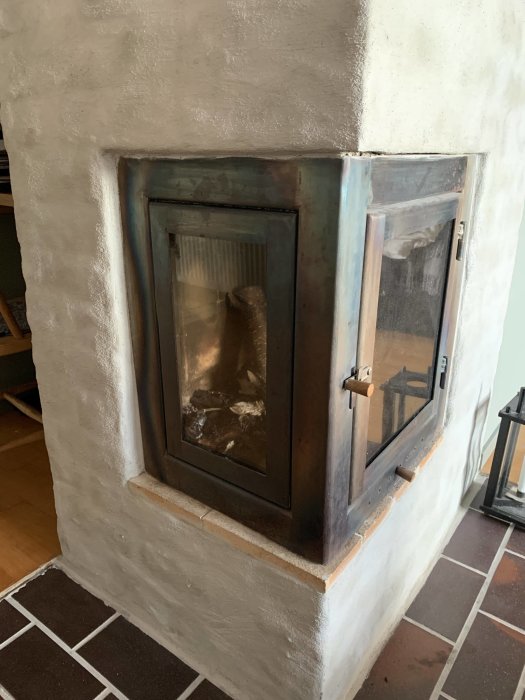
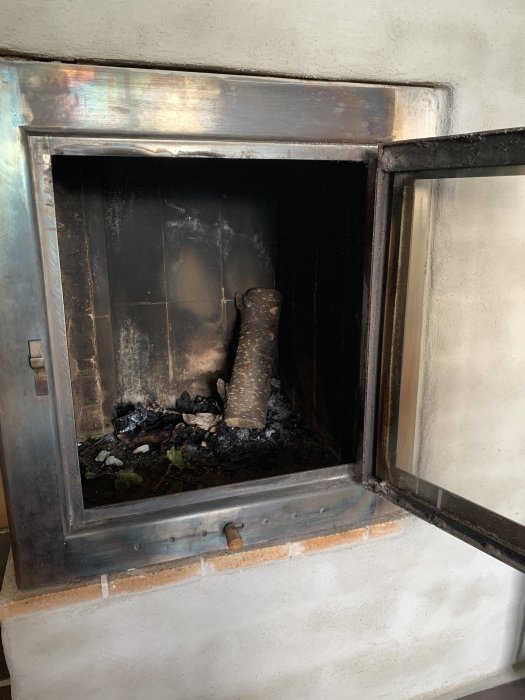
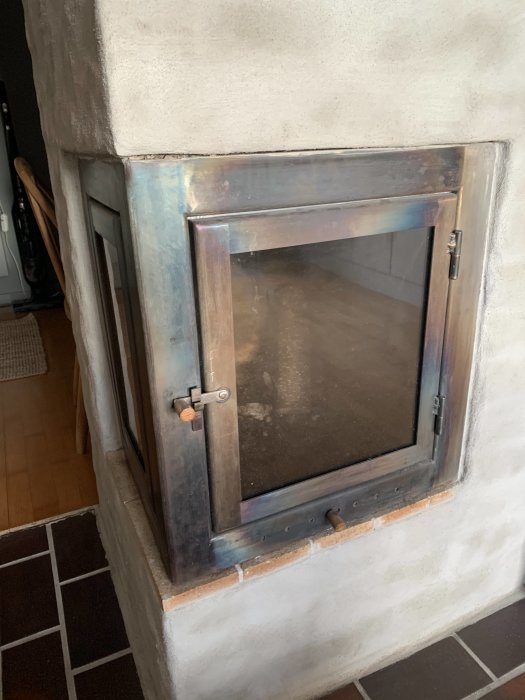
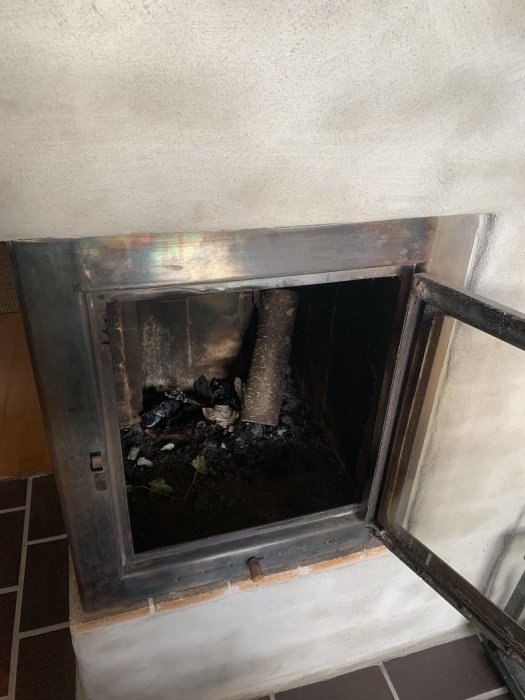
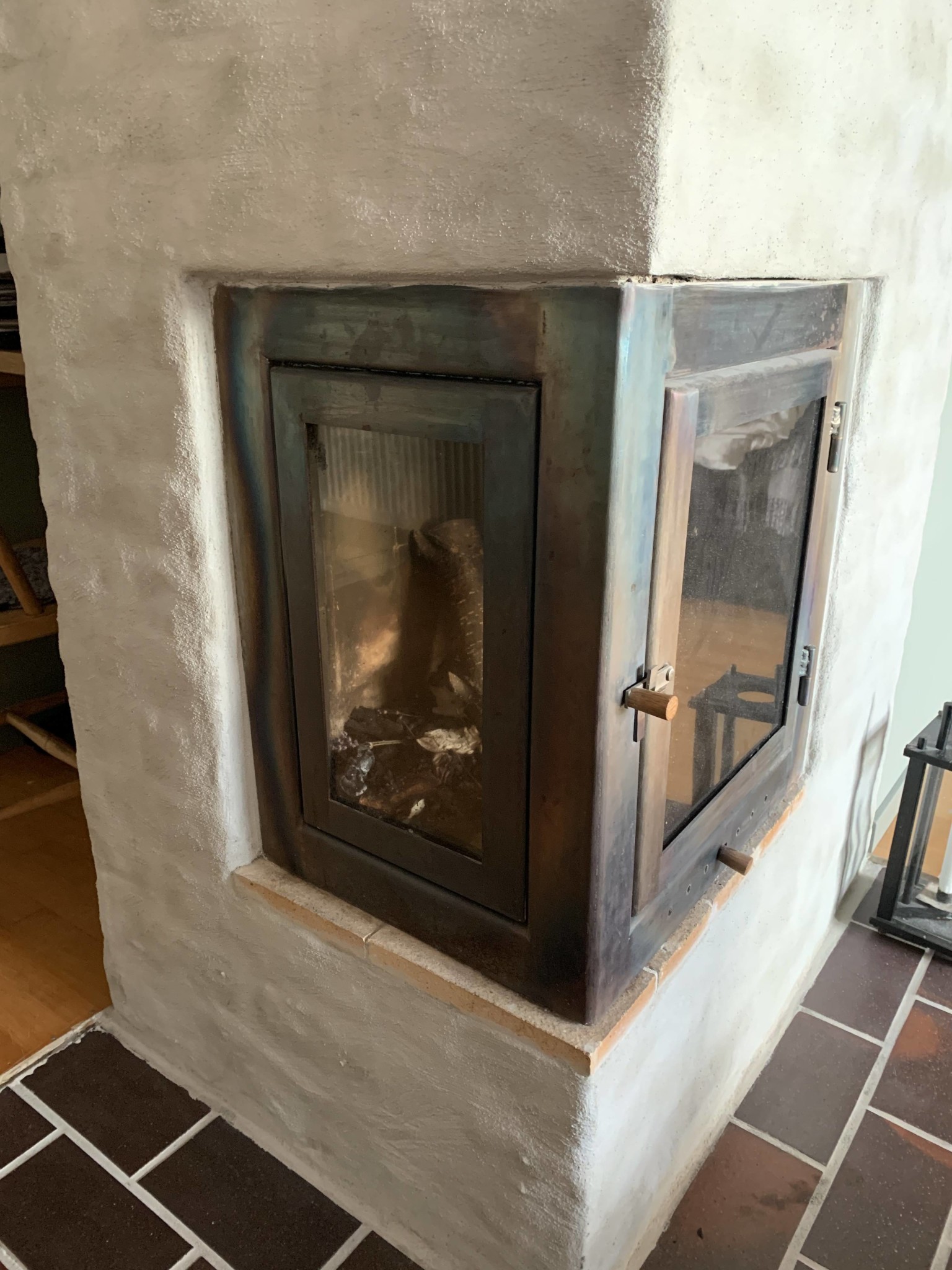
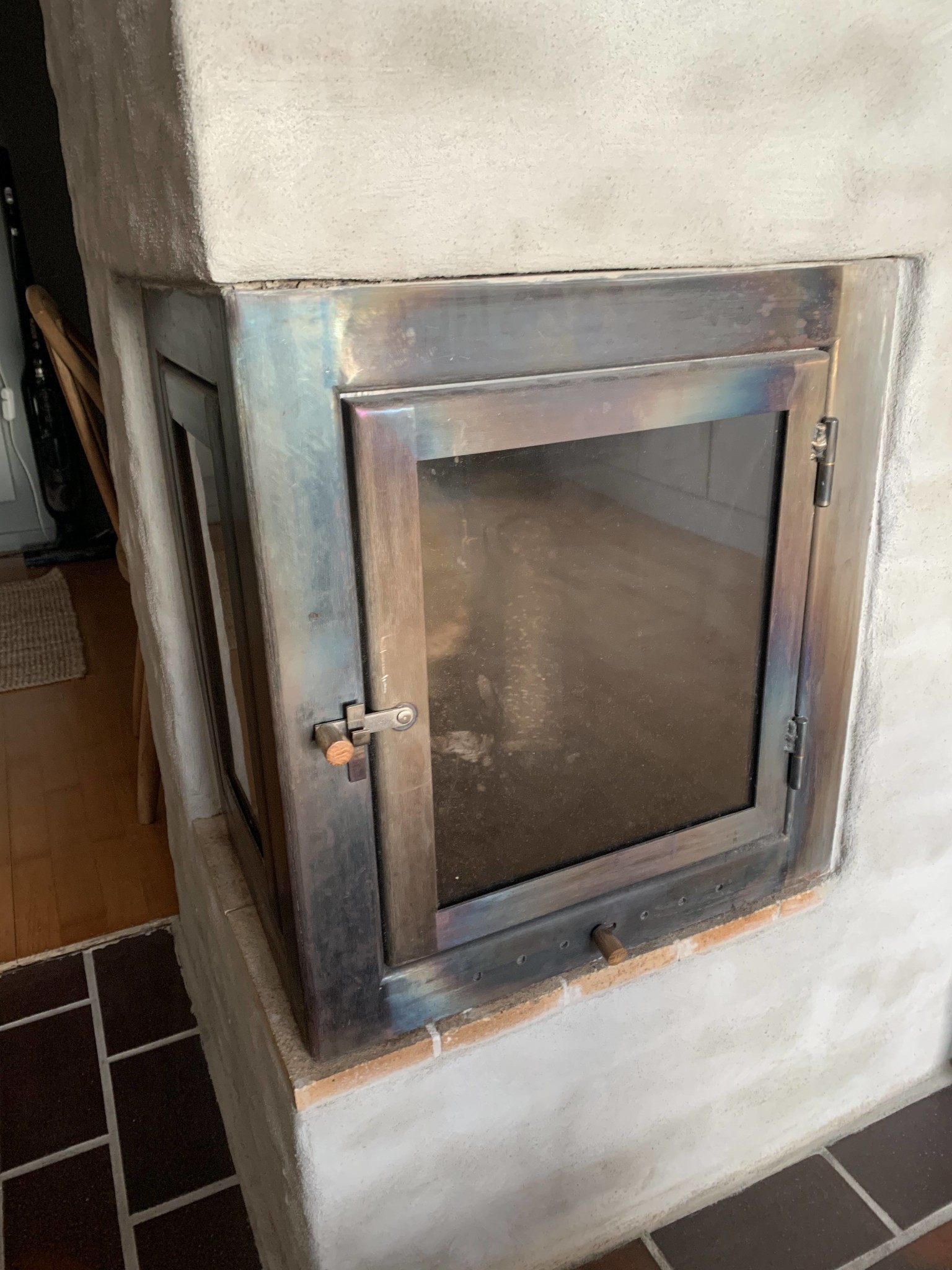
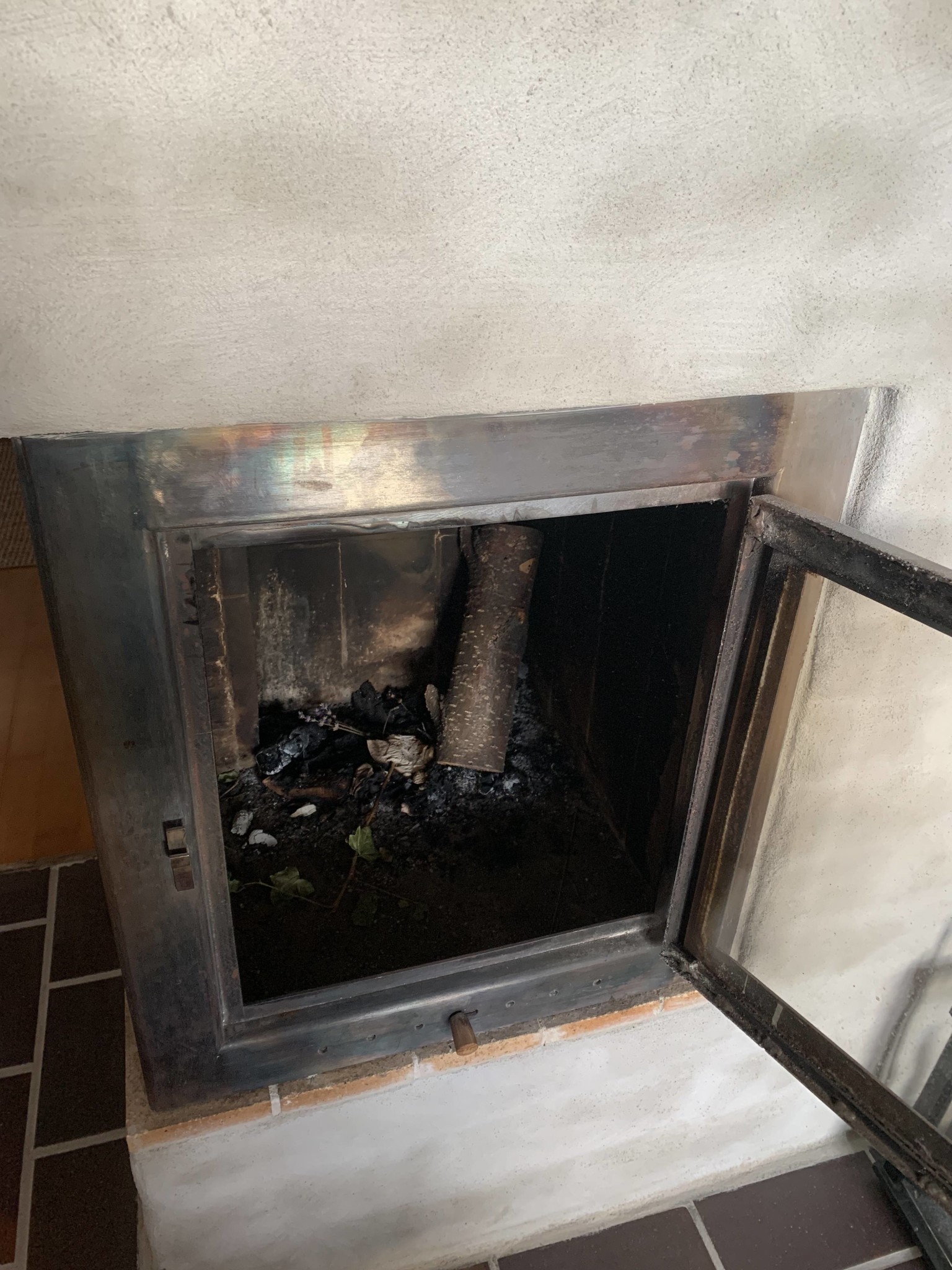
I went to the local blacksmith and ordered some pieces of 3 mm Corten steel, bent into angle iron dimensions 60 x 30 mm. Corten is the material used, for example, by energy cassettes for their stoves; it is also used as edging because it gets a rusty surface but doesn't rust away. With this material, I then welded together two sides of a cassette and placed them in the fireplace opening. Sealing against the fireplace's sides was done with fiberglass sealing tape used for stove doors. The panes were ordered from the local glazier, and I think they are 4 mm "fire glass." The guy was a bit nervous when cutting the glass; it took some force...
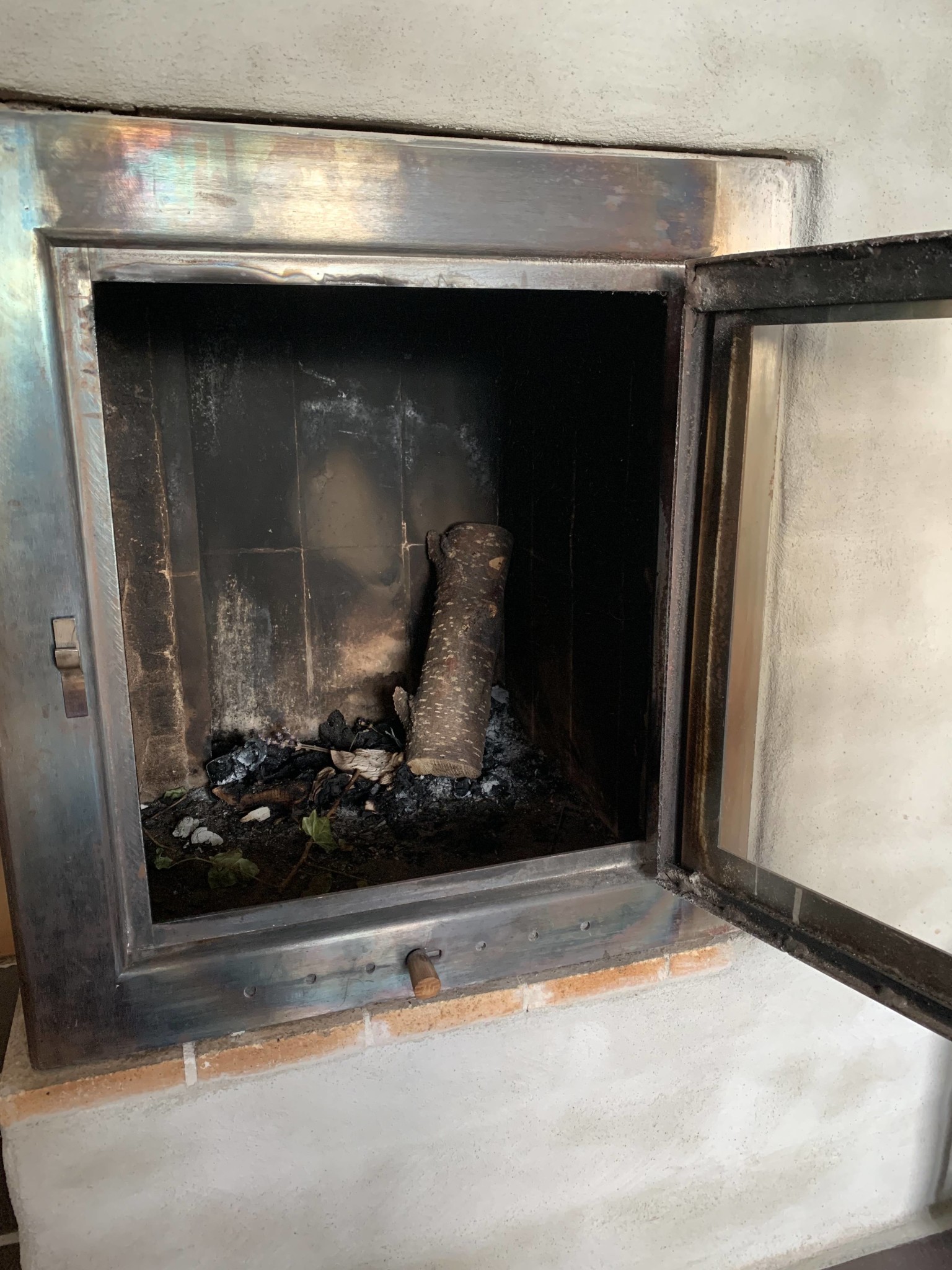
The door hinges were ordered online and are intended for homemade stoves. The vent under the door was made like the one we have on an energy cassette downstairs, a few holes in a metal piece that can slide sideways to regulate the air, and the door also has two settings for this purpose, like on our energy cassette.
We do not have sealing on the door itself; we thought it would be too bulky, and some air needs to come in anyway. We didn't paint it, and now it must be more than fifteen years since we made it. The heat has affected the color, but we don't think it bothers and it hasn't rusted significantly in this dry environment.
During that time, we might have lit it once or twice a year. The glass soots up, but since it is so infrequent, we don't see it as a problem and are satisfied with the installation.
Originally, we kept the original "chatterad," brown brick on the fireplace; shortly after we installed the "fireplace corner," we coated the bricks with regular "C-putz mix," thinly so that the brick's shape is still visible. Because the "chatterad" surface was so coarse, there were no adhesion problems.
During Corona, the bedroom was renovated, and we coated the bricks again, not because it had cracked or anything but because we wanted a new surface. You can still see the shape of the bricks, but it became a smoother surface with Heyd'i fiber putz.
When my wife wakes up, I'll try to take some photos and upload them.
"I'll be back"
/R
Hello, I have been checking posts on this forum for several years but this will be my first comment where I feel I have something to share. We have a similar fireplace in the bedroom just over a meter from the bed. This means that we usually never use it as it quickly becomes too hot to sleep there. Installing an insert was never an option due to the economic aspect. We still wanted glass/doors in case one wanted to use it during extended power outages or extreme cold and not have to use a separate spark guard or be afraid to fall asleep with a lit fire. Additionally, birds can be quite noisy when they try to build nests above the chimney grill. Glass and doors also feel more modern and "clean." I went to the local blacksmith and ordered some pieces of 3 mm Corten steel, bent like angle iron in dimension 60 x 30 mm. Corten is the material that, for example, the energy cassette used for its stoves, it is also used as border edges because it has a rusty surface but does not rust through. With this material, I then welded together two sides of an insert and placed them in the opening of the fireplace. Sealing against the sides of the fireplace was done with fiberglass sealing tape used for stove doors. The glass panes were ordered from the local glazier, I believe they are 4 mm "fire glass." The guy was a bit nervous when he was cutting the glass, it required some force... Hinges for the door were ordered online and are intended for homemade stoves. The vent under the door was made like the one we have on an energy cassette downstairs, some holes in a piece of metal that can be slid sideways to regulate the air, the door also has two settings for this purpose, just like on our energy cassette. We have no seal in the door itself, we thought it would be too bulky and air should still come in. We haven't painted it and now it must be more than fifteen years since we made it. The heat has affected the color, but we do not find it disturbing, and it has not rusted significantly in this dry environment. During that time, we might have used it once or twice a year, the glass panes get sooty, but since it's so seldom we do not see it as an issue and are satisfied with the installation. Originally, we had the original "chattered," brown brick on the fireplace. Shortly after we installed the "fireplace corner," we plastered over the bricks with regular "C-mortar," thinly so the shape of the bricks is still visible. Since the "chattered" surface was so rough, there were no adhesion problems. During Corona, the bedroom was renovated, and we plastered over the bricks again, not because it had cracked or anything, but we wanted a new surface. You can still see the shape of the bricks, but the surface became smoother with Heyd’i fiber plaster. When my wife wakes up, I'll try to take some photos and upload them. "I’ll be back" /R
Thank you so much for a great description! This was exactly the information I was looking for.
I have looked at a similar solution myself, but I chose a fireplace insert. The deciding factor was the problem of finding a solution that reduces soot buildup on the glass. If you're building it yourself, you should consider a design where the air intake is drawn over the glass surface to reduce soot buildup. You should look at how different manufacturers have solved this. One of our stoves is similar to yours with an insert, and we use it frequently, so it's a cast iron insert.
Here you go!
I should add that the side glass that cannot be opened blackens the fastest. Since there is no seal around the door, air is drawn in there which certainly helps to "ventilate" the glass in the door. If we were to use it for more regular heating during the winter season, I would invest in a stove insert, much more environmentally friendly and significantly more efficient.
I believe it’s possible to find one that’s fairly nice looking as well. Personally, I am particularly pleased with how my corner wraps around the post. It's hard to capture in a picture though.
/R
Click here to reply
Vi vill skicka notiser för ämnen du bevakar och händelser som berör dig.