Diligent visitor but less diligent writer. Now it's time to ask for good advice.
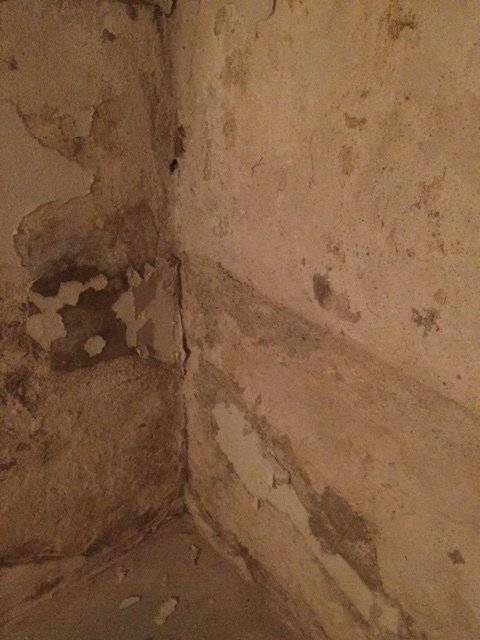
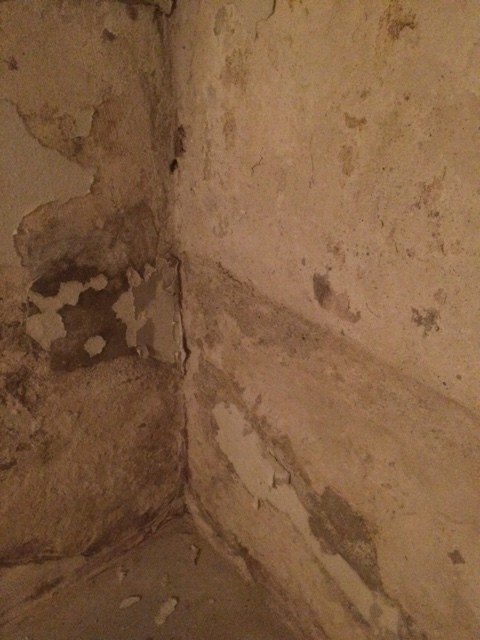
It's time to deal with a room in the basement as we had a water damage on the ground floor and unfortunately the water also found its way down to this room. Two of the walls are exterior walls (one with an exterior door to an open basement staircase), two are interior walls. All of them previously had wallpaper and on top of that some kind of painted fabric which I guess made the walls too tight. Now I've stripped off the wallpaper and the plastic flooring that was on the floor (on chipboard on a platon mat).
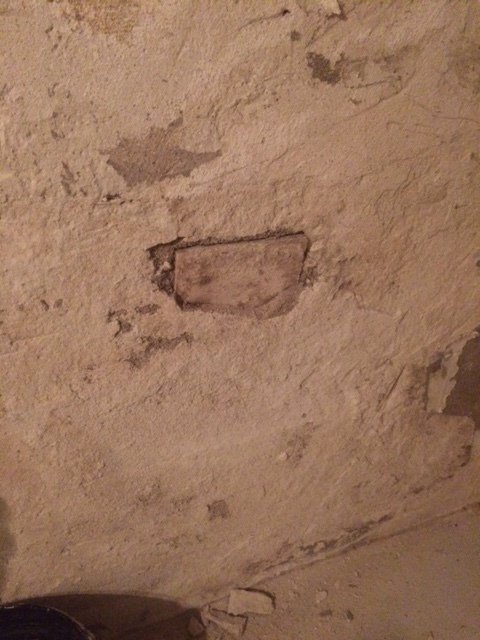
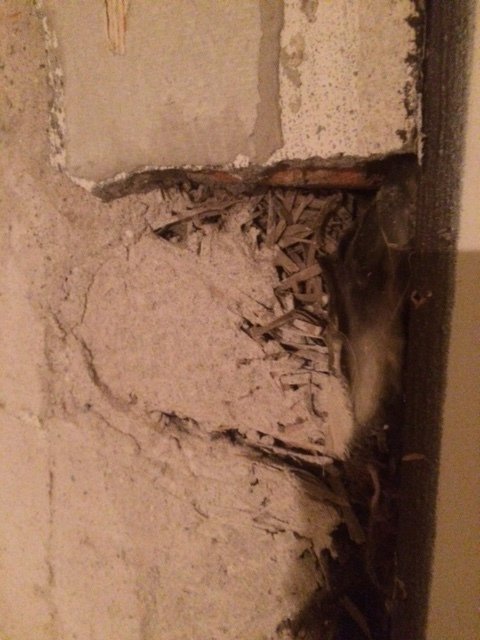
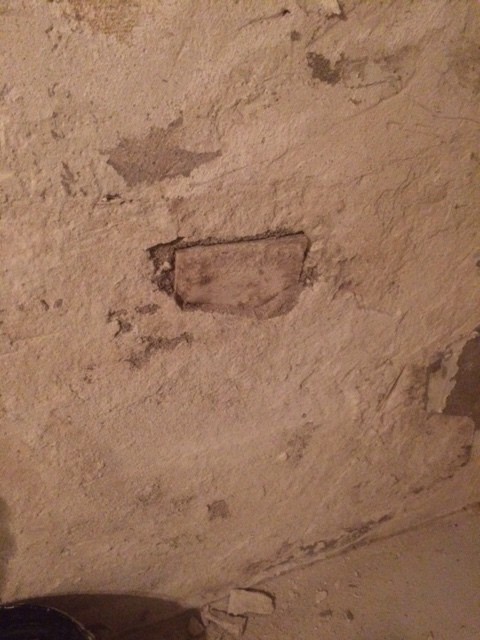
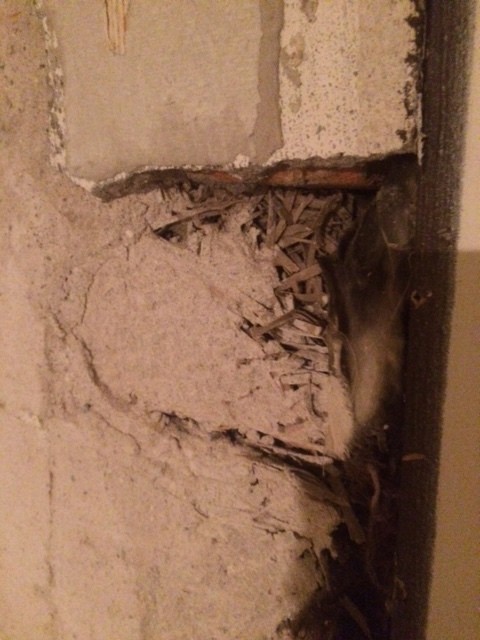
The floor will be covered with tiles and since large parts of the plaster came off with it, I now have to re-plaster the walls and then paint with moisture-permeable paint. The house has been built in stages, but I guess this part of the basement was built in the 1940s and that it's lime plaster on the walls but in some places it seems to be some other darker and harder plaster on top of the lime plaster and these pieces fall off in large chunks unlike the lighter parts which can rather be scraped off. In some places, you can also see some kind of dry strands that seem to function as some sort of filler.
Now to the questions:
1. That it's lime plaster is my guess. It feels porous and when you run your fingers even over the healthiest parts of the interior walls, dust falls down. Anyone who thinks it’s something other than lime plaster? Because if it’s lime plaster, I have to continue with it.
2. Can you fine plaster on top of the old plaster on the interior walls that still look quite good despite the plaster so to speak chalks off properly, or will the new plaster not stick?
3. What do you think about the strands that you can glimpse in a picture? I guess it's some organic material and that I should therefore knock off all the plaster where this occurs but it doesn't seem to be on all walls. At the same time, this material feels very dry, at least where I’ve got access to it.
I want to do as little work as possible without taking shortcuts that I will regret in 5-10 years.
The strands you see are träullit/heraklith (a brand name, but the material is equivalent), which are wood fiber boards dipped in cement, and as you write, it's an organic material that doesn't really belong in a damp basement, but for some reason (that I can't cite any source for right now) wood fiber boards are resistant/durable against mold. They were mainly used not for filling but for insulation. The insulating value is not the best. You probably have this along the entire outer walls.
It might be that they've applied cement plaster on lime plaster, and that's why you get large chunks when you demolish it, as you should avoid applying stronger plaster on weaker plaster.
The darker larger chunks that detach are likely a patch with cement mortar. Lime plaster usually crumbles more when it comes off.
I am currently renovating a basement from the 30s in phases with the same goal as you. In my case, I haven't done any additional drainage either, as the foundation under half the house is directly on the rock. The surrounding ground is sand, and the moisture penetration I find is precisely in the floor where it lays directly on the rock.
Where the plaster on my walls has been less than ideal, I have repaired with KC plaster mortar and in some cases with hydraulic lime mortar. This has provided good results so far. Just don't forget to slurry first with the same mortar before plastering; it sticks much better then.
Regarding wood wool, I have no experience beyond previous speakers. I wouldn't remove them since you're opting for a breathable solution.
Träullit, there you go! Thanks KjellTimell. Like you, I believe that the cement-based patching in certain areas is causing extra issues right there. However, I wonder if they also used träullit for filling in some places since there seems to be incredibly uneven masonry behind. I've read a bit about the material now, and I tend to agree with johmi to keep them and invest in moisture-permeable lime plaster. After all, they seem to have lasted 70 years quite well despite suboptimal wall covering. But what do you think about applying new lime plaster on the old one that, so to speak, releases sand grains and leaves a light gray dust film on your fingers when you run over it? Sweep away the worst, pre-water thoroughly, and hope for adhesion or?
Are you planning to plaster the entire walls or just where it's completely coming off? The important thing is to drill away everything that is loose until you reach a solid surface and remove all residues from the old wallpaper.
Water. Mix the dry mortar in water to a thin porridge and brush it on with a kalkborste. Then you can plaster.
Yes, I probably need to replaster all the walls, but on the interior walls, it's more about a fine plastering to make the surface smoother, as the old plaster seems to remain there. On the exterior walls, it will be more rough plastering, but I have no intention of knocking down all the old plaster unless necessary.
It might be worth adding that the house stands on a naturally well-drained sandy base (old pine heath) and that the basement otherwise does not show signs of excessive moisture.
Click here to reply
Vi vill skicka notiser för ämnen du bevakar och händelser som berör dig.