
5,374 views ·
33 replies
5k views
33 replies
Remove load-bearing wall with concrete column
Here is a small update.
A constructor was here a few days ago and looked at the construction and the drawings. He has discussed with colleagues, but they cannot figure out what the wall is actually for. The most likely reason is that it is meant to withstand earth pressure, but it has no contact with the concrete elements on the outermost part of the outer wall.
They recommended placing diagonal wall supports against the concrete elements in the outer wall and then tearing down the concrete and documenting. I have not yet sent them any pictures.
But I am attaching some pictures here.
There is also a ledge cast along the floor, but perhaps it is there to make the construction more stable if it were to receive pressure from the side. The floor in the old bathroom also has a higher level than the rest of the floor in the basement, meaning they have poured more concrete after all the walls were in place.
You can also see now that they have torn down the innermost pillar, they have inserted chipboard and other materials behind this pillar. If the wall was really supposed to withstand earth pressure, would they have really pushed all this material between the pillar and the concrete elements in that case?
Does the information and pictures provide any new clues?
Now that we have torn down the wall, the question is whether we will need some type of support beam? If so, can it be added to one or both of the walls we will actually have in the bathroom later (those walls are parallel to where the concrete wall stood and are about 1.5 m from where it stood)?
A constructor was here a few days ago and looked at the construction and the drawings. He has discussed with colleagues, but they cannot figure out what the wall is actually for. The most likely reason is that it is meant to withstand earth pressure, but it has no contact with the concrete elements on the outermost part of the outer wall.
They recommended placing diagonal wall supports against the concrete elements in the outer wall and then tearing down the concrete and documenting. I have not yet sent them any pictures.
But I am attaching some pictures here.
There is also a ledge cast along the floor, but perhaps it is there to make the construction more stable if it were to receive pressure from the side. The floor in the old bathroom also has a higher level than the rest of the floor in the basement, meaning they have poured more concrete after all the walls were in place.
You can also see now that they have torn down the innermost pillar, they have inserted chipboard and other materials behind this pillar. If the wall was really supposed to withstand earth pressure, would they have really pushed all this material between the pillar and the concrete elements in that case?
Does the information and pictures provide any new clues?
Now that we have torn down the wall, the question is whether we will need some type of support beam? If so, can it be added to one or both of the walls we will actually have in the bathroom later (those walls are parallel to where the concrete wall stood and are about 1.5 m from where it stood)?
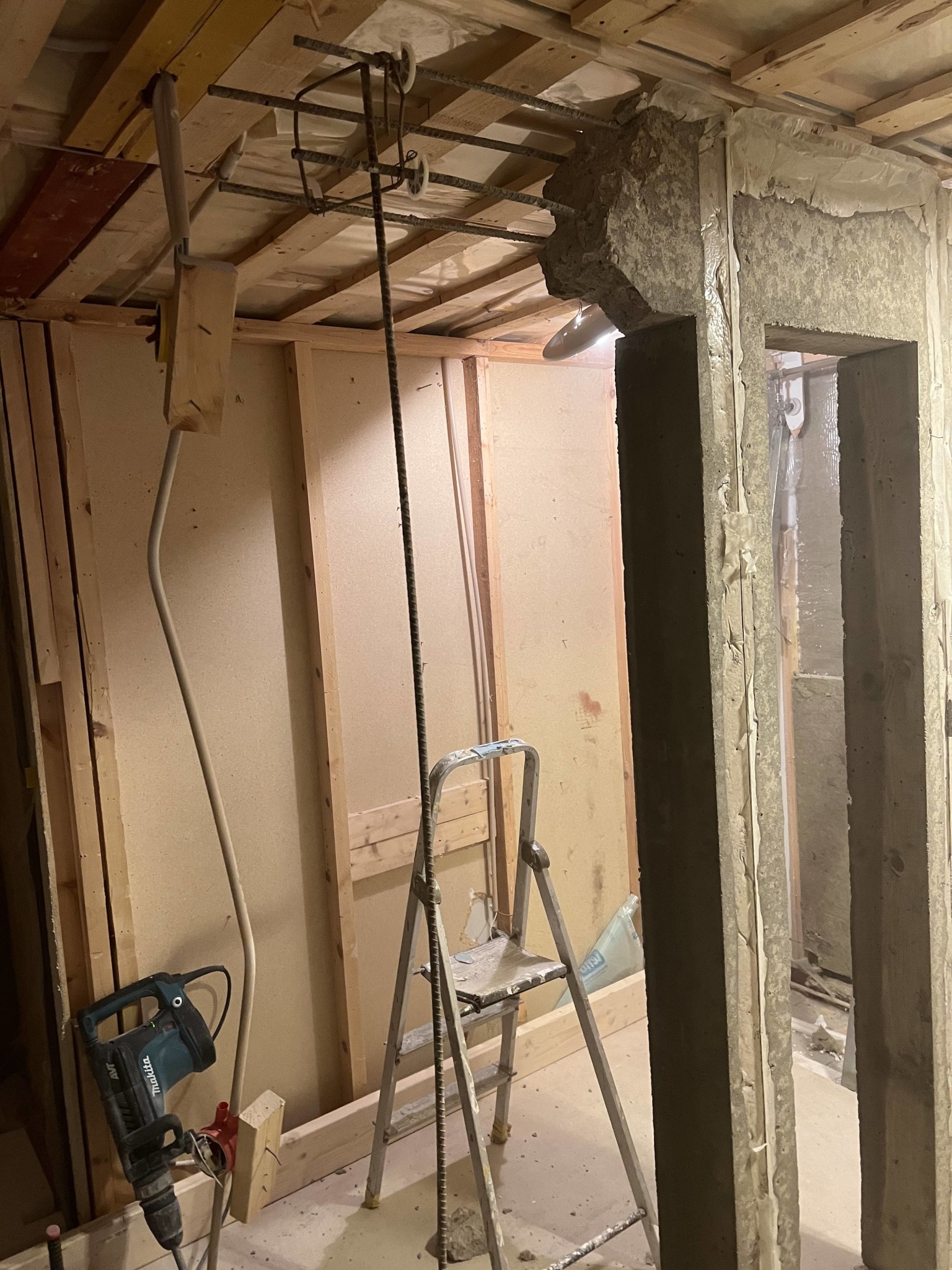
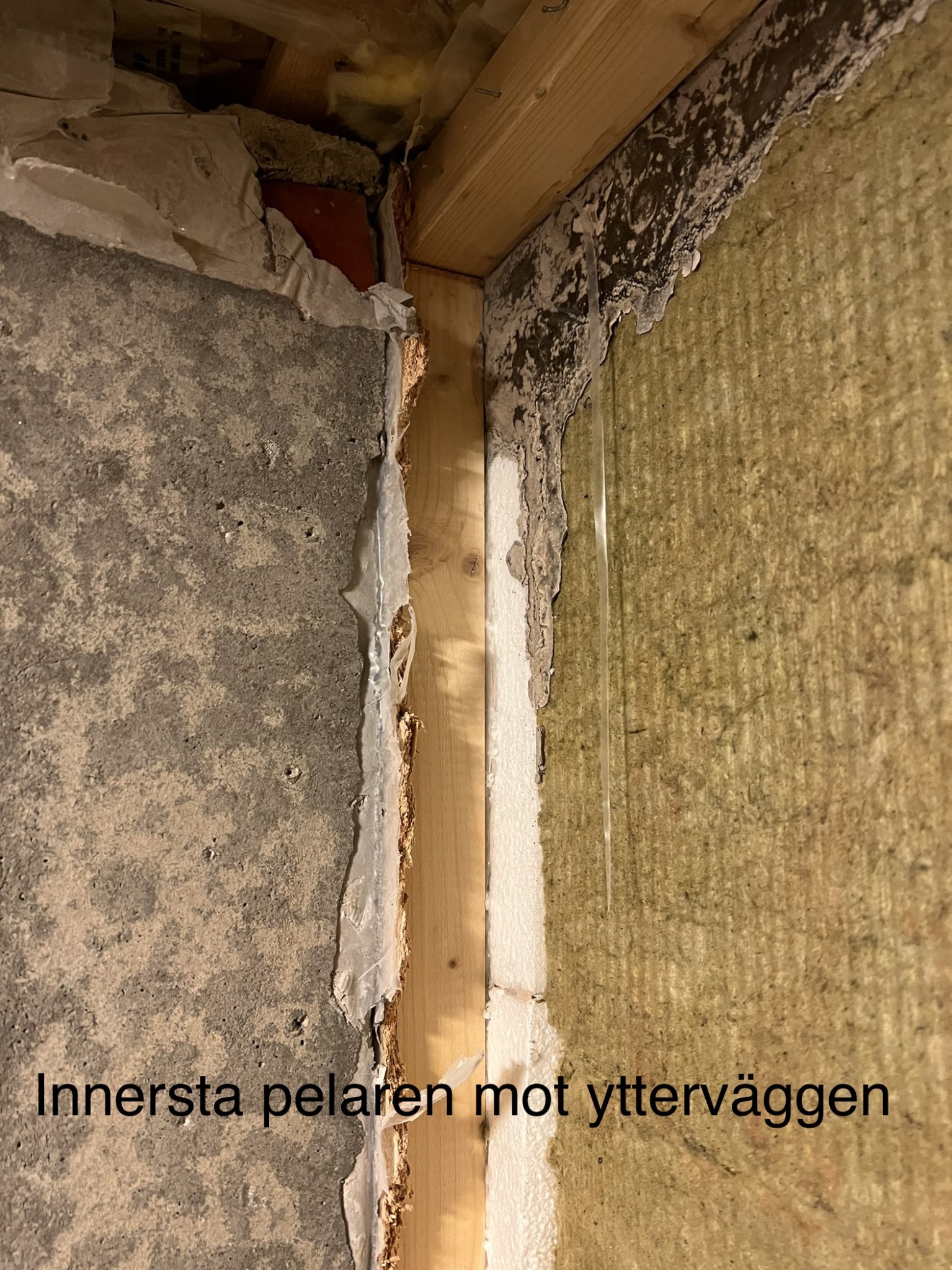
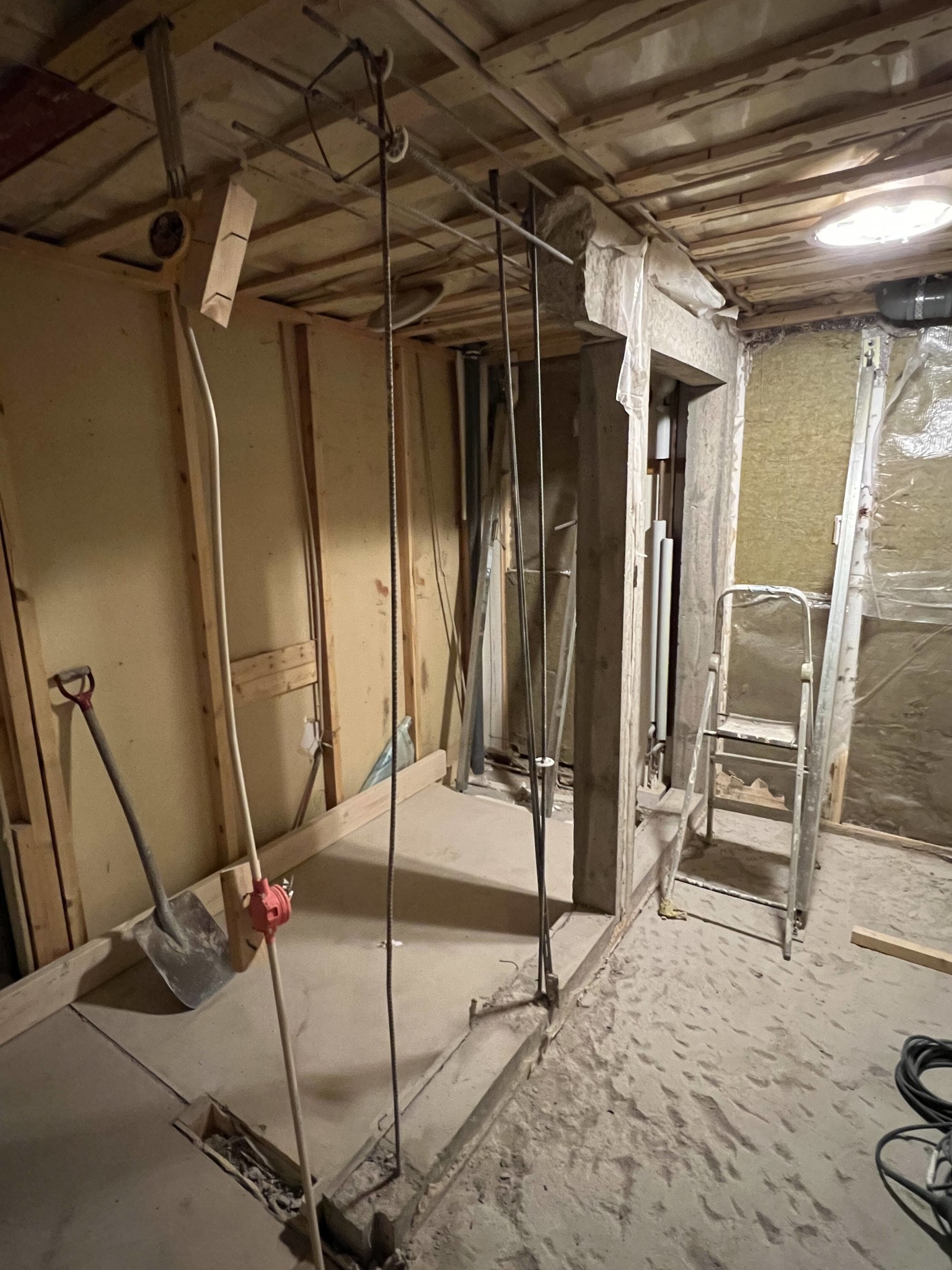
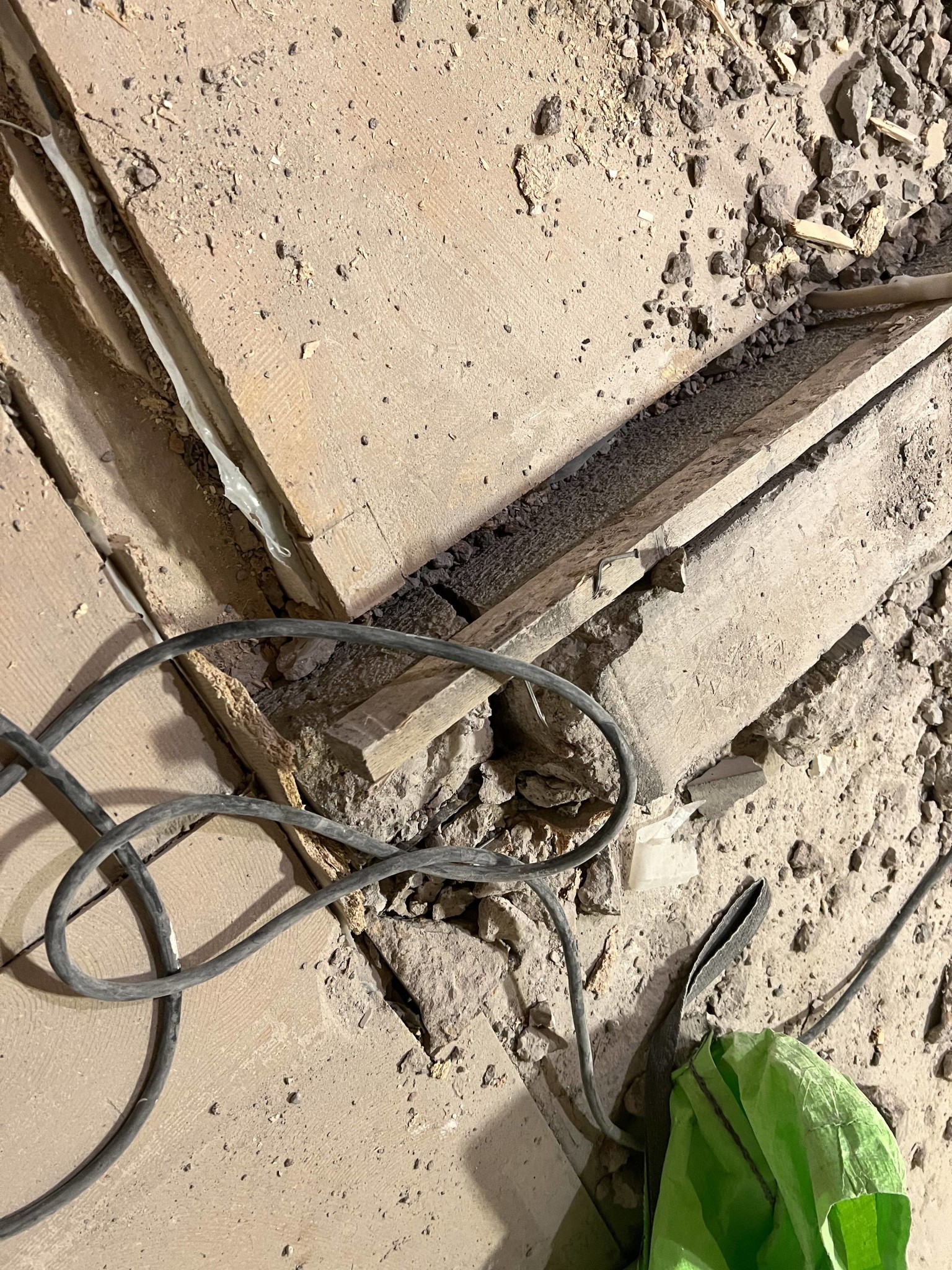
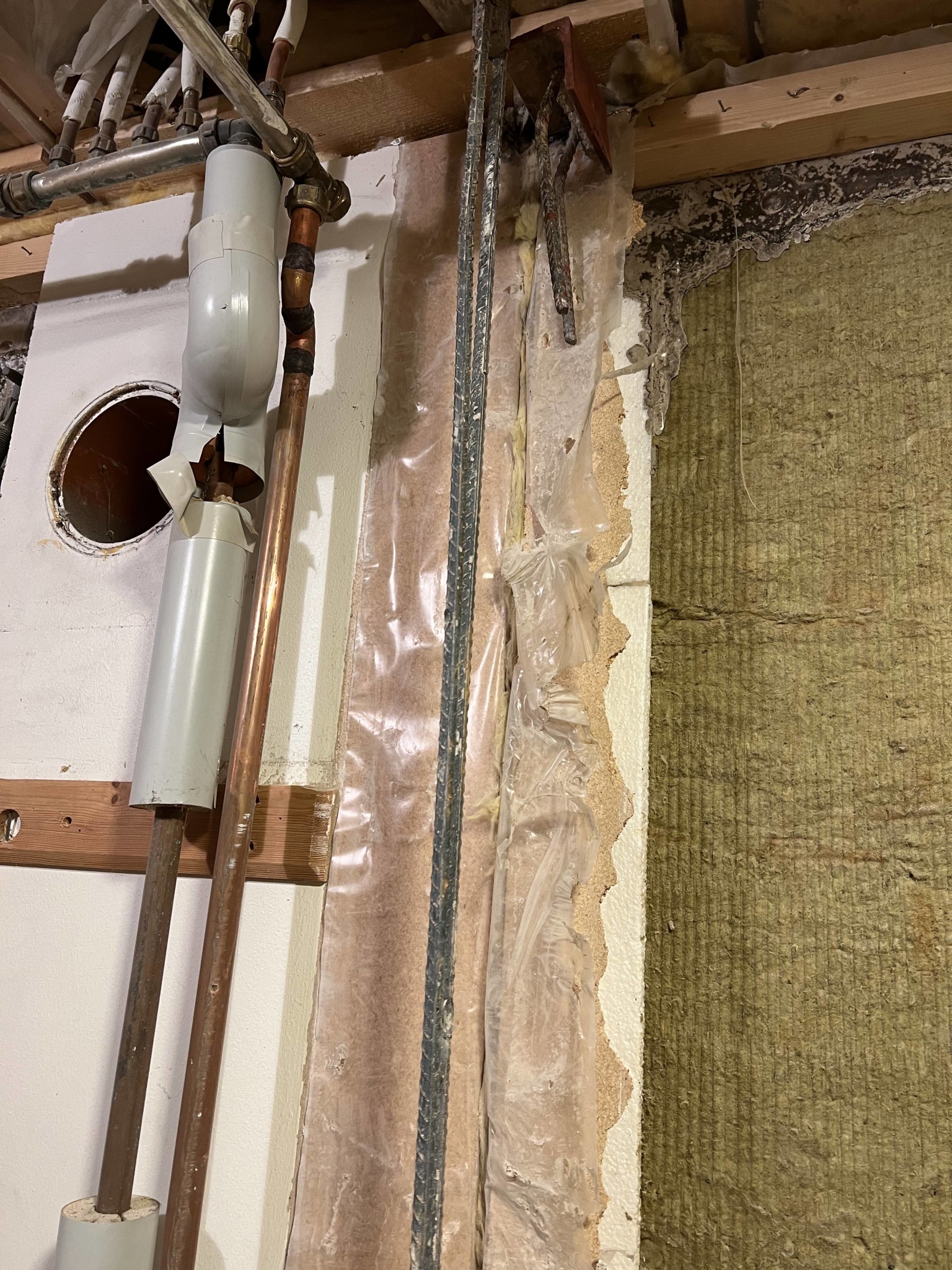
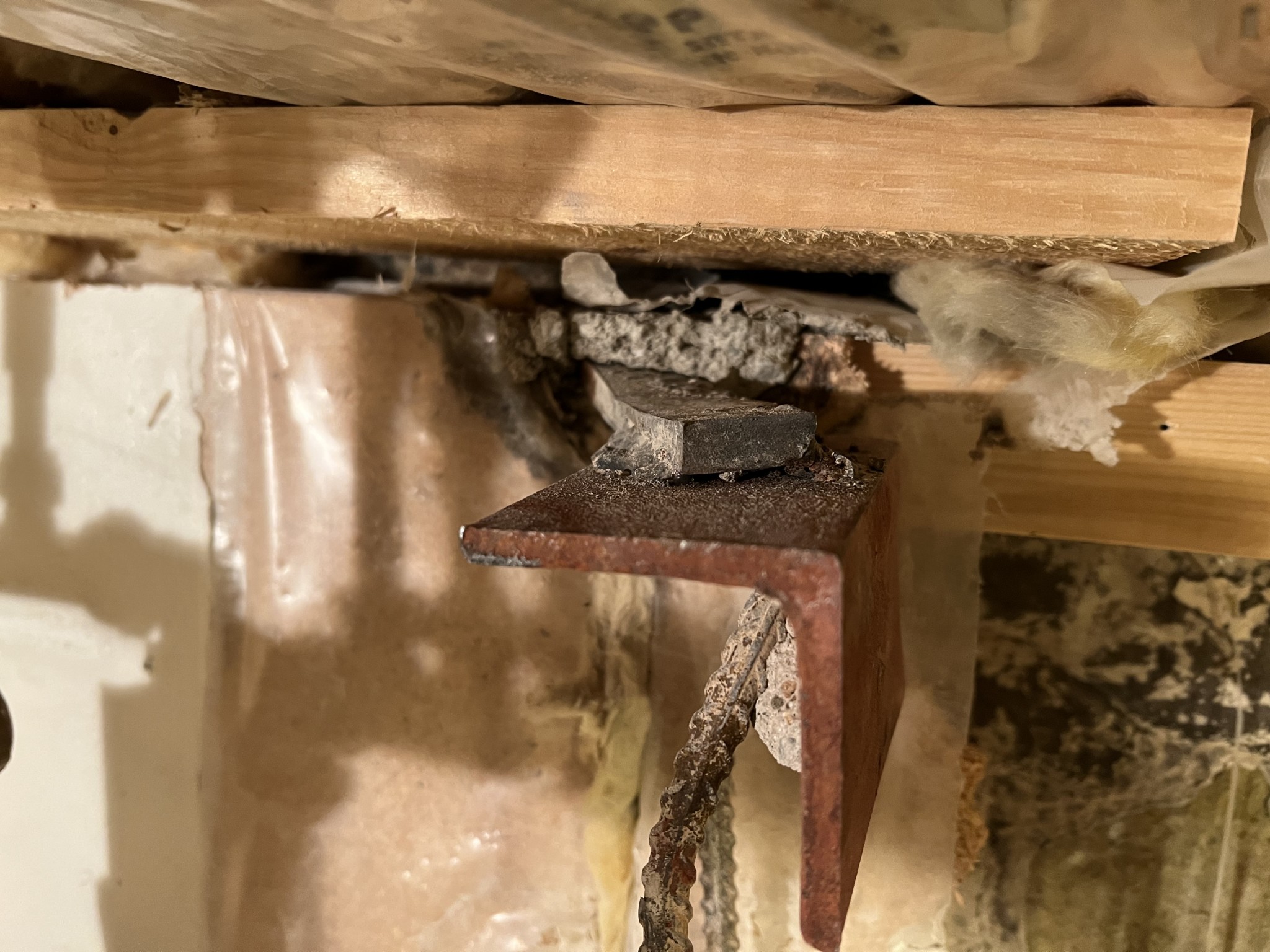
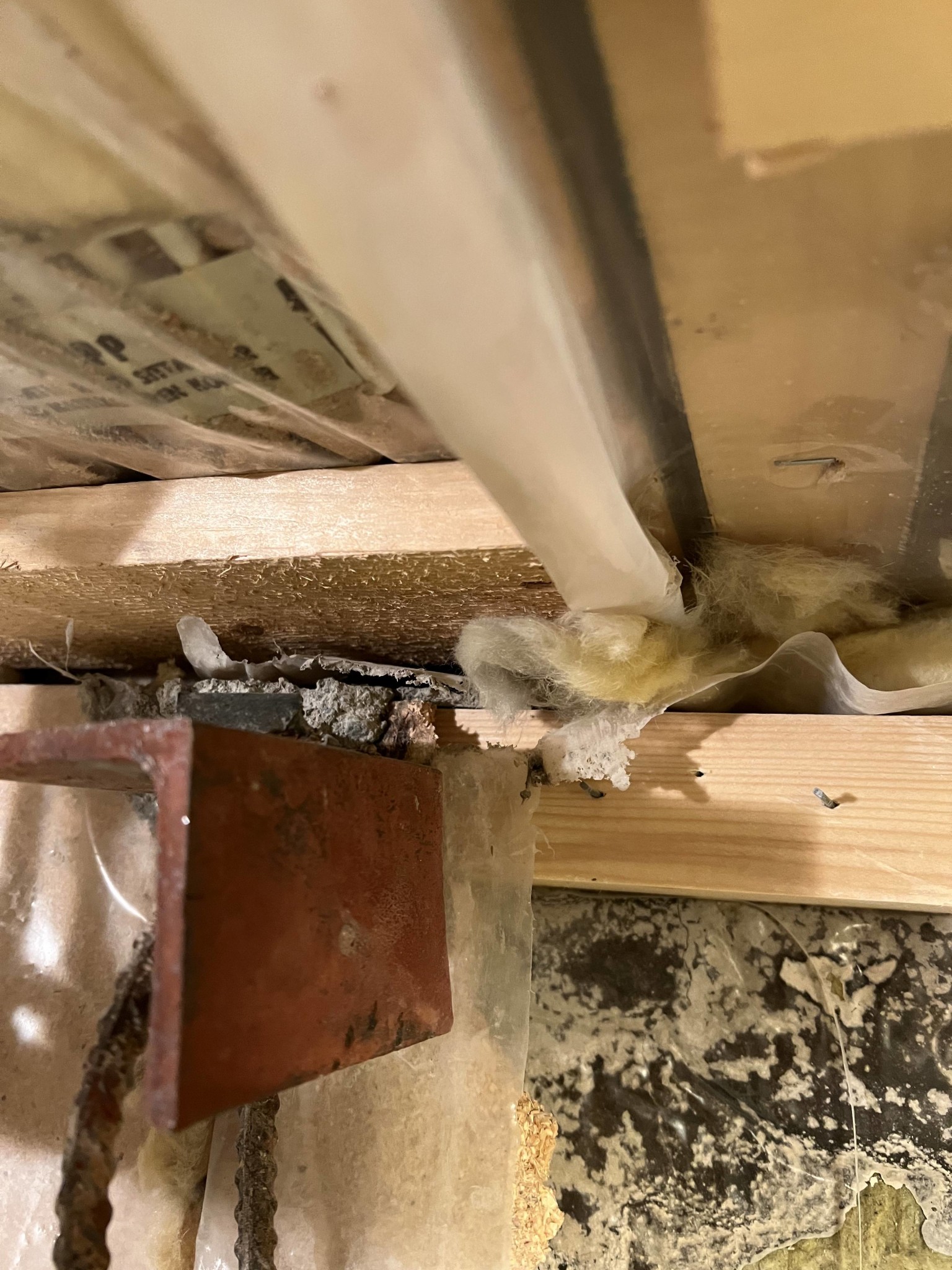
Went down and checked again and there was actually a small connection between the concrete element and the concrete wall. At the top, there was a small steel/metal piece that is attached to the concrete element and to the red angled piece in the picture.
How much can it support with such a small connection?
How much can it support with such a small connection?
Space out!!A Angjo said:
That seems odd. Have you had time to inform the designer about the discovery?
haha! Yes, very sketchyK Kane said:
Yes, I just got a response. They said it's definitely a load-bearing forging that looks very homemade! They wanted us to remove all the insulation, etc., where the other walls are so they can see how we can attach support there instead.
Feels like an incredibly overbuilt wall if it was only that little piece of forging that was supposed to be the bridge between the concrete
but what do I know
Click here to reply