
5,342 views ·
33 replies
5k views
33 replies
Remove load-bearing wall with concrete column

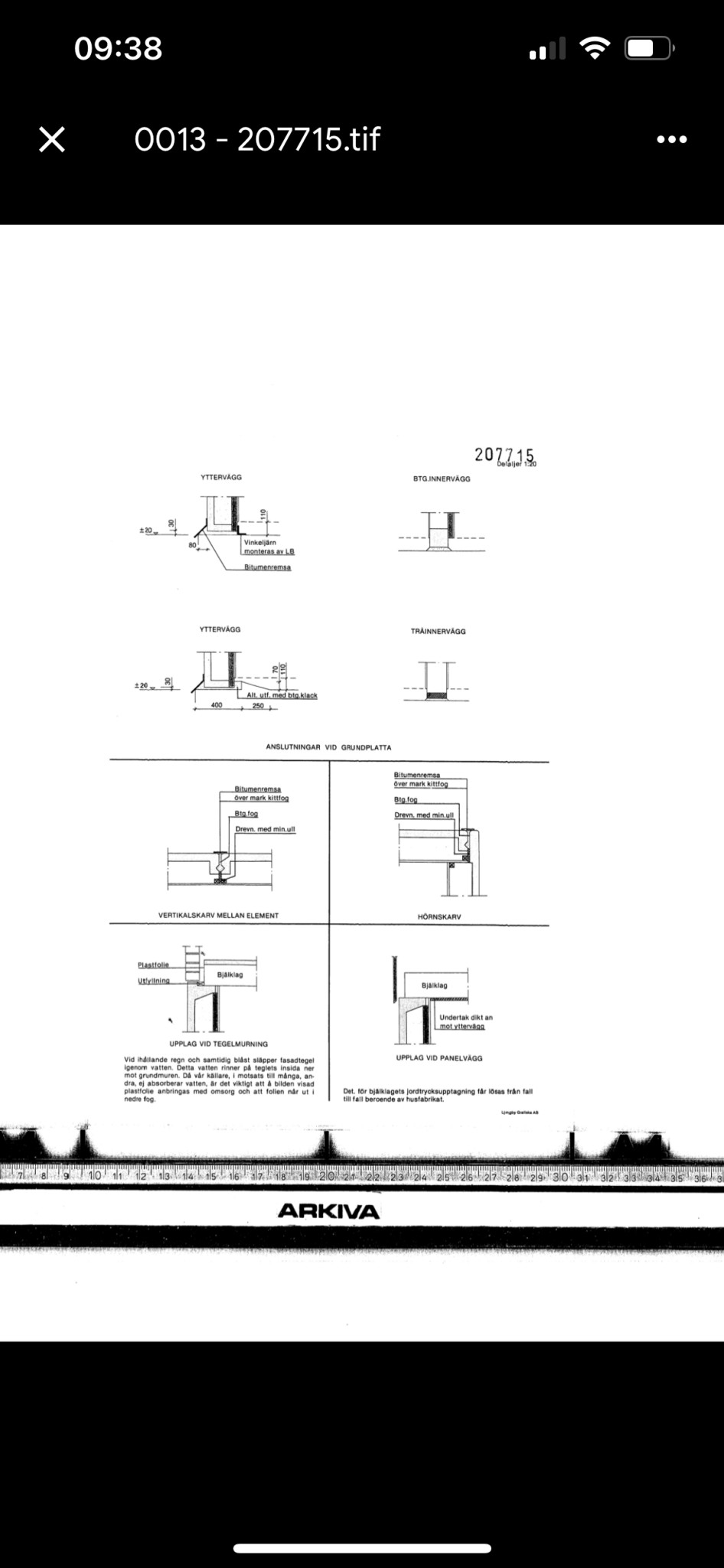


I'm absolutely not an expert but just trying to be logicalA Angjo said:The closet that was there was quite bad, so we would prefer to include it in the bathroom instead, to optimize the floor plan.
I was downstairs talking to the bathroom renovators and they think it is very strange that this whole concrete block doesn't seem to connect with anything else. It doesn't connect with what's above, so it's not a load-bearing structure upwards. And it also doesn't connect with the exterior wall. You can pass a ruler behind the innermost pillar. And behind there seems to be a regular 45-rule.
Could it be that they built it wrong? Or that they initially planned to build in another way so they put this wall in but then decided to do something else?
Is the wall really load-bearing if it has no contact with the exterior wall or ceiling?
 . Do I understand you correctly that it doesn’t even have contact with the ceiling above? And neither with the exterior wall? Towards the corridor, it is also open so then it’s entirely free-standing and can't have any function at all? Then it doesn’t feel like it can have any direct stabilizing effect for the outer wall unless the roof pillar continues over the corridor and gets support on the other side (as mentioned, it’s not particularly stable in the "longitudinal direction" with that construction on the pillars).
Addition: maybe completely irrelevant and at the risk of showing my ignorance
)), but there is something about if backfilling occurs before the deck is in place, "bracing" should be left behind, could this have been part of a supporting structure when the backfilling occurred, but is no longer relevant when the deck is in place?
Do you mean there is air between the top of the beam and the floor structure above? Without better drawings (K-drawings) or on-site inspection, I still cannot approve the demolition of any part.
Exactly, there is about 1cm of air between the beam and the ceiling above. The inner pillar closest to the outer wall has about a 1mm gap until there is a chipboard that in turn lies against a 45regel and then comes insulation before the concrete element. So it really feels like this concrete has no function.H Hajjen said:I am absolutely no expert but just trying to be logical
Addition: maybe completely irrelevant and at the risk of showing my ignorance
Interesting addition, maybe that's how it could be!
yes, there is about 1cm of air between the top of the beam and the ceiling above.J justusandersson said:
If the concrete structure really has no contact whatsoever with the floor slab above, I think you should demolish it completely.
Yes, it seems likely that we will tear it down, the only place where it's difficult to see if it has any contact with the outer wall is at the bottom, the part that's under the floor. But we can't understand what function it would have if it were only in contact with the external concrete elements at the bottom. Right now, it looks like there is just a standalone concrete frame there for unclear reasons.
we found some more drawings and here is a picture of KÄ18 that was included in the comment you mentioned. But we can't quite decipher what it says. We also found some photographs from the construction. There you can see that when the base plate was cast and the outer walls and all the studs were in place, you can also see that these concrete pillars were in place. Then you can see in another photo that they backfilled the soil masses before they laid the slab. Could that give a clue to it only being used during the construction of the house?H Hajjen said:I am absolutely no expert but just trying to be logical
Addition: maybe completely irrelevant and at the risk of showing my ignorance
then there was a drawing called support pillars for the basement, could that provide any information?

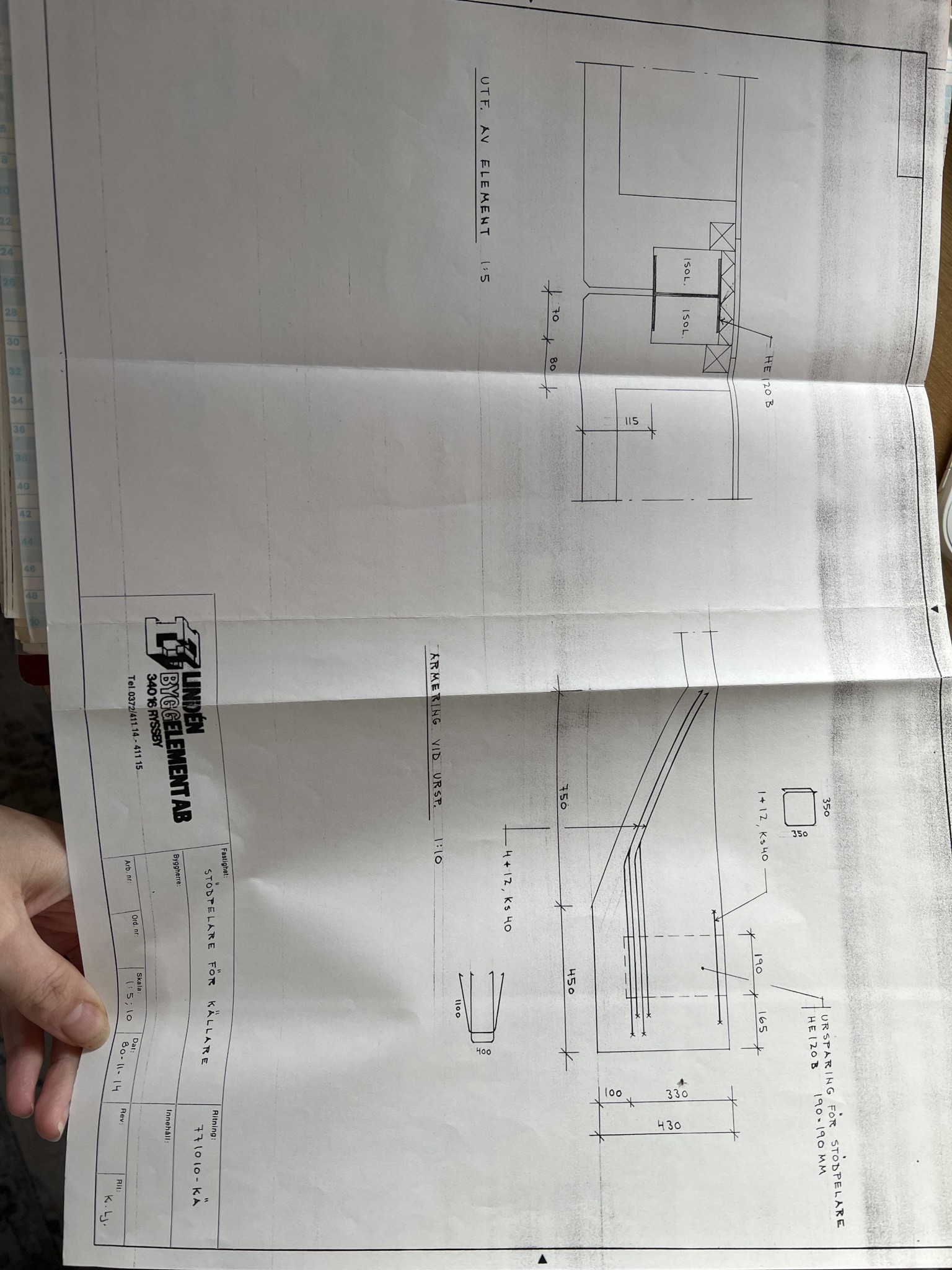


I'm afraid I don't have much more to add. But @justusandersson seems to have a bit more insight so maybe there's something to gain thereA Angjo said:we found some more drawings and here is a picture of KÄ18 that was included in the comment you mentioned. But we can't quite make out what it says. We also found some photographs from the construction. There you can see that when the foundation slab was cast and the outer walls and all the studs were in place, you can also see that these concrete pillars were in place. Then you can see in another photo that the soil masses were backfilled before the floor joists were added. Could this provide any clue as to whether it was only used during the construction of the house?
there was also a drawing titled support pillars for the basement, could that provide any information?
yes @justusandersson seems to have many good commentsH Hajjen said:
Could it be possible that the idea with the wall is that it should support the floor structure, but the concrete floor and the pillars have settled and thereby lost contact with the floor structure, which is instead supported by other forces (the heart wall, perhaps hanging from a wall on the upper floor or something similar)?
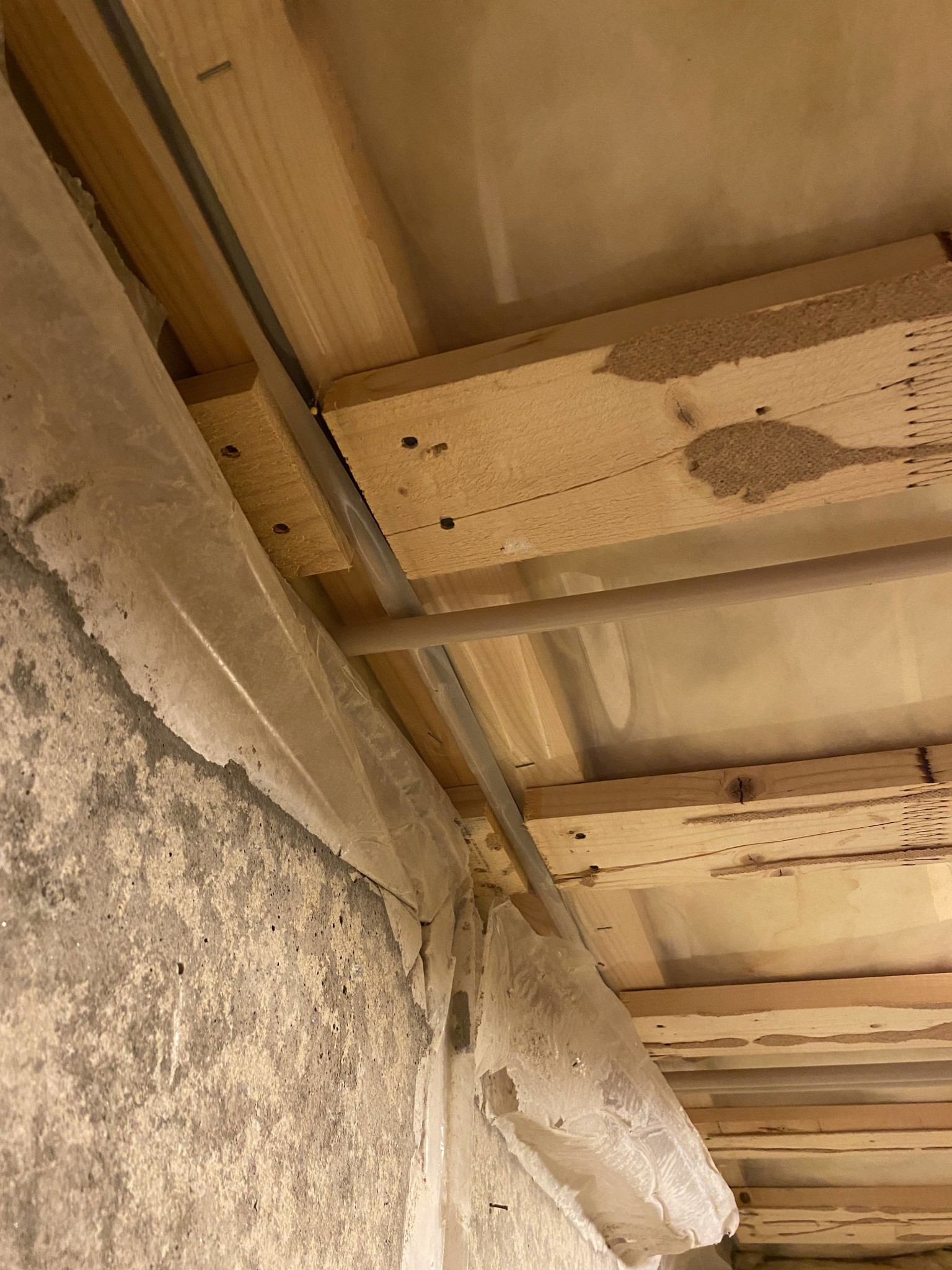
Here is a picture showing the pillar that is farthest from the outer wall. There are two beams above the concrete beam, but these are next to the beam and boards have been nailed into these beams from below, so the idea must never have been for these beams to be centered and rest on the concrete beam?
Then there is also a picture that shows a bit of what it looks like above along the concrete beam.
Then there is also a picture that shows a bit of what it looks like above along the concrete beam.

I have twisted and turned the images but can't make it into something unambiguous. It's clear that there is a steel column (HEB 120) in the rear basement wall as a stabilization. The steel column is embedded in the bottom floor slab. I don't believe that the concrete columns have a role in that context. I would need access to the complete set of drawings or visit you on-site to understand how it's intended, and that's not realistic. Bring in a construction-savvy person (not a carpenter) or take a chance and tear it down or leave it be.
Thanks for the reply! We're getting a structural engineer to check it out tomorrow, so I'll get back with more info when I know more. It will be very exciting to see what they say!J justusandersson said:I have examined the images from different angles but can't make sense of it clearly. It is clear that there is a steel column (HEB 120) in the rear basement wall as a stabilization. The steel column is fixed in the ground floor. I don't believe the concrete columns have any role in this context. I would need access to the complete set of drawings or visit you on site to understand how it is designed, and that is not realistic. Bring in someone knowledgeable in construction (not a carpenter) or take a chance and demolish it or leave it be.