I've tried to save a bit with the phone (so a little parenthesis for missing a zero), but I would guess you could maybe go down to an IPE240 if you're really bold. This assumes that:
* The beam is properly braced laterally.
* You can allow the beam to bend down 10mm under its own weight during installation. You can compensate for this before setting the section.
* No snow on the roof during installation.
* You have a 20mm allowance above the frame.
However, the deflection from snow might become visible. Deflection greater than L/300 usually starts to become noticeable. Total deflection here about L/250.
If you choose IPE270, I would also say that the deflection is manageable.
I tried to do some rough calculations with the phone (so a small parenthesis for missing a zero) but I would think you could possibly go down to an IPE240 if you're really bold.
This assumes that:
*The beam is properly braced laterally.
*If you can allow the beam to bend down 10mm from its own weight during installation. You can build this away before setting the unit.
*No snow on the roof during installation.
*That you have a 20mm allowance above the frame.
However, the deflection due to snow may become noticeable. Deflection greater than L/300 typically starts to show. Total deflection here is about L/250.
If you choose IPE270, I would also say that the deflection works.
Actually, I arrived at HEA 260 just to keep the deflection at a very low level (about L/450). Then I translated the result into an IPE and ended up with a slightly higher moment of inertia and IPE 330. Clearly, if one creates a margin (spatially and visually) for a slightly larger deflection, I think an IPE 270 can work.
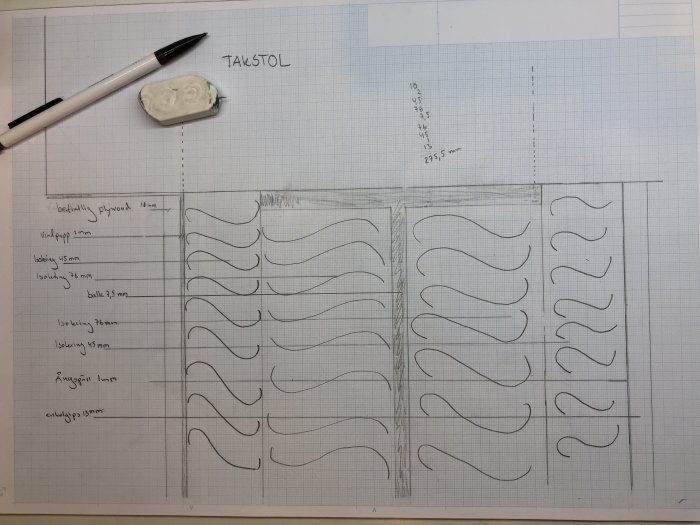
I would probably suggest that you use a larger portion of insulation outside the beam just to keep the beam warmer. Then a few centimeters of insulation between the beam and the vapor barrier to prevent condensation.
Justus: IPE270 ended up almost exactly at 10mm for snow load?