The glue may contain both isocyanates and formaldehyde. Especially in chipboard flooring which has such a large amount of glue. The OSB only has a couple of percent of glue, but you want to be on the safe side.
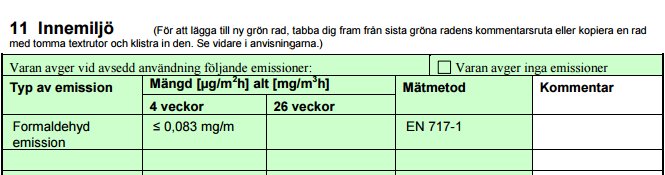
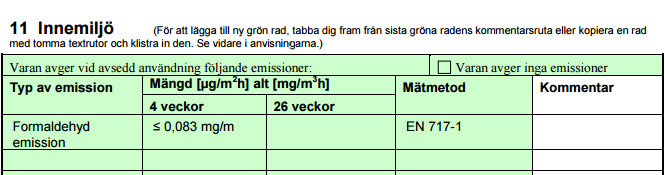
It often does, more or less, at least formaldehyde. It is reported in the building material declaration. This is how it might look for a chipboard from Moelven:
Almost everything in the construction industry that contains some form of binder/glue (especially glue, paint, and sealants) contains formaldehyde and many other goodies that continue to release into the air long after installation.
Glue, I don't even know if there's any non-toxic good alternative when talking about construction? It would probably be nails and screws in that case.
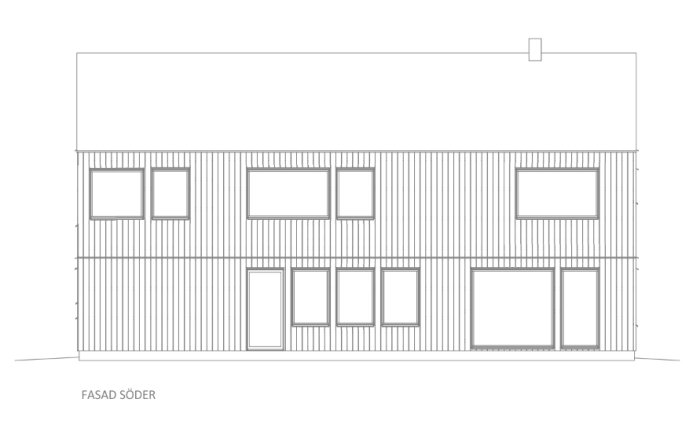
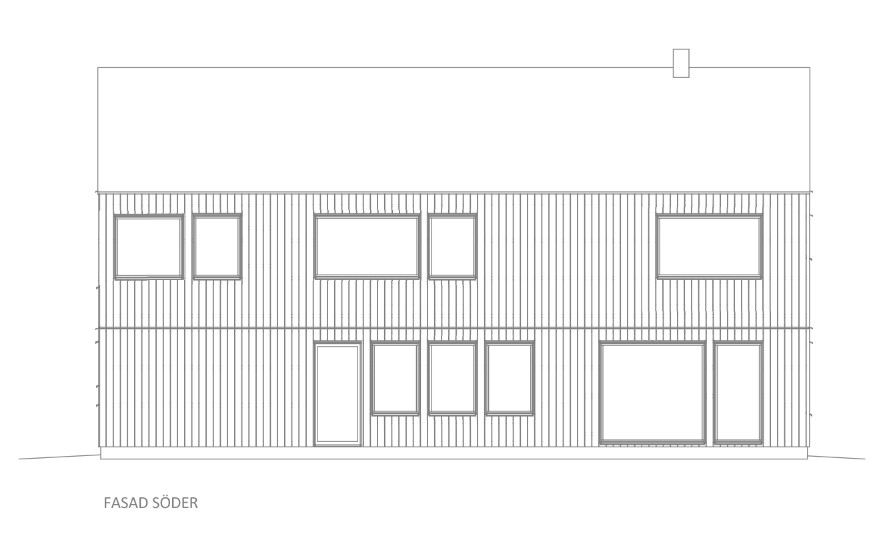
That's why I'm trying to keep it down as much as possible. We are building, for example, with Kebony façade, wood that has been impregnated in an environmentally friendly way and is protected against rot for 30 years without maintenance.
Interesting... It certainly feels safer, especially with små children, to choose good building materials. How about linoljefärg? Or äggoljetempra?
I'm working on a new kitchen in solid pine for the frames and everything, completely different smell compared to IKEA furniture and particle board stuff... However, I have no idea how much impact it has in the long run, the formaldehyde should fade over the years, right?
Linseed oil and egg oil tempera contain no toxins as long as you don't mix in turpentine. The advantage is that the turpentine leaves the paint incredibly quickly, though I do not know how long it might continue to leave the paint. However, it is not necessary either.
That's why I'm trying to keep it down as much as possible. We're building with Kebony facade, for example, wood that has been impregnated in an environmentally friendly manner and is protected against rot for 30 years without maintenance.
There are really good - and bad - paints for indoor use. Just check out this test: [link]
I know there are manufacturers making formaldehyde-free OSB in Denmark, currently looking for a Swedish distributor.
How do you impregnate the wood in an environmentally friendly way?