
6,388 views ·
8 replies
6k views
8 replies
Natural stone wall that's about to collapse, patio in danger!
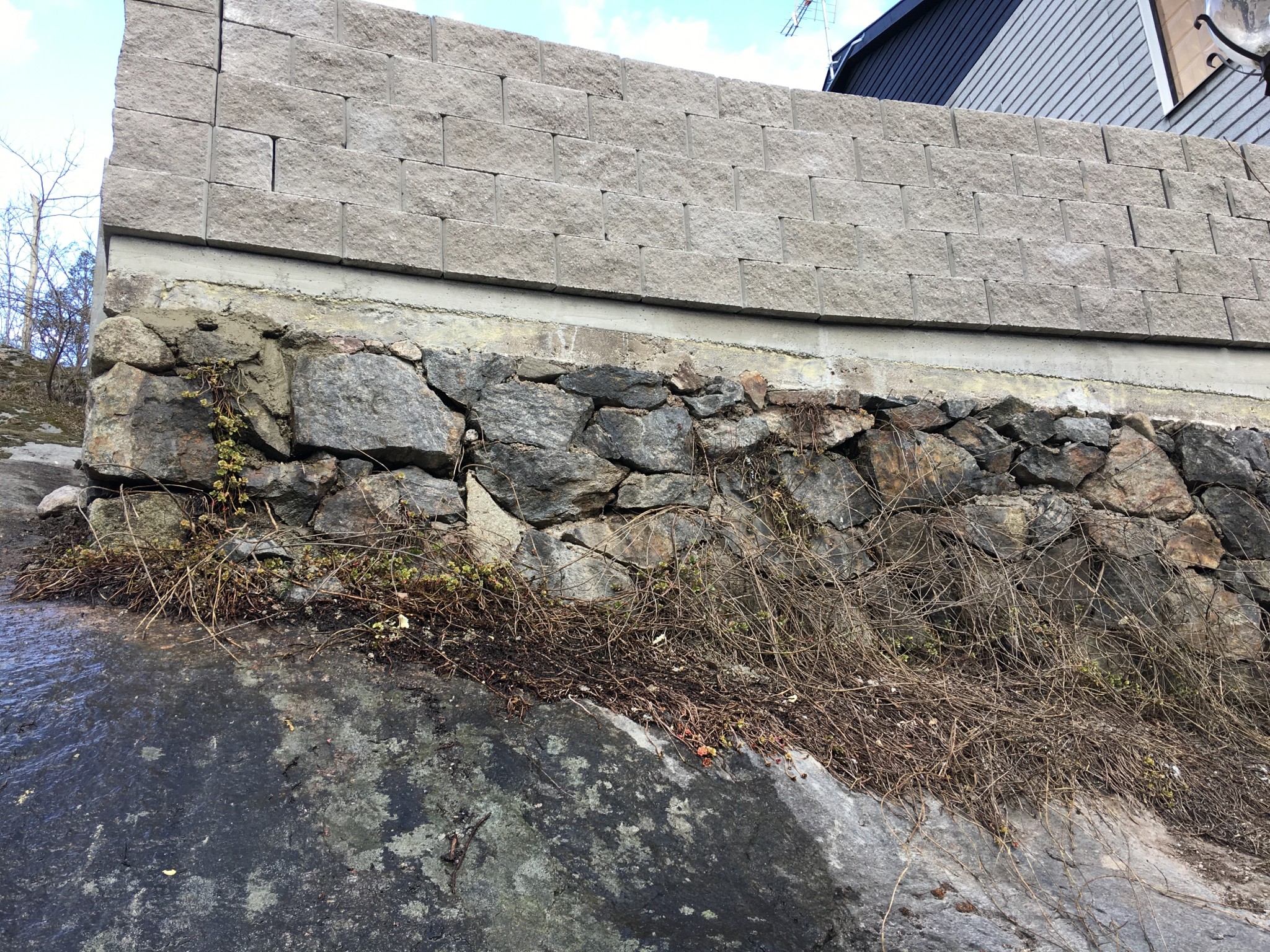
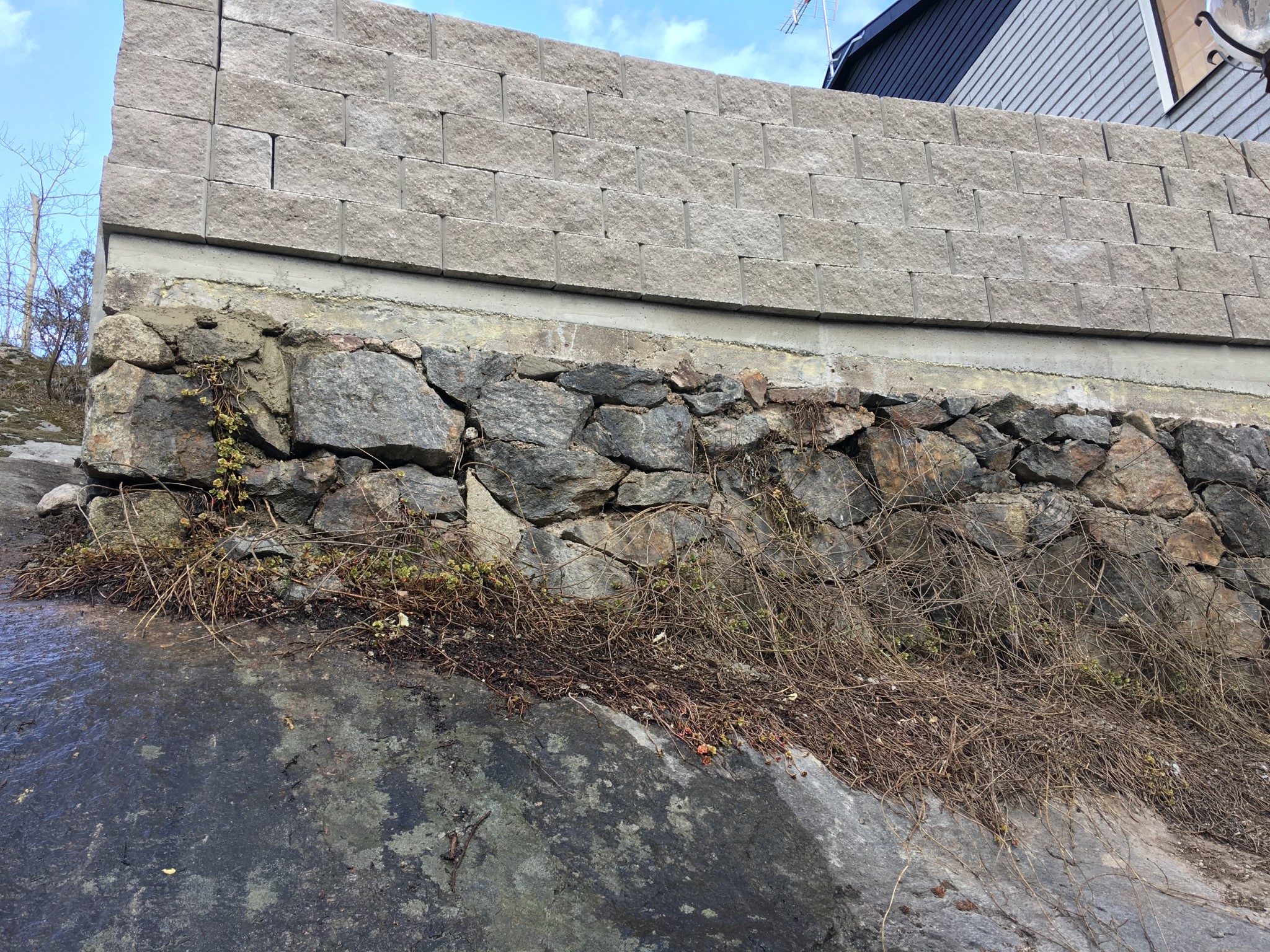
I have an old "natural stone wall" consisting of large and smaller stones stacked on top of each other on a rock.
The wall functions as a retaining wall for a patio of about 20m2.
On top of the stone wall is a concrete lip cast, and above that stands another wall.
So the natural stone wall bears a lot of weight.
I've noticed that the concrete between the stones has disappeared and that some stones are loose.
I'm wondering how best to stabilize the wall so the stones don't collapse.
It's difficult to get concrete or similar materials to where you want them.
I've considered buying a lot of cans of stone adhesive and injecting it, but it doesn't feel optimal, it's expensive, and not a long-term solution.
Considering that the stone wall stands on a rock, maybe one could drill down heavy-duty rebar so they are tight against the large stones and thus ensure they can't come loose?
I don't know ...
What would you do? Thanks a lot!
The wall functions as a retaining wall for a patio of about 20m2.
On top of the stone wall is a concrete lip cast, and above that stands another wall.
So the natural stone wall bears a lot of weight.
I've noticed that the concrete between the stones has disappeared and that some stones are loose.
I'm wondering how best to stabilize the wall so the stones don't collapse.
It's difficult to get concrete or similar materials to where you want them.
I've considered buying a lot of cans of stone adhesive and injecting it, but it doesn't feel optimal, it's expensive, and not a long-term solution.
Considering that the stone wall stands on a rock, maybe one could drill down heavy-duty rebar so they are tight against the large stones and thus ensure they can't come loose?
I don't know ...
What would you do? Thanks a lot!
Have you thought about how gabions are constructed? If it doesn't work with other options, maybe rebar is an option?
How are you thinking with the reinforcement? Drill down rebar into the rock and try to get them as close to the larger stones as possible?En apelsin said:
The problem is getting the rebar to lie flush.
Then I'm a bit unsure about how optimal it is with rebar that rusts?


One option is to temporarily brace most of the wall with studs or similar, remove a segment of the wall, cast a pillar or a wall segment, then remove the next part of the wall, repeat until the concrete base is stable without natural stone. Then you can rebuild as much of the stone wall as you like on the outside for aesthetic reasons, without worrying about the strength.

The picture shows no signs of the wall starting to collapse, or am I missing something here? That some stones are loose is nothing unusual. In such a wall, some stones will have a purely cosmetic function. It also does not appear that there has ever been any "concrete" between the stones, it looks like a typical dry stone wall where the stones are just stacked on each other.Hällvetet said:
It doesn't look like you have any issues with settling in the natural stone wall, and that some stones are loose is not unusual! If you want to prevent stones from coming loose and falling down, you can use a slightly expanding assembly foam and fill in the back, leaving space at the front for regular mortar which you mask and protect the foam with! One alternative can be Eps wedges of regular S80 and mortar... When spraying the foam, it can be good to use a moisture sprayer so that the foam adheres!I have an old "natural stone wall" consisting of large and smaller stones stacked on top of each other on top of a rock. The wall serves as a retaining wall for a patio of about 20m2. On top of the stone wall is a cast concrete edge and above it stands a wall. Thus, the natural stone wall bears a lot of weight. I have noticed that the concrete between the stones is gone and that some stones are loose. Wondering how to best stabilize the wall so that the stones do not collapse. It is difficult to get concrete or the like to get where you want it. I've thought about buying a bunch of cans of stone adhesive and spraying it in, but that doesn't feel optimal, expensive and not a long-term solution. Considering that the stone wall is on a rock, perhaps one should drill down heavy reinforcing bars so they are tight against the large stones and thus ensure they don't come loose? I don't know ... How would you have done it? Thanks in advance!
Member
· Västernorrland
· 12 097 posts
If the wall had sunk, the cast would have definitely cracked... if no such indications are seen, I believe one can wait without doing anything. I wouldn't bother spraying any foam in there...
Thanks for the advice! I'll do as you say and leave everything as it is 
I just got a bit anxious when I noticed that some of the larger stones were loose and that there appeared to be large cavities in the wall.
I just got a bit anxious when I noticed that some of the larger stones were loose and that there appeared to be large cavities in the wall.
Click here to reply