
Hello,
We are in the process of renovating the kitchen and when we removed the old kitchen from the '70s, there is mold by the floor.

http://imgur.com/pzt5S1e

http://imgur.com/fI3FD7T

http://imgur.com/W4PH3GH
The baseboard that was on the floor smelled quite a bit like mold, but the floor itself doesn’t smell significantly. The floor consists of 22 mm particleboard and my first thought was to take the multi-tool and cut out the affected piece and replace it with a fresh particleboard. You would of course try to hit the joists underneath so that the board rests on something. The alternative is to replace the entire board but they are quite large boards and it feels unnecessary to say the least?
I’ve looked at Bygg Max but they don’t seem to have 22 mm regular particleboard for floors? They have specially composed floor panels in particleboard but they have grooved edges and consist of different layers of particleboard. Maybe these are the ones to use anyway? e.g.
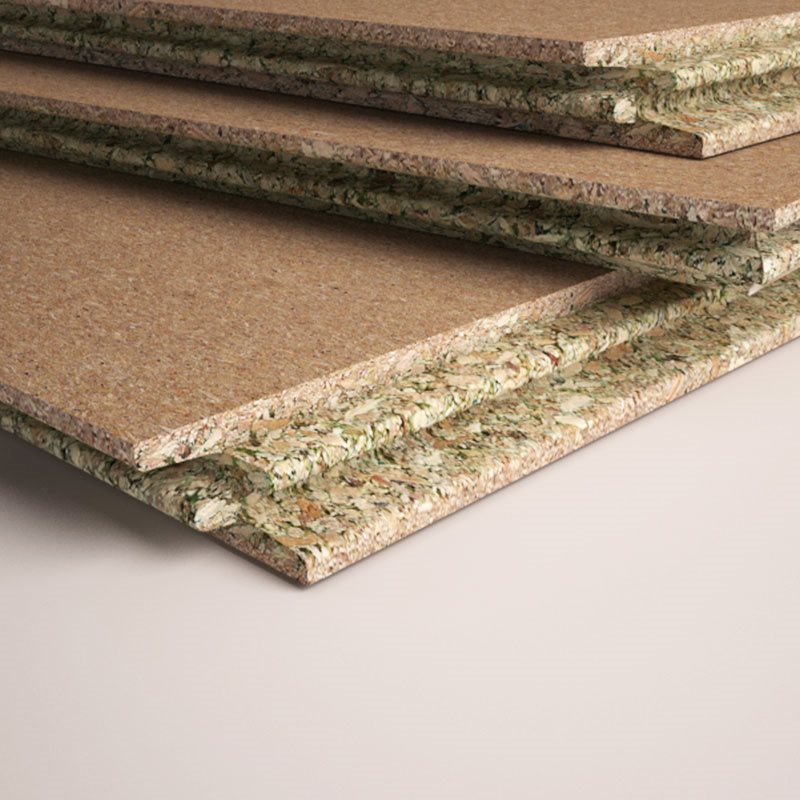
https://www.byggmax.se/skivmaterial/byggskivor/spånskivor/golvspånskiva-fuktbeständig-p6601021
We are in the process of renovating the kitchen and when we removed the old kitchen from the '70s, there is mold by the floor.
http://imgur.com/pzt5S1e
http://imgur.com/fI3FD7T
http://imgur.com/W4PH3GH
The baseboard that was on the floor smelled quite a bit like mold, but the floor itself doesn’t smell significantly. The floor consists of 22 mm particleboard and my first thought was to take the multi-tool and cut out the affected piece and replace it with a fresh particleboard. You would of course try to hit the joists underneath so that the board rests on something. The alternative is to replace the entire board but they are quite large boards and it feels unnecessary to say the least?
I’ve looked at Bygg Max but they don’t seem to have 22 mm regular particleboard for floors? They have specially composed floor panels in particleboard but they have grooved edges and consist of different layers of particleboard. Maybe these are the ones to use anyway? e.g.
https://www.byggmax.se/skivmaterial/byggskivor/spånskivor/golvspånskiva-fuktbeständig-p6601021
Member
· Västernorrland
· 12 037 posts
I wouldn't want to call that mold. Possibly some water leakage once upon a time so it got wet. I would just try sanding off the worst parts and then make sure it's dry.

My guess is that there has been a loose connection in the sink/faucet, causing water to run down under the sink or through the faucet fitting and then run inside, or between the cabinet sides down to the floor. It doesn't look like mold, just a slight water damage. Just make sure it's dry before you apply anything new.
If you want to be a bit safer, you can use a mold cleaner, for example, Cillit Bang Dirt and Mold is easy to use and disinfects the surface.
If you want to be a bit safer, you can use a mold cleaner, for example, Cillit Bang Dirt and Mold is easy to use and disinfects the surface.
Okay, this saves us a lot of work then. How can you know it's not mold? We will keep the sink in the same place, is it perhaps that the floor should be coated with something water-repellent before installing the kitchen furnishings? Or is that directly bad for the wooden house?
Last edited:


Check this out: Secure the kitchen against water damage
Here is one of several places that sell such products: http://www.vattenlarm.se/index.php?p=menu&content=1
Here is one of several places that sell such products: http://www.vattenlarm.se/index.php?p=menu&content=1
Sanded off about 1 mm of the surface where it was black, and underneath the wood was completely healthy so you were absolutely right. Still don't understand how you could see it in advance. If one needs to fill in irregularities, is it regular filler that should be used then? Or should one use special wood filler? Maybe something that breathes?
BirgitS, thanks for the links, I'll take a look there, but I had hoped for something quick and simple that one could just smear on the floor as one does in the shower.
BirgitS, thanks for the links, I'll take a look there, but I had hoped for something quick and simple that one could just smear on the floor as one does in the shower.
No problem 
In the bathroom, a completely sealed and waterproof enclosure is created on the floor and up the walls, which is quite cumbersome with sealing layers with membrane and other materials. In the kitchen, one is satisfied (so far?) with ensuring that leaking water flows onto the floor and becomes visible.
In the bathroom, a completely sealed and waterproof enclosure is created on the floor and up the walls, which is quite cumbersome with sealing layers with membrane and other materials. In the kitchen, one is satisfied (so far?) with ensuring that leaking water flows onto the floor and becomes visible.
Click here to reply