Building a new garage on an existing slab.
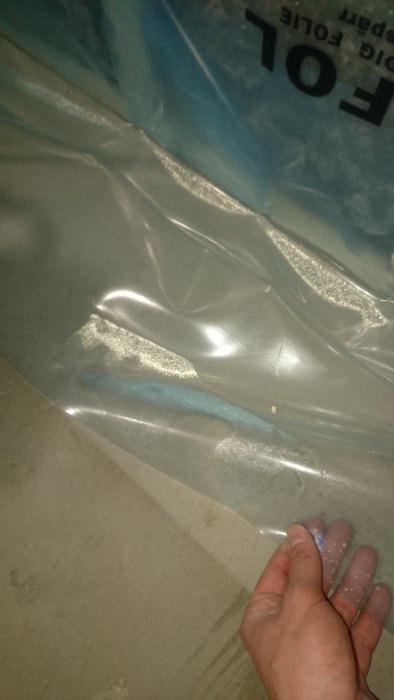
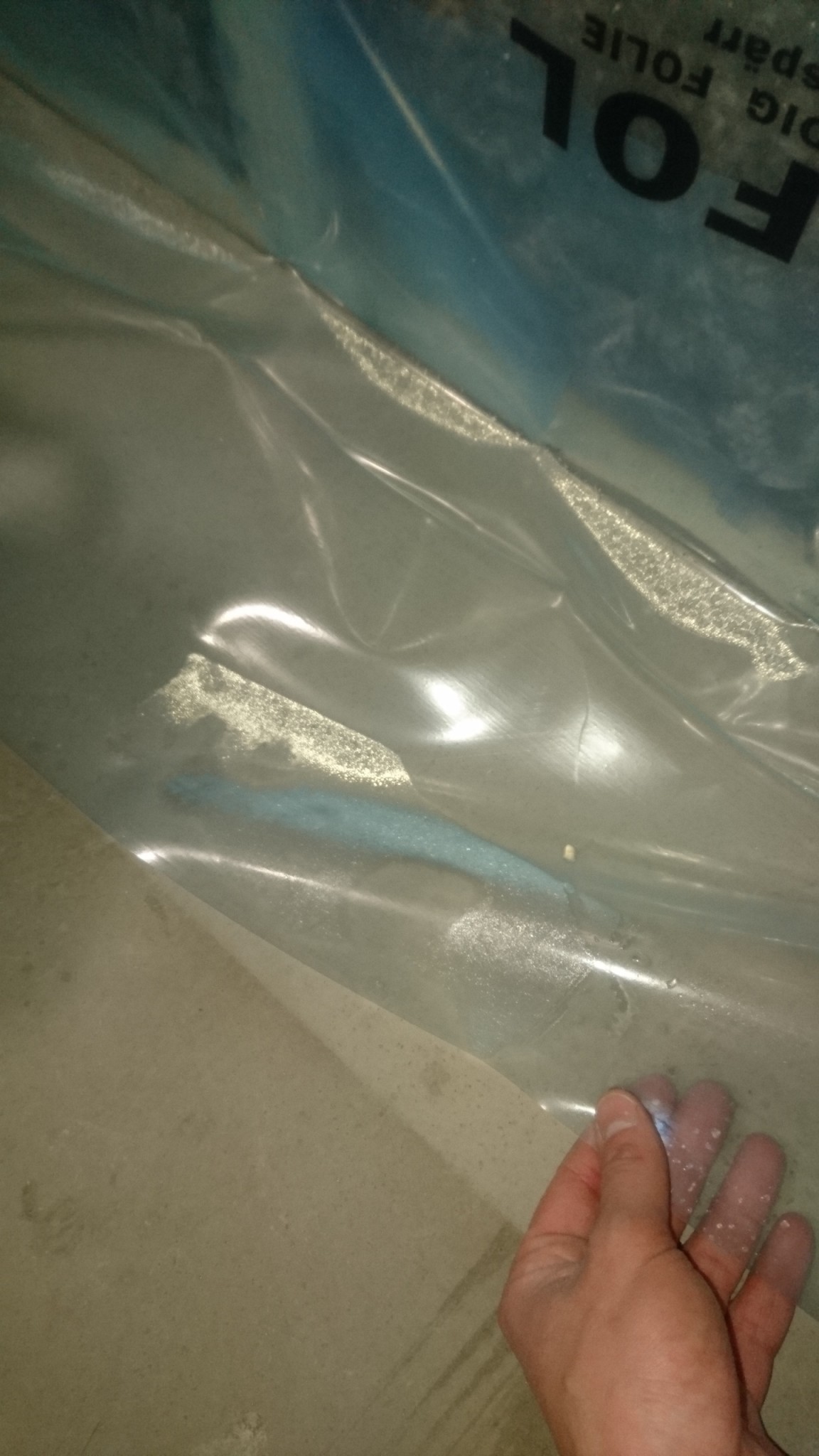
So yesterday, when everything was insulated and covered with plastic, I turned on the construction heater to avoid working in freezing temperatures, but when I came out today after work, the temperature was up, and I noticed it was like dew on the floor. Where the plastic extends onto the floor, you can see small accumulations of moisture, similar to summer dew.
Doesn't feel great; will I need to tear up the plastic in some places to allow it to dry out around the insulation as well?
If it's just against the concrete, I would guess that the slab is releasing moisture, if it's against insulation it could be the sill and studs releasing moisture. You should dry thoroughly before installing the plastic to prevent this from happening. If it's just at the concrete, tape up the overlap that is over the concrete against the wall and let the slab dry out with the heat on.
It's the floor that's cold, and now when you heat the air, the warm humid air condenses against a cold surface, i.e., on the plastic that's lying against the cold floor in the same way you see on the concrete floor where no plastic has been. There, the concrete is damp, and under the plastic, it's dry because the moisture has gathered on the plastic instead. It's natural, and that's why you have the plastic against your walls so that the moisture doesn't reach the outer parts, which are colder, and condense inside the wall.
The floor is cold, and now that you are heating the air, the warm moist air condenses against a cold surface, i.e., on the plastic that is placed against the cold floor in the same way you see on the concrete floor where no plastic has been placed. There, the concrete is damp, and under the plastic, dry because the moisture has collected on the plastic instead. That is natural, and that's why you have the plastic against your walls so the moisture doesn't reach the outer parts that are colder and condense inside the wall.
But the moisture must come from somewhere. In a regular home, it comes from exhaled air, bathing, laundry, and the kitchen. If none of that exists in the garage, then there is another moisture source that should be identified first.
I suppose that the moisture has formed on the top side?
It is the floor that is cold, and now that you are heating the air, the warm moist air condenses against a cold surface, i.e., on the plastic lying against the cold floor in the same way you see on the concrete floor where no plastic has lain. There, the concrete is moist, and under the plastic, it is dry because the moisture has gathered on the plastic instead. It is natural, and that is why you have the plastic against your walls, so the moisture does not reach the outer parts that are colder and condense inside the wall.
Correct that it is on the top side of the plastic; I can't see or feel anything under the plastic against the floor or insulation. The garage has stood cold since summer, and snow has come in with shoes and other things that have been outside, so some moisture has come in.
Thank you Oceanis
Click here to reply
Vi vill skicka notiser för ämnen du bevakar och händelser som berör dig.