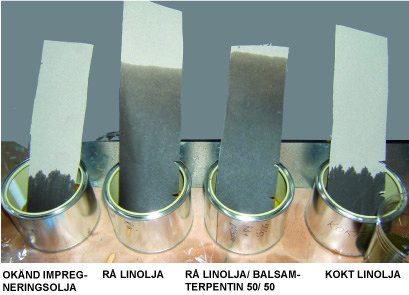
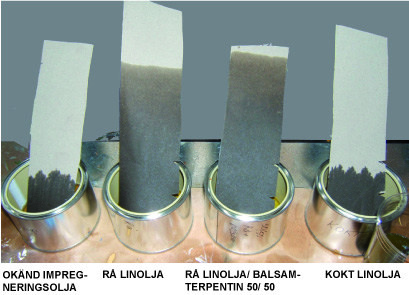
Since I started using raw linseed oil on my SAAB 9-5, it has practically stopped rusting (even in areas where there was a lot of rust before). Raw linseed oil has an incredible penetrating ability in crevices and rusty surfaces, but it takes several weeks to dry. The oil expands around 15% when it dries (oxidizes) and seals the crevices even better. I had planned to keep it for three years, now it's soon five (it's 17 years old now), and the car is significantly less rusty than when I bought it. Therefore, I will run it for quite a while longer. Together with smooth Hammerite silver (which is very similar to SAAB silver metallic 265), the car gets better every year.
If you want faster results, you can use boiled linseed oil, which dries much faster but doesn't penetrate as well.
Yes, 5-56 and WD-40 and similar products consist mostly of solvent, with a small amount of oil, meaning most of it evaporates quickly and the remaining oil film offers barely any rust protection.
For my part, I mostly believe in the regular rust protection products for car panels, possibly thin and easily flowing first to achieve good penetration, especially good if it has started creeping under the paint, and then a layer with a bit thicker one that provides a more durable film for long-term protection. But linolja I can also imagine is really good. And one advantage is that it doesn't mess things up as badly, it is, for example, light instead of black.
Externally, subjected to wear, it probably needs to be painted, meaning cleared of loose rust and paint, rustproof treated (zinc), and then painted.
Rust is not something malicious. It's just evidence that the product has begun its journey back to nature.
Perhaps we sometimes want to delay the process a bit when it should remain aesthetically pleasing in our eyes for a little longer. The items that do not naturally return to nature effectively are a problem, such as plastic that ends up in the ocean.
The things the OP mentions here have already started their journey back. Sandblasting and repainting can probably extend the time they remain attractive. 556, WD-40, and other solutions are not helpful. They are already on their way.
If you want to manufacture something that endures in an aggressive environment, you choose another material. Therefore, acid-resistant steel is common on the Swedish West Coast. What gets painted usually has rust breaking through quite soon and especially junk like TS reports that barely lasts a short time.
SStrontus said:
Rust is definitely nasty. It's a waste of resources to manufacture something first, and then let it rust away.
To last a bit longer, it needs a zinc coating before painting, just like modern cars are protected from rust.
TS items have already been gripped by rust, and it's unlikely that junk like 556 mm will help.
It is clear that you can make things last longer if they are surface-treated or made from different materials. But the reason it needs to be done at all is because of rust. So rust is indeed nasty.
I think Hagman's rust protection wax offers good protection. Transparent, so it doesn't disturb too much. [link]
It's possible that Hagman's is better than all the others, but I've tried many rust protection waxes and none work particularly well once rust has started; then linolja is totally superior, and much cheaper. I used wax for many years, but it continued to rust, incessantly. On clean, rust-free surfaces and in areas not exposed to wear, it's good (like in beams and inside doors).
But what do you think, if I use Biltema linolje spray on areas that are not visible, like inside pipes and such, and then cold galvanizing on visible areas?
Of course, I will try to brush/sand away some rust first.
There is a very big difference in molecular size and penetration between raw and boiled linseed oil, not comparable, so check what the content is. Boiled linseed oil has the advantage of drying faster but that's where the benefits end.
Biltemas consists of linseed oil that is not boiled. Sprayed some on yesterday on both products but it doesn't seem to dry and remains an oiled surface. Maybe not the end of the world in this case but I had hoped it would set and create a rubbery surface as I have read about elsewhere.
The instructions suggest that it should dry since they recommend it as a primer.
Biltemas consists of linolja that is not boiled. Sprayed some yesterday on both products but it doesn't seem to dry, remaining an oiled surface. Maybe not the end of the world in this case, but I had hoped it would harden and create a rubber-like surface as I have read about.
The instructions suggest it should dry since they recommend it as a primer.
If you need quick-drying, you'll have to settle for boiled linseed oil or other alternatives.
If it's really warm, it can take less than 2 weeks (but also significantly longer under unfavorable conditions). I always brush the bottom edges of the car doors, and I notice immediately when it starts to dry because it sticks a bit to the body. The fastest I've experienced is probably 5-7 days during the peak of summer.
Click here to reply
Vi vill skicka notiser för ämnen du bevakar och händelser som berör dig.


Peter2400 said: