Hello everyone!
Can I get an update on how it has been going for you?
I have some untreated wood I plan to treat for outdoor use next season, as well as an untreated larch deck that I intend to treat.
Has anyone tried/compared Rusta's version https://www.rusta.com/se/traskydd-3-l-p105012560101.aspx/?
Currently 249kr/3L, which isn't far from the homemade mix. But is the homemade mix better maybe?
It's only available as a one-step, which step do you think they're skipping?
The tests from hbspeedshop show that the two-step treatment is preferred.
Hello everyone!
Can I get an update on how it has gone for you all?
I have some untreated wood I plan to treat for outdoor use next season and an untreated lärkaltan that I plan to treat.
Has anyone tested/compared Rusta's version [link]?
Right now 249kr/3L, which isn't far from the homemade mix. But is the homemade mix better perhaps?
It only comes as one step, which step do you think they skip?
The test from hbspeedshop suggests that a two-step treatment is preferable.
Grateful for all input!
Unfortunately, I haven't had time with the deck despite my ambitions . However, I've stocked up on more bottles of water stop during sales. The best option I know of right now is water stop from Weber, 99/liter at K-rauta. I believe it's more concentrated than the water stop from Combimix at Bauhaus.
Rusta's version looks like a diluted water glass solution, 10-15% without other additives. In that case, you might as well buy a bottle of water stop and dilute it yourself.
The question is really, do you want gray wood or wood protection? If gray wood is the case, then you can buy regular wood, all wood turns gray over time. However, if you want durable wood with long-established properties covered by a warranty, then you can choose NTR. If you don't want that warranty, then you might choose another product being discussed. As far as I know, neither Sioo nor Organowood are approved according to the NTR quality system. The water-repellent effect they claim doesn't really work, especially not after a month of wear. I work myself as a site manager and the panel we use absorbs rain just like any other plank, no difference after a short period.
Regarding research, I assume you've taken note of independent tests from SP, SP Report 2013:42. Not an impressive read for either Sioo or Organowood. Pictures speak for themselves.
The copper question is interesting. Especially considering the body needs copper, 2mg per liter of drinking water is the limit, we are recommended to drink 2 liters of water per day. Foods like liver, meat, fish, nuts, and cocoa contain copper, interesting then with GI methods that refer to increased meat intake. Put then 0.0018kg of copper in relation to kg of wood plank and a lifespan of 20 years, which would mean 0.00009kg of stable copper per kg of wood over a 20-year perspective.
Now, maybe this doesn't have much to do with your wood plank, but it's essential to set the level of discussion about whether copper is as dangerous as it is portrayed, in relation to other methods to protect wood. NTR approved wood requires no renewal of wood protective measures, while Sioo and Organowood recommend ongoing maintenance.
This does not mean it should be free to use copper, nor is it okay to use copper in boat paints, etc. It would be interesting to see a contemporary investigation that can prove today's wood preservatives are so much worse than those claimed to solve all environmental problems regarding wood protection. Often, references are made to old wood preservation products, but even in this area, there are advancements.
If you want to be truly environmentally friendly, you can choose Thermowood, no additives, just heating. It can't get more natural than that, and it will turn gray over time, even if it's brown when you buy it. However, Thermowood becomes quite brittle, which can cause problems depending on the application.
Question, I didn't know lead was recommended in water pipes. In which decade was lead recommended in water pipes?
About SiOO:X after 13 months: "Widespread discoloration on all boards - the heartwood only slightly discolored." (However, it's unclear to me whether the boards were pressure treated).
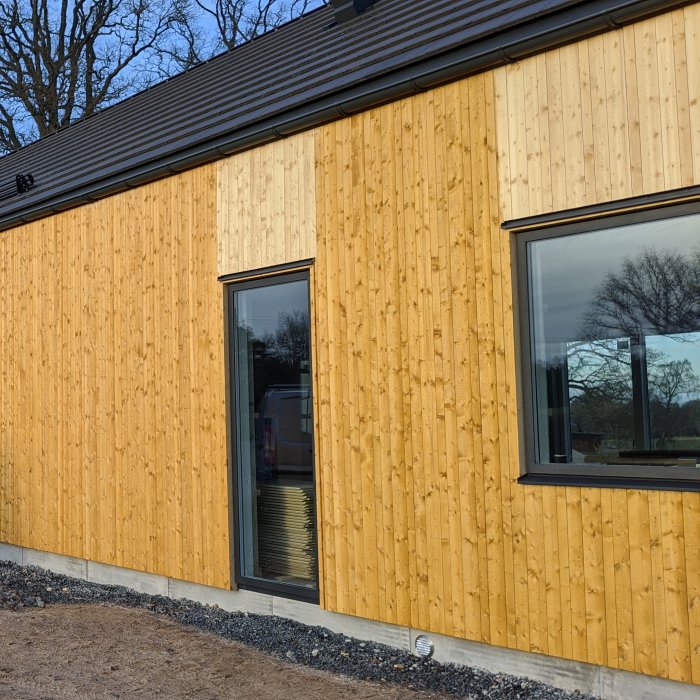
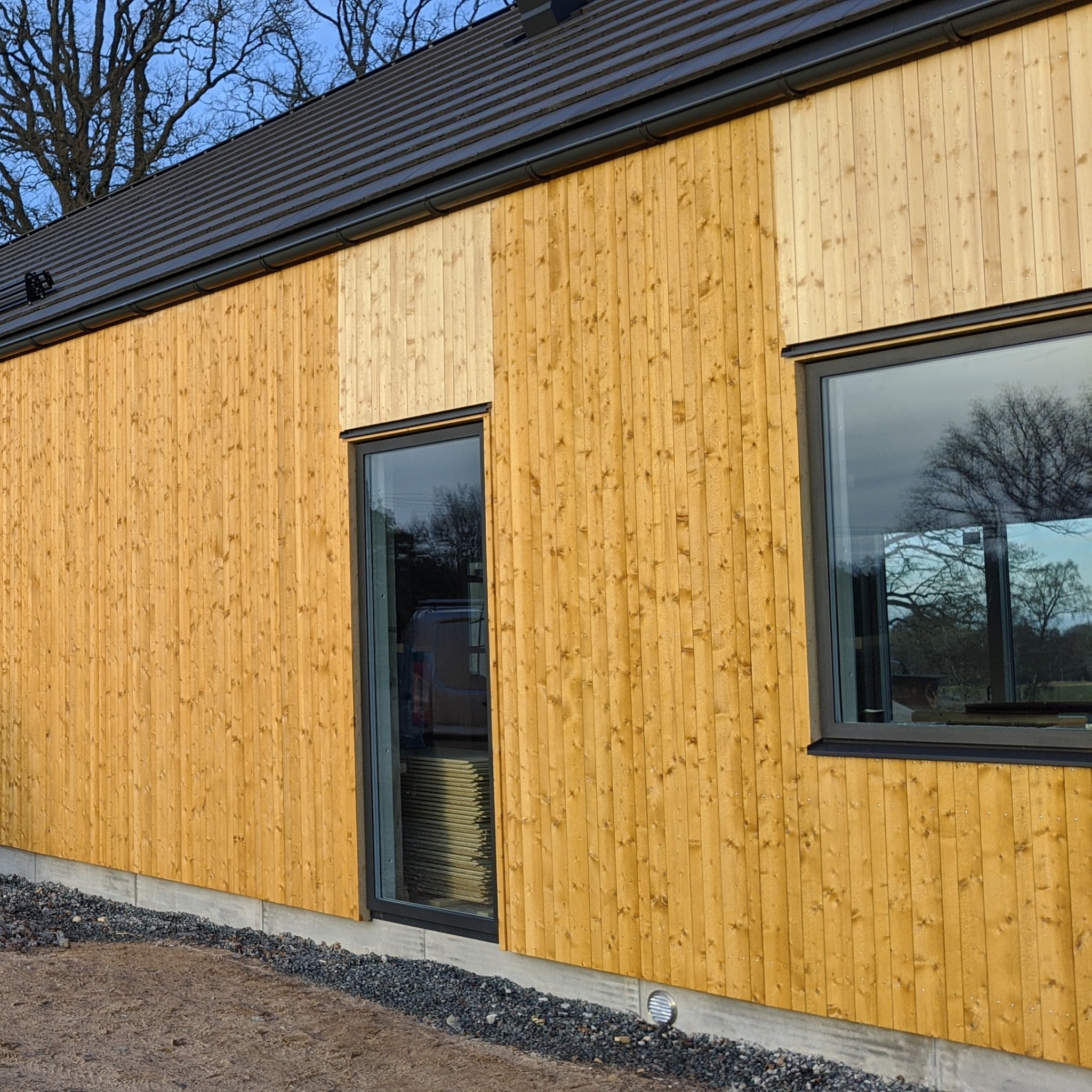
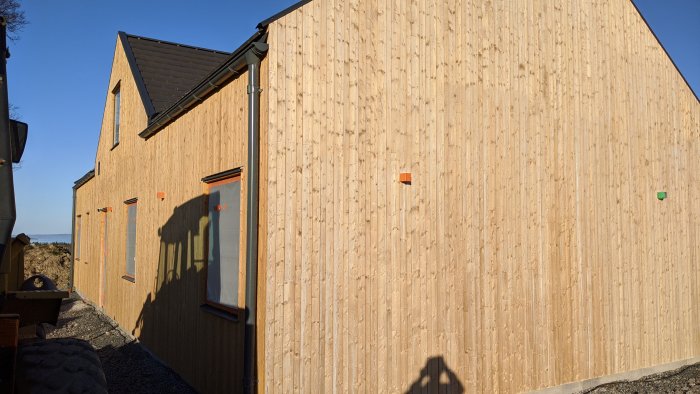
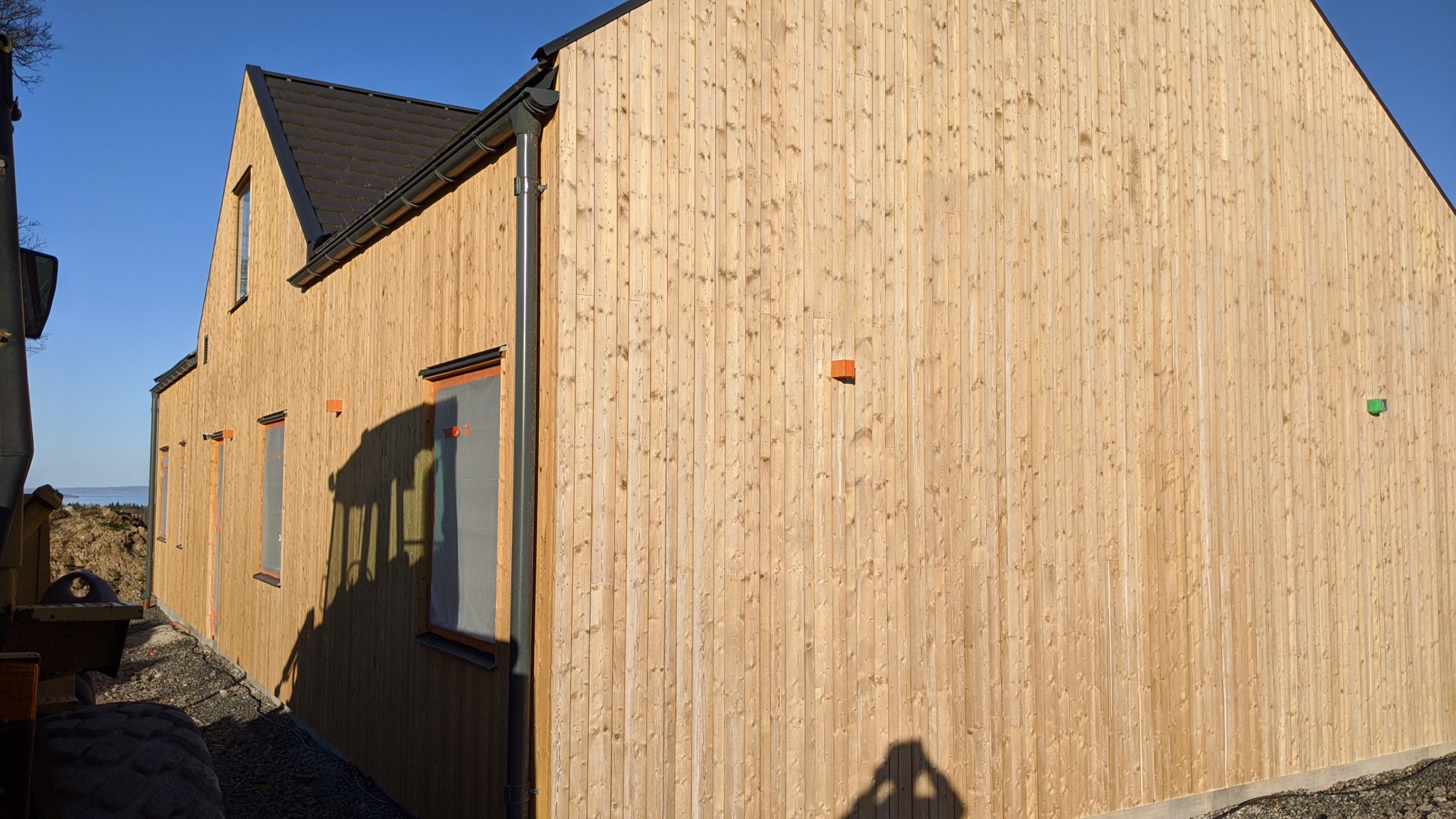
Now it will be a large-scale test. Applied the first treatment to our facade a few days ago. Now we're waiting for good weather so we can continue. The area above the windows is not treated. Didn't have any masking at the moment.
Now it's time for a large-scale test. The first treatment was applied to our facade a few days ago. Now we're waiting for good weather so we can continue. It's not treated above the windows. Didn't have any masking at the time.[image]
Hello!
Do you have any update on how it looks a month after the treatment?
What did you use? Home-mixed or store-bought treatment?
I'm planning to treat our new deck, which was laid in January with pressure-treated timber.
Hi!
Do you have an update on how it looks a month after the treatment?
What did you use? Home-mixed or store-bought treatment?
I'm aiming to treat our new deck made of pressure-treated wood that we had laid in January.
Hi, it has started to leach out now and begun to gray. We followed the method I described earlier in the thread. It doesn't show well in the picture, but it's clearer in reality. It will be treated one more time, then step 2 twice.
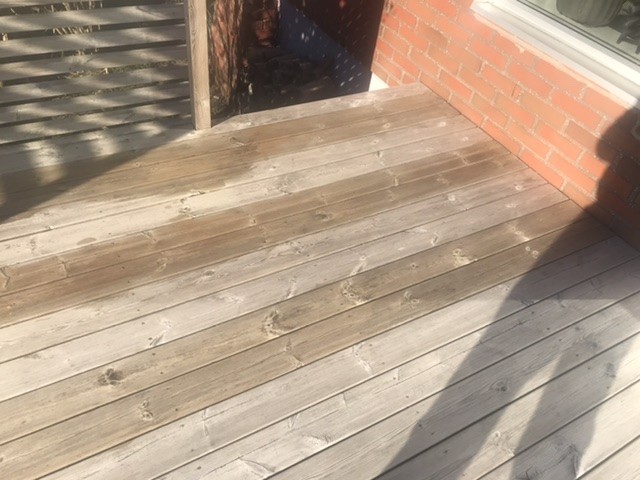
I'm running a small test with a mixture including water glass, among other things. I have only used spraying of concentrated weed vinegar before to remove green moss.
The terrace is about 10 years old and has never been oiled, only cleaned with high pressure, deck cleaner, and similar methods.
The two innermost parts have been applied with a scrubbing brush, and the nearest one only brushed. The surfaces were relatively green before the weed vinegar was applied!
Fun that more people are experimenting around the country.
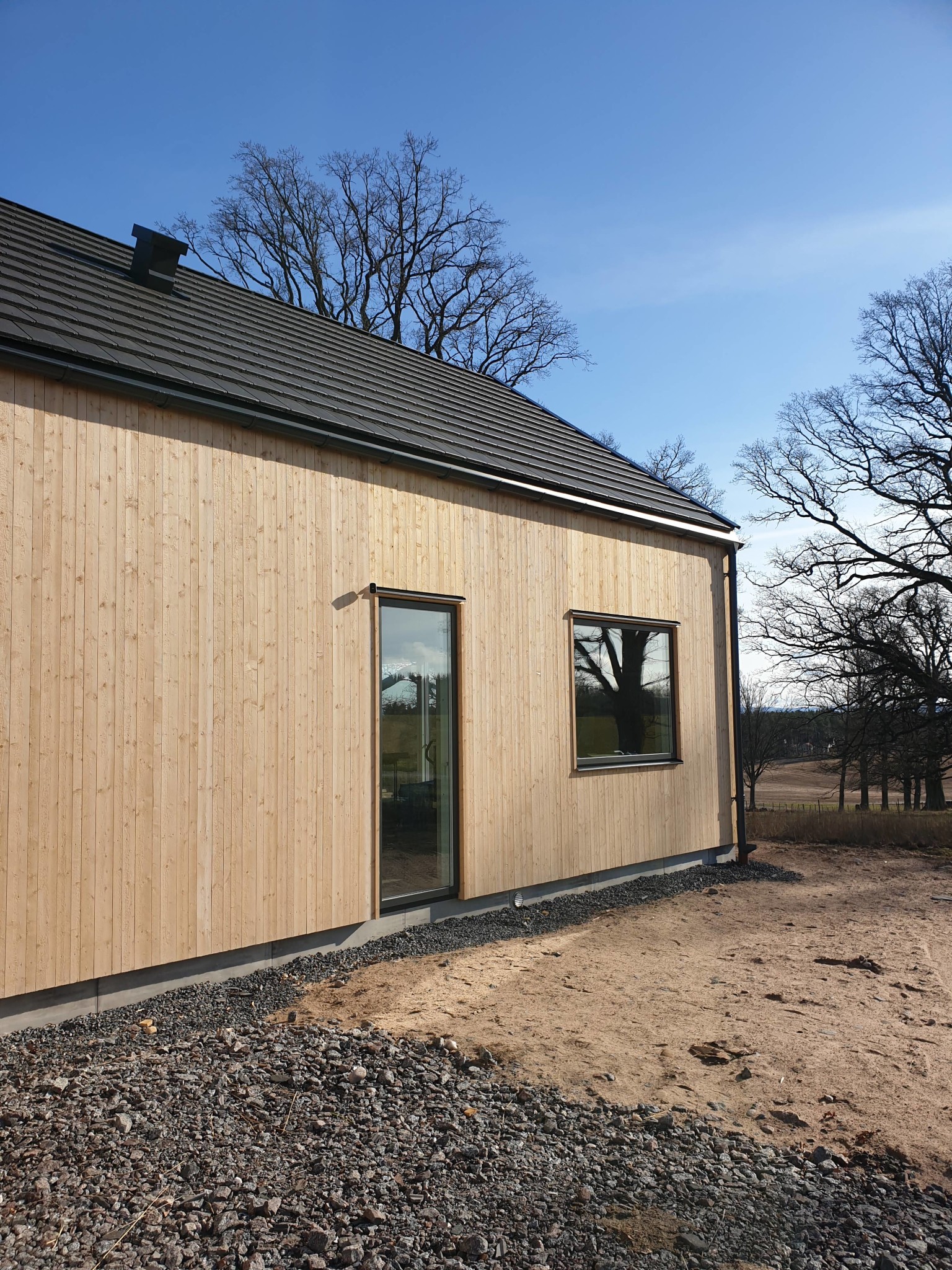
Thought I would contribute with an update on how the facade treatment is going.
I have now continued around the house with the first round of water stopper. The wood absorbs much more now that it has been dry and warm.
I apply the product with a five-liter hand sprayer and wipe off with a painting pad afterward, that seems to be the way. However, a word of caution. It etches glass in a heartbeat. I'm going to have to polish a few panes. So masking well ahead is preferable.
Since it almost only rains from one direction here on our plot, only the walls facing southwest have leached silica/minerals or whatever it is that comes out on the surface. I guess this will take some time.
I'm now using Finja's Vattenstopp, as I was able to buy it cheaper at my local hardware store. But it seems to contain the same stuff in similar concentration as Weber's Vattenstopp.
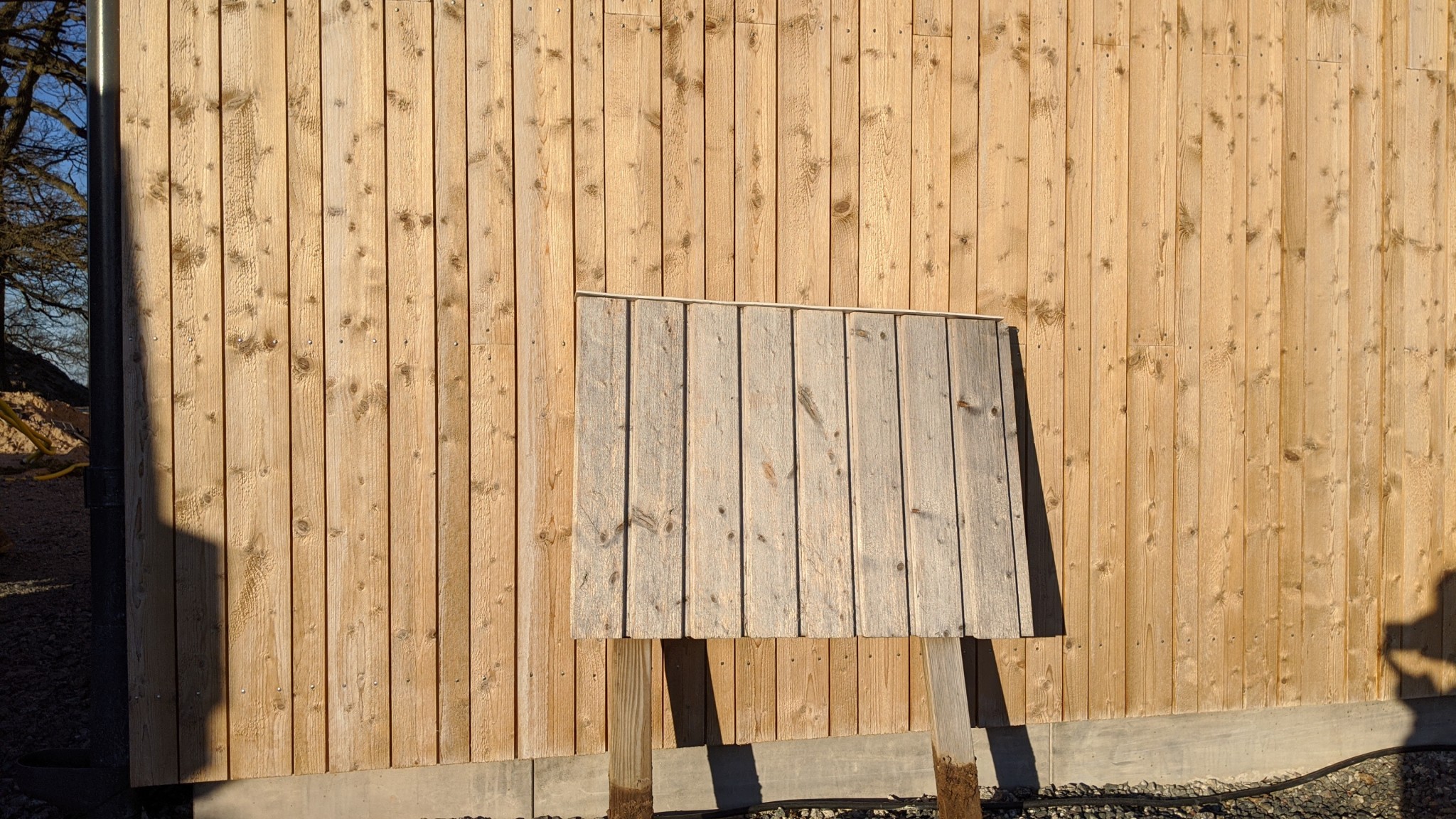
This is the test which is now about 2 years old, it's numbers 3 and 4 from the left that are treated the same way as the house. Unfortunately, it lay on the ground for a while. But it looks good, no growth. The untreated one farthest to the right is quite black if you look closely.
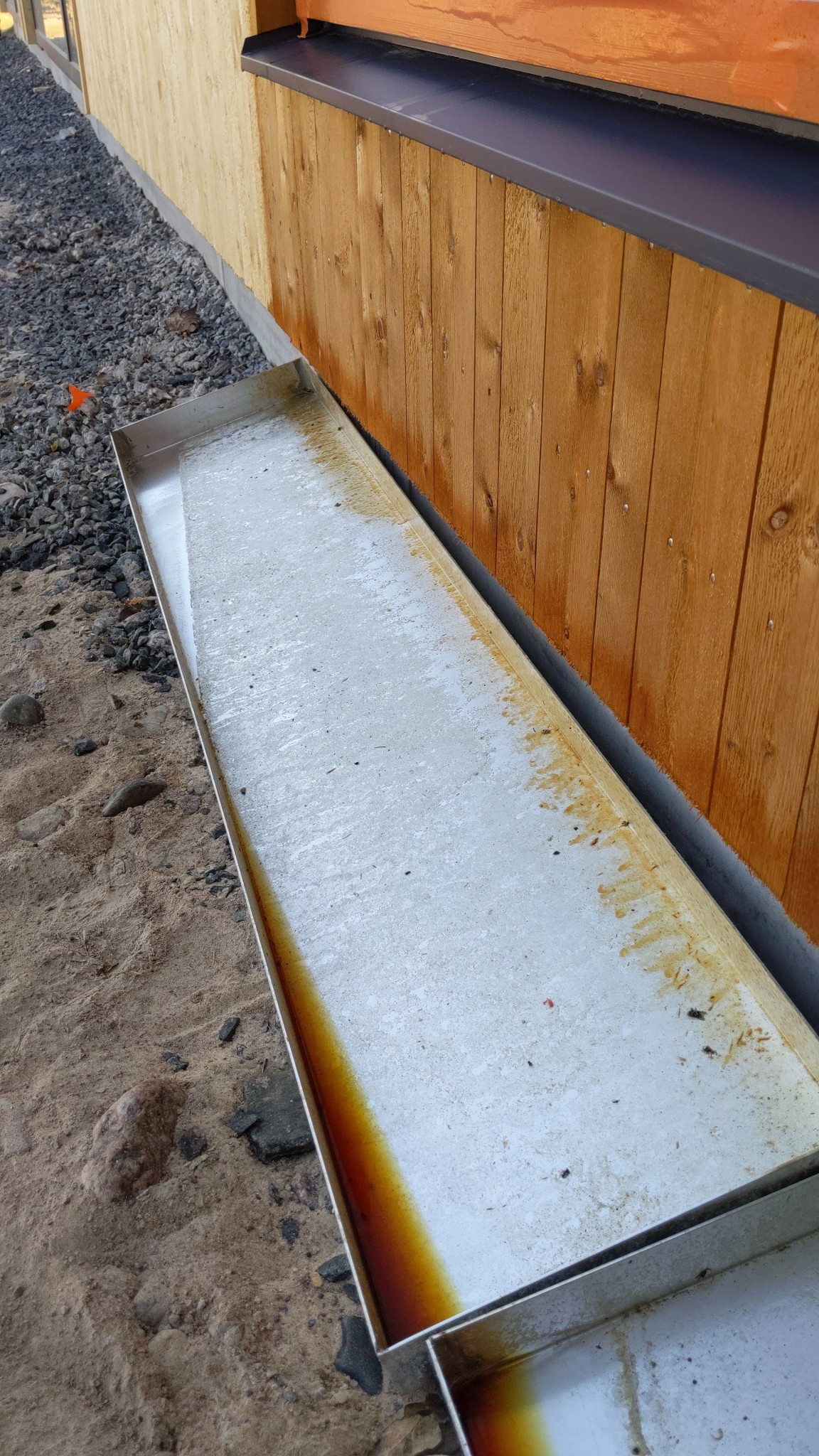
Does anyone know why the liquid that drains off is colored like coffee? Is it broken down wood from the surface that colors it? Vattenstopp is a completely clear liquid. On fresh wood, there wasn't this discoloration.
Does anyone by the way know why the liquid that drains off is colored like coffee? Is it the degraded wood from the surface that's coloring it? Waterstop is a completely clear liquid. On fresh timber, this staining didn't occur.[image]
Water glass is highly alkaline. So it's almost like washing the board with lye. Quite a bit would fall off from the surface. What is brown, I have no guess.
Is it like that for all types of wood? (I have a faint memory that you tested on different types of wood)
Water glass is highly alkaline. So it's almost like washing the board with lye. Quite a bit would fall off from the surface. As for what's brown, I have no guess.
Is it the same on all types of wood? (I seem to recall you tested on different types of wood)
When I treated in February, there wasn't this brown stuff. It only started now. I also didn't notice it with the other tests I've done. But it doesn't bother me. Just curious about what it could be.
When I treated in February, it didn't turn this brown. It was only now that it started. It was also nothing I noticed with the other tests I've done. But it doesn't bother me. Mostly curious about what it could be.
So it's during the second round that it turned this brown?
So it's after the second round that it turned this brown?
No, first treatment. Haven't gotten to the second round yet. But just from what I've done now in the spring, it's turned this brown. I think it's due to weather and wind. Untreated wood naturally breaks down if it's exposed. I believe it's resin that comes out of the wood and settles on the surface (did a bit of Googling). It probably dissolves and washes off, hence the brown color. Just a pure guess.
No, the first treatment. Haven't gotten to the second round yet. But just from what I've done now in the spring, it has become this brown. I think it's due to weather and wind. Untreated wood naturally breaks down if it's up. I think it's resin/kåda that leaves the wood and settles on the surface, (Googled a little). It probably dissolves and runs off, hence the brown color. Just a guess.
It could actually be a correct answer with kåda. The resin acids in the kåda react with a strong base like sodium silicate and become water-soluble and run down.
Fun that more people are experimenting around the country.
Thought I'd contribute an update on how the facade treatment is going.
I've now continued around the house with the first round of waterstop. The wood absorbs much more now that it has been dry and warm.
Applying the solution with a five-liter hand sprayer and smoothing it out with a paint pad afterward seems to be the way to go. However, a word of caution. It etches glass in seconds. I will have to polish a few windows. So masking in advance is preferred.
Since it almost only rains from one direction here on our plot, only the walls facing southwest have leached silica/minerals or whatever it is that comes out on the surface. This is going to take its time.
Now using Finja's Waterstop, as I could buy it cheaper at my local hardware store. But it seems to contain the same ingredients in similar concentrations as Weber's Waterstop.
[image]
[image]
This is the test that is now about 2 years old, it's numbers 3 and 4 from the left that are treated the same way as the house. Unfortunately, it lay down on the ground for a while. But it looks good, no growth. The untreated one on the far right is quite black if you look closely.
Would be interesting to make the same comparison on boards with Sioo and Bioclean.
Vi vill skicka notiser för ämnen du bevakar och händelser som berör dig.

 . However, I've stocked up on more bottles of water stop during sales. The best option I know of right now is water stop from Weber, 99/liter at K-rauta. I believe it's more concentrated than the water stop from Combimix at Bauhaus.