
90,595 views ·
74 replies
91k views
74 replies
Make your own wood protection / impregnation (Sioo, Organowood, Everwood)
Two weeks into the test, I can see that it's starting to get a bit gray after a lot of rain.
I also saw that Biokleen has come out with similar products to sioo:x. The latter surface sealant had similar contents to beckers regnstopp V, and also pine oil, I believe. I thought you could dilute regnstopp v with water and some genuine soap. Maybe you could get the beading effect from this? It should be good for m2 cost.
I also saw that Biokleen has come out with similar products to sioo:x. The latter surface sealant had similar contents to beckers regnstopp V, and also pine oil, I believe. I thought you could dilute regnstopp v with water and some genuine soap. Maybe you could get the beading effect from this? It should be good for m2 cost.
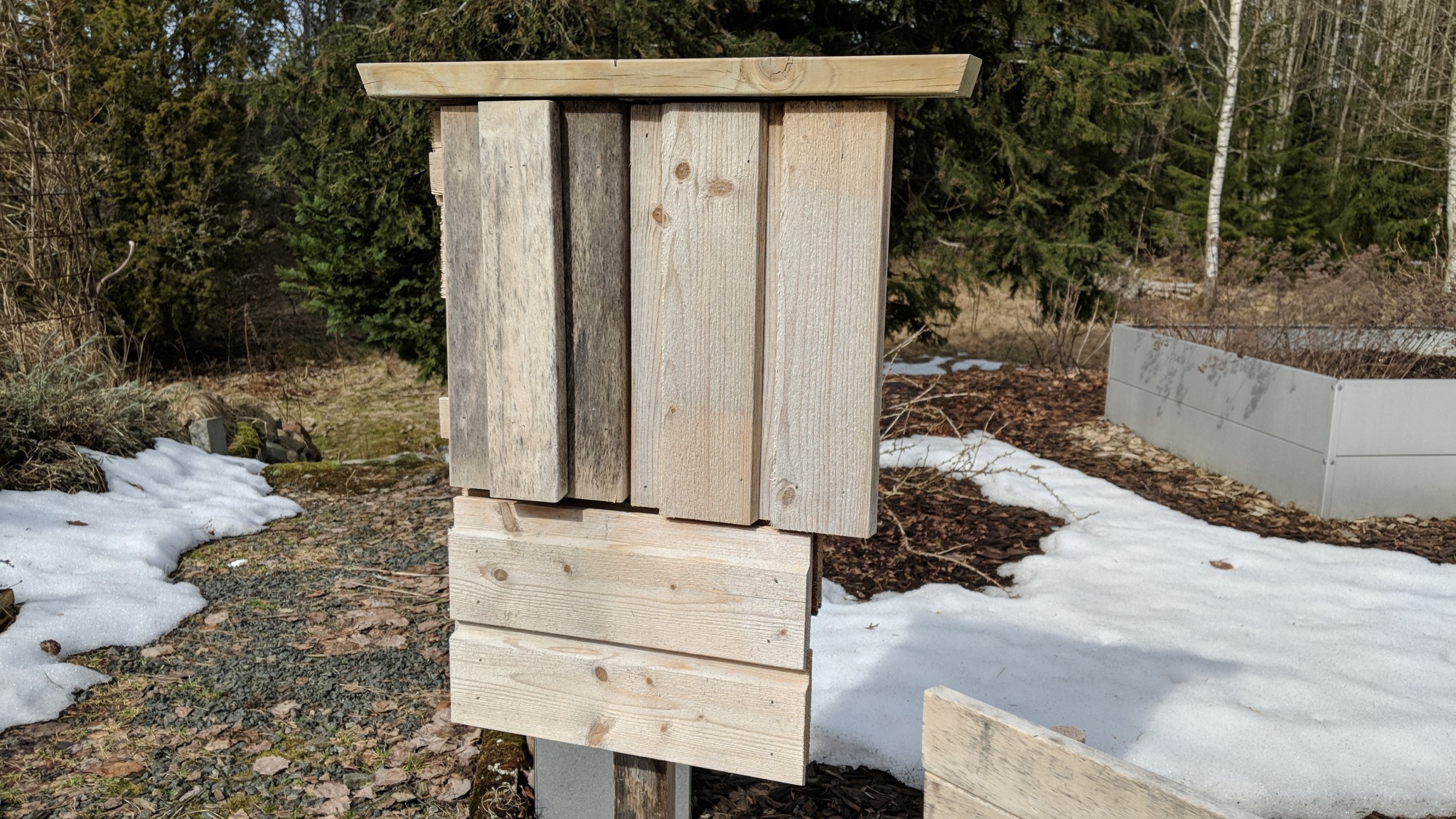
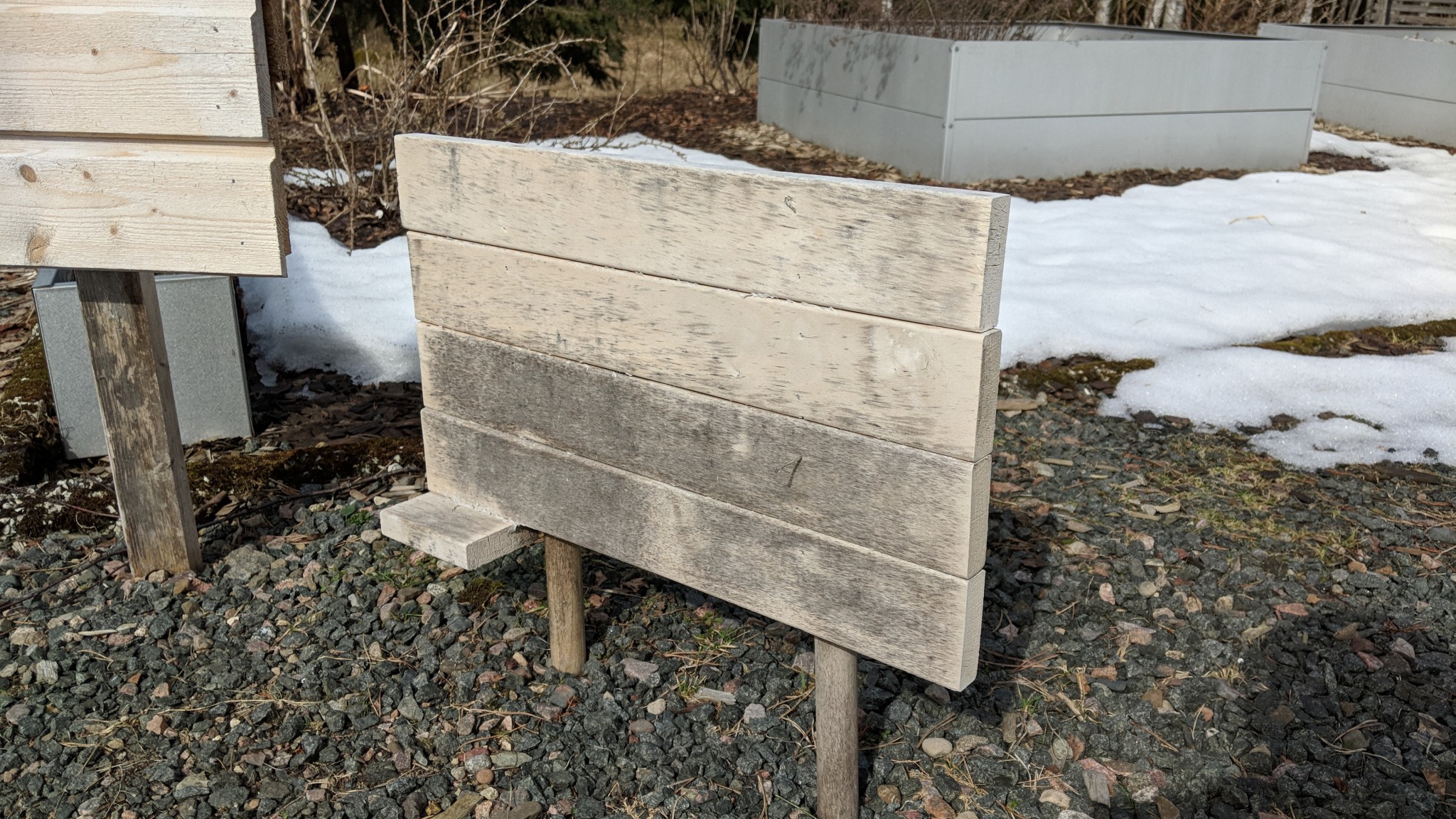
Here's how the test looks after about 7 months:
The narrow pieces are made of Al. The ones with the most growth have been treated with 2 coats, 1:1 combimix water stop and water.
The upper horizontal Al pieces and the outermost standing piece have also received 2 coats with 1:1 Beckers rain stop V, water, and a small splash of green soap.
The other pieces with regular z panel have received both treatments. No growth at all.
The backside has only received step 1 and there is some growth. However, it is the north side.
On top lies a pressure-treated piece that is starting to turn nicely gray. It has also received both coatings.
The narrow pieces are made of Al. The ones with the most growth have been treated with 2 coats, 1:1 combimix water stop and water.
The upper horizontal Al pieces and the outermost standing piece have also received 2 coats with 1:1 Beckers rain stop V, water, and a small splash of green soap.
The other pieces with regular z panel have received both treatments. No growth at all.
The backside has only received step 1 and there is some growth. However, it is the north side.
On top lies a pressure-treated piece that is starting to turn nicely gray. It has also received both coatings.
Last edited:
Hi, I have a newly built deck of 64m/2 (will add 20m/2 later), I have looked a little at SIOO:X and came across this thread. I calculated quickly and
But do you mix water, water stop, pH reducer, and soap? Does it correspond to treatment step 1 or 2 of SIOO:X's?
But do you mix water, water stop, pH reducer, and soap? Does it correspond to treatment step 1 or 2 of SIOO:X's?
Impressive with such a thorough test. Well done!H hbspeedshop said:This is what the test looks like after about 7 months.
The narrow pieces are made of Al. Those with the most growth are treated with 2 coats, 1:1 combimix waterstop and water.
The upper lying Al pieces and the outermost standing one have also received 2 coats with 1:1 Beckers rainstop V, water, and a splash of green soap.
The other pieces with regular z panel have received both treatments. No growth at all.
The backside has only received step 1 and there is a little growth.
Then again, it is the north side.
On top lies a pressure-treated piece which is starting to get nicely gray.
It has also received both coatings.
A few questions to understand better

Is it correct that all the wood pieces are of the Al type except for the Z panel and the lying pressure-treated piece on top?
By "received both coatings," do you mean they are treated with both Combimxi Waterstop and Beckers Rainstop?
Taking "a splash of green soap" is a very good idea, I think. I'll take and test that next time
maybe together with a splash of linseed oil too.It probably resembles step 1 of Sioo:x the most. However, one must know that it is not thoroughly tested so no one knows how good/bad it is.M MegakriL said:
The test by @hbspeedshop might provide a good indication. Personally, I don't think a pH reducer would be necessary; CO2 in the air can take on that role.
Yes exactly, all the narrow horizontal and vertical ones are alder. I wanted to test with alder as I could cut plenty and use it as paneling if I wanted, but it turned out to be less suitable. I think it behaves like factory-treated Sioo panel that I read about in another thread. Lots of growth and you have to wash and maintain it. That goes away completely. It’s supposed to be maintenance-free, which my small pieces have been.Y YWa said:Impressive with such a thorough test. Well done!
A few questions to understand better
Am I correct in understanding that all the wood pieces are made of alder except the Z-panel and the horizontal pressure-treated piece on top?
By "received both coats" do you mean they are treated with both Combimix Vattenstopp and Beckers Regnstopp?
Using "a splash of green soap" is a very good idea, I think. I'll have to try that next time
So the best results have been on the spruce pieces and the pressure-treated one on top.
Both coats mean Step 1 and Step 2.
Step 1. 1:1 Combimix - Water (sioo1).
Step 2. 1:1 Beckers Regnstopp V - Water (Nitor Wood sealer), tiny splash of soap (foamed quite well)
Alternatively, which I will try to make it more like Nitor Wood sealer.
Step 2. 1:1:2 Beckers Regnstopp V, Nitor Vattenglas, water
That Beckers regnstopp-water would be like Sioo Step 2 should be taken with a grain of salt. Triethoxy(octyl)silane included in Regnstopp V is also included in Nitor wood sealer. So that’s mostly what I wanted to mimic since it also contains pine oil. Hence the soap in Step 2.
I will expand tests by putting out larger boards and I will buy real Sioo to compare with. I think my little test has performed so well that it will probably be homemade for the whole house when it’s time for that.
I would do it like this:M MegakriL said:
STEP 1 – Hillbilly Speedshop Wood Protect
Apply H.S.W.P on a dry surface, spread with a wide brush, let dry for at least 2 hours. Apply another layer of H.S.W.P, let dry for at least 4 hours. It is especially important to apply generously on the end grain to seal it.
STEP 2 – Hillbilly Speedshop Wood Seal, 1ST SEASON:
Apply generously with H.S.W.S and let it soak in for about 3 minutes, then work the Surface Protection into the wood with the brush until the wood is saturated. The surface can be used when it is completely dry, after about 30–60 minutes.
STEP 2 – Hillbilly Speedshop Wood Seal, 2ND SEASON:
Apply H.S.W.S once again after 10–14 months. Gently clean the surface with Maintenance Wash and a soft brush. Let the surface dry. Apply Premium Surface Protection Deck according to the instructions for the 1st season. The product is a wear surface and may need to be applied a few more times during the system's lifespan.
It's probably just as good as Sioo, I would think.M MegakriL said:
I like Biokleen's other products from what I've tested.
The homemade mix costs about 1200 SEK. Calculated for 70m2.
(2 units of five-liter Combimix waterstop, 1 unit of five-liter Beckars Rainstop V)
If the usage is similar when it comes to larger areas?
Last edited:
Interesting! Did you do any extended test?H hbspeedshop said:Yes exactly, all the narrow horizontal and vertical are Al. I wanted to test with Al since I could cut a lot and use it as a panel if I wanted, but it turned out to be less suitable. I think it behaves like factory-treated Sioo panel that I read about in another thread. Lots of growth, and you have to wash and maintain it. So that's completely out. It should be maintenance-free, which my small pieces have been.
So the best results have been on the pine pieces and the one treated on top.
Both coatings, I mean Step 1 and Step 2.
Step 1. 1:1 Combimix - Water (sioo1).
Step 2. 1:1 Beckers Regnstopp V - Water (Nitor Wood sealer), very small amount of soap (foamed quite well)
Alternatively, which I will try to make it more like Nitor Wood sealer.
Step 2. 1:1:2 Beckers Regnstopp V, Nitor Vattenglas, water
That Beckars regnstopp-water would be like Sioo step 2 you should take with a pinch of salt.
trietoxioktylsilan included in Regnstopp V is also included in Nitor wood sealer.
So that's mostly what I wanted to replicate since it also contains pine oil. Hence the soap in step 2.
I'm going to expand testing with a few larger boards and I'm going to buy real Sioo to compare with.
I think my little test has been so successful, so I'll probably use self-mixed for the whole house when it's time for that.
Yes, and it looks promising. I've had facade boards set up for about a year now on the plot where the house will stand.R RJMS said:
You can clearly see growth on the control board compared to the treated ones. The combimix with rain stop has fared the best. A nicely grayed surface without growth or dirt. So I will use that for the house and garage.
Hello
I happened to find this post about Sioo.
When I built the deck in 2010, I was considering avoiding oiling the wood frequently.
I decided to use regular facade boards for decking. Impregnated with Na-silicate solution. I don't quite remember the concentration, but I think it was 10-20% and a drop of dish soap. Applied it and let it dry for a few hours. Then I thought of precipitating the silica with a metal and applied an alum solution (aluminum). It resulted in a hard surface that was gray but somewhat blotchy (darker areas).
The decking is still there and has no rot and looks like it will last many more years but seems to be starting to dry out (cracks). It is still a bit blotchy where I applied the most alum. That's where it's best (hardest).
I can add that I impregnated once with Sioo step 1 and 2 about four years ago. Didn't have the energy to find Na-silicate.
Must be cleaned every year as algae grow on the shaded parts. I use dish soap and a pressure washer (deck nozzle).
Hope this can be helpful for those who don't want to use expensive products.
I happened to find this post about Sioo.
When I built the deck in 2010, I was considering avoiding oiling the wood frequently.
I decided to use regular facade boards for decking. Impregnated with Na-silicate solution. I don't quite remember the concentration, but I think it was 10-20% and a drop of dish soap. Applied it and let it dry for a few hours. Then I thought of precipitating the silica with a metal and applied an alum solution (aluminum). It resulted in a hard surface that was gray but somewhat blotchy (darker areas).
The decking is still there and has no rot and looks like it will last many more years but seems to be starting to dry out (cracks). It is still a bit blotchy where I applied the most alum. That's where it's best (hardest).
I can add that I impregnated once with Sioo step 1 and 2 about four years ago. Didn't have the energy to find Na-silicate.
Must be cleaned every year as algae grow on the shaded parts. I use dish soap and a pressure washer (deck nozzle).
Hope this can be helpful for those who don't want to use expensive products.
Very interestingL Livio said:Hello
I happened to find this post about Sioo.
When I built the terrace in 2010, I was considering just this—avoiding having to oil the wood frequently.
I decided to use regular facade planks as decking. Impregnated with Na-silicate solution. I don't quite remember the concentration but I think it was 10-20% and a drop of dish soap. I applied it and let it dry for a few hours. Then I planned to precipitate the silicon with a metal and applied an alum solution (aluminum). It resulted in a hard surface that was gray but somewhat mottled (darker areas).
The decking is still there with no rot and looks like it will last many more years but seems to be starting to dry out (cracks). It's still a bit mottled where I applied the most alum. That's where it's best (hardest).
I should add that I impregnated once with Sioo step 1 and 2 about four years ago. Couldn't be bothered to find Na-silicate.
It needs to be cleaned every year as algae grow on the shaded parts. I use dish soap and a high-pressure washer (deck nozzle).
I hope this can be helpful for those of you who don't want to use expensive products.
May I ask where you bought Na-silicate and alum solution?
Had to go to a chemical company that manufactures water glass (Na-silicate solution) just outside of Gothenburg. I can't remember what it's called but it's somewhere near Nol.
Alum can be bought in any grocery store, I think it's among the spices.
What I've been considering is whether I should first fill the wood with potassium aluminum sulfate (alum). Let it dry and then apply the silicate. After that, you can apply another slightly weaker alum solution.
Good luck
Alum can be bought in any grocery store, I think it's among the spices.
What I've been considering is whether I should first fill the wood with potassium aluminum sulfate (alum). Let it dry and then apply the silicate. After that, you can apply another slightly weaker alum solution.
Good luck