
4,913 views ·
25 replies
5k views
25 replies
Lower the ceiling but keep the existing ceiling?
But do I have to take the cc measurement and stuff if it's just a matter of screwing up the new Byggmax boards? I can measure the thickness through the ceiling light cables (remove that box and measure), then take a screw that doesn't go all the way through the Tretex? Is it special screws that are needed in that case? And is it enough with regular 150mm between the screws?L Lärospånet said:Yes, paint a barrier on the Tretex in that case.
Can you find out the thickness of the tongue and groove from above? And check if it is sparse or dense - if it is sparse, measure the cc dimensions). It should work fine to screw up the Byggmax boards as long as you don't use screws that are too long, so you don't make holes in the plastic (and measure where the wood is if it is really sparse tongue and groove). Also, the battens must be screwed into something, so it's just as well to skip them, I think. If the Tretex is only slightly damaged and not bulging over the whole ceiling, it should be smooth and nice as a base.
No, just thinking if it’s "real" spaced paneling so you’re not screwing into air (because it’s not enough to just screw into the tretex). Yes, good to measure in the electrical box!K kimjohanss said:But do I need to take cc measurements and such if it's just about screwing up the new Byggmax boards? I can measure the thickness through the ceiling lighting cables (remove the box and measure), then take a screw that doesn't go all the way through the tretex? Is it a special screw required in that case? And is 150mm between the screws enough?
It's supposed to ideally be drywall screws for those boards? I thought I saw something about that at Byggmax, but check again to be sure.
Now I was up and looked a bit in the attic. Under the plastic, there's tongue and groove and framework underneath as it seems. To possibly make it easiest for me, maybe it's best to remove the existing ceiling and just put up a new one? I thought the plastic was laid differently than it was, so sorry for the previous post!L Lärospånet said:No, I was just wondering if it's "real" sparse tongue and groove so that you're not screwing into air (because it's not enough to just screw into the Tretex). Yes, good to measure in the ceiling box! It should preferably be drywall screws for those panels? I think I saw something about it at Byggmax but check again to be sure.
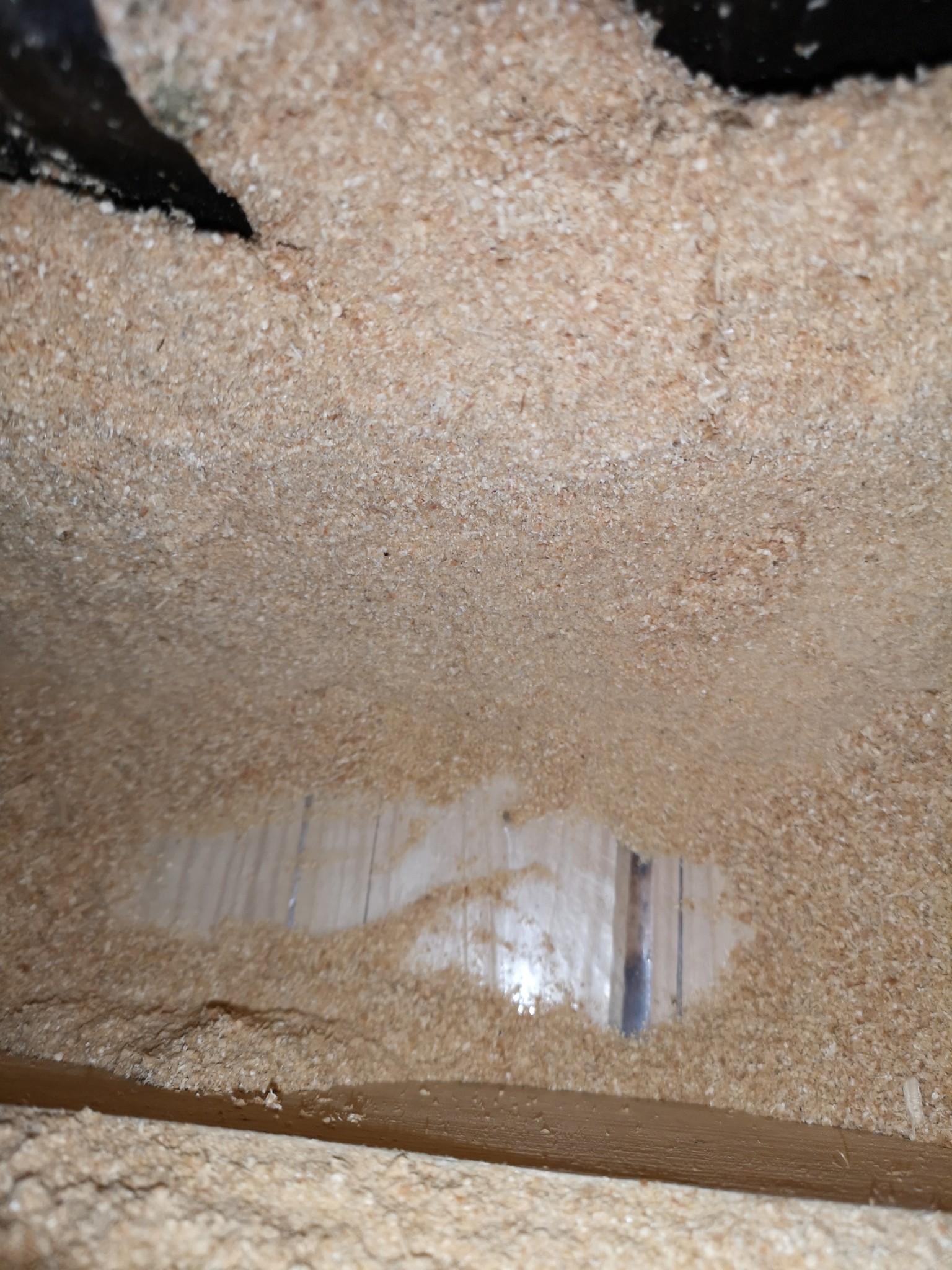
Best answer
Well, that's great!
Then you won't have to mess with stain-blocking paint and the like, and you'll have something solid to screw the panels into. I'm a bit curious about the framing (the purpose) but you'll see once you get rid of the old boards It's really quick to remove tretex!
Then you won't have to mess with stain-blocking paint and the like, and you'll have something solid to screw the panels into. I'm a bit curious about the framing (the purpose) but you'll see once you get rid of the old boards
It's really quick to remove tretex!Yes, exactly! I'll see what the purpose of the framing is and get back to you!L Lärospånet said:
A thousand and one thousand thanks for the help!
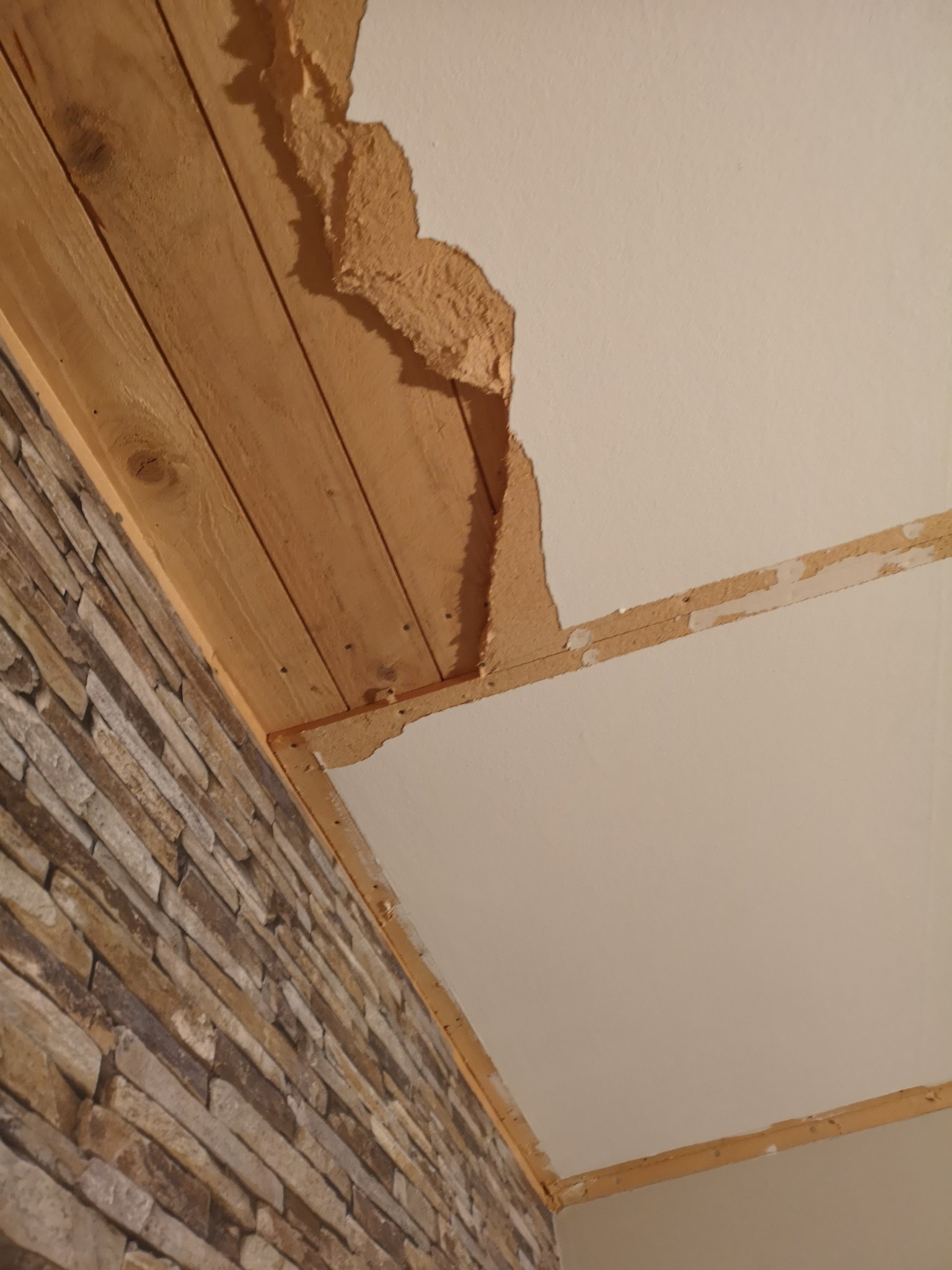


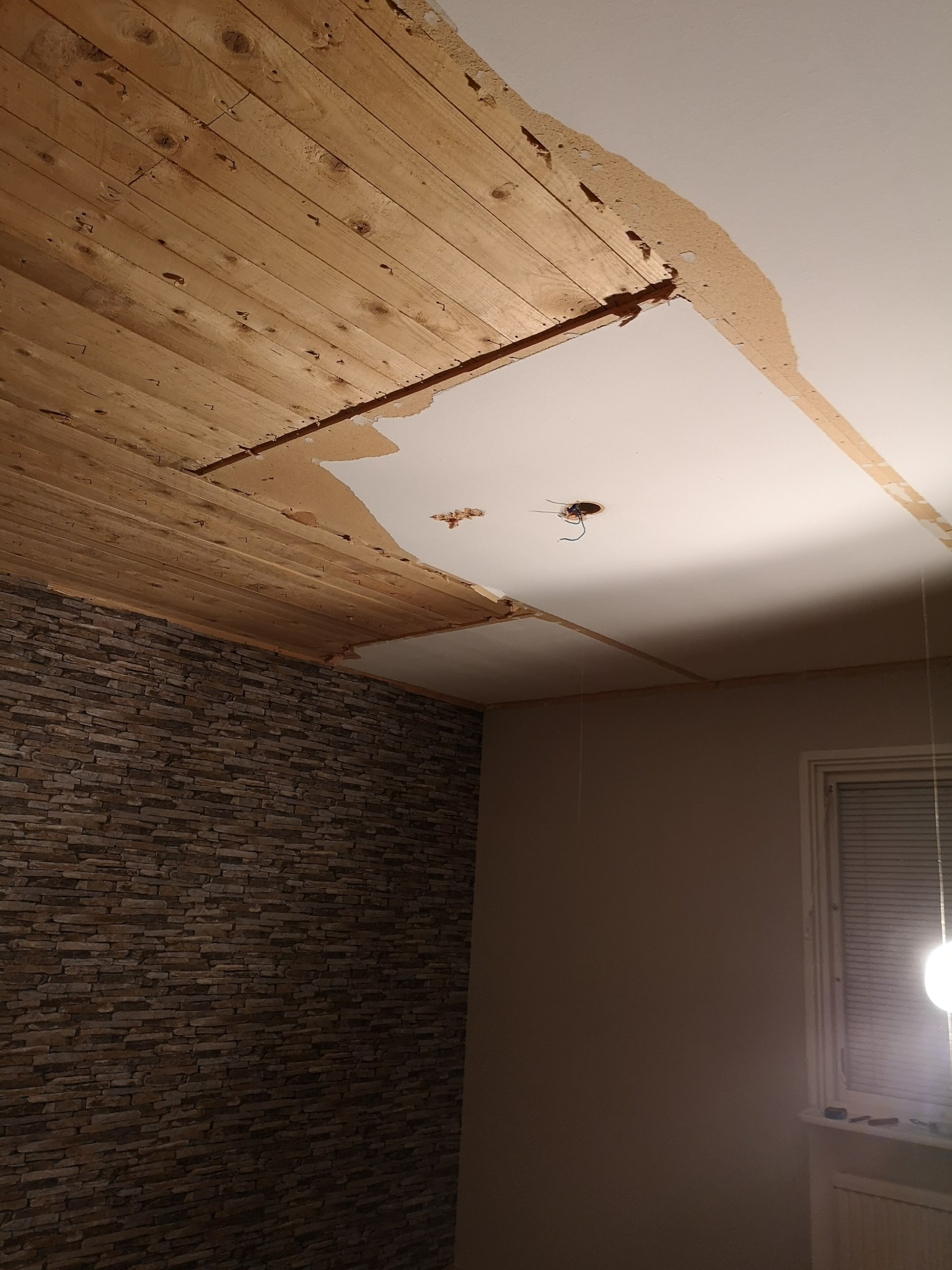
Yes, you're considering simply keeping the raw boards as the interior ceiling?K kimjohanss said:
I would probably have done that personally; I would have painted it myself, but oil should be fine too—just something safe to breathe.
The only thing I'm wondering about is if it might be a bit drafty towards the attic?
What do you mean by replacing the moldings with veneer? Do you mean ceiling moldings veneered with precious wood?
Click here to reply