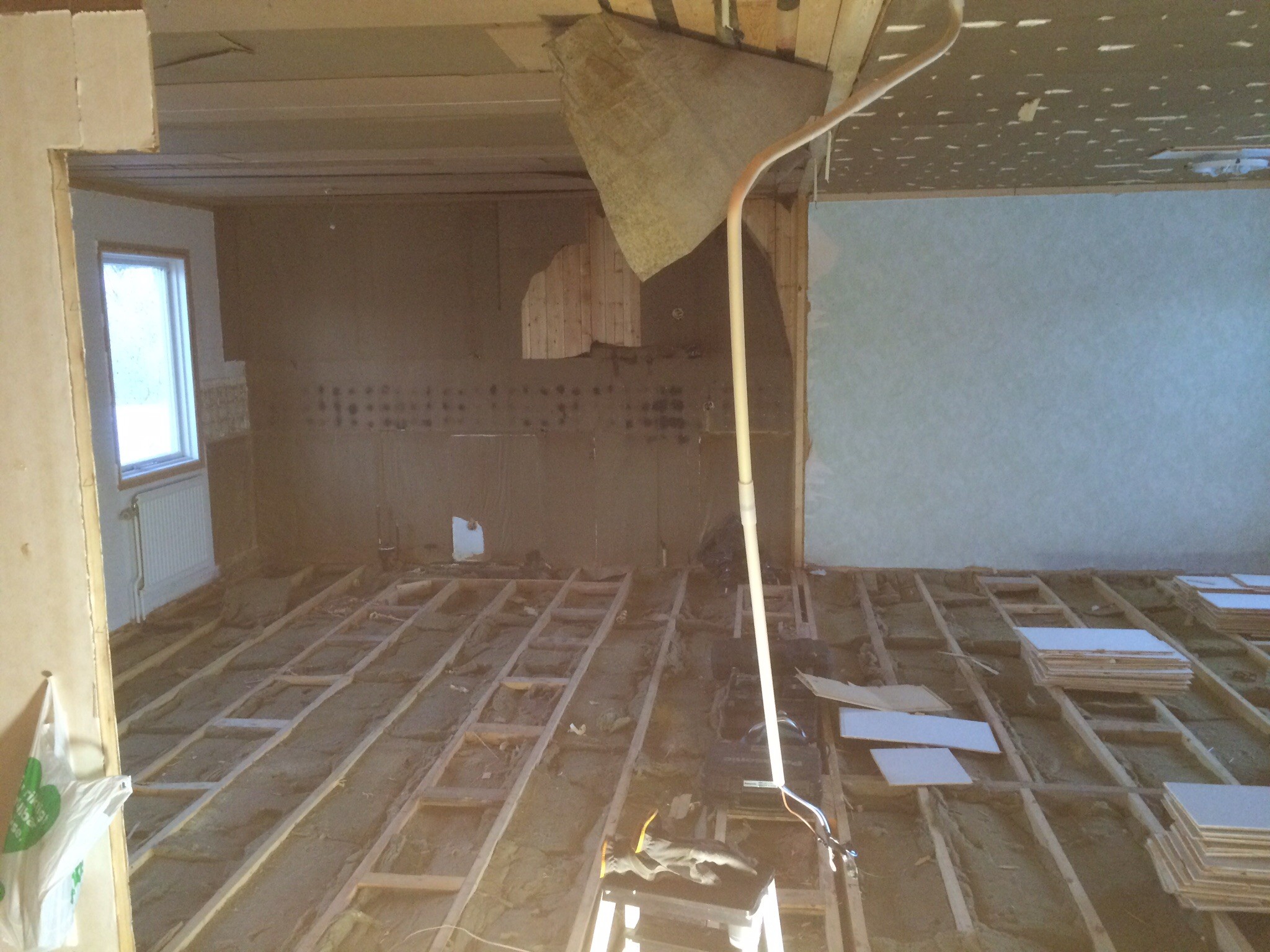
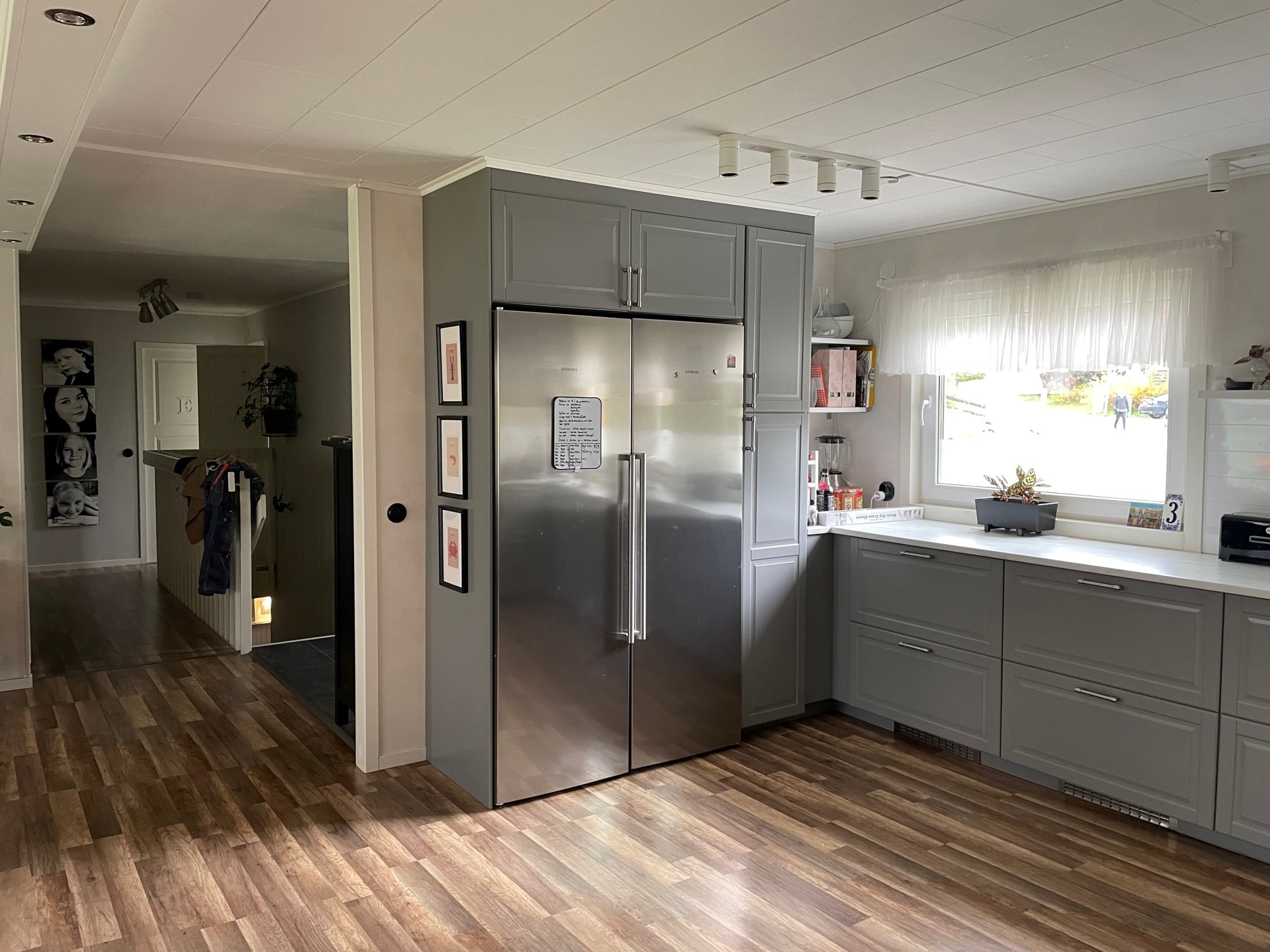
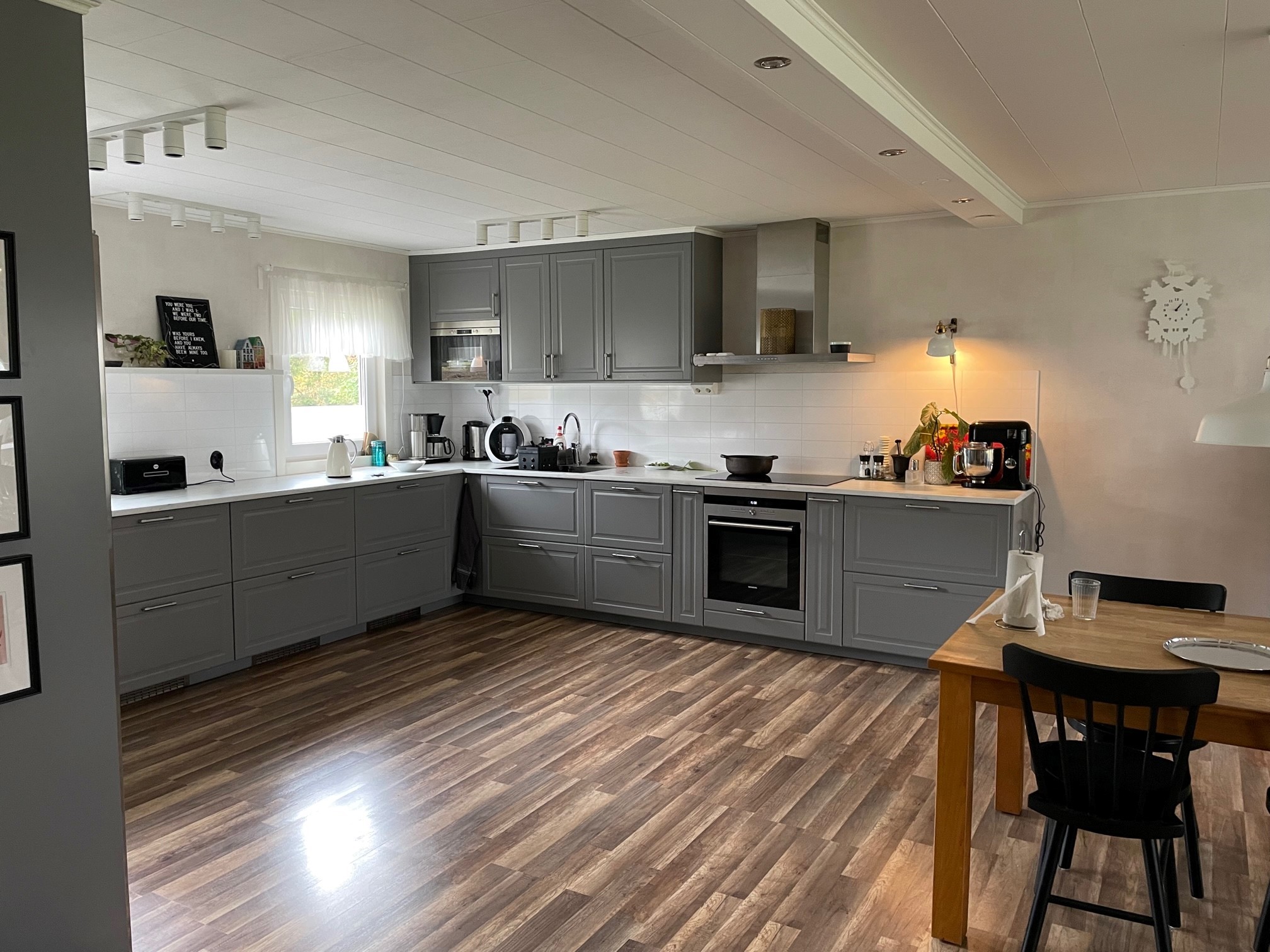
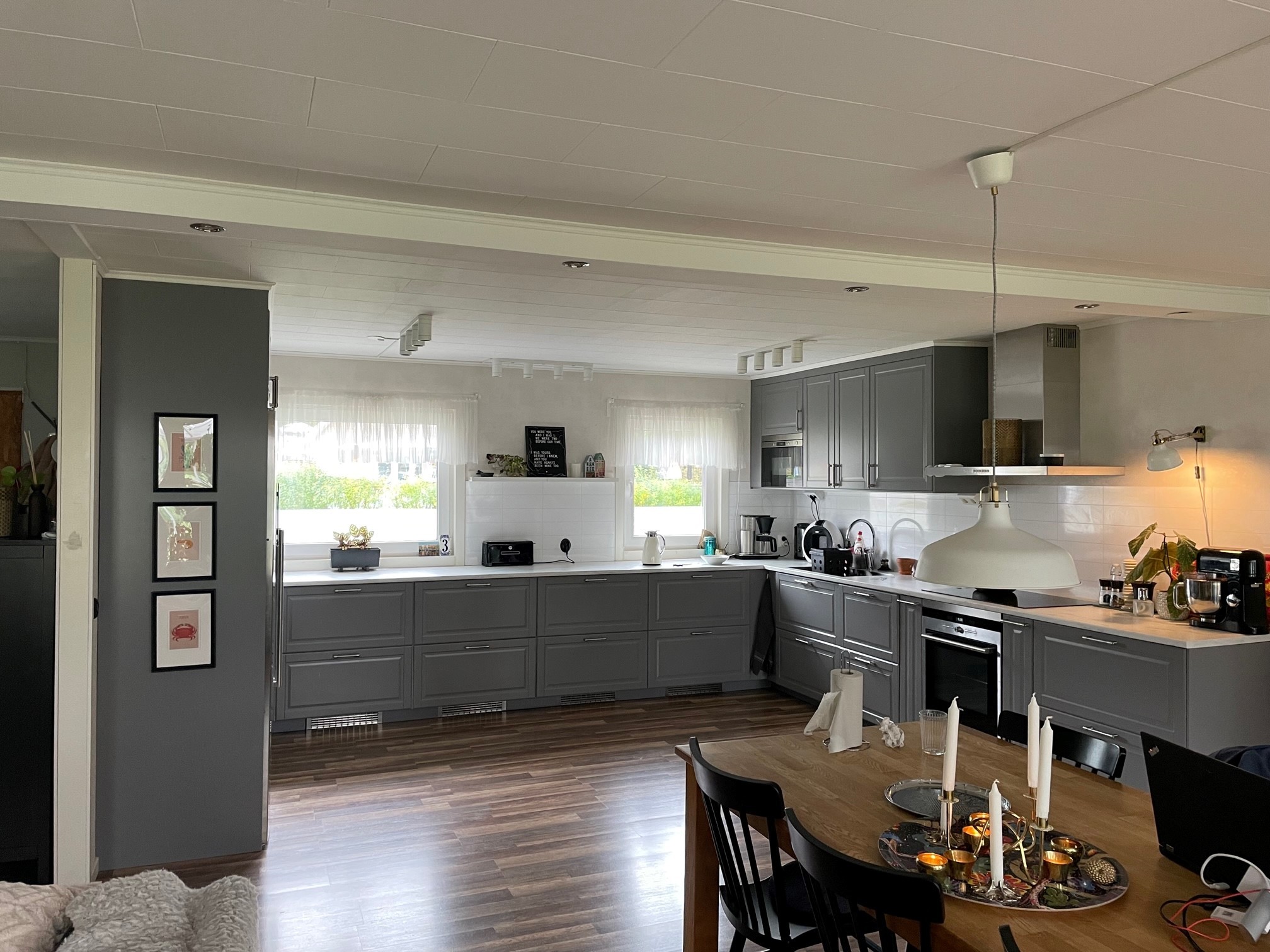
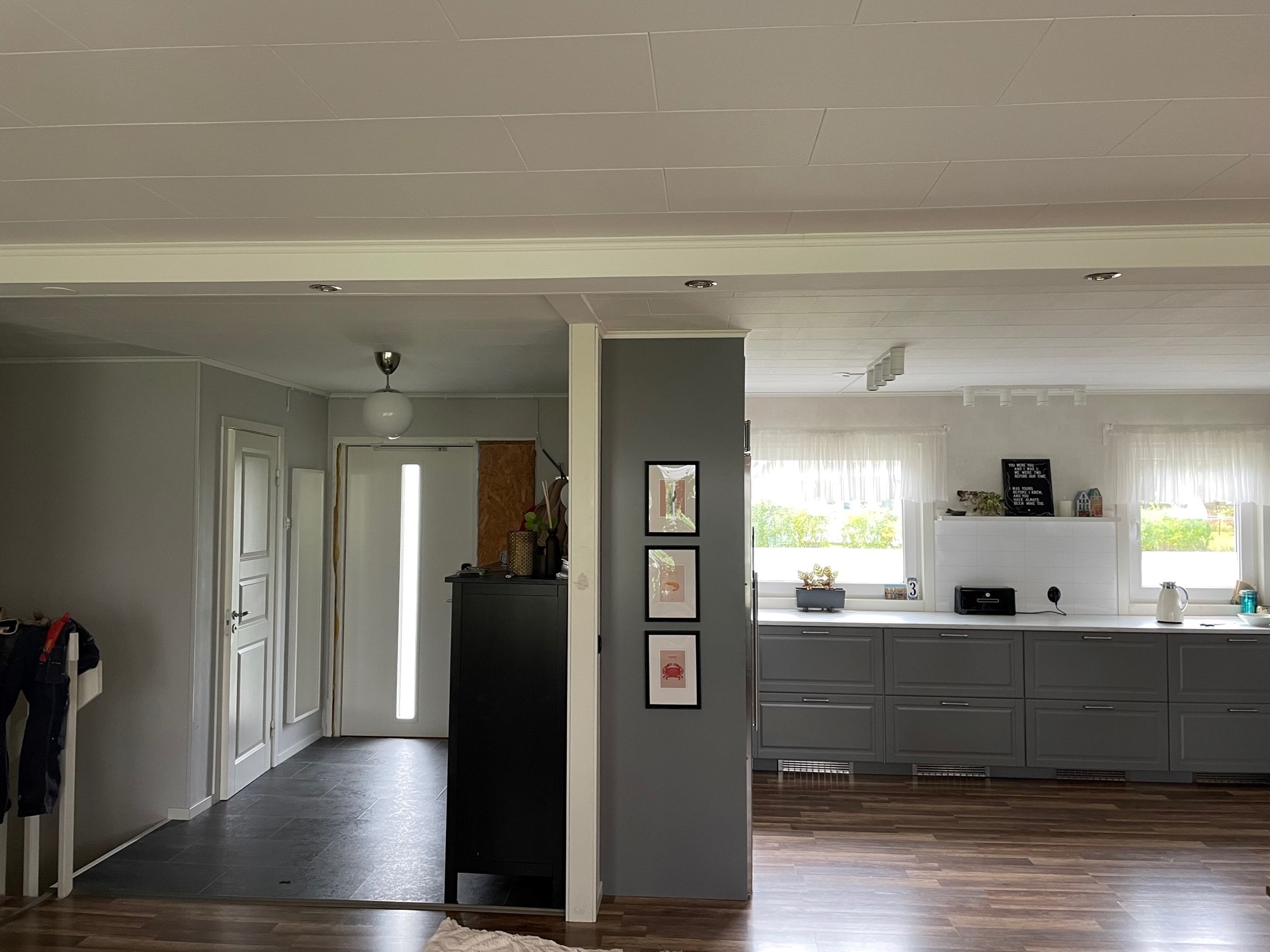
I have a similar house from '71 where I'm considering doing something similar, but I'm wondering if anything was done with the wall separating the kitchen from the hallway? I personally have a door frame at the far end relative to the picture.
I have just bought a Gullringshus built in '68 with similar designs to those Roy shared at the start of the thread, and I plan to remove the wall between the kitchen and living room. Is there anyone still living in the houses who has any tips and tricks to share?
Exactly,
has anyone added insulation in the attic, and if so, how?
Loose-fill insulation or something else?
Vapor barrier?
Noticed any moisture problems?
I'm considering adding about 300mm myself, and right now, cellulose loose-fill insulation seems to be the best option.
I should add that I have switched to a metal roof with new tongue-and-groove boards, and moved the "chimney" to the north side of the roof to have the south side completely clear, and thereby be able to install 32 solar panels in 4 neat rows. (8*4)
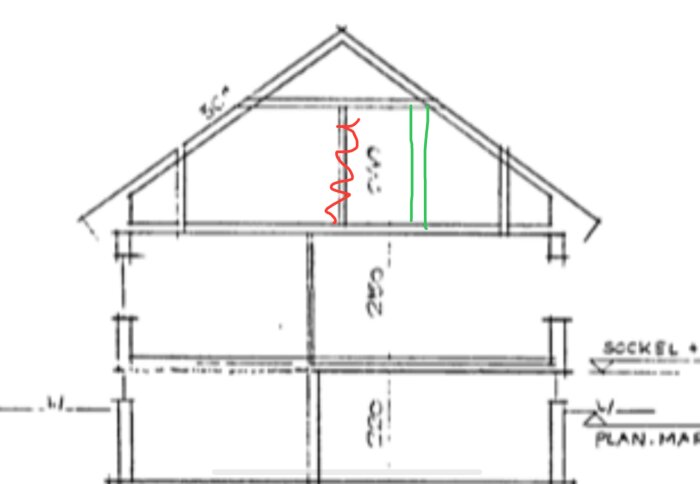
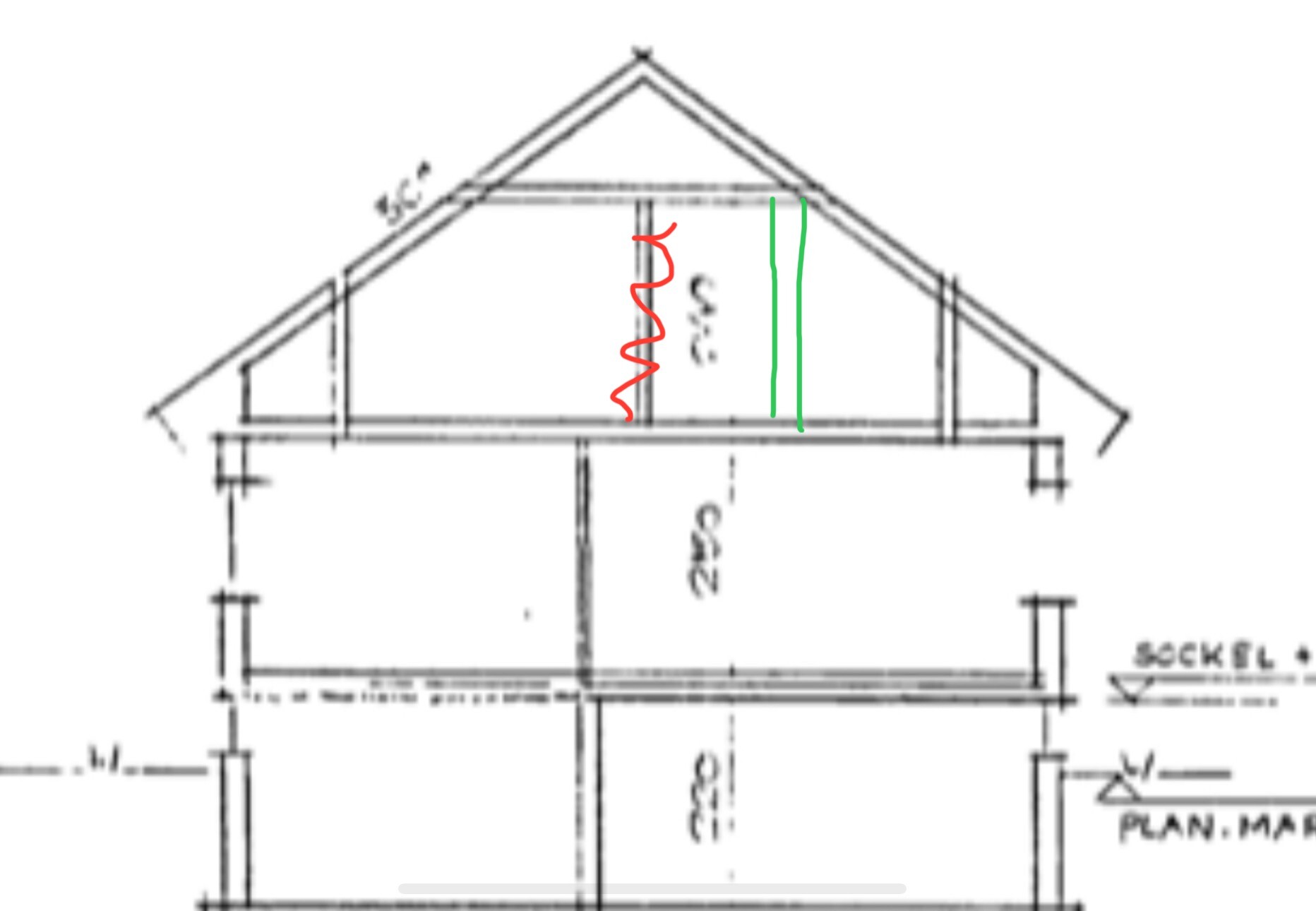
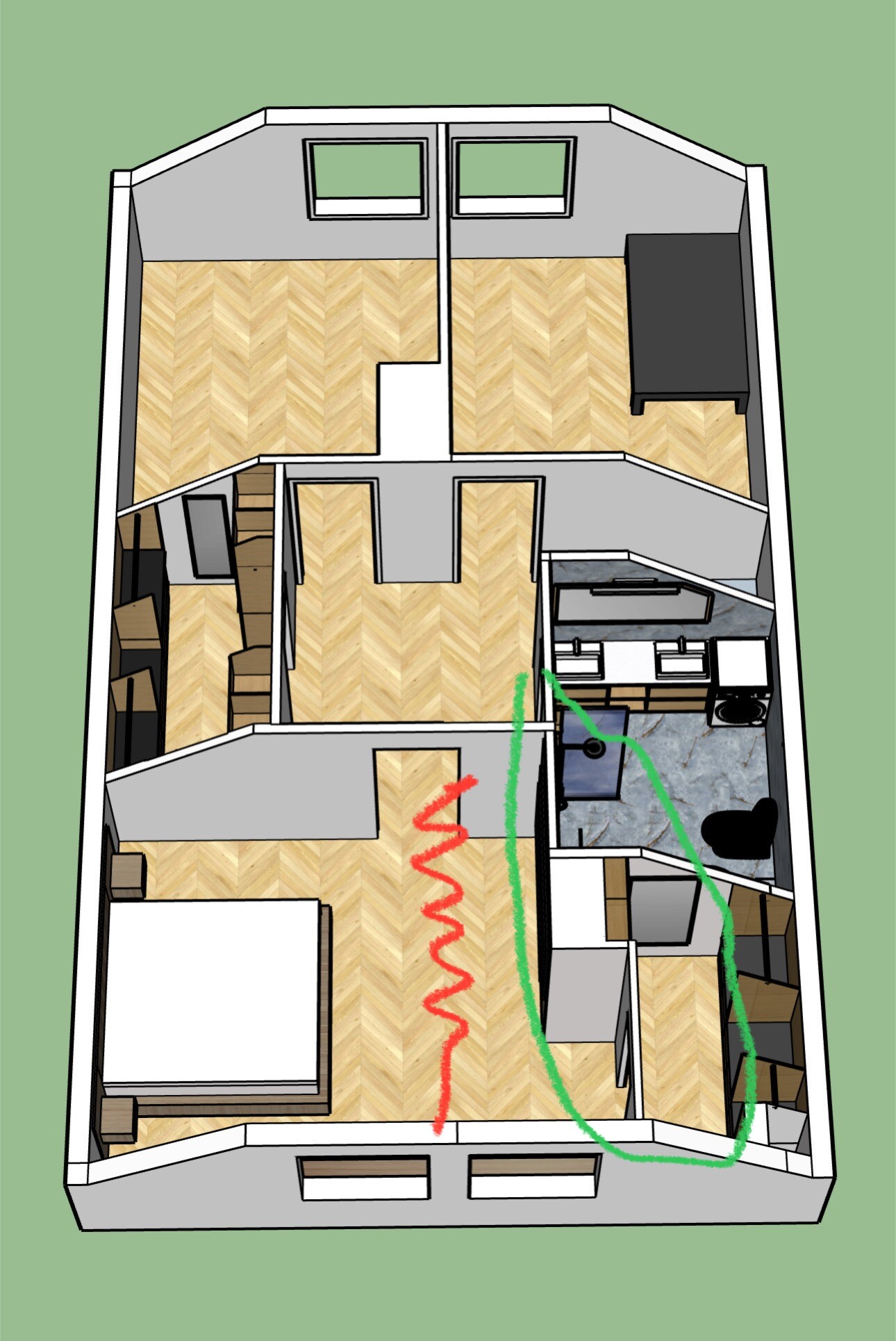
Going to demolish the wall below (marked in red) on our upper floor tomorrow (Friday) and have already replaced it with the wall marked in green. The wall runs along the length of the house and covers about 1/3 of the upper floor. The upper floor is about 6m wide in inner dimensions.
From my perspective, the dimension doesn't matter, a well-built wall of 45x70 can support any weight, but many seem to focus on the stud dimension when determining if a wall is load-bearing, and in this case, the existing wall has studs that are about 55x35 (odd, from '69) and 10mm chipboard on each side.
I feel like I have a fairly good sense of these things and can't see any issues.
But I have been reckless before and thought it couldn't hurt to ask. Can there really be any problem removing this wall? What especially affects the load-bearing capacity a bit is that the kitchen on the lower floor is quite large and now the new wall ends up in the middle of this area instead of approximately being on the joist close to the inner wall between the kitchen and dining room.
What do you think? Am I missing something in how these built-in trusses work? Reason to rethink and reinforce with a beam? Take any precautions?
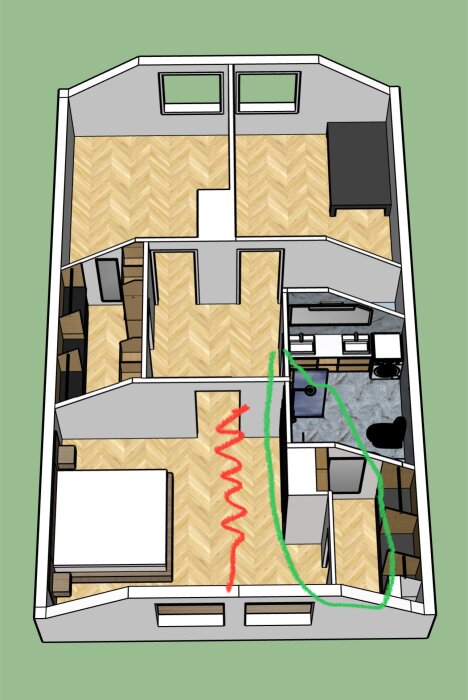
A slightly more descriptive image, the movement of the heart wall isn't quite as drastic as it appears above. Previously there were four identical smaller bedrooms on the upper floor. Now there will be three, one of which is slightly larger. The wall circled in green is already newly built. Where it's marked in red, there's currently a wall that will be removed.
Going to tear down the wall (marked in red) on our upper floor tomorrow (Friday) and have already replaced it with the wall marked in green. The wall runs in the longitudinal direction of the house and covers about 1/3 of the upper floor. The upper floor is about 6m wide in internal measurements.
From my perspective, dimension doesn't matter, a well-constructed wall of 45x70 can support any weight, but many seem to focus on stud dimension when determining if a wall is load-bearing. In this case, the existing wall has studs that are about 55x35 (odd, from '69) and 10mm chipboard on each side.
I think I have a fairly good sense of these things myself and can't see that there would be any issues.
But I've been reckless before and thought it couldn't hurt to ask. Surely there won't be a problem removing this wall? What affects the load-bearing capacity a bit is that the kitchen downstairs is quite large and now the new wall lands in the middle of this area instead of approximately being on the beam near the inner wall between the kitchen and dining room.
[image]
What do you think? Am I missing something in how these built-in trusses work? Any reason to rethink and reinforce with a beam? Take any precautions?
A more descriptive image, the shift of the central wall isn't as drastic as it appears above. Previously, there were four identical smaller bedrooms on the upper floor. Now there will be three, one of which is a bit larger. The wall circled in green is already newly built. Where it is marked in red, there is currently a wall that needs to be removed.
[image]
You're on the right track. Even a very thin wall can handle almost anything. Yet, a load-bearing wall is almost never built with weaker wood than 45x95. That's mostly due to lateral stability. A heavily loaded wall must also be able to withstand a strong hit.
That alone suggests that your wall is NOT load-bearing. But also how the interior walls are positioned so differently, and perhaps even missing entirely under some trusses, suggests that the wall is not load-bearing. Last but not least, a framework truss with that design is "never" built with an extra support/wall in the middle. With that said, you can tear down your wall without worry.
Click here to reply
Vi vill skicka notiser för ämnen du bevakar och händelser som berör dig.