
Hello, I live in Rhodes and currently have a terrace that is covered with glossy 20x20 tiles. The terrace is 60 sqm.
I am now planning to lay new tiles and wonder if I can lay the new tile floor directly on the old one. Maybe it needs to be sanded or treated in some way first for future adhesion.
I also need a waterproofing layer first since I live in a penthouse with a neighbor below. Which one? Membrane or rolling?
Kind regards, Bengt
I am now planning to lay new tiles and wonder if I can lay the new tile floor directly on the old one. Maybe it needs to be sanded or treated in some way first for future adhesion.
I also need a waterproofing layer first since I live in a penthouse with a neighbor below. Which one? Membrane or rolling?
Kind regards, Bengt

Self-builder
· Stockholm
· 8 600 posts
From a waterproofing perspective, the old tile floor should be removed first.
When it comes to adhesion, you can sand the glossy tiles and then apply primer - and then lay new ones.
But as mentioned - the waterproofing may adhere poorly, and in addition, you risk cracking and so on if you don't remove the old one.
/K
When it comes to adhesion, you can sand the glossy tiles and then apply primer - and then lay new ones.
But as mentioned - the waterproofing may adhere poorly, and in addition, you risk cracking and so on if you don't remove the old one.
/K
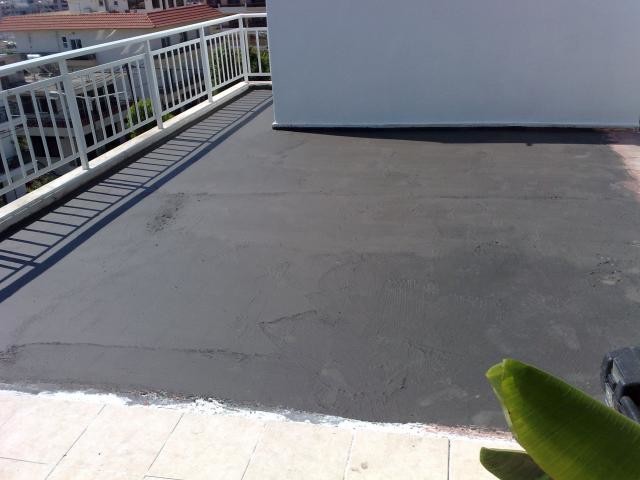
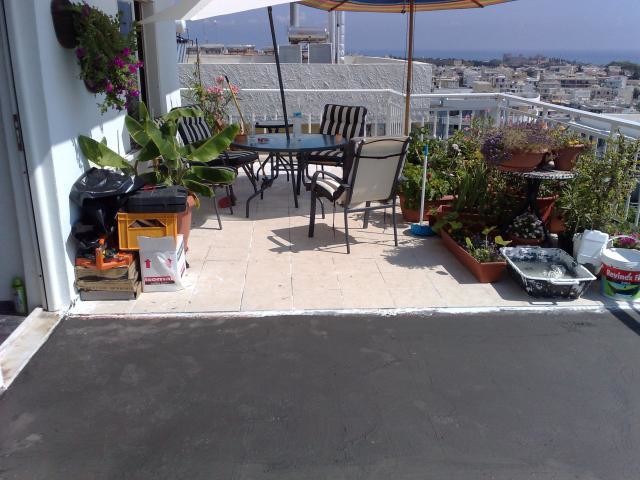
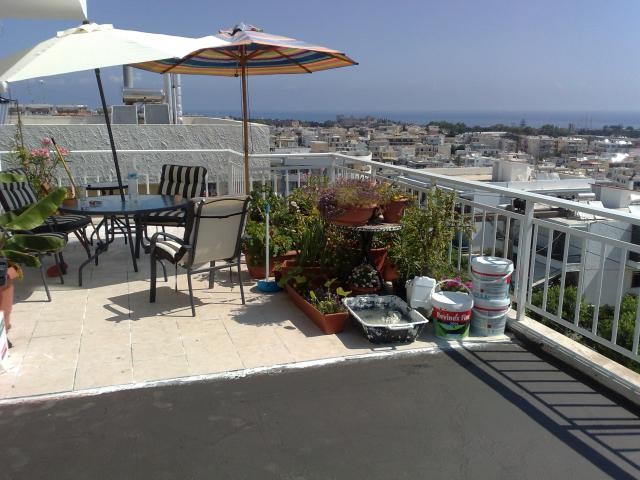
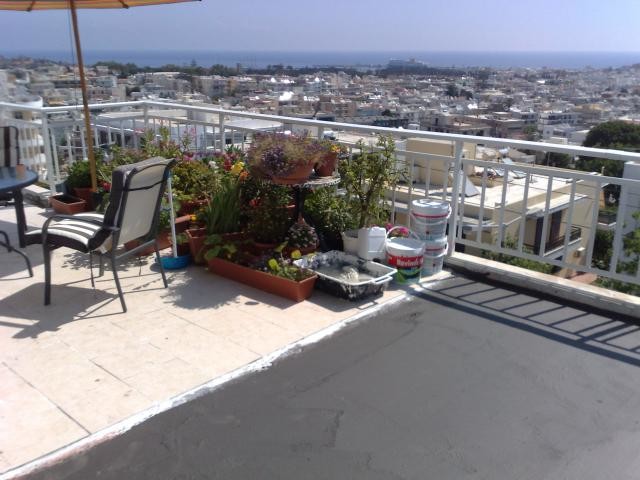
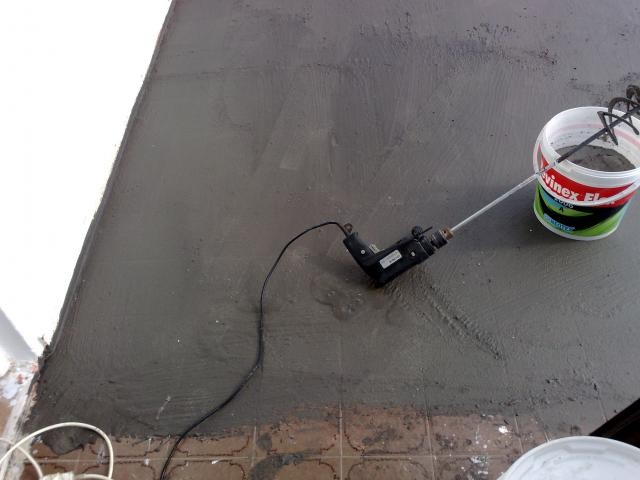
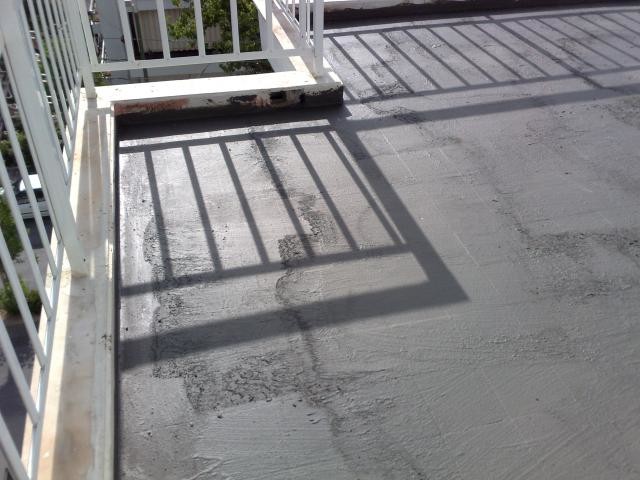
Thank you, Klas, for your advice. However, I found the solution for this. As a Swedish DIY enthusiast, I handled the job myself. I did the following: 1. Applied a layer of primer ISOMAT PL-bond. Achieved a surface like concrete. 2. Then, two layers of Revinex. A two-component rubber membrane applied with a soft long-bristled brush. After curing, I ended up with a fine 3mm waterproofing layer. I chose this to avoid cracking in the future. The mass is flexible (stretchable), yet hard, up to 2-3 mm. It suits well here where we occasionally have small earthquakes around 4-5 on the Richter scale. Furthermore, this mass provides some sound dampening effect downwards. Application time (60 m2 including curing time at 27 degrees) Primer: 6 hours Revinex: 18 hours x 2 layers Cost: Primer 40 EUR REVINEX 500 EUR After that, it was just a matter of starting to lay tiles in the usual way. With our new tiles and better water drainage (yes, it actually rains a few days a year), we got a very nice terrace. Feel free to watch how to do it: http://www.youtube.com/watch?v=sl77lg4rbCY
Take care in Sweden
Bengt Blomstrand Formerly Orust Henån
Take care in Sweden
Bengt Blomstrand Formerly Orust Henån
Last edited:
Self-builder
· Stockholm
· 8 600 posts
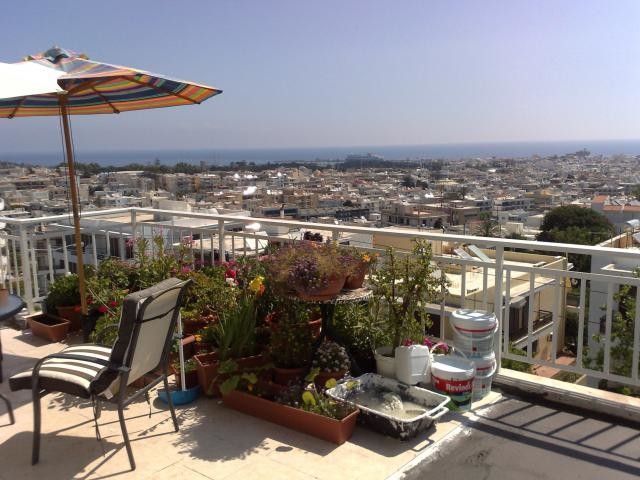
Now I'm curious about how the result looks - do you have any pictures?rhodos said:Thank you Klas for your advice.
However, I have found the solution for this. As a Swedish DIY enthusiast, I managed the job myself.
I did the following:
1. applied a layer of primer ISOMAT PL-bond. Got a surface like concrete.
2. Then two layers of Revinex. A two-component rubber layer compound applied with a soft long-bristle brush. After curing, I got a nice 3mm waterproof layer. I chose this to avoid cracking in the future. The compound is flexible (stretchable), yet hard, up to 2-3 mm. It suits well here where we sometimes have small earthquakes around 4-5 on the Richter scale. Additionally, this compound provides some sound-dampening effect downwards.
Application time (60 m2 including curing time at 27 degrees)
Primer: 6 hours
Revinex: 18 hours x 2 layers
Cost:
Primer 40 EUR
REVINEX 500 EUR
After that, it was just a matter of laying tiles in the usual way.
With our new tiles and better water drainage (yes, it actually rains a few days a year), we got a very nice terrace.
Feel free to see how it's done: [link]
Take care in Sweden
Bengt Blomstrand
Formerly Orust Henån

/K
Click here to reply