
17,339 views ·
65 replies
17k views
65 replies
Isolate vibrations from neighbor

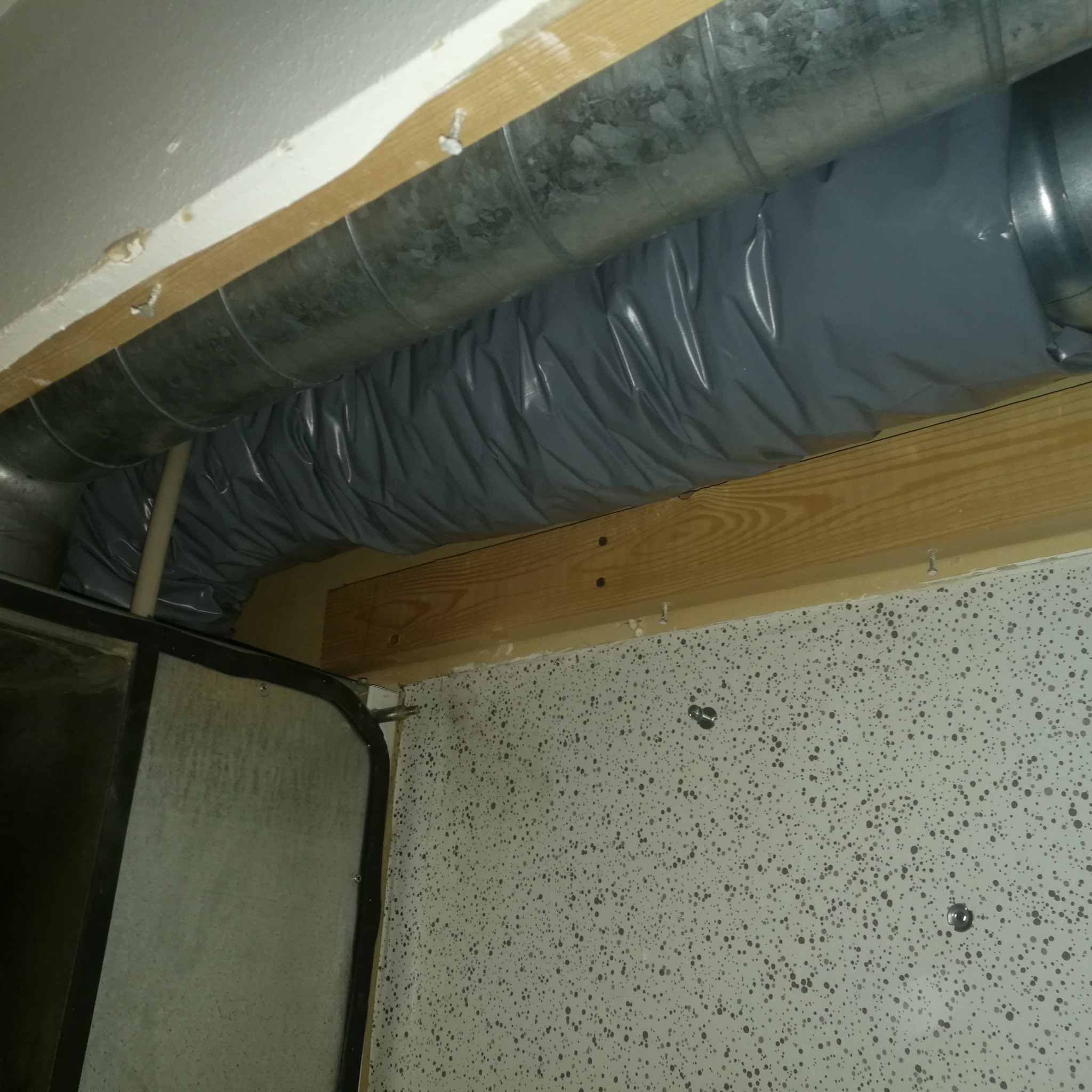
Yes, this is how it looks inside our place. Took down the plaster tonight. Completely missing silencers after the unit, for example. The pipes vibrate when you touch them. Then they go straight into the living room.H HBerggren said:Renovate your fans with new bearings and some nerdy form of balancing. Then when you're satisfied, knock on your neighbor's door and swap their fans with your newly renovated ones to see how it turns out. Well, renovate the neighbor's before installing them at your place.
Then try developing a new suspension system as you were considering. There might also be noise from ventilation, even if the fans are in good condition. More silencers could be the solution if the noise comes from "self-vibrating" rigid ventilation pipes.
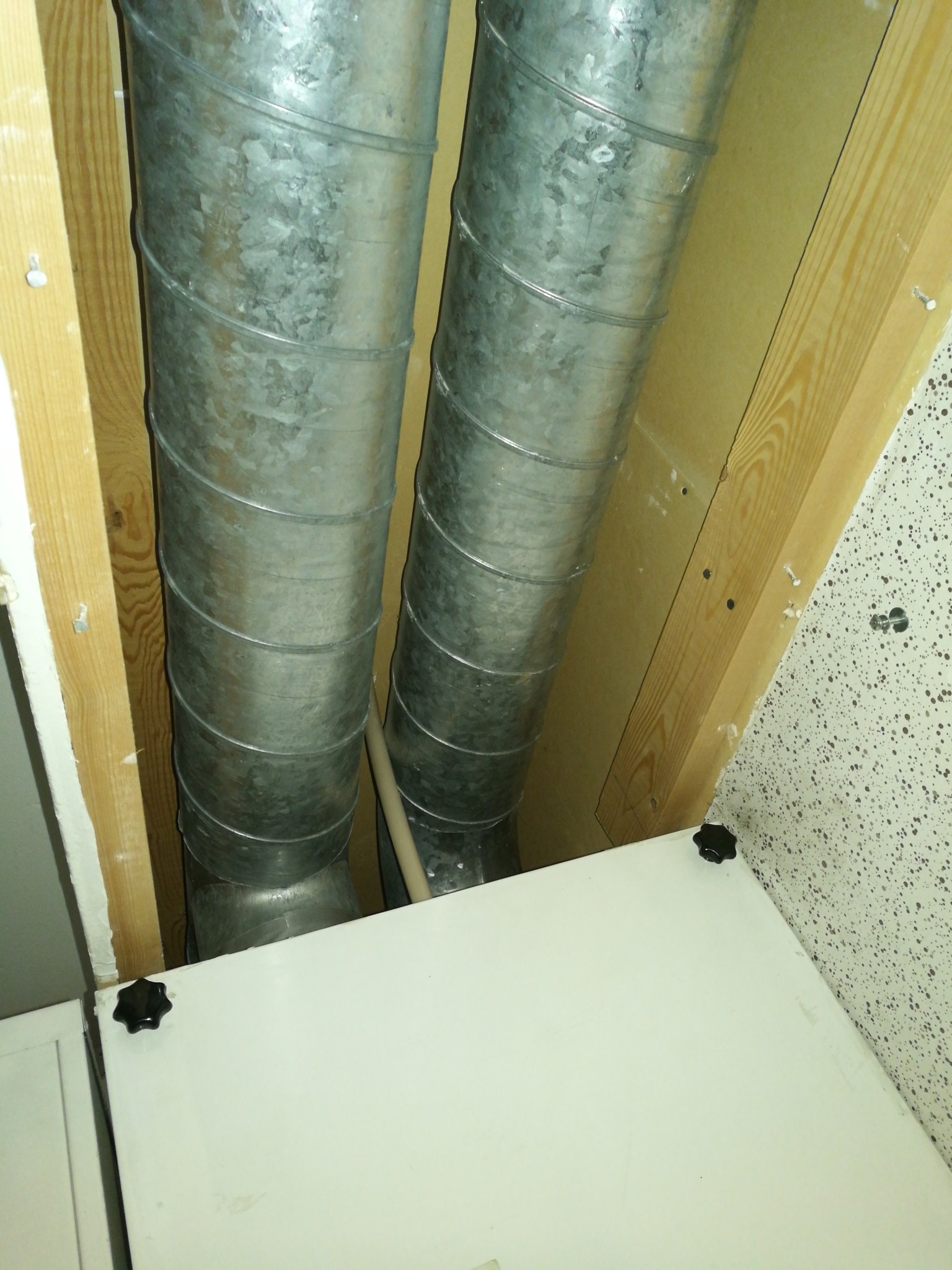
I cannot understand how they have attached the unit to the wall, though. Underneath, there is no beam or anything similar that it rests on. On top, there is no mounting. It is not screwed on the side, and when you open the front panels you can't see any screws. It must be screwed in the back somehow.
In the last picture, you can see where the threads are for the legs that are supposed to be, according to the installation instructions.
In the last picture, you can see where the threads are for the legs that are supposed to be, according to the installation instructions.
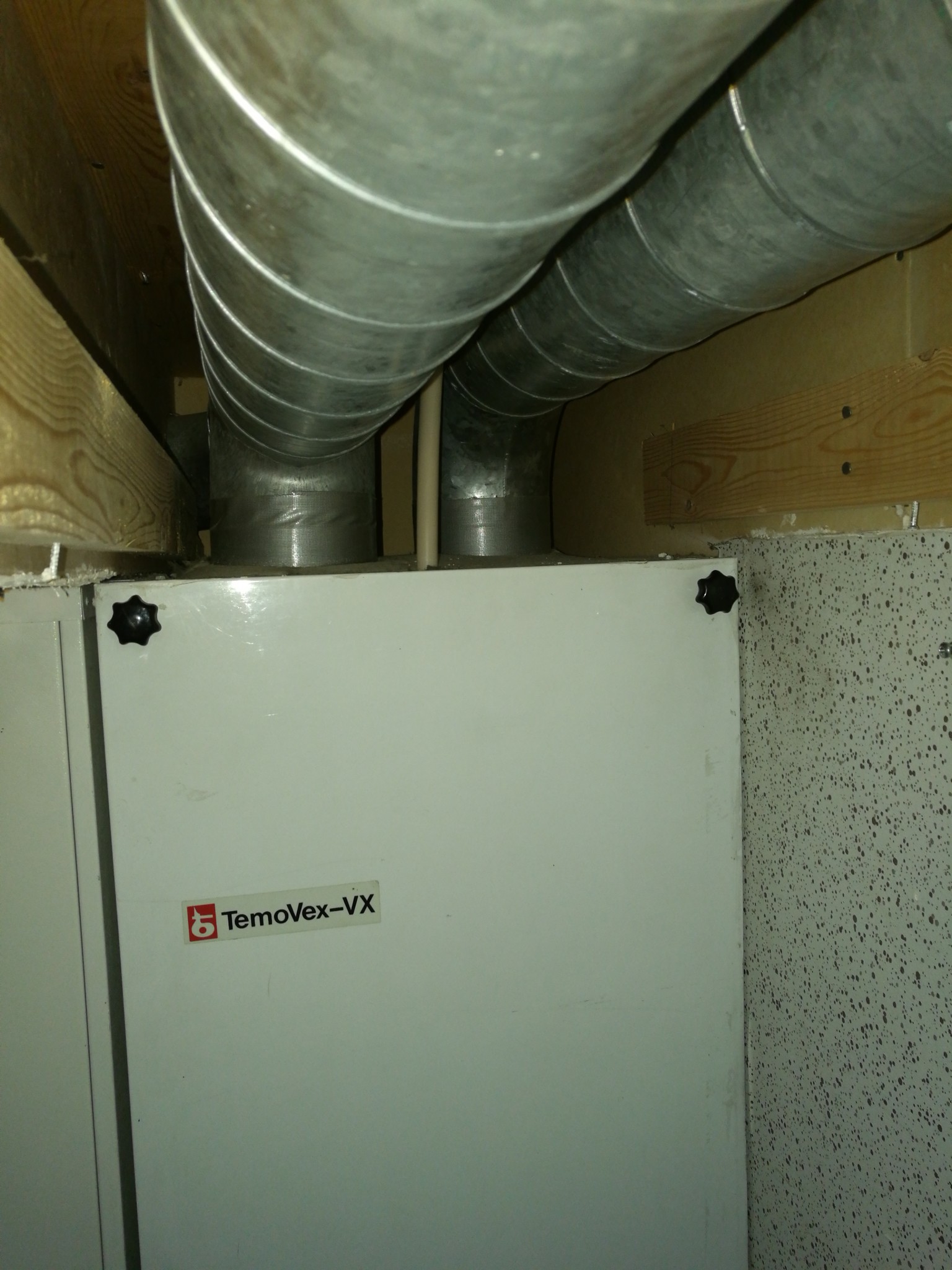
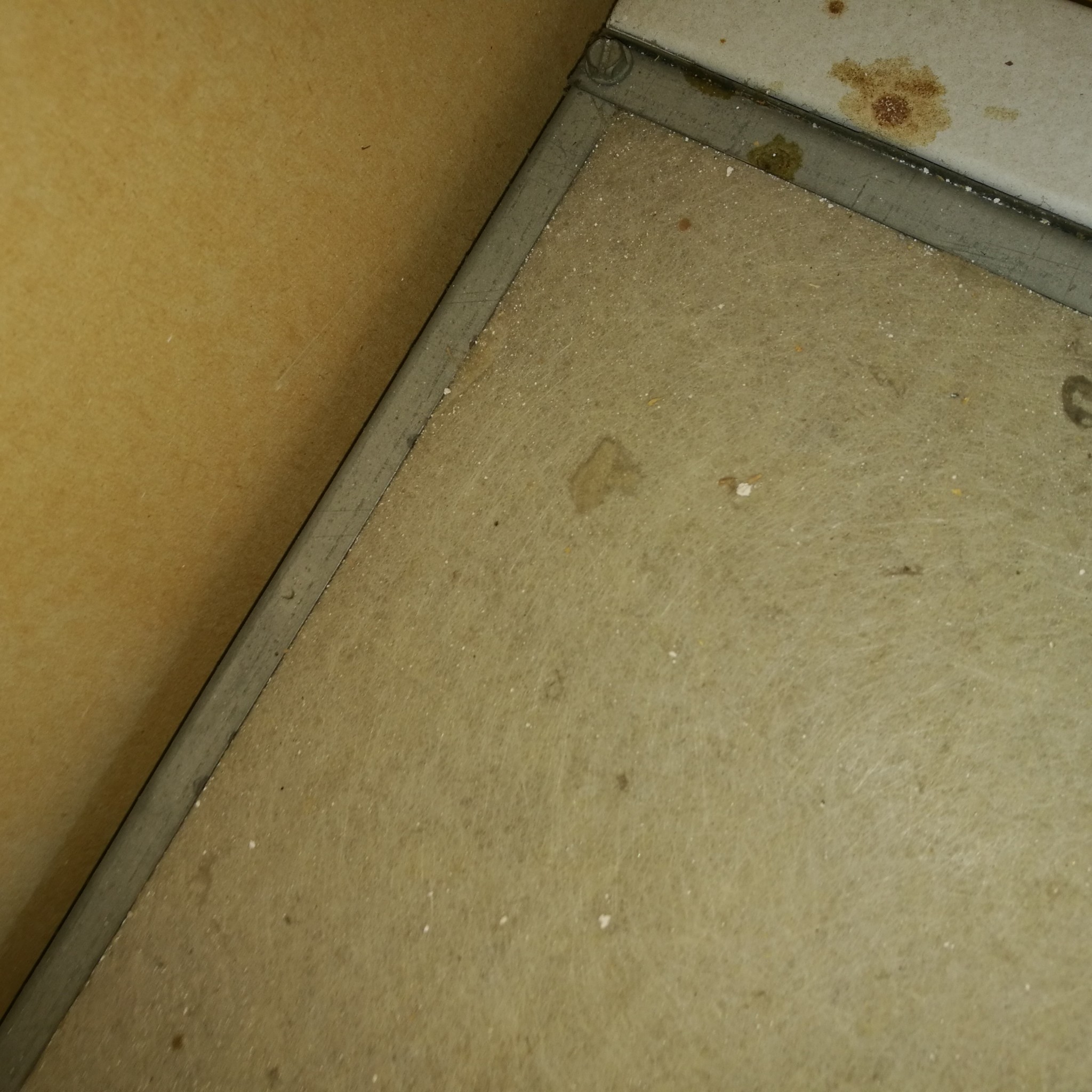
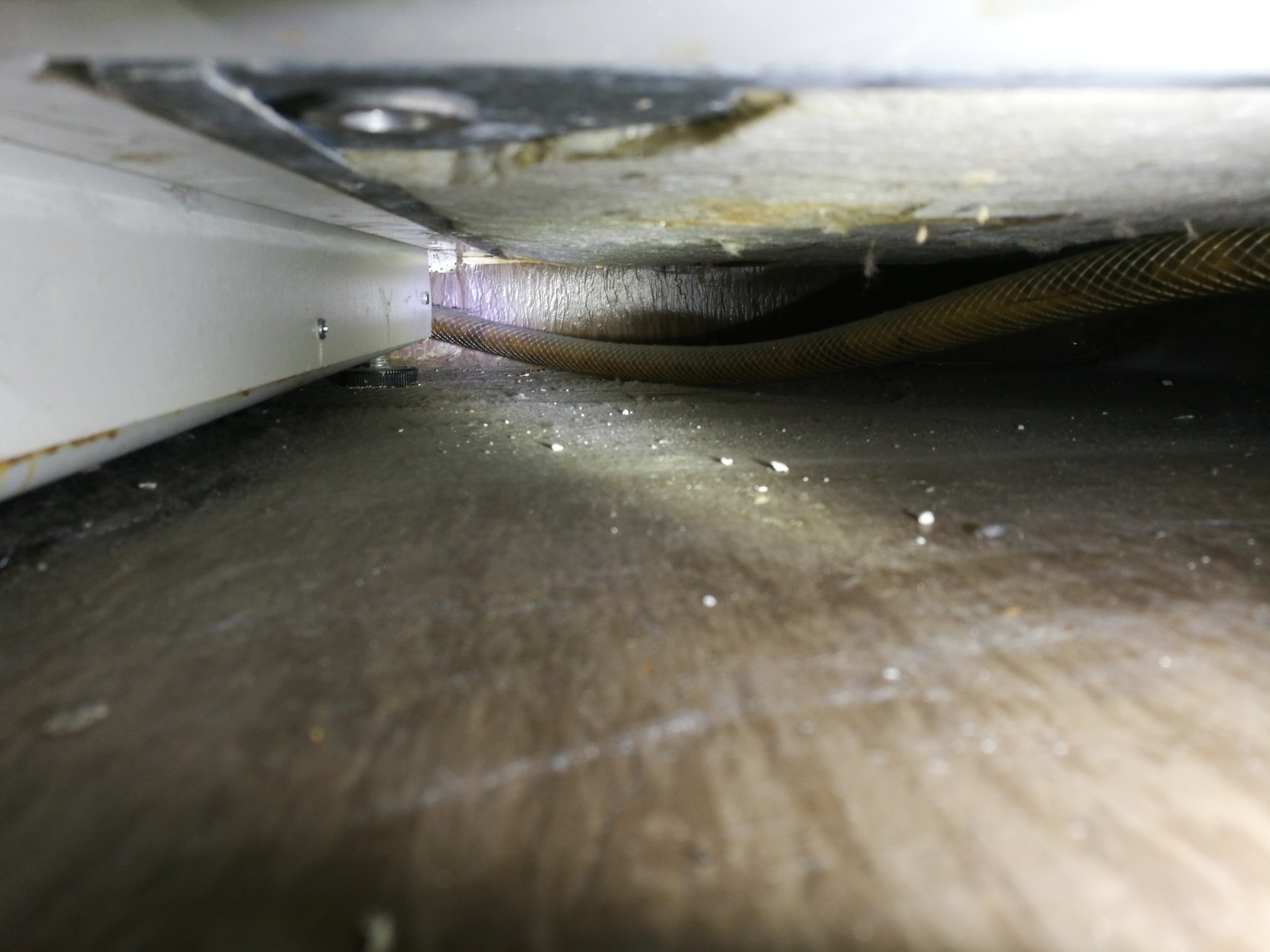
No silencers.. They should be as soon as possible after the unit. Square dampers might be squeezed in there. It would be good to alternate flex pipes between the unit and the pipes as they also reduce vibrations.
https://www.biltema.se/bil---mc/bil...agsstopp/genomslagsgummi-universal-2000017973
M8 under the machine, perhaps?
It feels a bit tight with space, it's important that the machinery doesn't rub against the wall.
Jula had some sort of machine mat, saw it two years ago. Memory says it was black rubber material, 10 mm thick, maybe 8x10 cm, 4 pieces for 49-99 kr, developed to dampen vibrations from machines. Should be able to fit underneath, I think.
It should be possible to resolve this issue well eventually if you put the solutions together.
https://www.biltema.se/bil---mc/bil...agsstopp/genomslagsgummi-universal-2000017973
M8 under the machine, perhaps?
It feels a bit tight with space, it's important that the machinery doesn't rub against the wall.
Jula had some sort of machine mat, saw it two years ago. Memory says it was black rubber material, 10 mm thick, maybe 8x10 cm, 4 pieces for 49-99 kr, developed to dampen vibrations from machines. Should be able to fit underneath, I think.
It should be possible to resolve this issue well eventually if you put the solutions together.
Probably the vibrations pass through the wall, but installing a flexible pipe at the beginning will dampen the sound throughout the entire pipe system. The most effective method is to replace the 90-degree bend at the beginning with a silencer. For example, one like this: https://soliduct.se/fl-200-1200-plast.htm (First hit on Google. There are plenty of other suppliers.)
You don't have problems with airborne sound in the ducts, so a regular stiff rectangular silencer won't help you.
The most important thing is probably the suspension. Rubber bushings there are key to a vibration-free installation.
You don't have problems with airborne sound in the ducts, so a regular stiff rectangular silencer won't help you.
The most important thing is probably the suspension. Rubber bushings there are key to a vibration-free installation.
I have ordered and will try now. I also found out that the unit is hanging on a bracket screwed to the wall. So if I manage to thread in a couple of short bolts where the legs are supposed to be and then slide in some type of rubber mat, I can thread out the bolts and lift the unit slightly. This might reduce some vibration in the wall without making major modifications?S STB said:The vibrations are probably traveling through the wall, but putting a flexible pipe at the beginning will dampen the sound in the entire pipe system. The most effective solution is to replace the 90-degree bend at the beginning with a silencer. For example, something like this: [link] (First hit on Google. There are plenty of other suppliers.)
You don't have problems with air-borne sound in the ducts, so a regular rigid square silencer won't help you.
The most important thing is the suspension. Rubber bushings there are key to a vibration-free installation.
Then I can do the same for my neighbor, what do you think?
Are the new steel studs completely independent from the old partition wall?P danneha said:Moved into a new semi-detached house and unfortunately experiencing vibrations in the living room from the neighbor's heat exchanger located behind the living room wall in their laundry room.
Talked to them and the unit is old, 85. Cleaned the fans but there's still a dull vibration. Worse in the corners of our living room. However, nothing is heard in the upstairs room or the room next to the living room.
Will a new wall with steel studs, insulation, and double layers of drywall help eliminate the noise?
And how should one best approach the ceiling and floor? Remove existing drywall and parquet? Would I need to find a stud in the ceiling to attach the steel stud to?
From experience, it is usually most effective to start by vibration isolating the source against a heavy building element (the foundation slab). This is provided the thread starter's neighbor is willing to do so.
The noise the thread starter is experiencing in their home is most likely so-called structure-borne sound. Vibrations from an installation are transferred to the building component to which the installation is anchored and then transmitted to adjacent homes via separating construction (the partition wall that the thread starter was thinking of equipping with an independent additional insulation) and flanking constructions (outer wall, floor, and ceiling) to then be radiated as sound in the thread starter's home.
If the dwelling-separating wall is a lightweight wall, a so-called triple construction occurs when such a wall type is equipped with an independent additional insulation. The air gap between the old wall and the drywall in the independent additional insulation results in a cavity resonance. By placing mineral wool in this air gap, this resonance is slightly reduced.
Where in frequency this new cavity resonance occurs depends, among other things, on the distance between the existing wall and the inside of the innermost panel in the new additional insulation. The greater the distance, the lower the frequency at which the resonance occurs.
The phenomenon you are talking about is related to room modes. See the link below.P danneha said:Yes, now there are gaps up to 0.5 cm all around the wall into the steel frame.
The funny thing is that in some places you don't hear the sound while it is amplified in, for example, the corners. It's enough to move a meter sideways on the sofa, and the sound becomes more noticeable. Could curtains help to prevent some of it? I have recently moved in, so the walls are bare and there are no curtains.
At the purple arrows, the sound is the worst. At the green arrow, you can sit without hearing
https://amcoustics.com/tools/amroc
When sound bounces around in an enclosed space, the sound waves that are in phase in certain parts of the room will reinforce each other, resulting in standing waves at these positions. In other points in the room, the sound waves are out of phase. When the phase difference between two waves is 180 degrees, there is a so-called local cancellation of the sound wave level (this is the technique used in noise-cancelling headphones). In these points, the sound level is perceived as significantly lower than in the points in the room where standing waves are formed. Sound is amplified in the corners because there are significantly more reflections compared to other parts of the room.
https://quantum-protection.com/wp-content/uploads/2015/09/skalar-vag.jpg
Yes, it is independent but screwed into the ceiling, floor, and short sides about 90mm in front of the old wall. I have filled up with insulation in the cavity.N nomoD2 said:Are the new metal studs completely independent from the old partition wall?
From experience, it is usually most effective to start by vibration-isolating the source against a heavy building part (the bottom slab). This is assuming the thread starter's neighbor is willing to do so.
The sound that the thread starter experiences in their home is most likely structural sound. Vibrations from an installation are transferred to the building part to which the installation is anchored and then transferred further to adjacent dwellings via the separating structure (the partition wall that the thread starter was thinking of providing with an independent additional insulation) and flanking structures (outer wall, floor, and ceiling) to then be radiated as sound in the thread starter's home.
If the dwelling-separating wall is a light wall, a so-called triple construction is obtained if such a wall type is provided with independent additional insulation. The air gap between the old wall and the plasterboards in the independent additional insulation results in a cavity resonance. By placing mineral wool in this air gap, this resonance is reduced slightly.
The frequency at which this new cavity resonance occurs depends, among other things, on the distance between the existing wall and the inside of the innermost board in the new additional insulation. The larger the distance, the lower the resonance frequency.
Instead of this triple construction that I have now built, maybe it would have been better to just increase the mass on the existing wall, say 2 more plasterboards screwed and glued so that there would have been 4 layers in total against the living room and the neighbor's two boards.
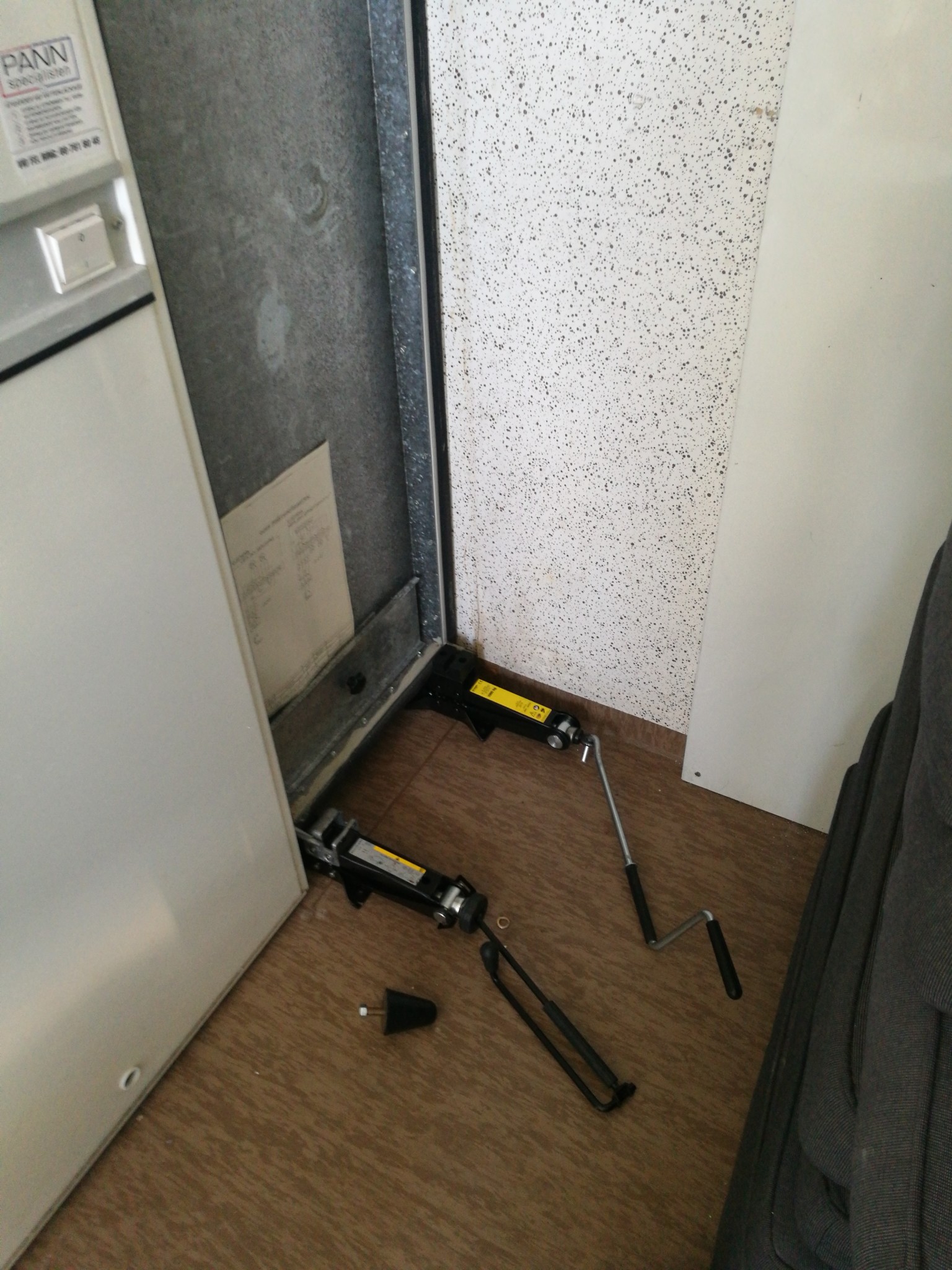
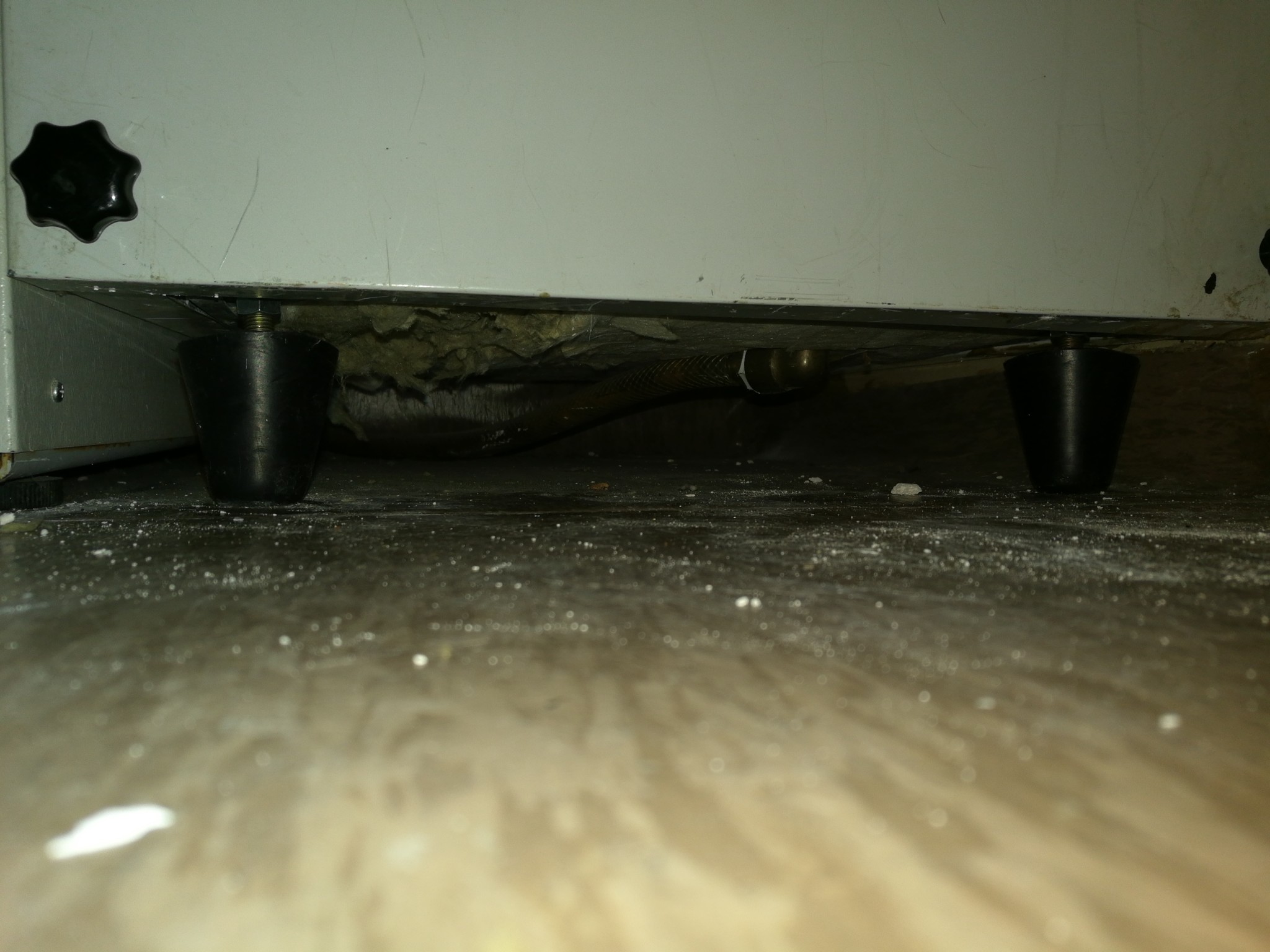
There. They don't fit very well since the threads were missing in the holes. They are just inserted, and the nut is adjusted upwards so the unit rests against it. But it was enough to lift the unit and move it out a few cm from the back wall so the vibrations are mostly gone.
Now I just need to convince the neighbor and make sure to secure the feet better. Not sure how though.
Funny that a wall was built for several thousand when you could buy rubber feet at Biltema for 80kr.
Now I just need to convince the neighbor and make sure to secure the feet better. Not sure how though.
Funny that a wall was built for several thousand when you could buy rubber feet at Biltema for 80kr.
Yes, but you learn from your mistakes. That's why I know so much...P danneha said:
Another lesson could be to ask first if you're unsure. You seem to be quite handy with constructions, so it's natural to start with things you're familiar with.
It's still very nice that we've found a solution together and that it seems to work. Rubber feet, and all other types of spring suspensions, can succeed with varying degrees because they can enter self-oscillation. Then you have to use harder or softer suspension to get away from the current frequency.
You can also celebrate with a big party and not have to worry about disturbing the neighbor thanks to the new well-insulated wall.

Did you also fit sound-dampening flexible pipes? I consider that the next step if rubber feet aren't enough. If you use one of those instead of a 90-degree bend, you get very good results, both for vibrations and more high-frequency sounds.
I have to thank you for all the help and good ideas.
I ordered a flex muffler that I plan to try attaching to the supply air, and if it works well, I'll order one for the exhaust air as well.
The sound did improve in all vents when the unit vibrates less. ☺️
Now it's just a matter of deciding whether the wall should stay or if I should reclaim the 10 centimeters it took up.
I ordered a flex muffler that I plan to try attaching to the supply air, and if it works well, I'll order one for the exhaust air as well.
The sound did improve in all vents when the unit vibrates less. ☺️
Now it's just a matter of deciding whether the wall should stay or if I should reclaim the 10 centimeters it took up.

Know-It-All
· Västra Götaland
· 12 551 posts
A little worse but it turns out almost as good. Place it next to the other one.