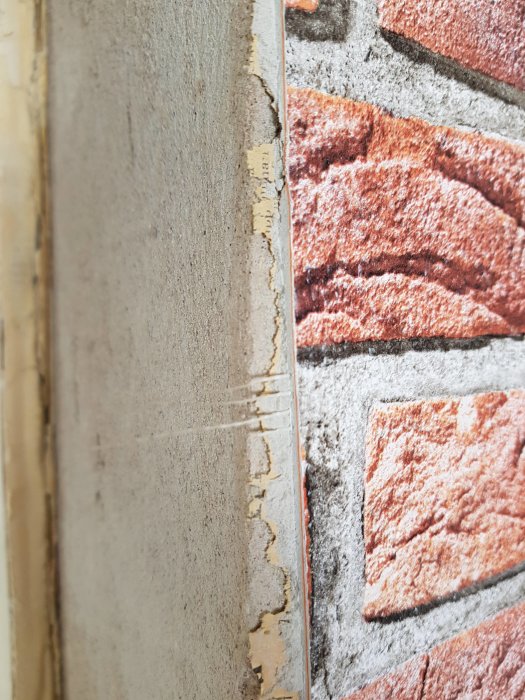
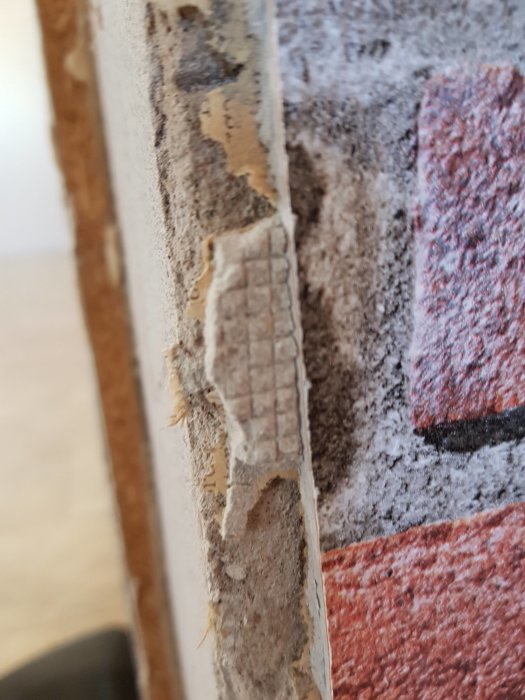
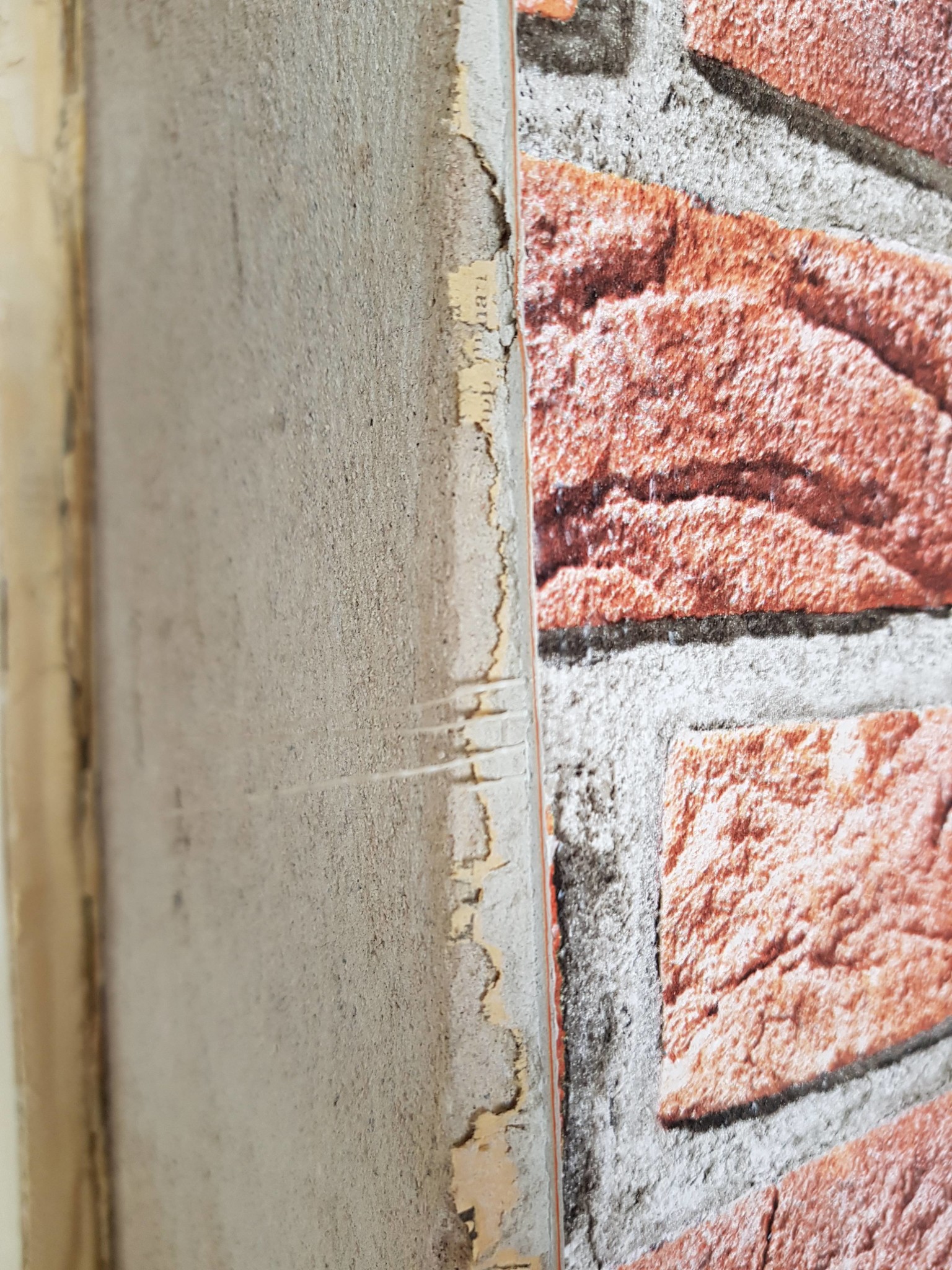
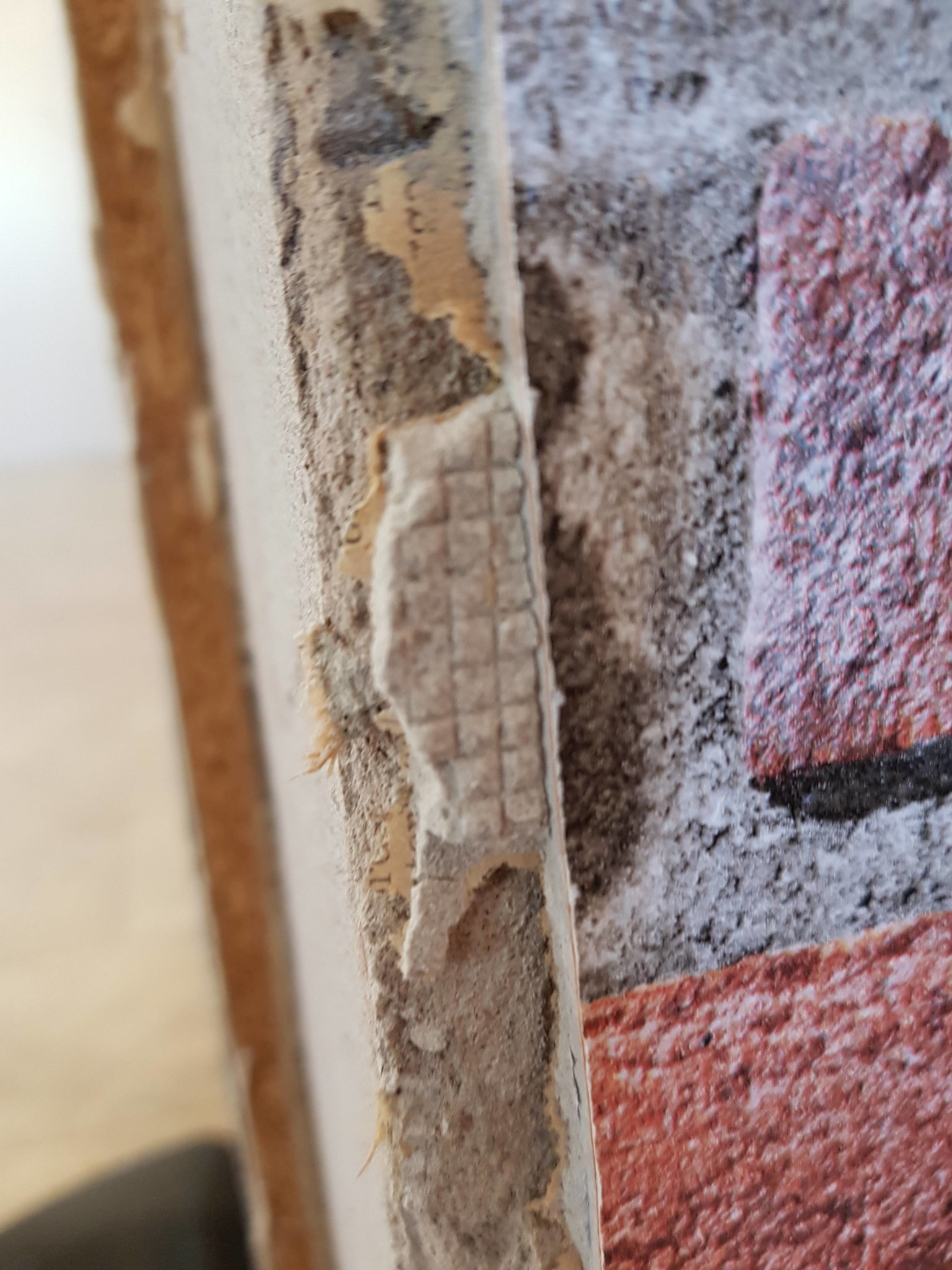
In the picture with the brick (brick wallpaper???) I see text, it seems to be newspapers against the plaster/concrete?
Okay thanks!
Yes, there are really old newspapers right against the concrete and the brown fuzz is remnants of tretex boards.
Haha yes, it's a brick wall wallpaper.
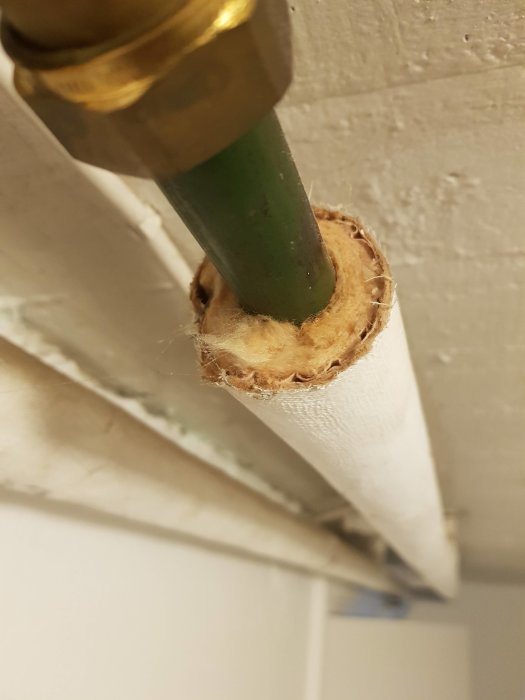
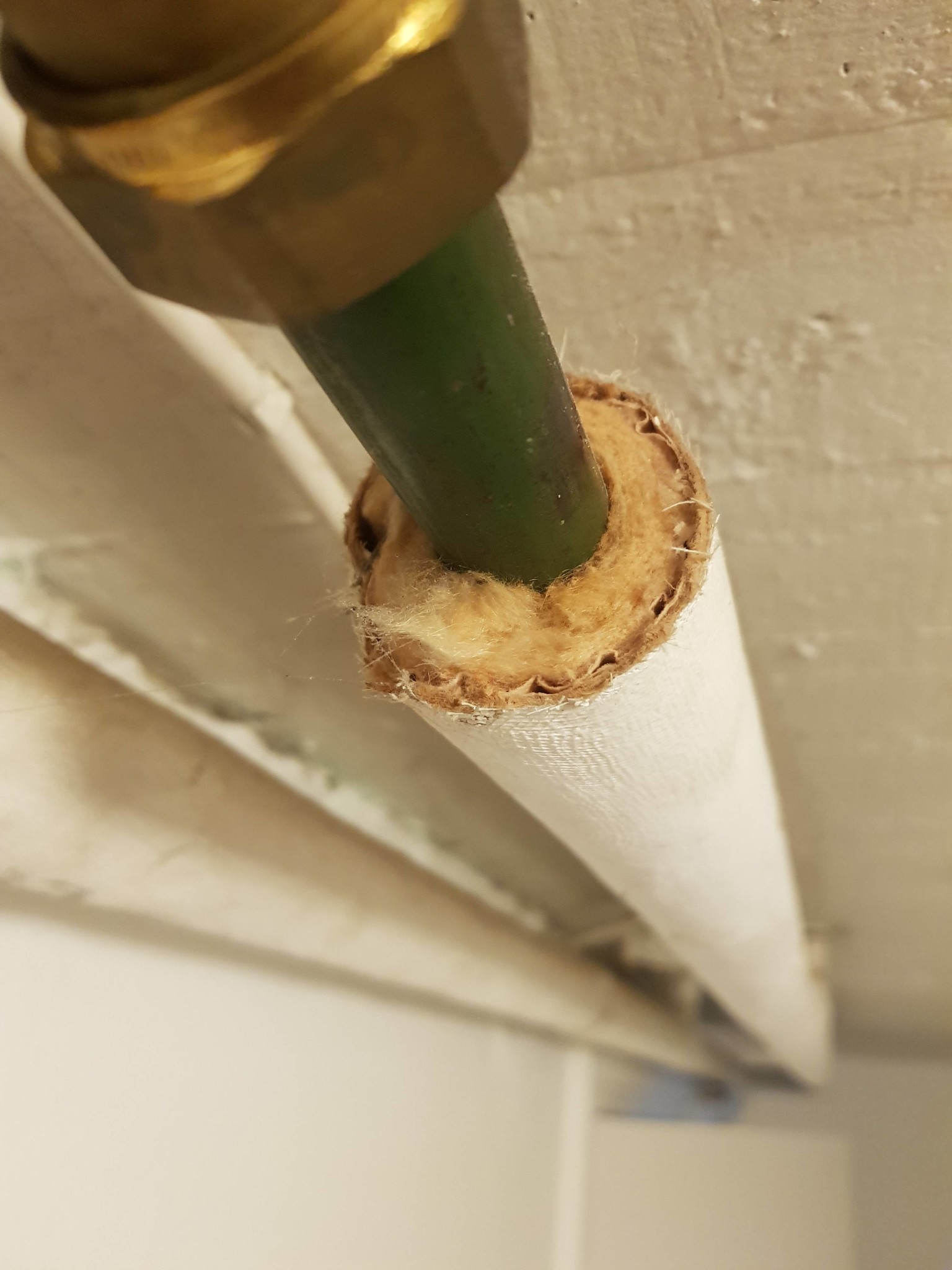
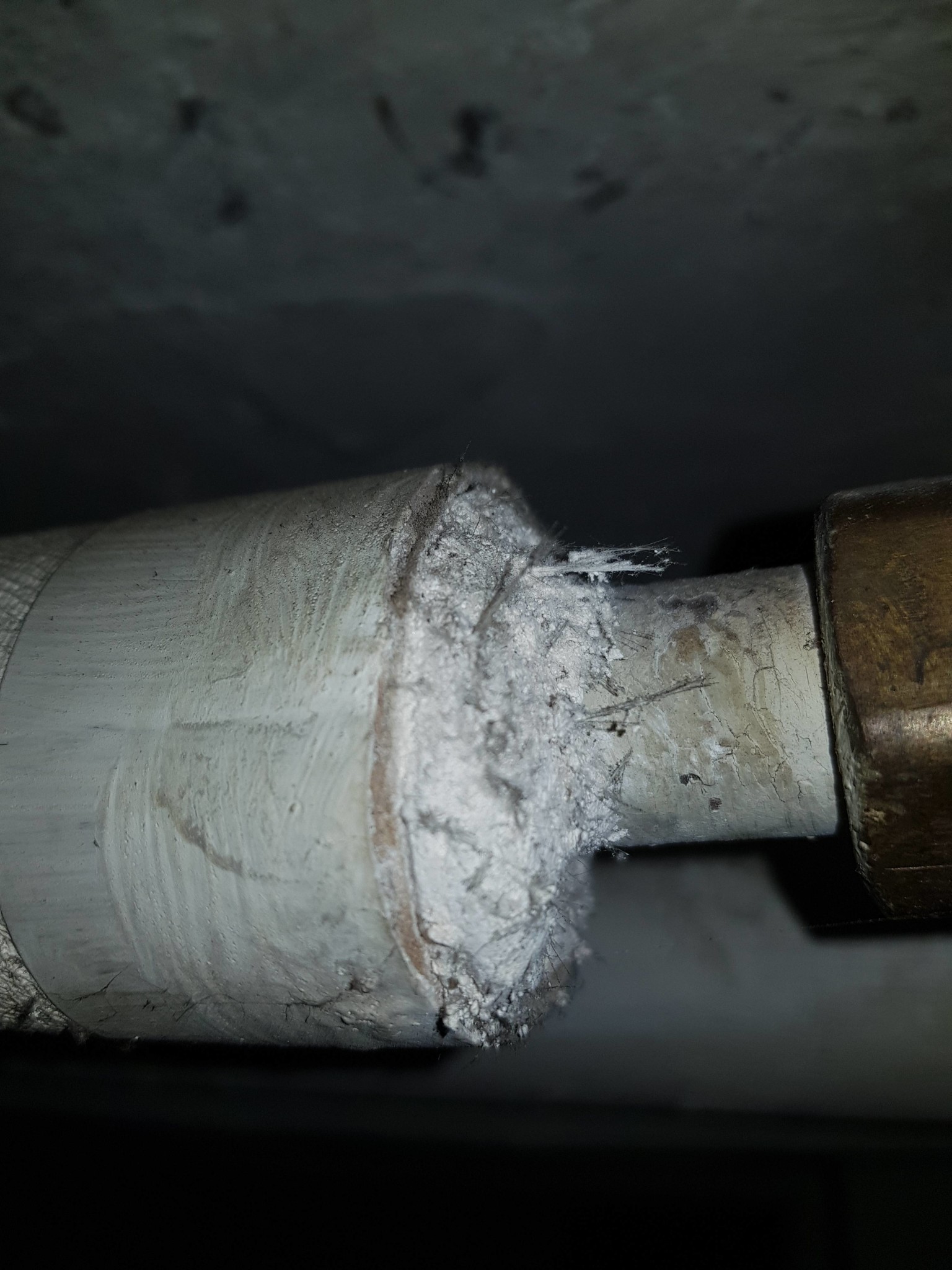
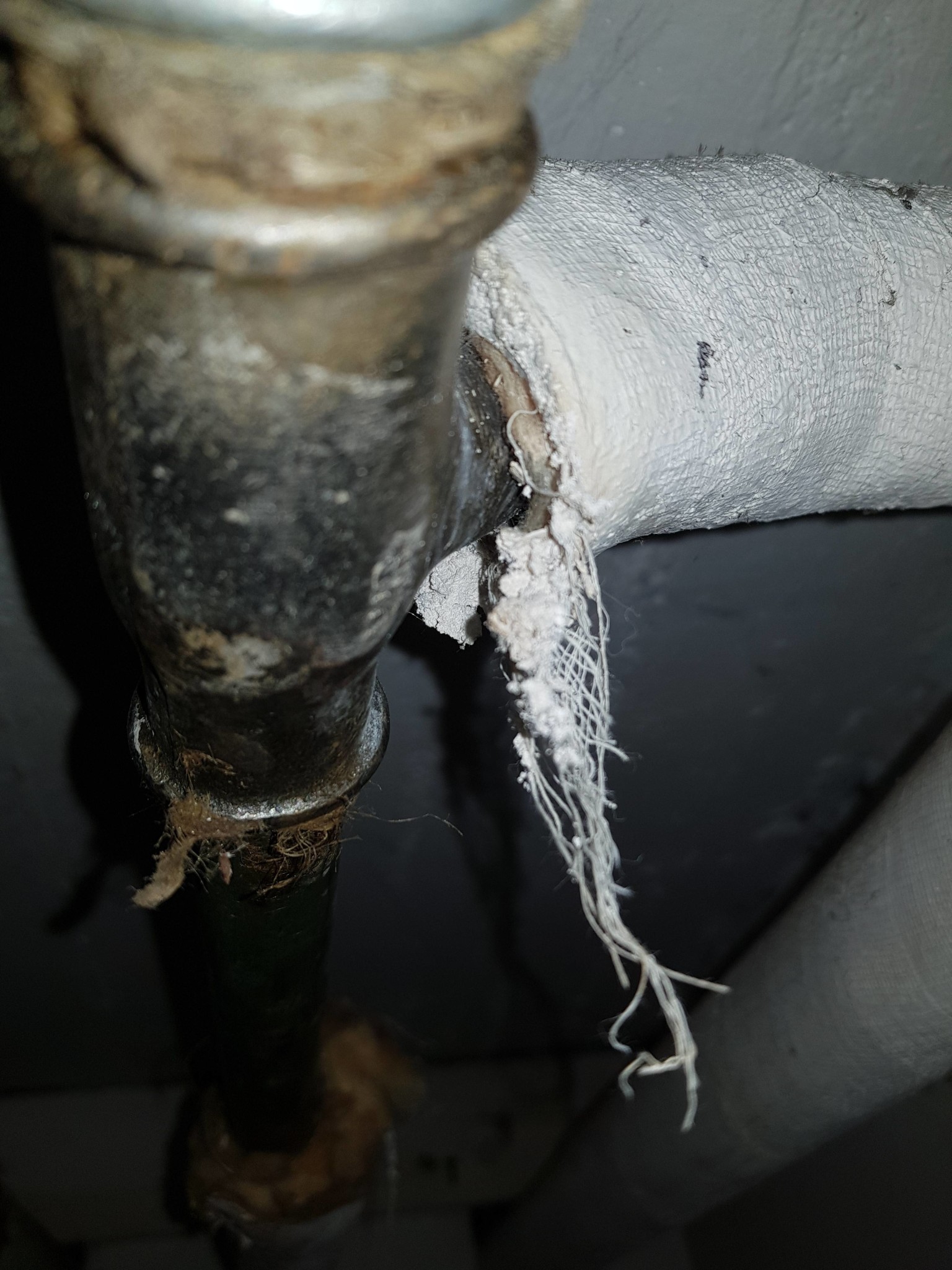
The last pictures (the white insulation) I would consider asbest even if it is not.
If you let companies remove the asbest, it costs a lot; removing it yourself is not difficult, you just have to be careful.
Soak the insulation properly before & while you start working on it. Avoid any work that creates dust. Use a respirator. Wet wipe after the work. Put the insulation in bags/sacks.
No, asbest is not deadly if you don't work with it daily for many years.
The last pictures (white insulation) I would consider as asbestos even if it is not.
If you let a company remove the asbestos, it costs a lot; removing it yourself is not difficult, you just have to be careful.
Thoroughly wet the insulation before and during your work.
Avoid processes that cause dust.
Use a respirator.
Wet-wipe after the work.
Place the insulation in bags.
No, asbestos is not deadly unless you work with it daily for many years.
I would also consider that pipe insulation as asbestos-containing until samples confirm otherwise.
However, I do not agree that it's OK to remove asbestos in pipe insulation by yourself in that manner.
The asbestos is not bound in the insulation and will dust very easily, even if you try to wet it, etc. You will end up with asbestos fibers lingering in your indoor air for a long time unless it is removed properly.
If you do it yourself, you should prevent dust spread by 100%. For example, by using a so-called "glove bag".
Would also consider the pipe insulation as containing asbestos, until tests confirm otherwise.
However, I do not agree that it is OK to remove asbestos in pipe insulation yourself in that manner.
The asbestos is not bound in the insulation and will dust very easily, even if you try to wet it, etc. You will have asbestos fibers lingering in your indoor air for a long time if it's not removed properly.
If you are going to do it yourself, you should prevent dust spread 100%. For example, by also using a so-called "glove bag."
If you do as she wrote, it's a good alternative if you have overalls and equipment and collect all the asbestos, and as she wrote, wet it so it doesn't dust. It's better than leaving the stuff there if you have the opportunity to remove it instead of leaving it there, which does no good, rather. But then you must be as meticulous as a professional, almost like wetting it and having protective equipment and wrapping it up and taking it to recycling ASAP what I interpret as crap, what do you have it for?
Click here to reply
Vi vill skicka notiser för ämnen du bevakar och händelser som berör dig.




Anna_H said:
 and the brown fuzz is remnants of tretex boards.
Demmpa said:
The last pictures (white insulation) I would consider as asbestos even if it is not.